Pearls are among the most timeless and elegant gemstones in the world. Loved for their natural beauty, soft glow, and symbolism of purity and wisdom, pearls have adorned royalty and modern fashion lovers alike. Yet, one common question buyers, retailers, and jewelry brands often ask is freshwater vs saltwater pearls – what’s the difference?
Understanding the difference between freshwater pearls and saltwater pearls is essential whether you are purchasing jewelry for personal use, sourcing pearls for a brand, or planning wholesale jewelry production. This detailed guide explores every aspect of freshwater vs saltwater pearls, from origin and formation to quality, price, durability, and styling suitability.
Pearls have always held a special place in fine jewelry, whether they are used in minimalist designs or statement collections. To explore how pearls are evolving in modern fashion, you can also read our detailed guide on pearl jewellery big pearl fashion trends, where we discuss how freshwater and saltwater pearls are shaping today’s luxury and runway styles.
What Are Pearls and How Are They Formed?
Before diving into freshwater vs saltwater pearls, it is important to understand how pearls are created.
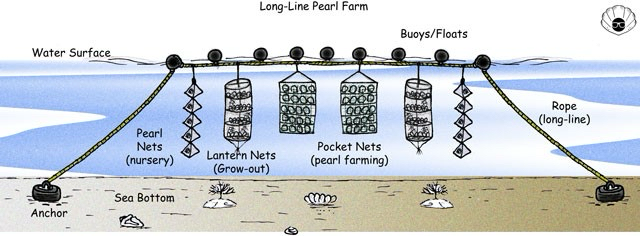
Pearls are organic gemstones formed inside mollusks when an irritant enters the shell. The mollusk secretes layers of nacre around the irritant as a defense mechanism. Over time, these layers build up to form a pearl.
Both freshwater pearls and saltwater pearls are cultured today, meaning humans assist in initiating the process, but the pearl formation itself is entirely natural.
What Are Freshwater Pearls?
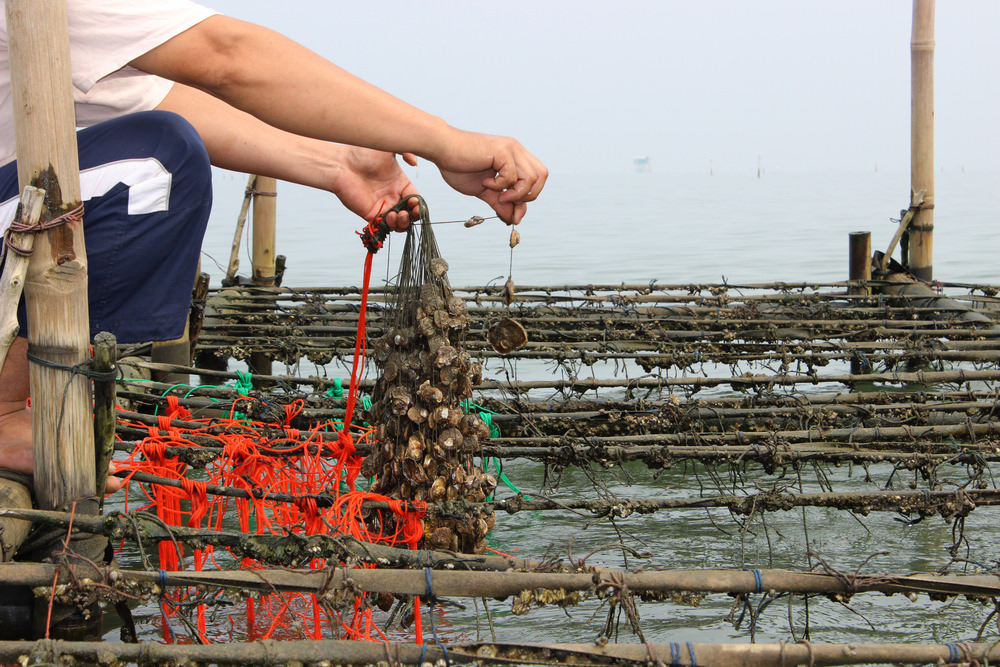
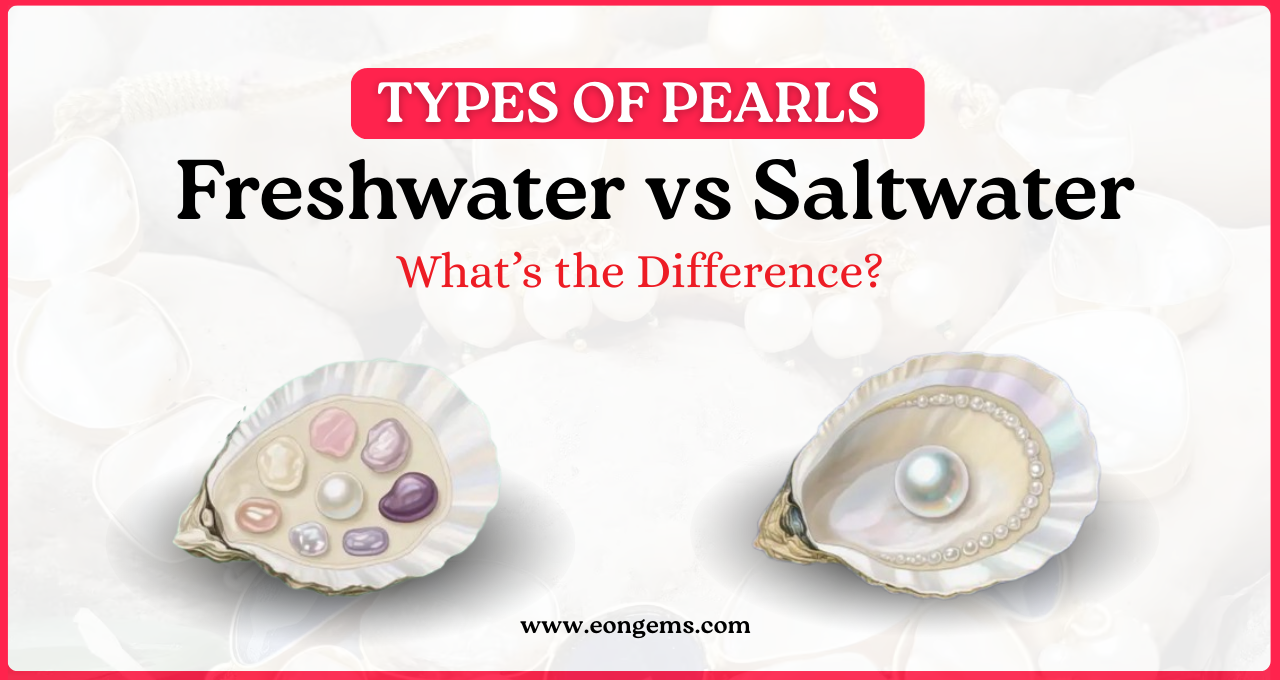
Freshwater pearls are produced in freshwater environments such as rivers, lakes, and ponds. They are primarily cultivated in freshwater mussels.
Key Characteristics of Freshwater Pearls
- Typically grown in rivers and lakes
- One mussel can produce multiple pearls at once
- Composed mostly of solid nacre
- Available in a wide range of shapes and colors
- Generally more affordable
Freshwater pearls are widely used in fashion jewelry, everyday wear, and large scale jewelry production due to their versatility and value.
What Are Saltwater Pearls?
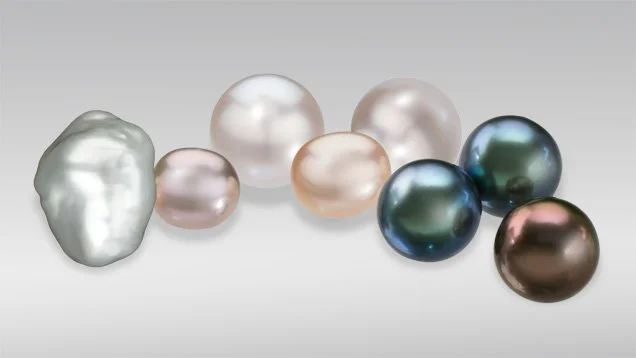
Saltwater pearls are grown in oceans and seas within specific types of oysters. Famous varieties like Akoya, Tahitian, and South Sea pearls all fall under the saltwater category.
Key Characteristics of Saltwater Pearls
- Cultivated in marine environments
- Typically one pearl per oyster
- Contain a bead nucleus with nacre coating
- Known for superior roundness and luster
- Higher market value
Saltwater pearls are often associated with luxury jewelry and fine collections.
Difference in Shape and Appearance
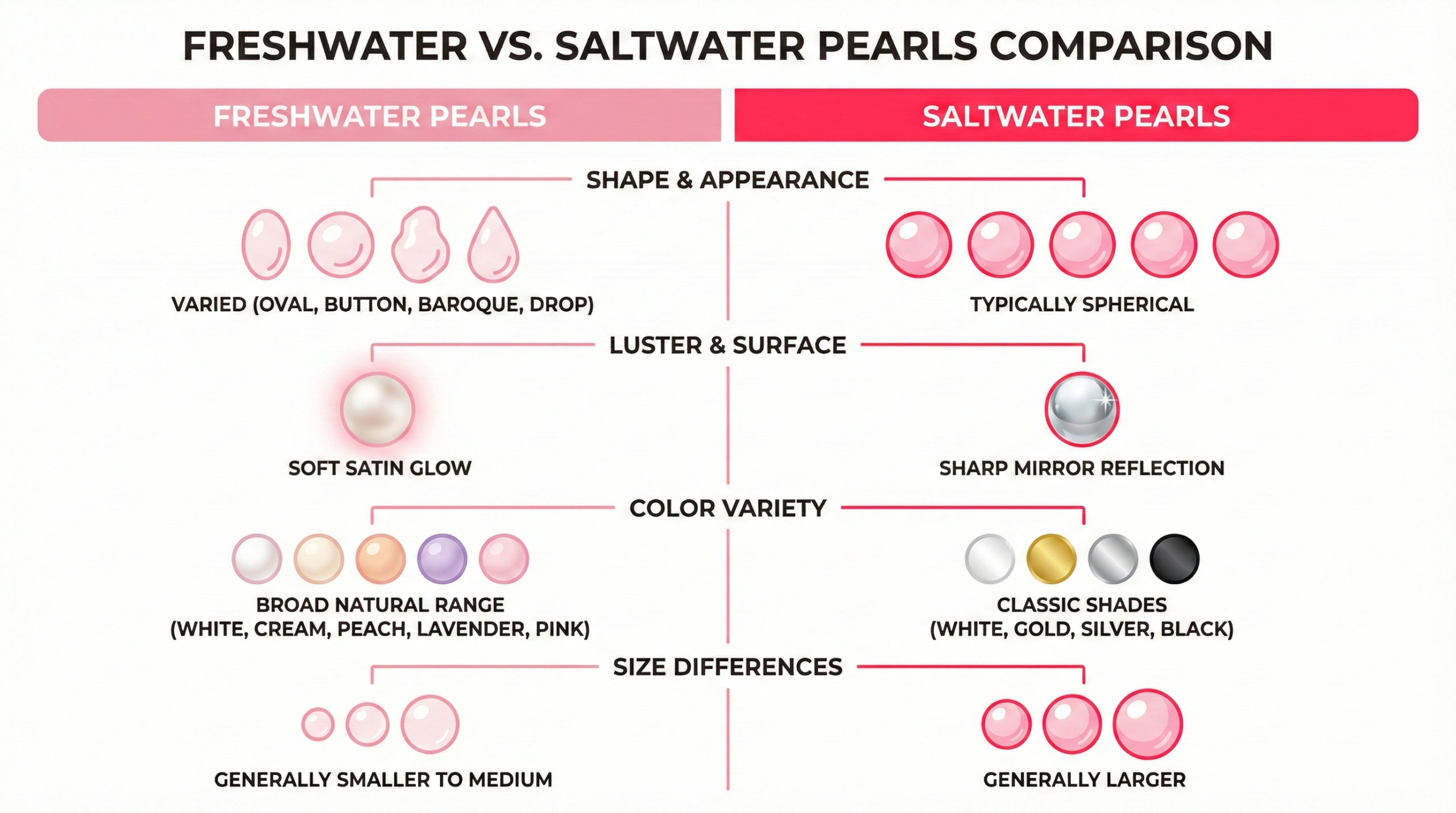
One of the most noticeable differences in freshwater vs saltwater pearls is shape.
Freshwater pearls often come in varied shapes including oval, button, drop, and baroque. While perfectly round freshwater pearls exist, they are rarer.
Saltwater pearls are typically more spherical due to the bead nucleus inserted during cultivation. This uniformity makes them highly desirable for classic pearl strands and luxury designs.
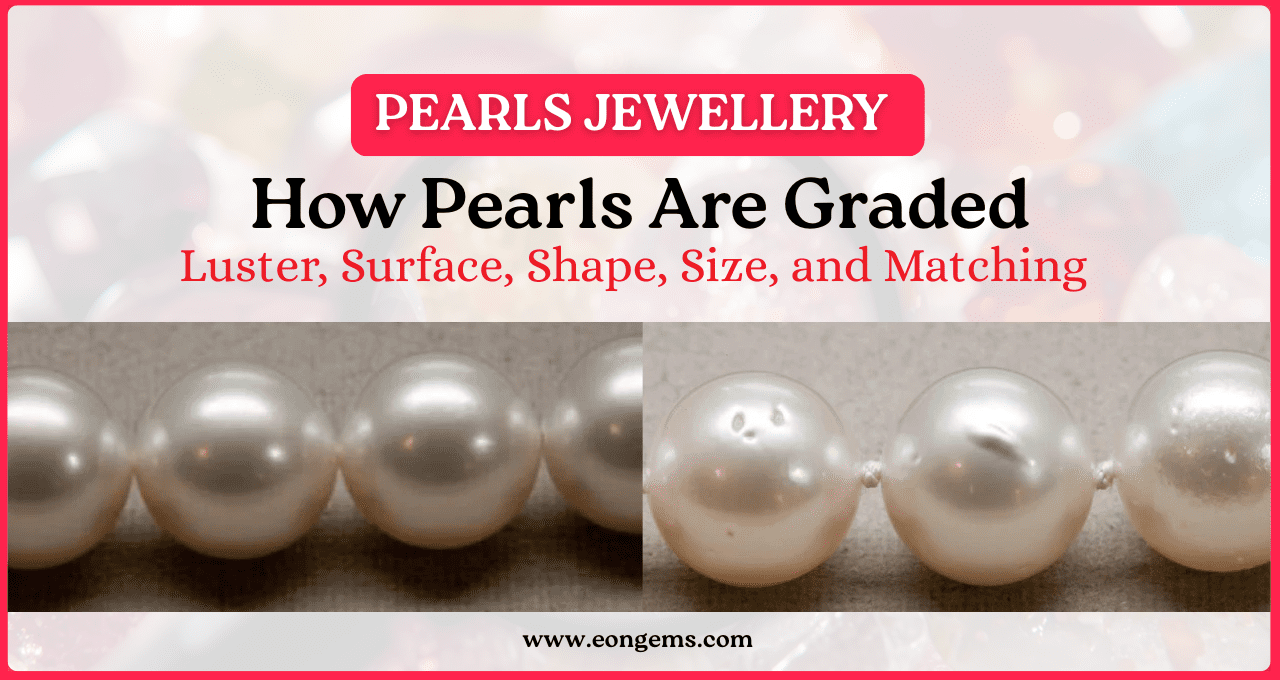
Luster and Surface Quality
Luster refers to how light reflects off the pearl’s surface.
- Freshwater pearls have a softer, satin like glow because they are made almost entirely of nacre.
- Saltwater pearls exhibit sharper, mirror like reflections due to their thinner nacre layers over a bead core.
When evaluating freshwater vs saltwater pearls, luster is often the deciding factor for high end jewelry buyers.
Color Variety and Natural Shades
Freshwater pearls naturally occur in a wide range of colors including white, cream, peach, lavender, and soft pink.
Saltwater pearls are usually white, cream, gold, silver, or black depending on the oyster species. Some saltwater pearl colors are extremely rare and valuable.
For designers seeking creative freedom, freshwater pearls offer broader color options.
Size Differences Between Freshwater and Saltwater Pearls
Saltwater pearls generally grow larger than freshwater pearls due to longer cultivation periods and oyster size.
However, modern freshwater farming techniques have significantly improved size and quality, narrowing the gap in freshwater vs saltwater pearls size comparisons.
Durability and Wearability
Durability is a major factor in jewelry design.
Freshwater pearls, being solid nacre, are often more resistant to chipping and wear. This makes them ideal for daily wear jewelry such as earrings, bracelets, and rings.
Saltwater pearls, though luxurious, require more careful handling due to thinner nacre layers.
Price Comparison: Freshwater vs Saltwater Pearls
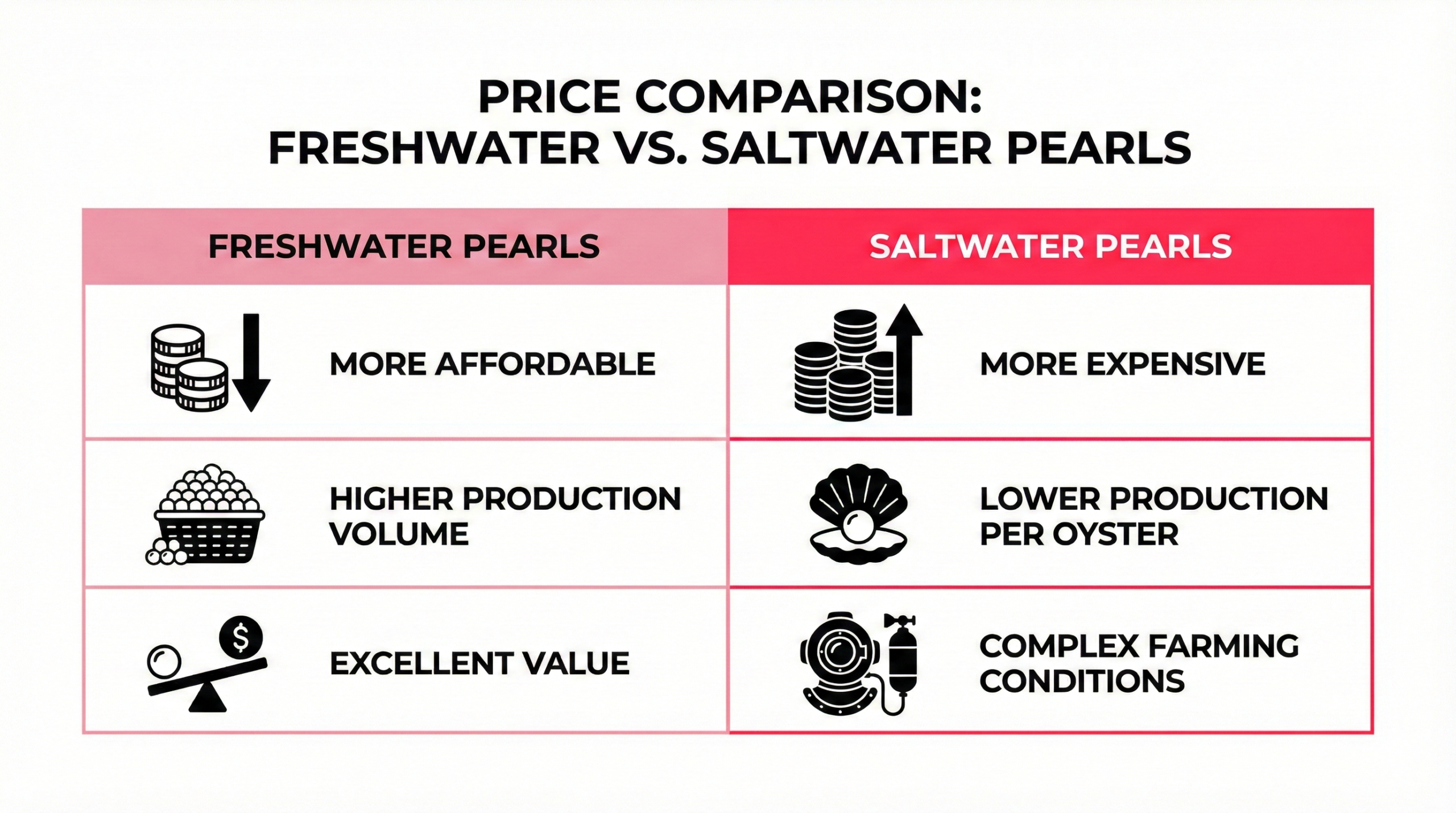
Price is where the difference between freshwater vs saltwater pearls becomes most evident.
- Freshwater pearls are more affordable due to higher production volume.
- Saltwater pearls are more expensive because each oyster produces fewer pearls and farming conditions are more complex.
For brands balancing quality and budget, freshwater pearls provide excellent value without compromising beauty.
Sustainability and Environmental Impact
Freshwater pearl farming is generally considered more environmentally sustainable. Mussels can improve water quality by filtering impurities.
Saltwater pearl farming requires careful marine ecosystem management and is often more resource intensive.
As sustainability becomes a priority, freshwater pearls are increasingly favored by ethical jewelry brands.
Whether you choose freshwater pearls for affordability or saltwater pearls for premium appeal, pearls remain a profitable category in the jewelry market. If you’re considering launching your own brand or expanding product lines, our article on start your own jewelry business covers essential steps, from sourcing gemstones to building a scalable brand.
Which Is Better for Jewelry Making?
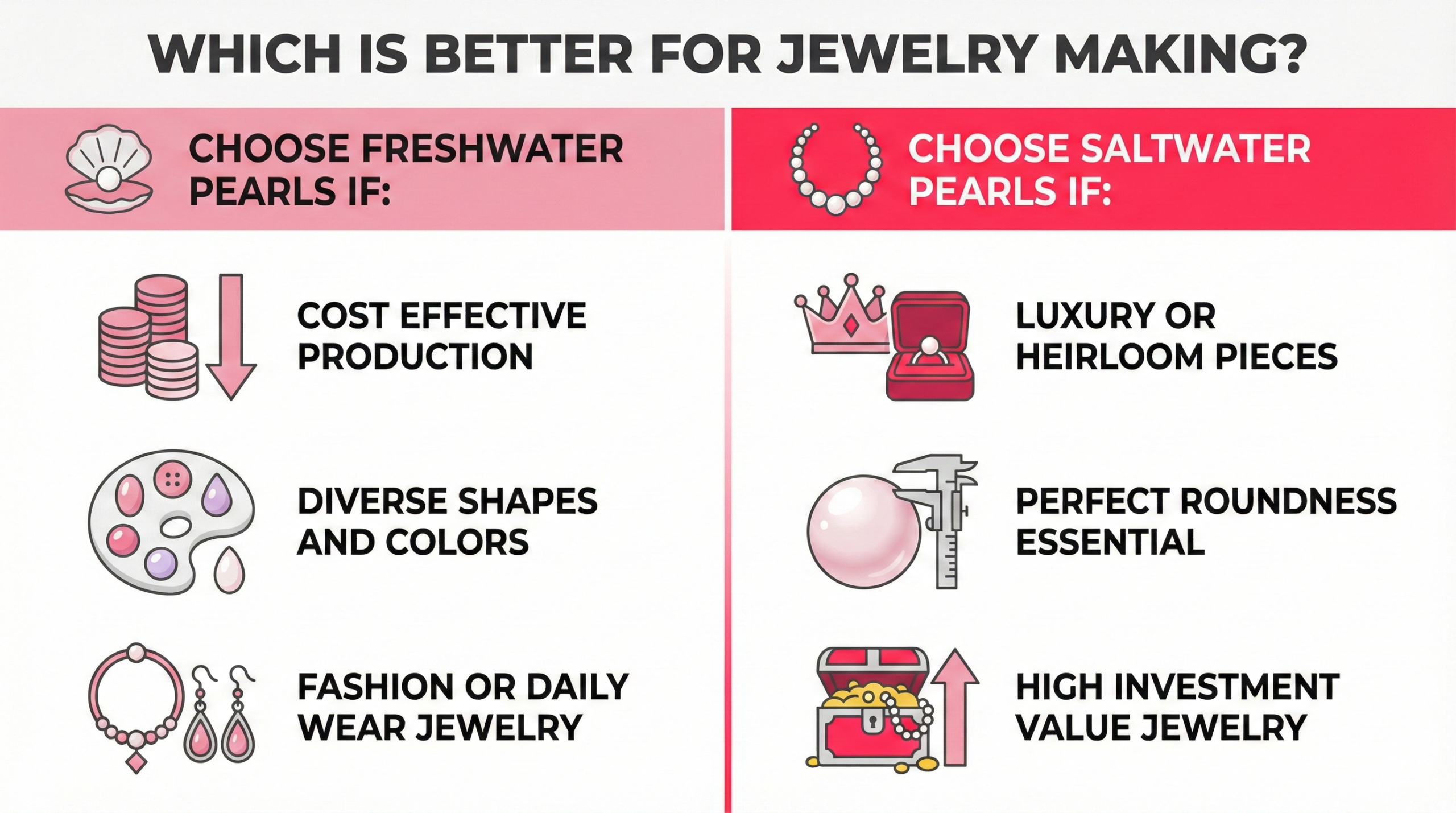
There is no single answer to which is better in freshwater vs saltwater pearls. It depends on the purpose.
The choice between freshwater vs saltwater pearls often depends on the jewelry manufacturing process. Factors like durability, sourcing, and design flexibility play a major role. If you’re interested in understanding how premium jewelry is crafted from raw materials to finished pieces, our article on silver jewelry manufacturing process offers valuable insights.
Choose freshwater pearls if:
- You need cost effective production
- You want diverse shapes and colors
- You are designing fashion or daily wear jewelry
Choose saltwater pearls if:
- You are creating luxury or heirloom pieces
- Perfect roundness is essential
- You want high investment value jewelry
Freshwater vs Saltwater Pearls for Wholesale Buyers
Wholesale buyers and jewelry manufacturers often prefer freshwater pearls because they allow greater flexibility in design and pricing.
For wholesalers and retailers planning to enter or scale their pearl jewelry business, sourcing the right materials is just as important as understanding pearl types. Our comprehensive guide on buy wholesale jewelry for resale explains how to select reliable manufacturers, manage pricing, and ensure consistent quality.
Saltwater pearls are typically reserved for premium collections and limited edition designs.
Understanding freshwater vs saltwater pearls helps buyers align sourcing decisions with brand positioning.
Care Tips for Both Types of Pearls
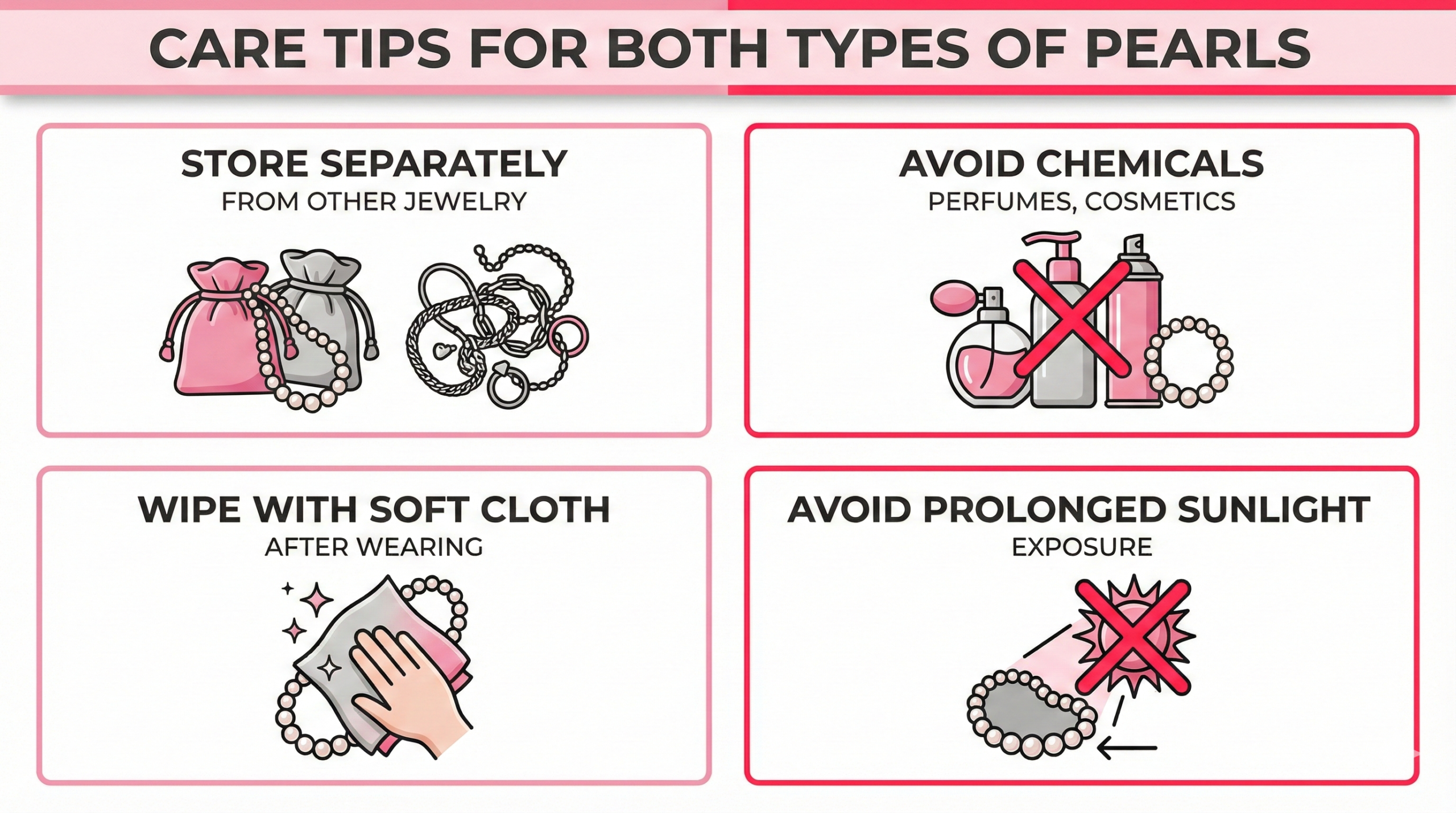
Regardless of type, pearls require gentle care.
- Store pearls separately from other jewelry
- Avoid chemicals, perfumes, and cosmetics
- Wipe with a soft cloth after wearing
- Avoid prolonged exposure to sunlight
Proper care ensures longevity whether you choose freshwater or saltwater pearls.
Myths About Freshwater vs Saltwater Pearls
Myth 1: Freshwater pearls are fake
Reality: Freshwater pearls are real cultured pearls with natural nacre.
Myth 2: Saltwater pearls are always better
Reality: Quality depends on grading, not just origin.
Myth 3: Freshwater pearls lack shine
Reality: High quality freshwater pearls can rival saltwater pearls in beauty.
Freshwater vs Saltwater Pearls: Which Should You Buy?
Your decision should depend on personal style, budget, and usage.
For everyday elegance and value, freshwater pearls are an excellent choice.
For classic luxury and investment jewelry, saltwater pearls remain unmatched.
Both types have their place in modern jewelry collections.
Frequently Asked Questions
1. Are freshwater pearls real pearls?
2. Why are saltwater pearls more expensive?
3. Can freshwater pearls be used in fine jewelry?
4. Which lasts longer freshwater or saltwater pearls?
Why Choose Eongems for Pearl Jewelry?
At Eongems, we combine traditional craftsmanship with modern manufacturing excellence to deliver high quality freshwater and saltwater pearl jewelry. From custom designs to bulk wholesale production, our team supports brands, retailers, and distributors worldwide with ethically sourced pearls, competitive pricing, and reliable export services.
Whether you are building a new collection or scaling an existing jewelry business, EonChamps helps you turn ideas into market ready pearl jewelry.
Final Thoughts on Freshwater vs Saltwater Pearls
The debate of freshwater vs saltwater pearls is not about which is superior, but which is right for your needs. Each type offers distinct advantages in beauty, durability, cost, and design flexibility.
Choosing the right pearl type is only part of the journey. Working with an experienced manufacturer ensures quality, consistency, and ethical sourcing. As a trusted pearls jewellery manufacturer, Eongems specializes in crafting premium freshwater and saltwater pearl jewelry for global brands, wholesalers, and designers.
By understanding the differences, buyers, designers, and jewelry brands can make informed decisions that enhance quality, value, and customer satisfaction.
Whether you prefer the affordability and versatility of freshwater pearls or the refined elegance of saltwater pearls, both remain timeless treasures that continue to define elegance in the world of jewelry.