Custom gemstone cutting is one of the most important services in modern jewelry manufacturing because it allows brands to move beyond standard catalog stones and create collections that are visually distinctive, technically consistent, and commercially scalable. For jewelry brands, retailers, designers, and wholesalers, custom cutting is not only about changing a gemstone’s outline. It is about controlling shape, millimeter size, matching, proportions, surface finish, and overall quality so the final stone fits the design exactly as intended. Trade and gemology sources consistently explain that gem cutting involves both the face up shape and the faceting style, with common cutting styles including brilliant, step, and mixed cuts.
In practical terms, a custom cut gemstone is made to fit a purpose. That purpose may be a signature ring collection, calibrated side stones for repeat manufacturing, unusual geometric earrings, or a custom center stone that standard market sizes cannot provide. The process starts long before the stone is polished. It begins with the design brief, the rough material, the intended setting style, and the exact measurements needed for production. Gem cutting references also note that standard gem sizes are closely tied to jewelry settings, which is why dimension accuracy matters so much in custom work.
For brands that want full manufacturing support around stones and finished jewelry, our gemstone manufacturer in Jaipur page is the most relevant starting point.
What is custom gemstone cutting
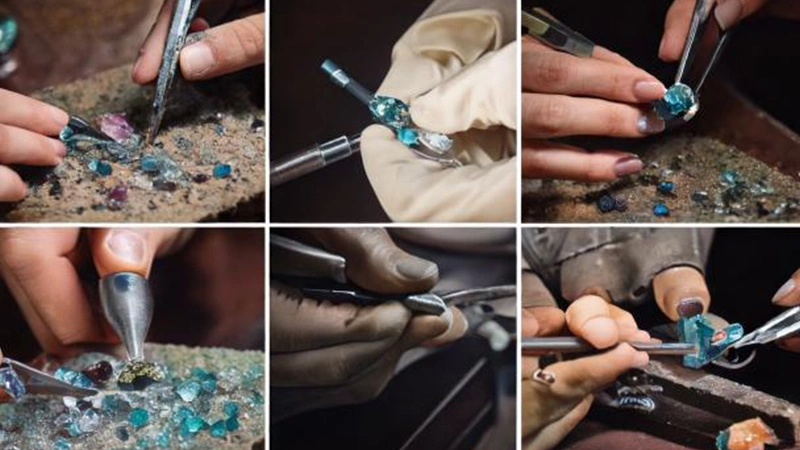
Custom gemstone cutting means shaping and finishing a gemstone to exact design requirements rather than choosing only from ready made market sizes and standard outlines. The request can be simple, such as producing an oval in a non standard size, or more advanced, such as creating calibrated hexagons, kites, shields, coffin cuts, matched pairs, or unusual freeform silhouettes.
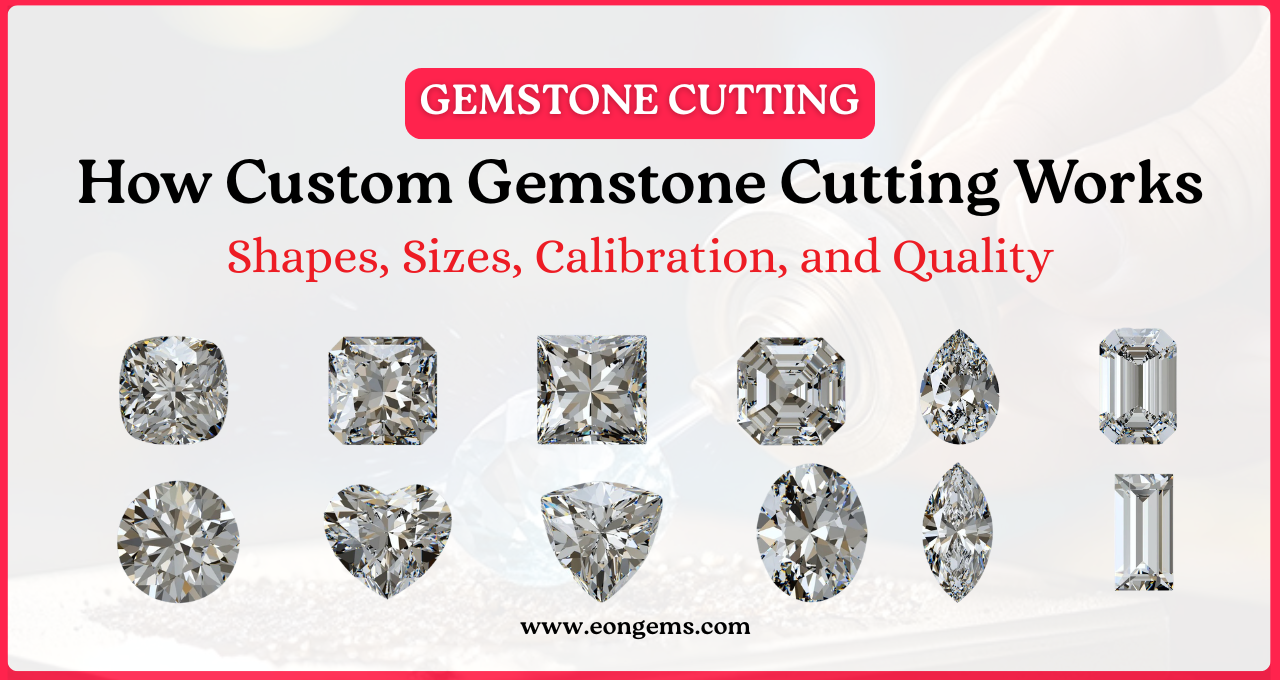
In the trade, cut language can refer to two connected things. One is the visible shape, such as round, oval, pear, emerald, cushion, hexagon, or trillion. The other is the faceting style, such as brilliant cut, step cut, or mixed cut. The International Gem Society explains this distinction clearly, noting that shape and faceting style work together to create the final appearance of the gemstone.
For jewelry brands, custom cutting is useful when they need:
- Signature shapes for a branded collection
- Exact millimeter sizes for existing settings
- Matching pairs or sets for earrings
- Stones calibrated for repeat production
- Better proportions for a specific design
- More control over visual identity
How the custom gemstone cutting process works
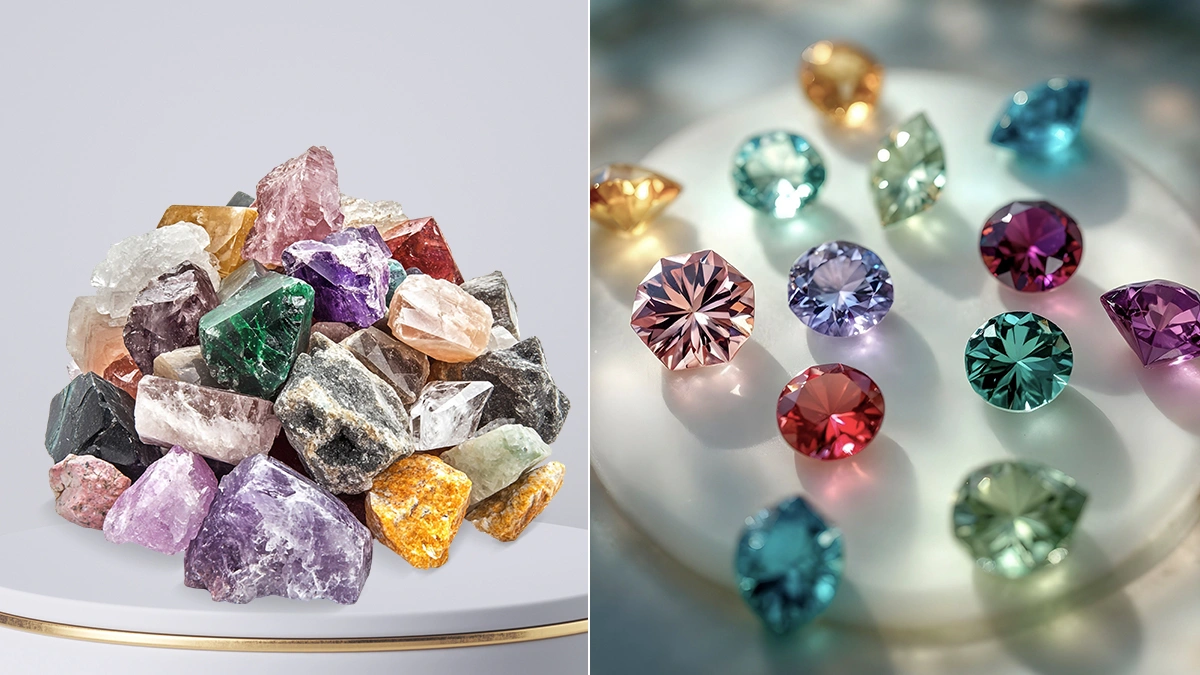
The process of custom gemstone cutting combines design, material selection, technical planning, shaping, faceting, polishing, and final quality control. While methods vary depending on the material and cut style, the overall workflow follows a practical sequence.
1. Understanding the design brief
Everything begins with the design requirement. A manufacturer needs to know what the stone is being cut for, what metal it will be set in, whether it is for a ring, pendant, or earring, and whether the design needs standard or custom proportions.
At this stage, brands usually define:
- Gemstone type
- Shape
- Exact dimensions in millimeters
- Quantity
- Matching requirements
- Faceting or cabochon preference
- Color and clarity expectations
- Jewelry application
This planning stage is essential because a stone cut for a ring may need different durability and proportion decisions than a stone cut for a pendant or earring.
2. Selecting the rough or preform material
Once the design is clear, the cutter selects suitable rough material or prepared preforms. The material has to be evaluated for color, clarity, inclusions, orientation, and yield potential. For colored stones, gemological studies emphasize that color is often the most important value factor, which means the cutter must plan around how the rough will face up after cutting.
At this stage, the cutter looks for:
- Best direction for color presentation
- Areas to avoid because of fractures or inclusions
- Potential size loss during shaping
- Feasibility of matching stones in larger orders
3. Preforming the shape
Preforming is the step where the rough starts to become the intended outline. The material is trimmed and shaped into a basic form before detailed faceting begins. This stage is critical because it determines how efficiently the stone can reach the final target dimensions.
If a brand requests custom shapes such as kite, shield, coffin, or hexagon, preforming has to be very accurate. Even small size deviations at this stage can create problems later in calibration and setting.
4. Faceting or cabochon shaping
After preforming, the cutter moves into the main finishing stage. Faceted stones are cut with planned facet arrangements, while cabochons are shaped with a domed or smooth surface rather than facets. The International Gem Society’s faceting guides explain that gemstone faceting follows a structured sequence and that faceting style influences light behavior and the final character of the gem.
This stage determines:
- Light performance
- Face up appearance
- Shape definition
- Symmetry
- Depth
- Girdle suitability for setting
5. Polishing and finishing
Once the stone has reached its planned form, it is polished to bring out luster, transparency, and crisp facet junctions. Polish is one of the recognized quality elements in cut assessment, especially in formal diamond cut grading and broader trade standards around finish quality. CIBJO diamond standards specifically identify polish, symmetry, and proportions as key cut related factors.
6. Final quality control
The last stage is inspection. The finished stone is checked for dimensions, symmetry, polish, shape consistency, and visual appearance. In calibrated production, every stone may also be checked against tolerance requirements to ensure it fits mountings or matches the rest of the lot.
If you want to see how this connects to finished jewelry production, our gemstone manufacturing process guide is a useful companion.
Shapes in custom gemstone cutting
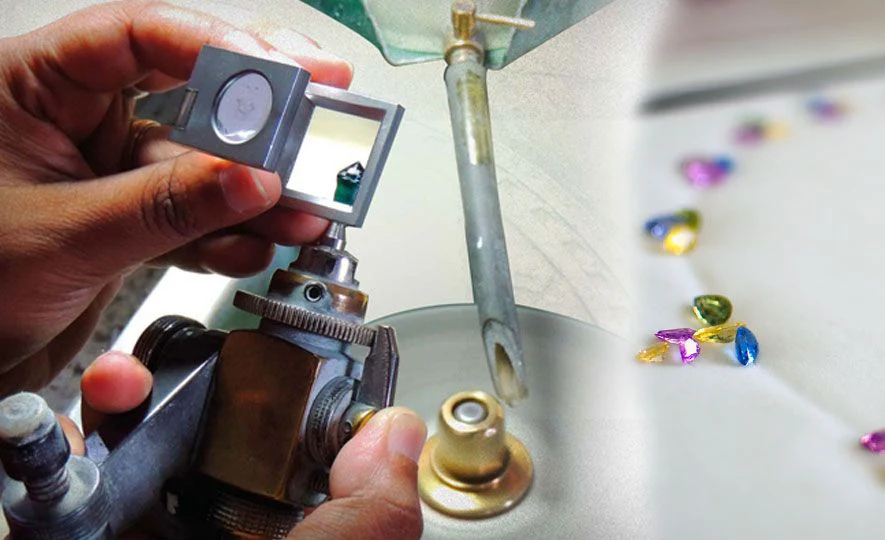
Shape is one of the most commercially important decisions in gemstone cutting because it affects style, setting method, yield, and consumer appeal. Some shapes are highly commercial and easy to merchandise. Others are more niche and brand defining.
Standard shapes
These are commonly requested in both natural and synthetic gemstones:
- Round
- Oval
- Pear
- Emerald
- Cushion
- Marquise
- Princess
- Heart
Fancy and custom shapes
These are increasingly popular for modern brands and signature lines:
- Hexagon
- Kite
- Coffin
- Shield
- Trillion
- Lozenge
- Freeform
- Custom geometric variations
Fancy shapes are especially useful for brands that want visual differentiation. They also work well in silver, vermeil, and custom design collections where silhouette becomes part of the brand language.
For shape focused inspiration, our article on custom shapes in synthetic gemstones explores many of these cutting directions in more detail.
Sizes in gemstone cutting
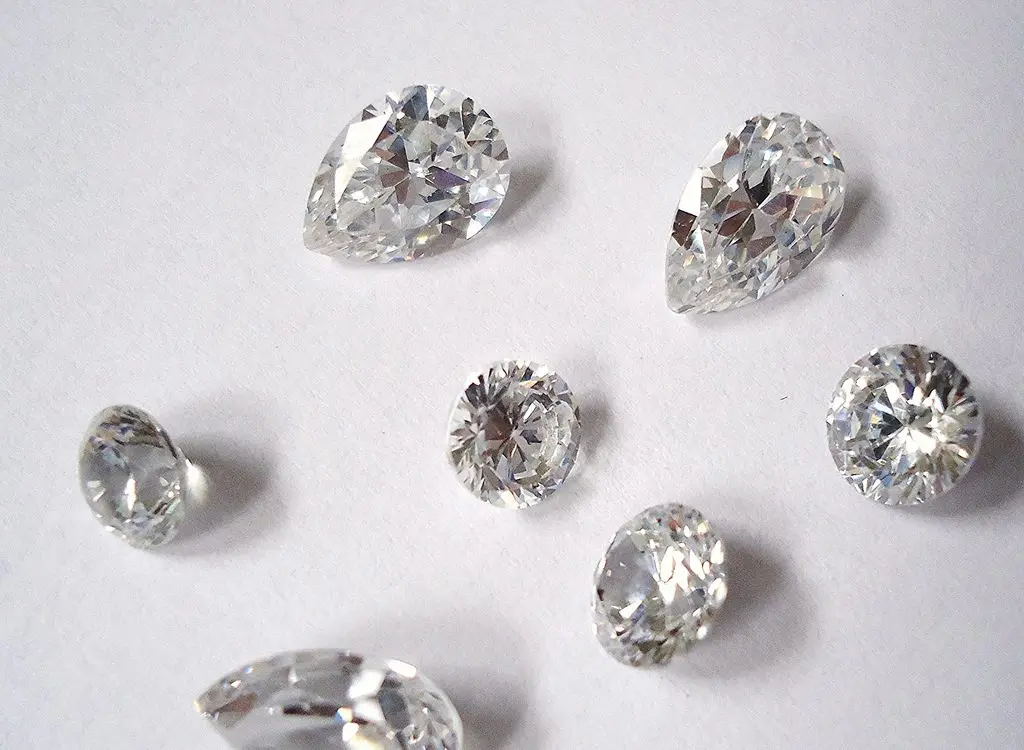
Gemstone sizes for jewelry manufacturing are usually discussed in millimeters rather than only in carats. This is because jewelry settings are built around physical dimensions, not weight alone. The International Gem Society’s standard gem size guide shows how jewelers rely on dimension based sizing to determine whether a stone will fit a mounting.
For example:
- An oval may be requested as 8 by 6 mm
- A pear may be requested as 7 by 5 mm
- A round may be requested as 4 mm
- A hexagon may be requested by width and height
- Custom shapes may need side length and depth specifications too
This is why brands should always define stones by exact dimensions, not only by approximate weight. Two stones with similar carat weight may look very different in face up size depending on proportions and shape.
Why millimeter sizing matters
- It ensures a stone fits the setting
- It helps standardize production
- It reduces mounting adjustments
- It improves reorder accuracy
- It supports better quality control
What gemstone calibration means
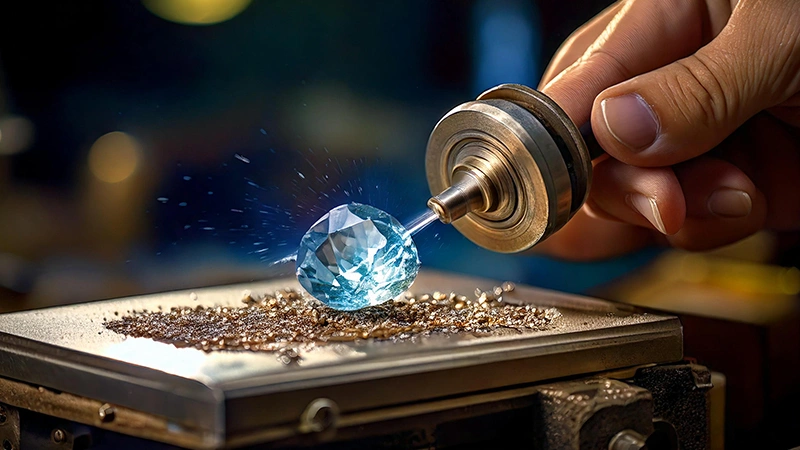
Calibration means cutting gemstones to standardized or precisely requested dimensions so they can fit specific settings and match one another consistently. In jewelry manufacturing, calibrated stones are essential because they simplify setting, reduce production time, and make repeat orders more efficient. The International Gem Society notes that standard size charts are used specifically to determine fit in settings, which is one of the clearest commercial reasons for calibration.
Calibration matters most in:
- Bulk production
- Matching earrings
- Tennis style jewelry
- Halo and cluster layouts
- Multi stone rings
- Repeat catalog designs
When calibration is poor, stones may not seat correctly, prongs may misalign, and manufacturing costs can rise because of extra adjustments.
Common calibration requirements
- Exact length and width
- Consistent depth range
- Matching girdle thickness
- Uniform outline shape
- Tolerance limits across lots
In higher precision work, even small millimeter differences can affect the finished piece.
Quality factors in custom gemstone cutting
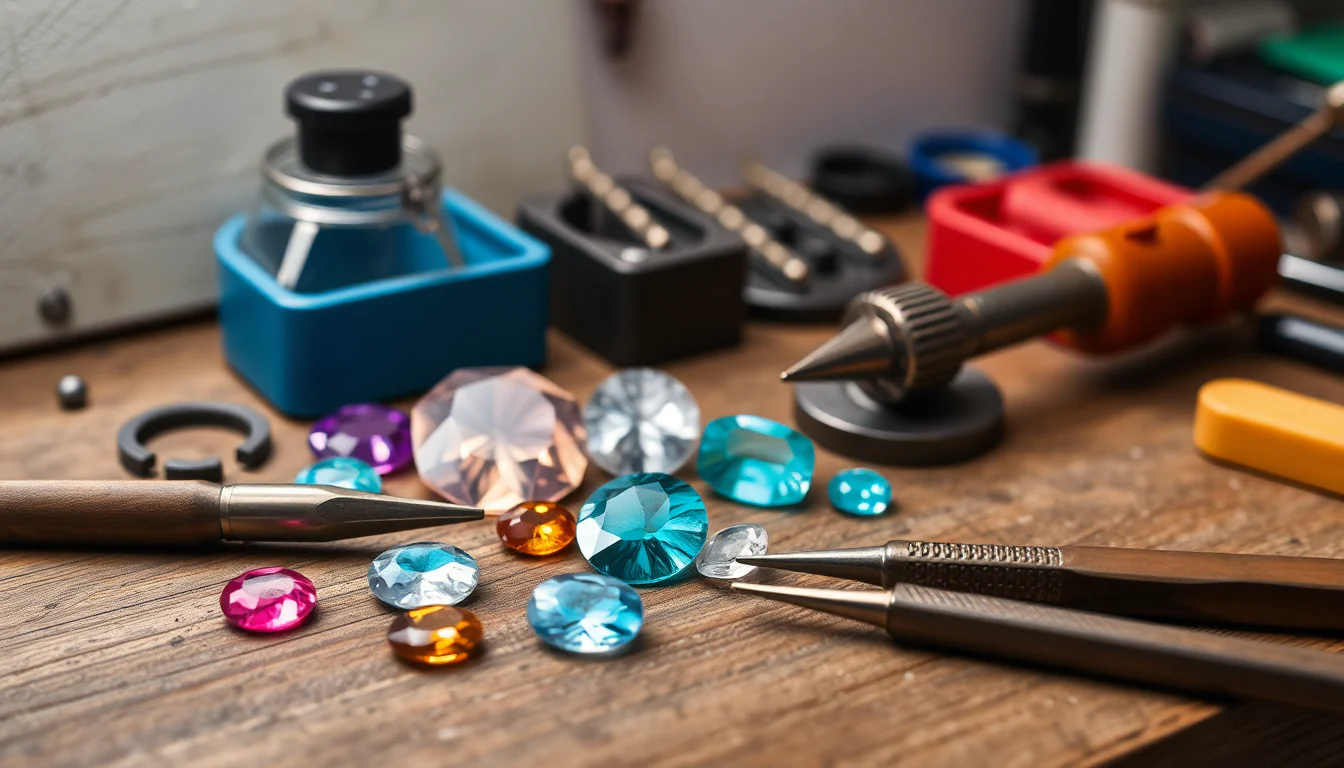
A custom cut gemstone is not judged only by shape. Quality depends on how well the final stone performs visually and practically. Gem grading and cut references consistently point to factors such as proportions, symmetry, polish, and overall presentation as important quality indicators.
Main quality factors to check
- Shape accuracy
The outline should match the requested design cleanly. - Symmetry
Both sides should balance correctly, especially in pairs and geometric cuts. - Polish
Surfaces and facets should be clean, bright, and well finished. - Proportions
The depth and overall structure should support both beauty and setting practicality. - Girdle quality
Girdle thickness matters because it affects durability and mounting fit. Lapidary guidance also notes that girdle thickness should be judged carefully with setting use in mind. - Facet meet points
In faceted stones, the junctions should appear crisp and controlled. - Face up appeal
The stone should look lively, balanced, and attractive when viewed from the top. - Matching quality
In sets or pairs, the stones should match in size, color, and visual feel.
Why custom cutting matters for jewelry brands
Custom gemstone cutting gives brands greater control over both design and production. It allows you to create jewelry that does not look like standard catalog inventory, while also helping you standardize quality across a line.
Key brand advantages include:
- Signature design language
- Better alignment with custom CAD models
- More control over retail positioning
- Ability to create exclusive collections
- Easier scaling when stones are properly calibrated
- Improved consistency across product categories
For brands that want to move from generic styles to stronger identity, custom cutting can become one of the most powerful product development tools.
If your goal is full custom manufacturing, our jewelry manufacturing process page explains how gemstone work ties into CAD, casting, setting, and finishing.
Common mistakes brands make when ordering custom cut gemstones
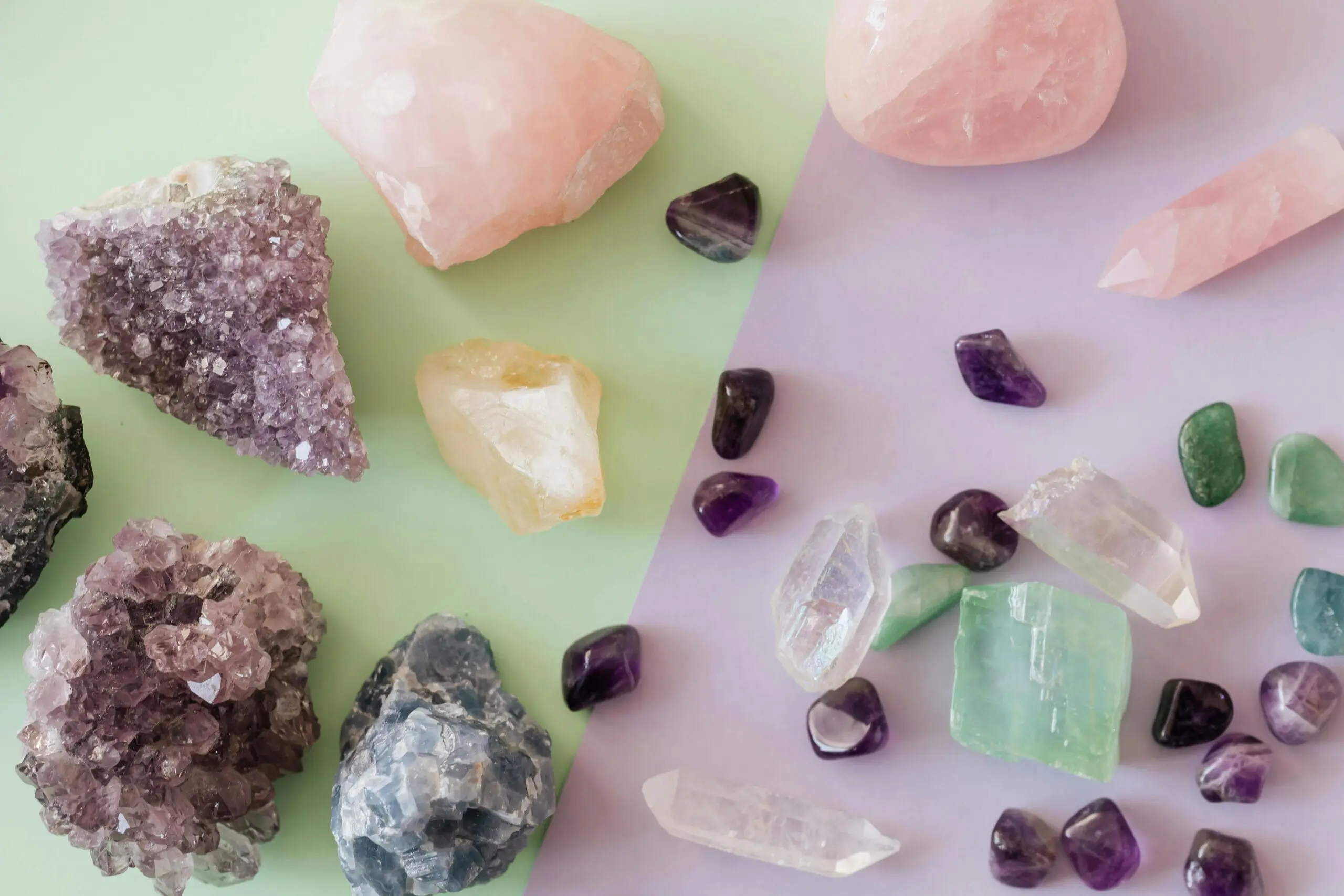
Many problems in gemstone production come from incomplete briefs rather than cutting skill. The more specific the order, the better the outcome.
Common mistakes include:
- Giving only carat targets instead of millimeter dimensions
- Not defining acceptable tolerance
- Ignoring depth and girdle needs
- Not clarifying whether matching pairs are required
- Choosing shapes without considering setting practicality
- Approving a sample without planning for reorder consistency
- Focusing only on outline and ignoring polish and symmetry
FAQs
1. What is custom gemstone cutting?
2. What is the difference between shape and cut style?
3. Why are gemstones measured in millimeters?
4. What does calibrated gemstone mean?
5. Why does girdle thickness matter in gemstone cutting?
6. What quality factors should brands check in custom cut gemstones?
7. Can custom cut gemstones be made in fancy shapes?
8. Why is custom gemstone cutting important for jewelry brands?
Final thoughts
Custom gemstone cutting is where design ambition meets manufacturing precision. It is not simply a decorative step. It is a technical process that determines whether a gemstone will fit the design, present the right color and proportions, match other stones, and perform well in production. For jewelry brands, the real value of custom cutting lies in control. You control the shape, the millimeter size, the calibration, and the final quality standard. Gemology and trade sources consistently show that cut style, proportions, symmetry, polish, and dimension accuracy all play a major role in the final result.
When brands understand how shapes, sizes, calibration, and quality work together, they make better sourcing decisions and build more consistent collections. Whether you are developing standard ovals, custom hexagons, matched pairs, or a full private label line, custom gemstone cutting gives you the precision needed to turn a concept into a repeatable commercial product.
If you want help with custom gemstone cutting, calibrated sizes, or complete jewelry production, explore our custom gemstone manufacturing services and our Contact Us page. You can also call us directly at +918769104410 for design and sourcing support.