Diamond grading is one of the most important subjects for retailers and jewelry brands to understand. It directly affects pricing, purchasing confidence, product positioning, customer education, and long term trust. When a diamond is graded correctly, retailers can describe it more accurately, compare stones more consistently, and build product ranges that align with both customer expectations and business margins. When grading is misunderstood, brands risk overpaying, under explaining, or creating confusion at the point of sale. GIA describes the 4Cs, color, clarity, cut, and carat weight, as the defining characteristics of every diamond and the global standard for communicating diamond quality.
For jewelry businesses, diamond grading is not only a technical gemology topic. It is also a commercial tool and helps buyers assess whether a stone suits bridal jewelry, fashion fine jewelry, daily wear pieces, or a premium statement collection. It helps merchandisers decide where to invest, and it gives sales teams a clear language for discussing quality with customers. A grading report also adds a structured basis for comparison by documenting the 4Cs and, in GIA’s case, additional details such as proportions, finish, and a plotted diagram of clarity characteristics.
If your brand works with custom production or diamond set jewelry, it helps to understand how grading fits into the broader jewelry manufacturing process before choosing stones for a collection.
What is diamond grading?
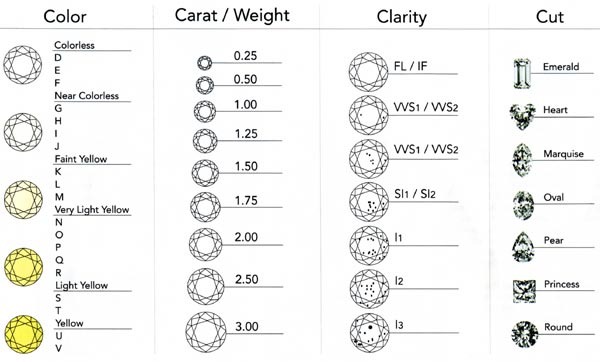
Diamond grading is the process of evaluating a diamond’s quality using recognized criteria. In the modern trade, the most widely recognized framework is the 4Cs, color, clarity, cut, and carat weight. This system was developed by GIA to create a universal language for describing diamond quality, helping buyers and sellers compare diamonds more accurately across markets.
For retailers and jewelry brands, this common grading language matters because no two diamonds are exactly alike. Even stones that appear similar at first glance can differ significantly in brilliance, inclusions, body color, proportions, and pricing. Grading reduces guesswork and allows more transparent buying decisions.
In practical business terms, diamond grading helps with:
- Product pricing
- Inventory segmentation
- Customer communication
- Sourcing consistency
- Vendor comparison
- Quality assurance
- Premium and entry level assortment planning
Why diamond grading matters for retailers and brands
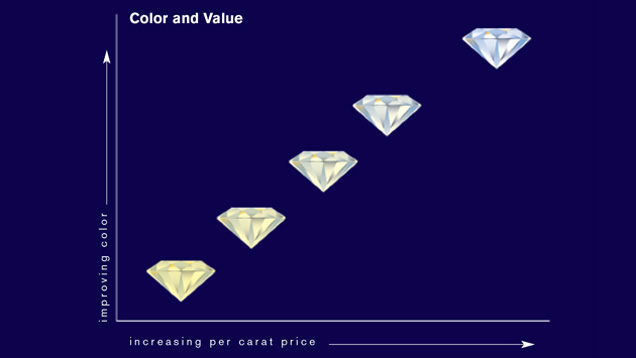
Retailers do not just sell diamonds. They sell confidence. The customer wants to know why one stone costs more than another, what quality level they are buying, and whether the product description is trustworthy. Brands that understand grading can answer those questions with clarity instead of vague sales language.
Diamond grading is especially important for:
- Bridal and engagement collections
- Fine jewelry lines
- Diamond accented silver and gold jewelry
- Private label manufacturing
- Ecommerce product listings
- Wholesale buying and resale
It also helps avoid a common business mistake, buying diamonds only by carat weight without fully evaluating cut, clarity, and color. A larger diamond is not always the better commercial choice. In many cases, cut quality and overall face up appearance matter more to the customer than size alone.
If your sourcing includes both natural and alternative options, our article on natural diamonds vs lab grown diamonds can help frame the broader buying decision.
The 4Cs of diamond grading explained
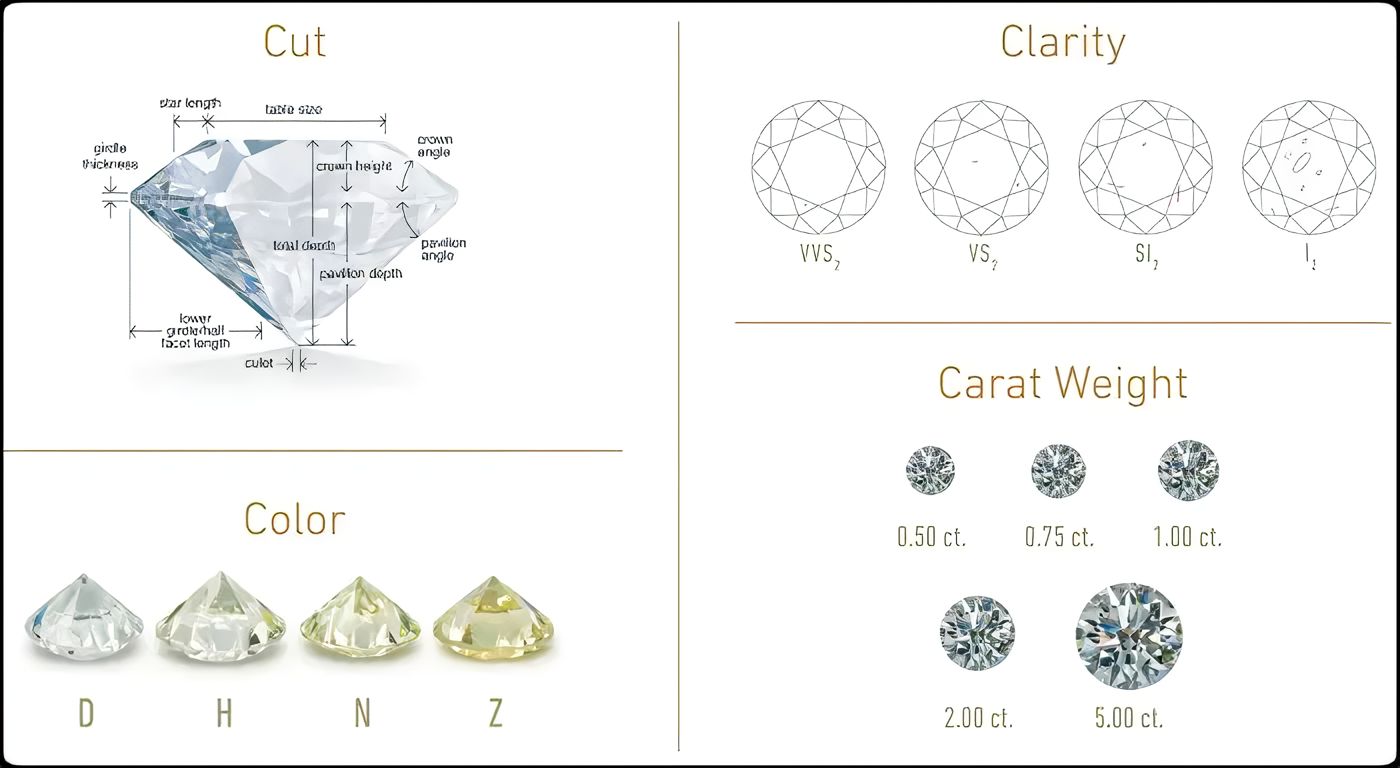
The 4Cs are the foundation of diamond grading. Each C affects how the diamond looks, how it performs in jewelry, and how it is priced.
1. Carat weight
Carat weight refers to how much a diamond weighs, not how large it looks. GIA includes carat weight as one of the 4Cs, and it is one of the easiest grading factors for customers to recognize. However, it should never be viewed in isolation. Two diamonds of the same carat weight can look different in size depending on cut proportions, and can differ greatly in value depending on color and clarity.
For retailers, carat weight matters because it affects:
- Pricing brackets
- Consumer expectations
- Product category positioning
- Inventory depth by size range
A smart merchandising approach is to compare carat weight together with cut and face up beauty, not as a single value marker.
2. Color
Diamond color grading for the standard colorless to light yellow or brown range uses GIA’s D to Z scale. D represents colorless, and the scale moves progressively toward more visible color as it approaches Z. GIA states that this scale is the industry standard and that grading is performed by comparing diamonds to stones of known color under controlled conditions.
For brands, color affects both the look of the stone and the final feel of the jewelry. Colorless and near colorless diamonds are often preferred for classic engagement jewelry and high clarity fine jewelry. Slightly warmer diamonds may still work beautifully in certain settings, especially when paired with yellow gold or when cost control is important.
Retail considerations for color:
- Higher color grades usually carry stronger premium positioning
- Near colorless grades can offer a strong value balance
- Mounting color can affect how body color is perceived
- Online listings should describe color honestly and clearly
3. Clarity
Clarity measures the presence of internal features called inclusions and external features called blemishes. GIA evaluates clarity under 10 times magnification and grades diamonds based on the size, number, nature, relief, and position of those characteristics. The GIA clarity scale includes 11 grades, ranging from Flawless to Included, with many diamonds falling into the VS and SI categories.
For retailers, clarity is important, but it needs to be handled carefully in customer communication. Many inclusions are not visible to the naked eye, which means a lower clarity grade may still look clean in everyday viewing. This creates a valuable opportunity for brands to offer stones that present well visually without pushing the customer into unnecessarily expensive grades.
Clarity is useful for:
- Matching price points to visual expectations
- Planning center stone and accent stone categories
- Creating value driven assortments
- Explaining quality differences with credibility
4. Cut
Cut is one of the most important factors in how a diamond handles light. GIA’s cut grading system for standard round brilliant diamonds evaluates how effectively the stone interacts with light and assigns grades from Excellent to Poor. Cut has a major impact on brilliance, fire, scintillation, and overall visual life.
This is often the most underappreciated C in retail selling. Customers may focus first on carat and clarity, but cut is what often creates the sparkle that makes a diamond feel impressive in person. A well cut diamond can appear brighter and more attractive than a larger stone with weaker proportions.
For jewelry brands, cut matters because:
- It strongly influences customer perception
- It affects face up appearance
- It helps determine how luxurious the finished piece feels
- It can improve the visual impact of moderate color and clarity grades
What a diamond grading report tells you

A diamond grading report gives the retailer and the buyer a structured record of the stone’s assessed quality. GIA says its Diamond Grading Report for natural diamonds uses recognized standards to record shape, color, clarity, cut, and carat weight, along with proportions, finish, treatments, and a plotted diagram of characteristics.
For retailers and jewelry brands, a report helps with:
- Comparing diamonds across suppliers
- Supporting product descriptions
- Training sales staff
- Building customer trust
- Managing higher value inventory
When reading a report, do not stop at the headline grades. Look at the full picture, including proportions, polish, symmetry, fluorescence if listed, and how the combination of all features supports the intended jewelry design.
If diamonds are part of a larger sourcing strategy, our diamonds supplier and wholesaler page can help connect grading requirements with production needs.
How retailers should use grading in buying decisions
Diamond grading is most useful when it is applied practically. The best diamond for a retailer is not always the highest grade stone. It is the stone that best fits the category, target customer, setting style, and price position.
For bridal and engagement jewelry
Customers in this category usually want a strong story around quality and trust. Cut and face up appearance often matter most, followed by color and clarity depending on budget.
For diamond accent jewelry
Smaller stones are often bought in calibrated lots, and consistency becomes more important than individual premium grades. Matching look and reliable supply may matter more than pushing every stone to top grades.
For ecommerce brands
Clear grading language helps reduce hesitation. Product listings should explain what customers are getting in understandable terms rather than only technical jargon.
For private label and wholesale
Grading helps standardize buying and reduce subjective decision making. It creates better communication between brand, manufacturer, and supplier.
Common grading mistakes jewelry businesses make
Many retailers and brands lose margin or clarity because they misread grading priorities. Here are some of the most common mistakes:
- Focusing only on carat weight
- Treating all clarity grades as equally visible
- Ignoring cut quality
- Overbuying premium grades where the customer cannot see the difference
- Under explaining grading in product pages and sales conversations
- Assuming all grading terminology is interchangeable across reports
The smartest buying strategy is to choose quality levels based on actual collection goals, not only on top grade aspirations.
If your team is also choosing manufacturing partners, our guide on how to select a perfect jewellery manufacturer can help you align sourcing and production decisions.
Diamond grading and truthful marketing
Retailers and brands should also remember that grading language must be paired with honest disclosure. The FTC’s Jewelry Guides emphasize that jewelry advertising claims must be truthful and non deceptive, and that marketers should disclose material information clearly. The FTC has also highlighted the need for clear, conspicuous disclosure for non mined diamonds and treatments where relevant.
This matters for:
- Product descriptions
- Website listings
- Sales scripts
- Marketplace feeds
- Social media promotions
Accurate grading information is not just about technical credibility. It is also about legal and commercial trust.
How to explain diamond grading to customers without confusing them
The best retail communication translates grading into real customer value. Instead of only listing letters and abbreviations, explain what the grade means in visual and practical terms.
A stronger selling approach includes:
- Explain sparkle through cut
- Explain size through carat, but compare visual appearance too
- Explain clarity in terms of visible impact, not only lab language
- Explain color in a way that relates to how white or warm the stone appears
- Connect grading to the finished jewelry design
This makes the conversation more customer friendly and improves confidence at the point of sale.
FAQs
1. What are the 4Cs of diamond grading?
2. Which C matters most in a diamond?
3. Does a higher carat diamond always look better?
4. Are clarity inclusions always visible to the eye?
5. What is the diamond color scale?
6. Why is a grading report important for retailers?
7. Should jewelry brands disclose diamond details clearly in marketing?
8. Can retailers use different grading combinations for different collections?
Final thoughts
Diamond grading is not only a laboratory system. For retailers and jewelry brands, it is a core business tool. It helps you price accurately, buy with confidence, train teams better, and communicate product quality in a way customers can trust. The 4Cs, color, clarity, cut, and carat weight, remain the most recognized framework for understanding diamond quality, but the real skill lies in applying them wisely to different product categories and buyer expectations.
The most successful jewelry businesses are not always the ones that buy the highest grades. They are the ones that buy the right grades for the right collection. A well chosen diamond can deliver beauty, value, and strong retail performance even without chasing the most extreme specifications. When brands understand grading properly, they build better assortments, stronger trust, and more sustainable margins.
If you want help sourcing diamonds for retail collections, bridal jewelry, or custom manufacturing, explore our diamond sourcing services. For tailored guidance, pricing, or production support, visit our Contact Us or call +91 8769104410.