Synthetic gemstones or Lab Grown gemstones have become an important part of modern jewelry manufacturing. For jewelry brands, they are no longer seen only as low cost substitutes. Today, they are a practical option for product development, custom design, calibrated production, color consistency, and large scale collection planning. As more brands balance creativity, pricing, and repeatability, synthetic gemstones offer a valuable route for building commercially strong jewelry lines.
In simple terms, synthetic gemstones are laboratory created gem materials. In many cases, they have essentially the same chemical, optical, and physical properties as their natural counterparts. This is different from imitation stones, which may only look similar without matching the same internal composition. Gemological authorities such as GIA and the International Gem Society make this distinction very clearly, and that difference matters a lot for jewelry brands, wholesalers, and private label buyers.
For brands, the real conversation is not whether synthetic gemstones are real enough. The real question is whether they are right for a specific product category, target price point, and customer segment. In some collections, they are the smartest choice. In others, natural gemstones may still carry stronger emotional or luxury value. The best decision comes from understanding the benefits, limits, and use cases in a practical way.
If you are exploring production options more broadly, you can begin with our jewelry manufacturing services to see how gemstone selection fits into complete collection development.
What are synthetic gemstones?
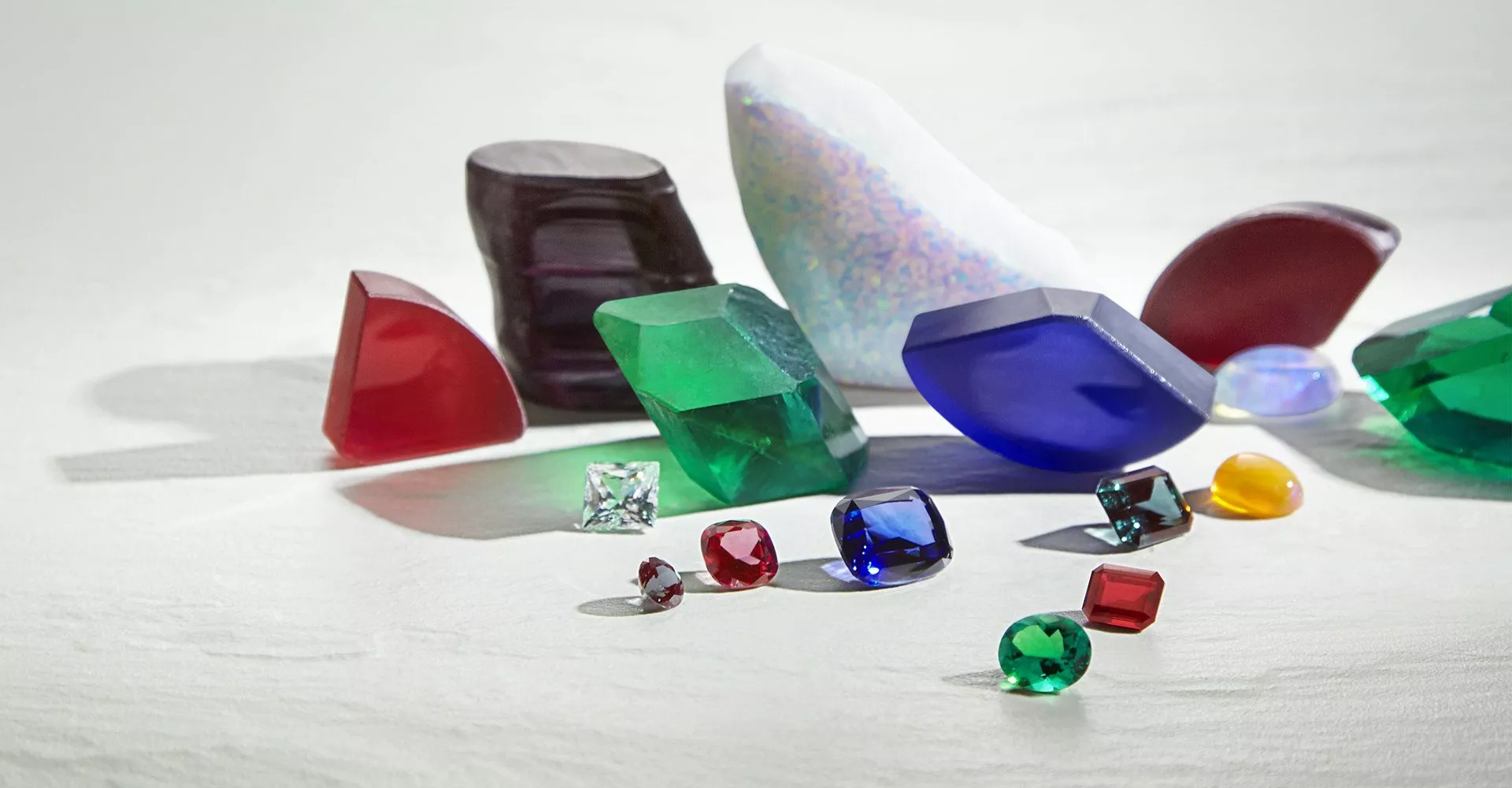
Synthetic gemstones are lab created stones produced under controlled conditions to replicate naturally occurring gem materials. GIA explains that many gemstone varieties besides diamond can be synthesized, and trade education sources also note that synthetic stones may share the same key properties as the natural gem they represent. This is why proper disclosure is essential in the jewelry trade.
For jewelry brands, this means synthetic gemstones can offer a more controlled material choice for certain designs and production models. They are especially useful when a brand needs:
- Consistent color across multiple pieces
- Predictable clarity and appearance
- Matching stones for earrings and sets
- Calibrated sizes for production
- Repeat orders with similar visual output
- Wider creative freedom in custom cuts
The terminology used in marketing also matters. The FTC says gemstone descriptions must be accurate and non deceptive, and it specifically discusses the need for clear disclosure terms such as laboratory grown, laboratory created, or synthetic immediately linked to the gemstone name where appropriate.
Why jewelry brands are using synthetic gemstones more often
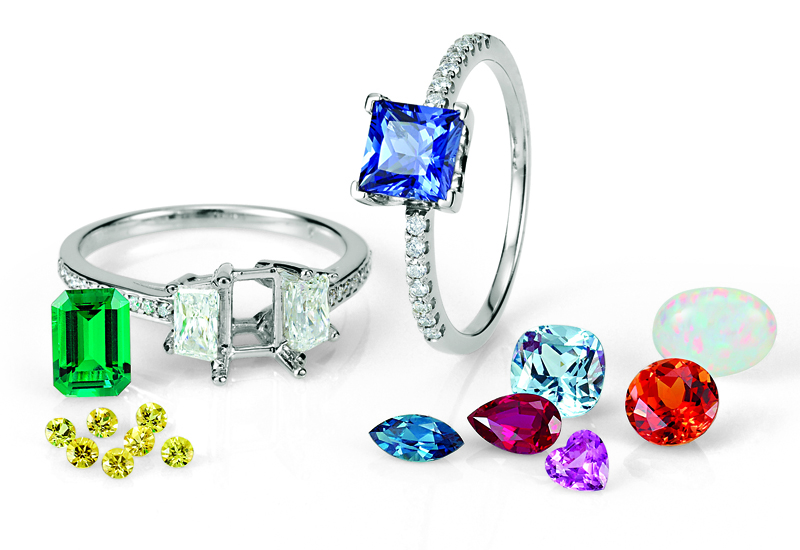
The rise of synthetic gemstones is closely tied to how modern jewelry businesses operate. Many brands today work across multiple launch cycles, test new styles quickly, and need materials that support design consistency without pushing every product into a high price bracket. Synthetic gemstones help solve several of those business challenges.
They are especially relevant for:
- Private label jewelry brands
- Fashion and demi fine collections
- Custom design businesses
- Silver and vermeil jewelry lines
- Brands that need many color options
- Product ranges built around geometric or custom cuts
One of the biggest advantages is predictability. Natural gemstones can vary widely in color, clarity, and availability, even within the same species. Synthetic options often make it easier to achieve a cleaner, more repeatable collection. That does not automatically make them better, but it does make them very practical in certain categories.
If your brand is focused on non natural options for larger scale production, our substitute gemstones page can help you compare available directions.
Main benefits of synthetic gemstones for jewelry brands
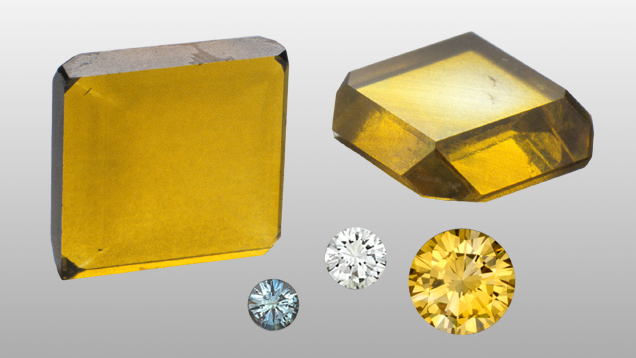
Synthetic gemstones can support both design and business goals. Their advantages go beyond price alone.
1. Better consistency
One of the biggest reasons brands choose synthetic stones is consistency. When you are building a line with repeated SKUs, matching pairs, or calibrated layouts, consistency matters more than theory. Synthetic gemstones often help maintain a more uniform result across:
- Color tone
- Clarity appearance
- Size and calibration
- Matching sets
- Shape accuracy
This becomes very valuable in earrings, tennis inspired styles, cluster settings, and repeatable catalog designs.
2. More control in custom design
Synthetic gemstones are often easier to plan for custom shapes, geometric cuts, and precise dimensions. That makes them especially useful for brands creating modern collections with specific design language.
They work very well for:
- Kite cuts
- Coffin cuts
- Hexagon cuts
- Shield cuts
- Trillion and lozenge cuts
- Matching side stones
If custom silhouettes are part of your collection strategy, our guide on custom shapes in synthetic gemstones connects directly with this topic.
3. Better pricing flexibility
For many jewelry brands, product pricing needs to stay within a workable retail range. Synthetic gemstones often make that easier. They allow brands to create visually rich products without tying up too much capital in raw material cost.
This is useful for:
- Entry premium collections
- Fashion forward launches
- Giftable jewelry lines
- Seasonal color collections
- Trial capsules and limited drops
4. Easier scaling for repeat orders
A beautiful sample is not enough if it cannot be repeated. One of the practical strengths of synthetic gemstones is the ability to support ongoing manufacturing with better repeatability than many natural stones.
That helps with:
- Reorders
- Wholesale supply
- Marketplace consistency
- Catalog based selling
- Long running best sellers
5. Wide color and shape possibilities
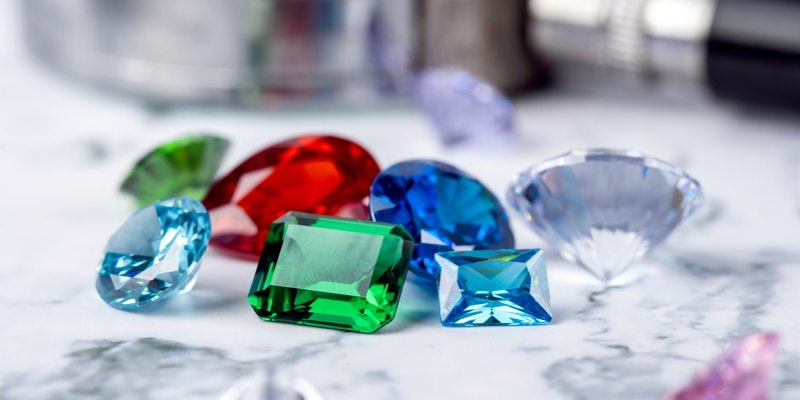
Synthetic gemstones can be created in a broad color range, often with strong visual consistency. That opens design opportunities for brands building collections around mood, palette, season, or merchandising themes.
Limits of synthetic gemstones that brands should understand
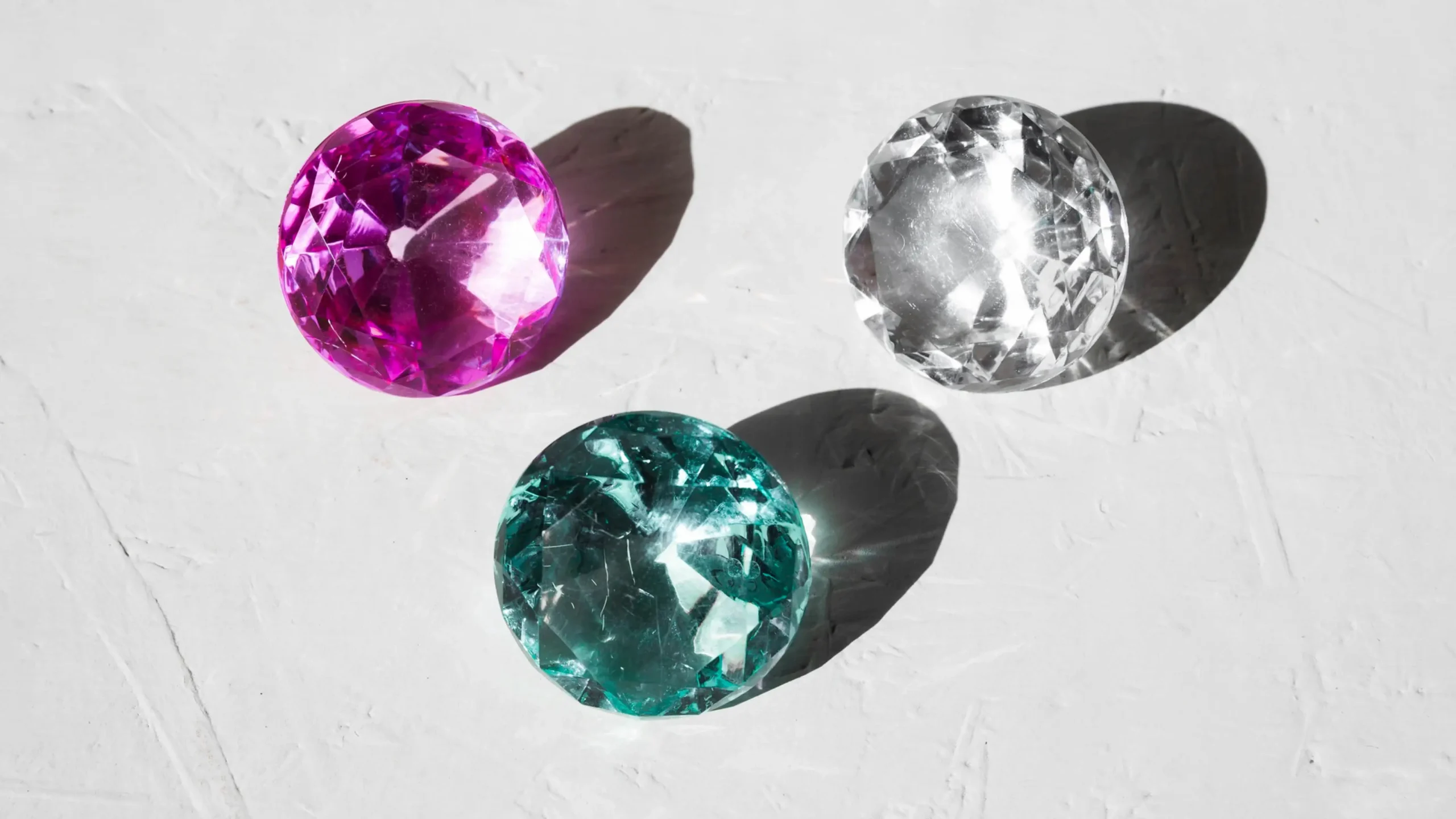
Synthetic gemstones are useful, but they are not the perfect answer for every jewelry line. Smart brands also understand their limitations before building a collection around them.
1. They may not fit a natural luxury narrative
For high heritage, heirloom, or rarity focused brands, natural gemstones still carry a stronger emotional and prestige driven story. Customers who value geological origin, rarity, and collectibility may not view synthetic materials the same way.
This matters especially in:
- High value fine jewelry
- Investment oriented pieces
- Bridal categories with strong tradition
- Collector focused gemstone jewelry
2. Disclosure must be clear
The FTC emphasizes accurate product descriptions, and trade standards also support consistent naming for synthetic materials. This means brands must market synthetic gemstones honestly and never blur the line between natural, synthetic, and imitation products.
Good practice includes:
- Naming the stone accurately
- Using terms such as laboratory grown or synthetic where appropriate
- Avoiding misleading natural claims
- Training sales teams and resellers clearly
3. Some buyers still misunderstand the category
Even when a synthetic gemstone is beautiful and properly disclosed, some customers may still incorrectly assume it is fake, low quality, or purely costume. That is a positioning challenge brands must manage through product storytelling and education.
4. Not every collection needs them
Some designs actually benefit from the natural character of inclusions, variation, and slight uniqueness. If your brand identity depends on organic individuality, a perfectly uniform synthetic stone may not deliver the same visual emotion.
Best use cases for synthetic gemstones in jewelry collections
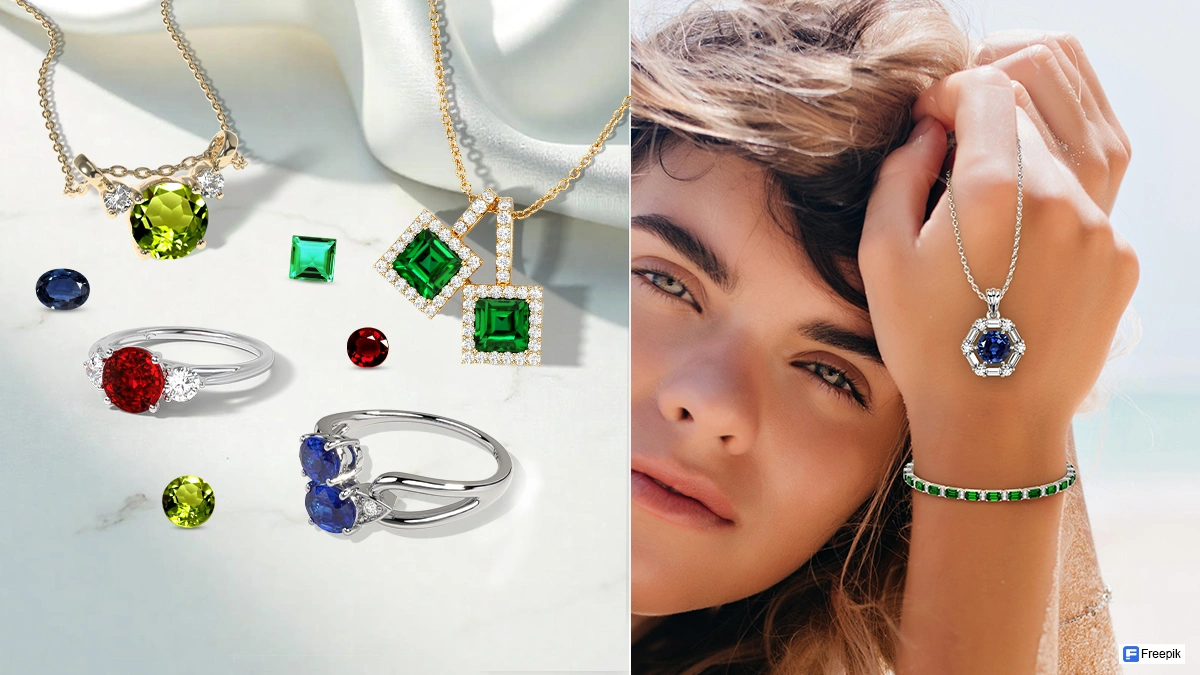
Synthetic gemstones are at their best when a brand needs high visual impact, repeatability, and strong design flexibility.
Best use cases include:
- Fashion jewelry collections
These need style variety, color consistency, and commercial pricing. - Demi fine jewelry
Synthetic stones work very well in silver and vermeil designs aimed at accessible luxury. - Geometric and custom cut collections
Fancy shapes are often easier to standardize in synthetic material. - Private label development
Brands that need controlled production across multiple SKUs benefit from consistency. - Trend driven launches
When speed and variety matter, synthetic gemstones can support faster development. - Color story based collections
If your catalog is built around pink, green, blue, lavender, or multicolor themes, synthetics offer practical flexibility. - Jewelry lines for ecommerce
Online selling benefits from repeatable appearance and more consistent product imagery.
For brands that also work with natural stones, it helps to compare them in the right context. Our article on precious vs semi precious gemstones gives a useful broader framework for collection planning.
When natural gemstones may still be the better option
Synthetic gemstones are not meant to replace all natural stones. In fact, many successful brands use both, depending on category and price architecture.
Natural gemstones may still be the better choice when:
- The customer expects geological rarity
- The product is marketed as premium heritage jewelry
- The collection depends on origin storytelling
- The brand wants one of a kind visual variation
- Certification and natural value are central to the sale
The most commercially smart brands do not argue about which category is universally better. They decide which one fits the purpose of the product.
How to choose whether synthetic gemstones fit your brand
Before choosing synthetic stones for a collection, ask practical business questions.
Questions brands should ask:
- What is the target retail price of the line
- Is consistency more important than natural variation
- Do you need repeat orders in matching quality
- Is the collection trend driven or heritage driven
- Will the customer value custom shape and color more than natural rarity
- Does the design require calibrated stones
- Is the collection built for silver, vermeil, or gold
If your team is developing new products from scratch, our jewelry manufacturing process guide explains how gemstone decisions affect the full production cycle.
Practical buying tips for jewelry brands
If you plan to source synthetic gemstones, treat them with the same discipline you would apply to any production material.
Here is what to confirm before ordering:
- Exact stone identity
- Disclosure language for labeling and marketing
- Color reference and tolerance
- Dimensions and calibration
- Shape consistency
- Quantity and matching requirements
- Intended setting type
- Reorder feasibility
- Quality control process
- Packaging and shipment standards
Also remember that CIBJO and FTC guidance both support accurate nomenclature and transparent communication in the jewelry trade. Brands that get this right build stronger trust with both wholesale buyers and retail customers.
FAQs
1. Are synthetic gemstones real gemstones?
2. Are synthetic gemstones good for jewelry brands?
3. What is the main benefit of synthetic gemstones in manufacturing?
4. What is the biggest limit of synthetic gemstones?
5. Can synthetic gemstones be used in fine looking jewelry?
6. Do brands need to disclose synthetic gemstones clearly?
7. Which jewelry categories are best for synthetic gemstones?
8. Can synthetic gemstones be cut into custom shapes?
Final thoughts
Synthetic gemstones give jewelry brands a highly practical material option for many modern collections. Their biggest strengths are consistency, scalability, custom shape potential, color control, and more flexible pricing. For private label brands, wholesalers, and fashion forward designers, these benefits can translate directly into smoother production and stronger commercial performance.
At the same time, synthetic gemstones are not a universal replacement for natural stones. Their success depends on the product category, target customer, and the honesty of your brand positioning. Used thoughtfully, they can be excellent for silver, vermeil, custom cut, and trend based jewelry lines. Used carelessly, without clear disclosure or strategic fit, they can weaken customer trust. The best outcome comes when brands choose synthetic gemstones not as a shortcut, but as the right material for the right collection.
If you want expert help choosing the right synthetic stones for your next collection, explore our synthetic gemstone solutions. For product development, custom cutting, or full jewelry manufacturing support, visit our Contact Us page or call +91 8769104410.