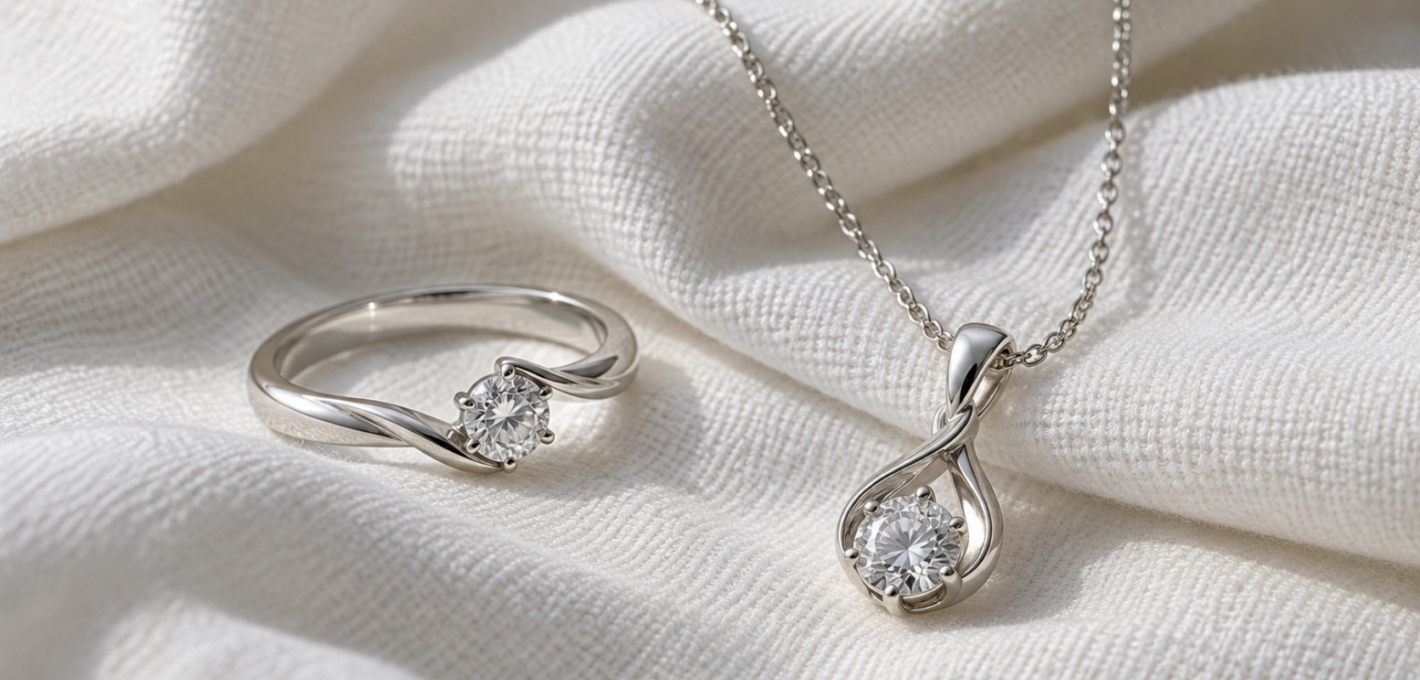
Not everything that looks like silver is real silver.
The jewelry market is full of silver-colored pieces made from stainless steel, plated brass, nickel alloys and zinc-based metals. At first glance, all of them can pass for genuine 925 sterling silver. Whether you are a shopper buying a single ring or a brand sourcing hundreds of pieces, knowing how to verify silver protects your money and your reputation.
At Eon Gems, we are Jaipur-based 925 sterling silver jewelry manufacturers with 36+ years of experience. This guide covers every method for identifying genuine 925 silver, from quick visual checks to professional verification. Individual buyers will find the home tests most useful, while wholesale buyers should jump to the section on verifying silver at scale.
What Is Genuine 925 Sterling Silver?
Genuine 925 sterling silver is an alloy of 92.5% pure silver and 7.5% other metals, usually copper. That small addition of copper gives the metal the strength needed for wearable jewelry, since pure silver alone is too soft for everyday use.
The “925” stamp is the standard hallmark for sterling silver. In the UK, hallmarking is a legal requirement for most silver items above a minimum weight. In many other markets, including the USA and EU, a piece sold as “sterling silver” must genuinely meet the 92.5% standard, and the stamp is how buyers expect to see that promise.
With that in mind, three things help you identify the real thing: the hallmark, the physical properties of the metal, and how it behaves under specific tests.
Method 1: Look for the 925 Hallmark
The fastest way to identify sterling silver is to look for the hallmark stamp.
Where to Find the Hallmark
Genuine pieces carry the stamp in a discreet but accessible spot:
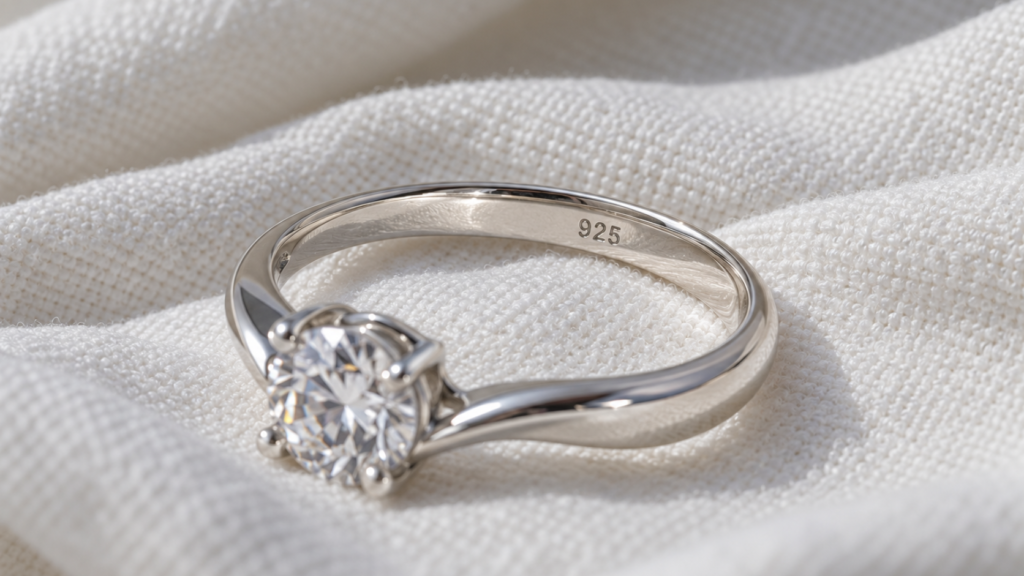
- Rings: inside the band
- Necklaces and chains: on the clasp or a small tag near it
- Bracelets and bangles: on the inner surface or the clasp
- Earrings: on the post or the earring back
- Pendants: on the bail, the loop that connects the pendant to the chain
What the Hallmark Looks Like
Genuine hallmarks read “925,” “S925,” “Sterling,” or “Ster.” The stamp is tiny, so a loupe or magnifying glass often helps. It should be engraved or laser-etched into the metal, not printed on or applied as a label.
What to Watch For
Some counterfeit pieces carry fake “925” stamps on non-silver metal. For this reason, the hallmark alone is not enough for high-value purchases. Treat it as one check among several.
Method 2: The Magnet Test
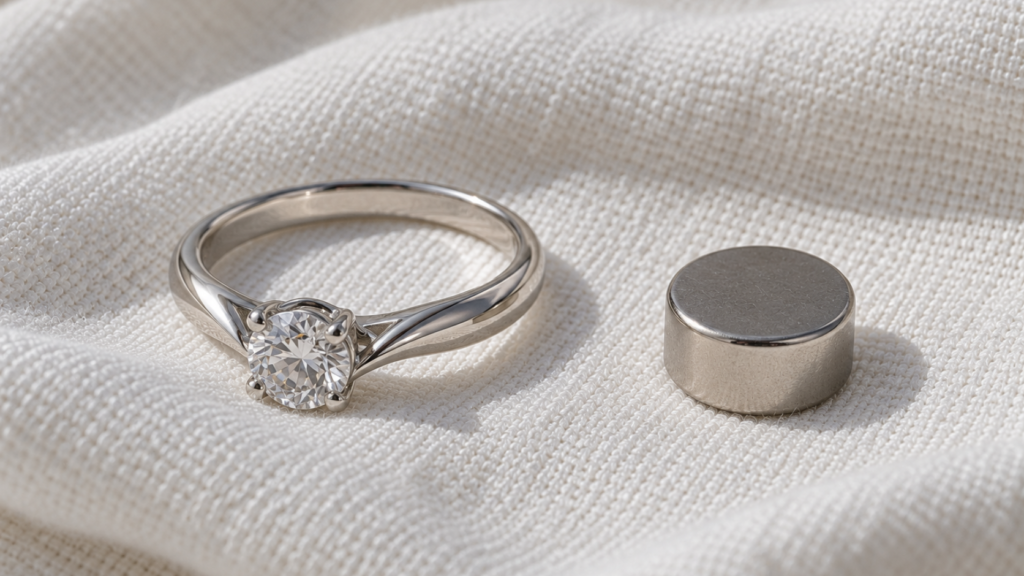
Silver is not magnetic, which makes the magnet test one of the quickest checks available.
How to Perform the Magnet Test
Hold a strong magnet, ideally a neodymium one, close to the piece. Genuine sterling silver shows no attraction.
What the Results Mean
If the piece sticks firmly to the magnet, it contains iron or steel and is definitely not sterling silver. If nothing happens, the piece could still be silver, but it could also be brass, copper or a zinc alloy. A faint pull on an otherwise genuine piece usually comes from a steel clasp spring or finding, not from the silver itself.
Important Limitation
The magnet test only rules out iron and steel-based fakes. Non-magnetic base metals pass it easily, so a piece that passes still needs further verification.
Method 3: The Temperature Test
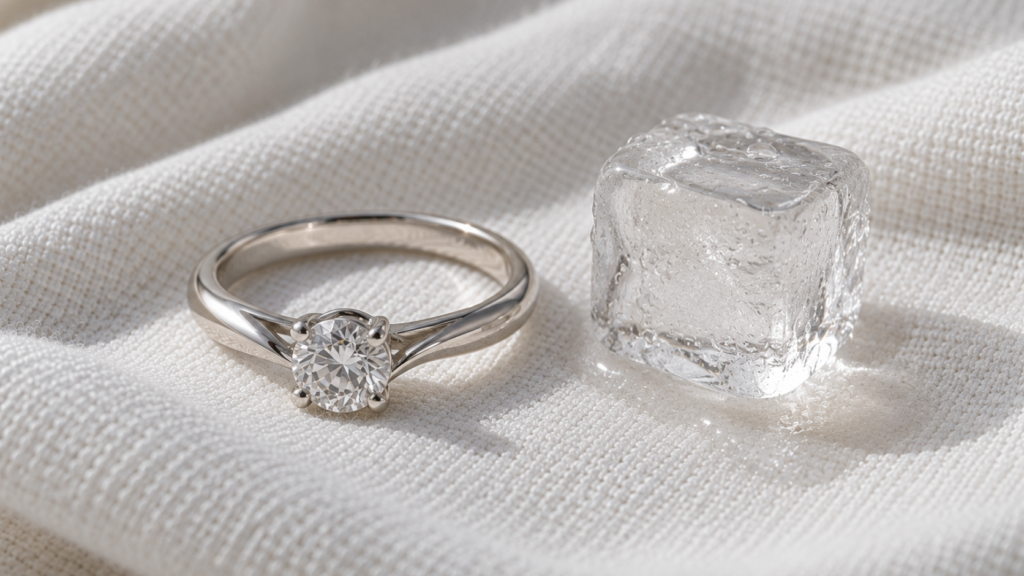
Silver conducts heat better than almost any other metal, and this gives you a simple physical test.
How to Perform the Test
Hold the piece in your hand for about 30 seconds. Genuine sterling silver warms up noticeably from body heat. For a second check, press an ice cube against the piece: ice melts faster on silver than on glass or most base metals.
What to Watch For
Glass and plastic imitations warm slowly, and base metals like stainless steel warm at different rates. That said, this test takes some practice to read. Use it as a supporting check rather than a final answer.
Method 4: The White Cloth Test
This test looks at tarnish, a natural behavior of sterling silver.
How to Perform the Test
Rub the piece firmly with a clean white cloth. Genuine sterling silver often leaves a faint grey or black mark, which is a thin layer of tarnish being wiped off.
Why This Works
Silver reacts with sulfur compounds in the air to form silver sulfide, the dark film we call tarnish. The copper in sterling silver speeds this reaction up. As a result, real silver tarnishes in a recognizable way, while many base metals leave no mark or a differently colored one.
What to Watch For
Silver-plated brass can leave a similar mark while the plating is still thick. Because many base metals also corrode, tarnish alone is not proof of silver. This test is therefore best at ruling out obviously non-silver metals, and less reliable against plated pieces.
Method 5: The Acid Test
The acid test is a chemical check of silver content. Compared with physical tests, it is far better at exposing silver-plated pieces.
How the Acid Test Works
A small drop of nitric acid is placed on a hidden area of the piece. To reach the metal under any plating, the spot is first scratched or filed lightly. The color of the reaction then shows what the metal is made of.
- Cream or milky white: consistent with sterling silver
- Green: copper or brass, so not silver
- Little or no reaction on the surface: be careful, since you may be testing only a plated layer
Important Considerations
Nitric acid is hazardous. It needs protective equipment and good ventilation, and it leaves a small mark on the piece. For these reasons, most buyers should leave this test to a qualified jeweler.
Method 6: Professional Verification
For significant purchases, and especially for wholesale orders, professional testing gives results that home tests cannot.
XRF Testing
XRF is the most accurate non-destructive method for checking metal composition. The machine directs X-rays at the piece and reads the energy sent back, which produces a precise breakdown of elements, including the exact silver percentage.
At Eon Gems, our German XRF machine verifies both silver content and gold plating thickness on every batch of gold vermeil jewelry. XRF reports are also available as part of standard shipment documentation, so wholesale buyers receive documented proof of metal content.
Hallmark Certificate
For commercial purchases, a hallmark certificate from the manufacturer gives written assurance of 925 content. Eon Gems issues these with every wholesale silver jewelry shipment as standard export documentation.
Common Silver Imitations
Silver-Plated Brass
This is the most common imitation: a brass or copper base with a thin silver coating. It looks identical to sterling when new. Over time, however, the plating wears off and reveals yellow or reddish metal underneath, most visibly at clasps and ring edges.
Stainless Steel
Stainless steel is silver-colored, durable and hypoallergenic, so it is sometimes confused with silver. It has no precious metal value, does not tarnish, and is usually stamped “SS” or “Stainless Steel” instead of 925.
Nickel Silver
Despite the name, nickel silver contains no silver at all. It is an alloy of copper, zinc and nickel, and it can trigger reactions in people with nickel allergies. Genuine sterling silver does not contain nickel.
Tibetan Silver and Tribal Silver
These are loose market terms for alloys that often contain little or no real silver. Since they are neither standardized nor regulated, buyers who want genuine precious metal should avoid them.
Identifying 925 Silver in Different Jewelry Categories
Rings
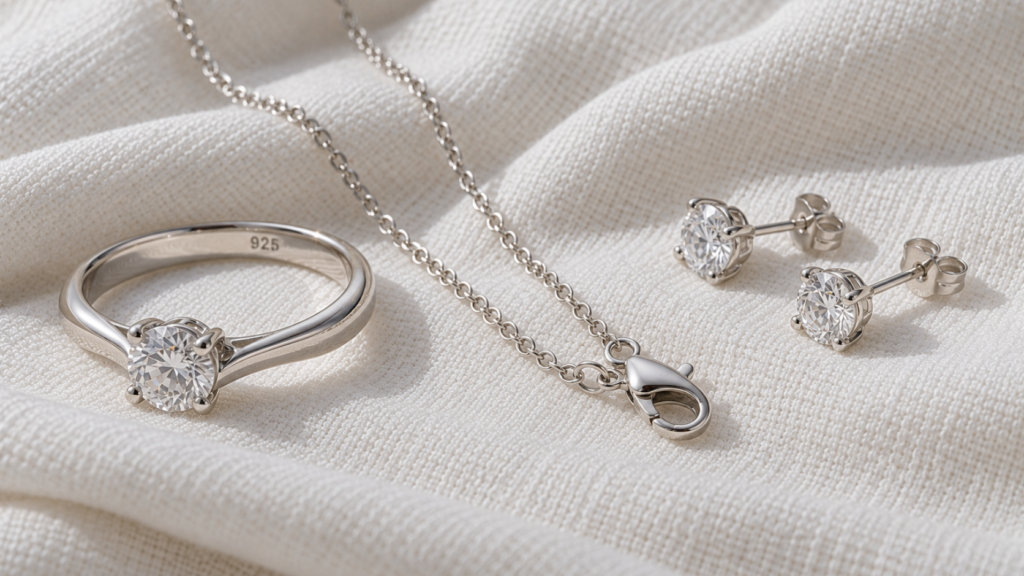
Check the inside of the band for the 925 hallmark first. Next, compare the weight: a sterling ring usually feels heavier than a stainless steel or brass ring of the same size.
Chains and Necklaces
Real silver chains have a soft, fluid drape. The clasp normally carries the 925 stamp, even when the links are too fine to stamp. If the clasp looks different in color or texture from the chain, investigate before buying.
Earrings
Look for “925” or “S925” on the post. Because sterling is denser than plastic or lightweight alloys, genuine pairs also feel more substantial when you compare several side by side.
Red Flags: What Genuine 925 Silver Rarely Does
Knowing what real sterling silver does not usually do helps you spot imitations quickly.
- Green skin: this is mostly a brass and copper-alloy problem. Sterling silver causes it far less often, though body chemistry and moisture can occasionally leave a faint mark on some wearers.
- Peeling or flaking: this points to a plated surface separating from the base metal. Solid silver has no plating to lose.
- Unusual lightness: a piece that feels very light for its size deserves a closer look. Note that some genuine sterling pieces, such as hollow beads and tubes, are light by design, so check the hallmark and the construction as well.
- Stubborn spots: real tarnish polishes off cleanly. Corrosion on base metals tends to appear as patches that polishing does not fully remove.
Silver-Plated vs. Sterling Silver at a Glance
| Feature | Sterling Silver (925) | Silver-Plated Metal |
| Composition | 92.5% silver throughout | Thin silver layer over base metal |
| Worn areas | Same silver color underneath | Yellow or reddish base metal shows |
| Peeling | None | Common over time |
| Value | Holds precious metal value | Little to no metal value |
| Tarnish | Polishes off cleanly | Uneven, may reveal base metal |
For Wholesale Buyers: Verifying 925 Silver at Scale
Home tests work for single pieces. Wholesale buyers, on the other hand, need a systematic process.
Request Documentation as Standard
Every reputable 925 silver manufacturer supplies hallmark certificates with wholesale shipments. At Eon Gems, they are standard export documentation, not a special request. For gemstone jewelry orders, treatment disclosure documents also accompany each shipment and confirm stone species, treatment status, and natural or lab-grown origin.
Specify XRF Testing in Your Purchase Agreement
If you are ordering gold vermeil alongside silver, make XRF testing a contractual requirement. A manufacturer who cannot produce XRF reports is not verifying their own claims.
Use Sample Orders to Validate Quality
Before committing to volume, place a sample order and send the pieces for independent testing. This small cost protects you from the much larger loss of a bulk order that misses specification.
FAQs: Identifying Genuine 925 Silver Jewelry
What does the 925 stamp look like on jewelry?
It is a small engraved or laser-etched mark reading “925,” “S925,” “Sterling,” or “Ster.” You will usually find it inside a ring band, on a clasp, or on a pendant bail. A loupe makes it much easier to read.
Can fake silver have a 925 stamp?
Yes, because some counterfeit pieces carry fake stamps on non-silver metal. For high-value purchases, combine several tests, and for wholesale orders, ask the manufacturer for documentation.
Does genuine 925 silver tarnish?
Yes. Sterling silver tarnishes over time as it reacts with sulfur compounds in the air, and polishing removes the tarnish easily. However, tarnish alone does not prove a piece is silver, since some plated and base metals tarnish too.
Is sterling silver the same as pure silver?
No. Pure silver (999) is 99.9% silver and too soft for most jewelry. Sterling silver (925) is 92.5% silver with copper added for strength, and it is the industry standard for wearable pieces.
How can I tell sterling silver from silver-plated jewelry?
Check high-friction areas such as clasps and inner ring bands. Yellow or reddish metal showing through means plating. A lightly scratched hidden spot can also reveal a different metal underneath.
What is the most accurate test for genuine 925 silver?
XRF testing, because it gives an exact elemental breakdown without damaging the piece. For everyday buyers, the hallmark combined with the magnet and white cloth tests gives reasonable practical assurance.
Eon Gems: Genuine 925 Sterling Silver Jewelry Manufacturer in Jaipur
Every piece of 925 sterling silver jewelry we make carries genuine hallmarking as standard, with verified alloy composition documented in export certificates. Quality stays consistent across batches, whatever the order size.
With 36+ years of manufacturing experience and direct access to Jaipur’s gemstone markets, we supply verified 925 sterling silver jewelry to wholesale buyers and brands in 50+ countries.
What we offer:
- Genuine 925 sterling silver, hallmarked as standard
- 925 hallmark certificates with every wholesale shipment
- Full range of finishes: plain, oxidized, rhodium, rose gold, gold vermeil
- 250+ natural and lab-grown gemstone varieties in-house
- XRF-verified gold plating for vermeil orders
- No MOQ, from a single prototype to large bulk production
- Complete export documentation for all major markets
👉 [Get a Free Quote from Eon Gems →]
🔗 [925 Sterling Silver Jewelry Manufacturing →]
🔗 [Gold Vermeil Jewelry Manufacturing →]
🔗 [Gemstone Jewelry Manufacturing →]