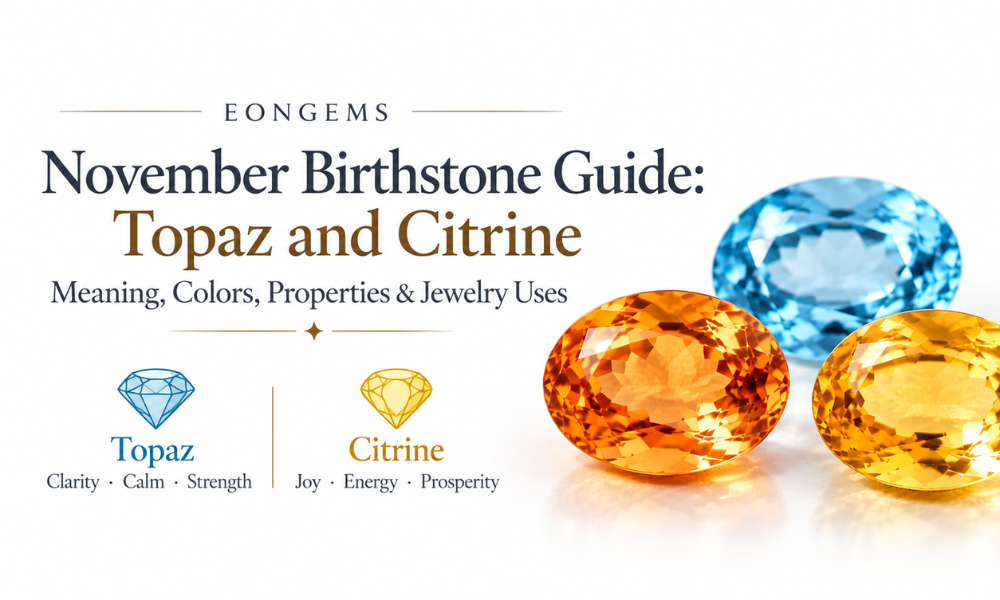
November gets two birthstones, and that’s good news for anyone shopping for them. Topaz and citrine both carry that warm, golden autumn color. But they behave very differently once you start making jewelry with them.
This November birthstone guide walks through both stones. You’ll see what each one means, what colors to expect, how tough they really are, and what they cost. We’ll also cover which metals and settings work best.
We’re Eon Gems, a Jaipur-based gemstone jewelry manufacturer with 36+ years of experience. Topaz and citrine come across our bench all the time, so this guide is written from what we see every day.
Why November Has Two Birthstones
Most months have one traditional stone. November has two, and each one suits a different buyer.
Topaz, the Traditional Stone
Topaz has been tied to November for a long time. It comes in lots of colors, from golden orange to sky blue. Nobody is completely sure where the name comes from. Some say it’s from the Sanskrit word “tapas,” meaning fire. Others point to Topazios, an old name for an island in the Red Sea.
Citrine, the Modern Addition
Citrine joined the list later. Its yellow and orange tones sit close to golden topaz, but it costs far less. So if a customer wants the November look on a smaller budget, citrine is usually the answer.
Topaz Meaning and Symbolism
Topaz has some of the oldest symbolism in the gemstone world. Most cultures saw it as a stone of strength and protection.
A Short History of Topaz
Ancient Egyptians linked topaz to the sun god Ra. The Greeks believed it made warriors stronger. Roman writers said it calmed anger. In medieval Europe, people wore it as a charm against bad luck.
Russia has a story too. The czars reportedly kept the best golden stones for themselves, which is how “imperial topaz” got its name.
What Topaz Means Today
Crystal healers connect topaz with clarity, honesty, and personal strength. Golden topaz is tied to the solar plexus chakra, which is about confidence and willpower. Blue topaz is tied to the throat chakra, which is about speaking clearly.
These meanings come from spiritual tradition, not science. Still, they’re a big reason topaz sells so well in wellness jewelry.
Topaz Colors, From Imperial Gold to Sky Blue
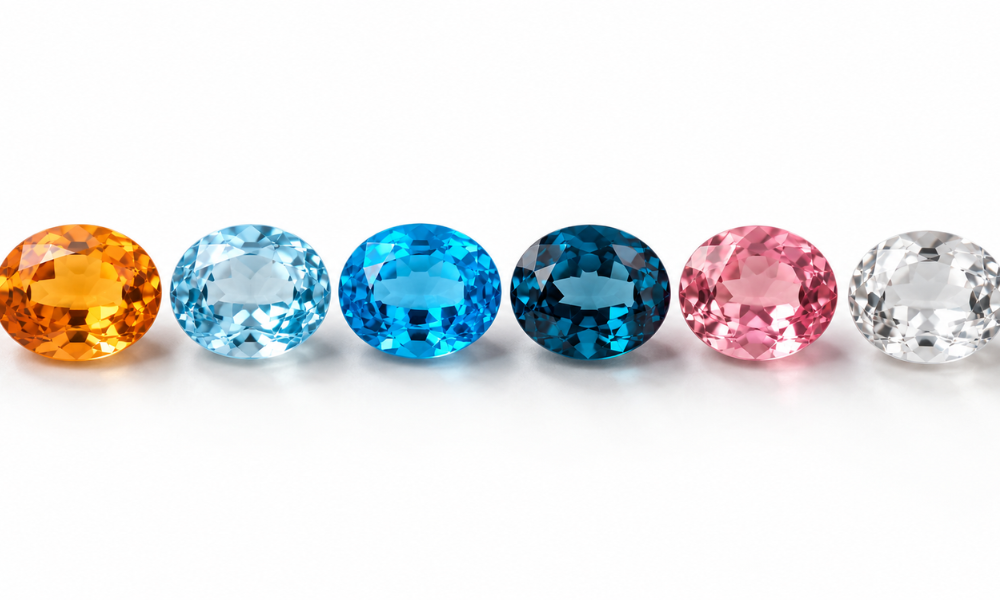
Pure topaz is colorless. Trace elements and natural radiation add the colors. That’s why topaz comes in such a wide range.
Imperial Topaz
Imperial topaz is a rich golden orange, often with pink or peach undertones. It’s the most valuable topaz color. Brazil’s Ouro Preto region produces the finest stones. Good ones are rare, so prices rise fast as size and color improve.
Blue Topaz
Blue topaz is the version most people know. Natural blue topaz is pale and uncommon. Almost all the blue topaz you see in shops started as colorless topaz. Irradiation and heat give it the blue color.
The trade accepts this treatment, and the color is stable. But sellers have to disclose it. Three shades dominate the market. Sky blue is light and bright. Swiss blue is medium and vivid. London blue is deep and inky.
Pink and Red Topaz
Natural pink topaz is rare. Most pink topaz in jewelry comes from heat-treating golden stones. Fine red topaz is very rare, and collectors pay a lot for it.
White Topaz
White topaz is colorless and clear. It’s a budget-friendly alternative to diamond in simple designs. Jewelers also use it as a small accent stone next to colored gems.
Mystic Topaz
Mystic topaz is colorless topaz with a thin rainbow coating. The coating throws shifting purple, green, and blue. It looks great in fashion jewelry. The catch is that the coating can wear off, so these stones need gentle handling and clear disclosure.
Topaz Properties: What Jewelers Need to Know
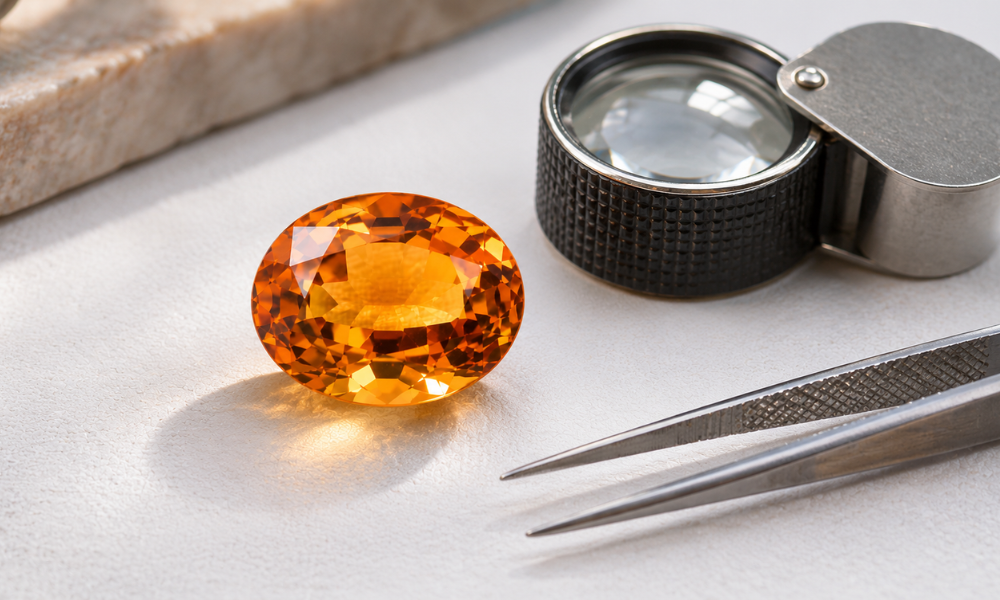
Topaz rates 8 on the Mohs hardness scale. That’s hard enough for rings. But hardness isn’t the full story.
The Cleavage Problem
Topaz has perfect cleavage in one direction. A sharp knock along that plane can split the stone. So for rings, we recommend a bezel setting. Prong settings can work too, but they need good metal coverage and careful placement.
Heat and Chemicals
Sudden temperature changes can crack topaz. That matters during repairs, because direct torch heat near the stone is risky. Buyers should also skip harsh chemicals and strong ultrasonic cleaners.
Where Topaz Comes From
Brazil leads in quality, especially for imperial topaz. Pakistan, Russia, Sri Lanka, Nigeria, and the United States also produce it. Brazil and Nigeria supply a lot of the colorless rough that gets treated into blue topaz.
Citrine Meaning and Symbolism
Citrine feels like sunshine in a stone. Its cheerful color shaped its reputation for joy and prosperity.
A Short History of Citrine
The name comes from the French word “citron,” which means lemon. Ancient Greeks carved yellow quartz into jewelry as far back as 300 BCE. In Scotland, craftsmen often set citrine into sword hilts and dagger handles.
What Citrine Means Today
Crystal healers call citrine the “merchant’s stone.” Some shopkeepers keep a piece near the cash register for luck. It’s linked with abundance, optimism, and creativity, and it connects to the solar plexus chakra, like golden topaz.
Many people also believe citrine doesn’t hold onto negative energy. They say it never needs cleansing. That’s tradition, not science, but it adds to its popularity.
Citrine Colors and Varieties
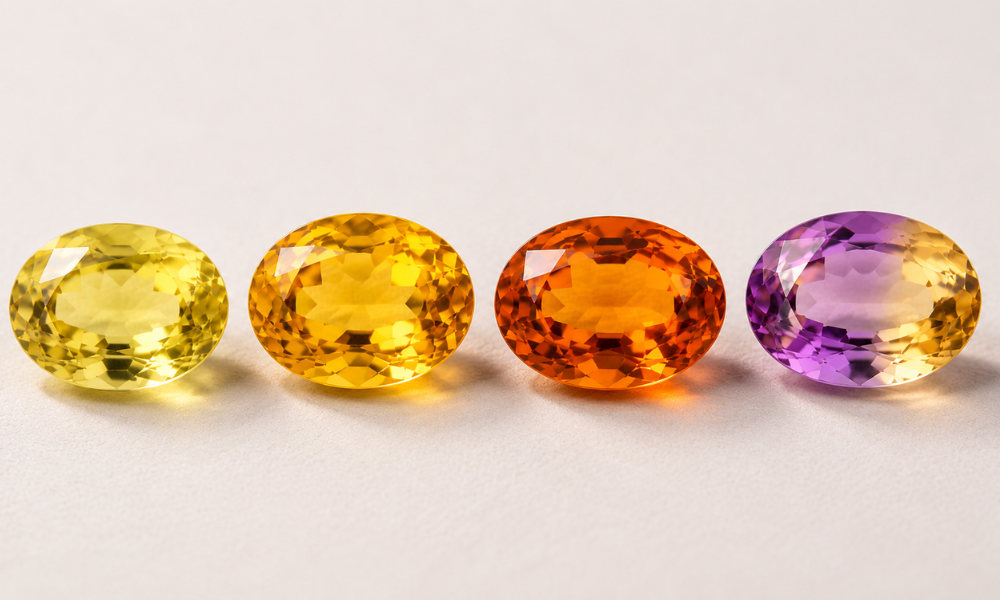
Citrine runs from pale lemon yellow to deep reddish orange. The deeper and richer the color, the higher the price.
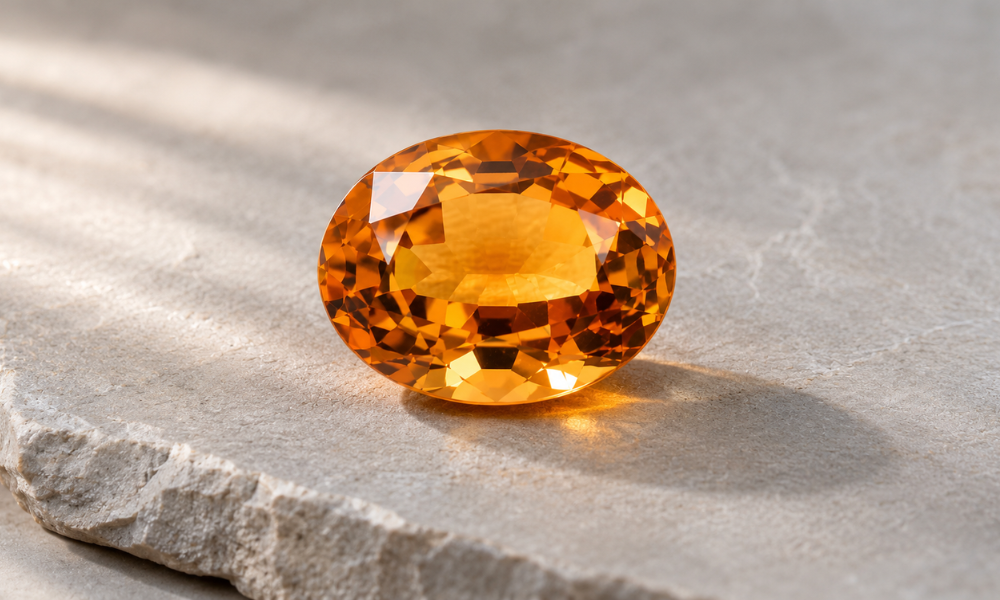
Madeira Citrine
Madeira citrine is a deep reddish orange, named after Madeira wine. Collectors and designers prize it above other citrine, and it fetches the highest prices in the family.
Palmeira and Golden Citrine
Palmeira citrine is a bright golden orange. It’s a little lighter than Madeira. Golden citrine sits in the middle and works for almost any design.
Lemon Citrine
Lemon citrine is pale and slightly greenish yellow. It looks fresh and modern, and it pairs nicely with silver.
Ametrine
Ametrine mixes citrine and amethyst in one stone, so you get purple and gold zones together. Bolivia is the main source. Designers love it for statement pieces.
Citrine Properties: Natural vs Heat-Treated
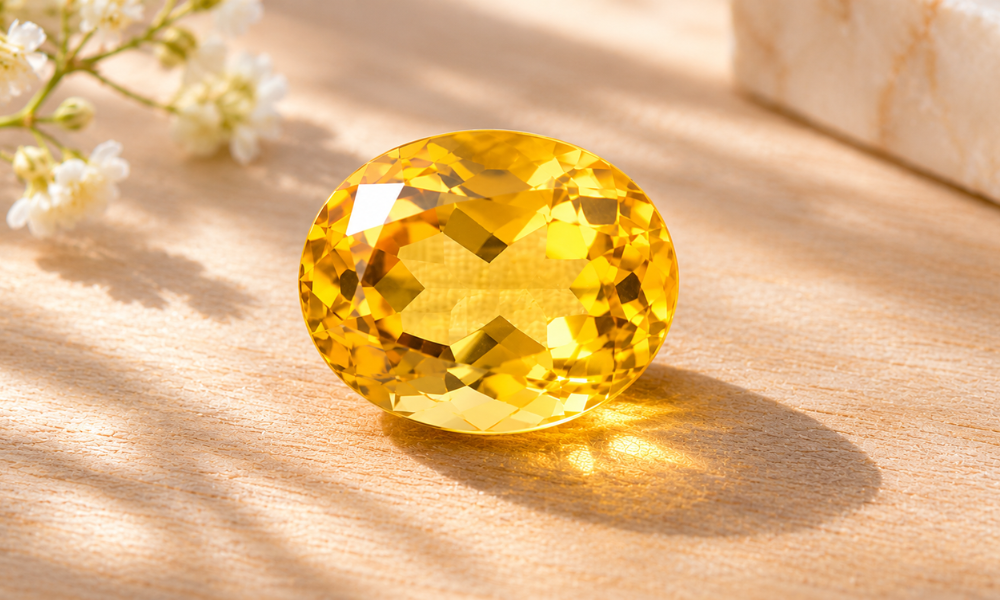
Citrine is quartz, so it rates 7 on the Mohs scale. It has no cleavage. That makes it more forgiving than topaz in daily wear, even though it’s a bit softer.
Natural and Heat-Treated Citrine
Natural citrine is rare. Most citrine on the market is heat-treated amethyst or smoky quartz. The heat turns purple or brown stones into warm yellow or orange. The treatment is standard and stable, but sellers should disclose it.
You can sometimes spot treated stones by their slightly reddish orange tone. Natural citrine usually looks paler and softer. That’s why treatment disclosure matters for fair pricing.
Where Citrine Comes From
Brazil is the biggest source. Spain, Bolivia, Madagascar, and Zambia also supply stones. Brazilian material feeds most commercial jewelry.
Topaz vs Citrine: Key Differences
Both stones share the warm November palette. Here’s how they differ.
Topaz is harder, at 8 against citrine’s 7. But topaz has cleavage and citrine doesn’t, so citrine often survives daily wear better.
Topaz has a much wider color range, including blue, pink, and white. Citrine stays in yellow, orange, and brown. If you want color variety, topaz wins.
Price is the biggest gap. Fine topaz costs far more than citrine. Citrine gives you a similar golden look at a friendlier price, and it’s affordable even in large sizes. That makes it great for statement pieces.
November Birthstone Jewelry: How to Use These Stones
A November birthstone guide needs some design advice, so here it is.
Popular Styles
Pendants are the top seller. A single faceted topaz or citrine drop makes an easy gift. Rings in oval or cushion cuts sell well too. Stud and drop earrings do strongly. Stackable bracelets are fun because they let buyers mix both stones.
Metal Pairings
925 sterling silver jewelry suits blue topaz best. The cool white metal pulls out the blue. Silver also works with lemon citrine for a light, fresh look.
Gold vermeil jewelry goes well with golden citrine and imperial-toned topaz. Yellow gold vermeil deepens the warm glow. Rose gold vermeil looks lovely with pink topaz.
Setting Tips
Use bezel settings for topaz rings to protect the cleavage plane. Prong settings work well for citrine and for topaz pendants. For raw or irregular citrine, go with a freeform bezel. Also, match the stone size to the design so the piece sits comfortably on the wearer.
November Birthstone Price Guide
Prices vary a lot with quality, color, and treatment. These are rough ranges, so treat them as a starting point.
Commercial blue topaz in calibrated sizes runs about $0.50 to $3 per carat. Swiss and London blue grades cost more, often $3 to $15 per carat. White topaz stays cheap. Natural imperial topaz is the premium tier, and fine stones can reach $100 to $1,000+ per carat.
Commercial citrine costs about $1 to $5 per carat. Good grade stones with strong color run $5 to $15. Fine Madeira citrine can reach $15 to $40.
Always ask suppliers for written grades and treatment status. A vague quote usually means a vague stone.
How to Care for Topaz and Citrine
Both stones last for years with simple care.
Topaz Care
Clean topaz with mild soap, lukewarm water, and a soft brush. Rinse well and dry with a soft cloth. Skip the ultrasonic cleaner if the stone has fractures or fillings. Keep it away from sudden heat. Store it in a soft pouch, apart from harder stones. And take rings off before heavy work, because one hard knock can do real damage.
Citrine Care
Clean citrine the same way. Avoid long exposure to strong sunlight, since some citrine can fade. Skip steam cleaning. Store each piece separately so harder gems don’t scratch it.
How to Identify Real Topaz and Citrine
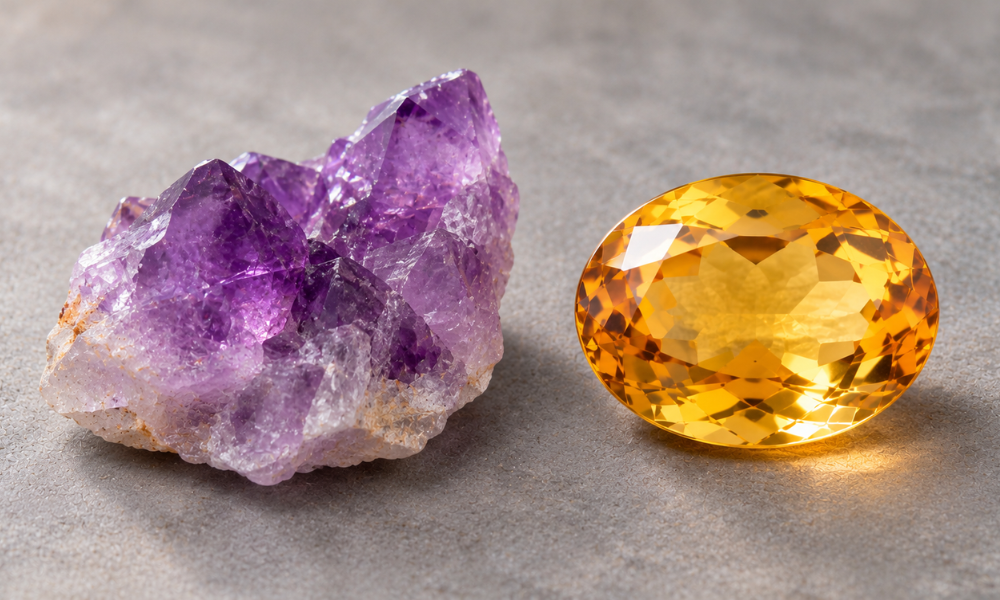
Imitations are common, so it pays to check.
Real Topaz
Genuine topaz feels heavier than glass of the same size and stays cool in your hand. Blue topaz should show even, stable color. Ask the supplier to confirm the irradiation and heat treatment. For mystic topaz, ask about the coating.
Real Citrine
Real citrine shows soft, natural color variation. Glass looks too perfect. A deep reddish orange usually means heat-treated amethyst. It’s still genuine citrine, but the seller should say so.
Ask for Paperwork
For valuable stones, request a gemological report. At Eon Gems, treatment disclosure goes on every gemstone invoice. According to the GIA Gem Encyclopedia, clear disclosure is what builds trust between buyers and suppliers.
Sourcing Topaz and Citrine for Your Jewelry Brand
If you’re planning a November birthstone collection, a few things help. Birthstone jewelry sells all year, with bumps around the holidays.
Start with both stones. Topaz gives you variety and a premium option. Citrine gives you warm color at an easier price. Together they cover two price tiers.
Order calibrated sizes so production stays consistent. Put cut, color grade, and treatment status in writing. And ask for samples before you commit to a bulk order. Jaipur is the world’s largest colored gemstone hub, so manufacturers here can offer wide stone choice and direct sourcing.
Frequently Asked Questions
What is the November birthstone?
November has two birthstones, topaz and citrine. Topaz is the traditional one and citrine is the modern addition. Both show warm golden tones, though topaz also comes in blue, pink, and white.
Which is better, topaz or citrine?
It depends on what you need. Topaz is harder and comes in more colors. Citrine costs less and has no cleavage. Many brands offer both so buyers can choose.
Is blue topaz natural?
Blue topaz is natural topaz, but most of it is treated. Irradiation and heat turn colorless topaz blue. The color is stable and the trade accepts it. Sellers just need to disclose it.
Can I wear topaz and citrine every day?
Yes, with a bit of care. Citrine handles daily wear well. Topaz works in protective settings because of its cleavage. Take rings off before heavy work.
What metal suits November birthstone jewelry?
Sterling silver flatters blue topaz and lemon citrine. Yellow gold vermeil brings out golden stones. Rose gold vermeil suits pink topaz.
Does citrine fade in sunlight?
Some citrine can fade after long exposure to strong sunlight. Store it away from direct light to protect the color.
Eon Gems: Topaz and Citrine Jewelry Manufacturer in Jaipur
Topaz and citrine are part of our regular gemstone jewelry manufacturing range. We’re based in Jaipur, the world’s largest colored gemstone trading hub. We buy directly from established traders and disclose every treatment.
What we offer November birthstone jewelry brands:
- Natural topaz in blue, white, and golden shades
- Citrine in lemon, golden, and Madeira tones
- Calibrated and freeform cuts
- Settings in 925 sterling silver and gold vermeil
- Full treatment disclosure on every stone
- No MOQ, from a single prototype to large bulk orders
- Complete export documentation for all major markets
👉 Get a Free Quote from Eon Gems →
🔗 Gemstone Jewelry Manufacturing →
🔗 925 Sterling Silver Jewelry →
🔗 Gold Vermeil Jewelry →