Buying lab grown gemstones wholesale is now a normal part of building a jewelry collection. Many brands use them next to natural stones. The hard part is knowing when each one makes sense, and how to buy either without getting burned.
We’re Eon Gems, a Jaipur-based gemstone jewelry manufacturer with 36+ years of experience. We export to 50+ countries and work with both natural and lab grown stones every day. This guide is for buyers and brands who want a straight answer, not a sales pitch.
What Lab Grown Gemstones Actually Are
Let’s clear up the wording first, because it causes real confusion with clients.
Lab Grown Is Real, Not Imitation
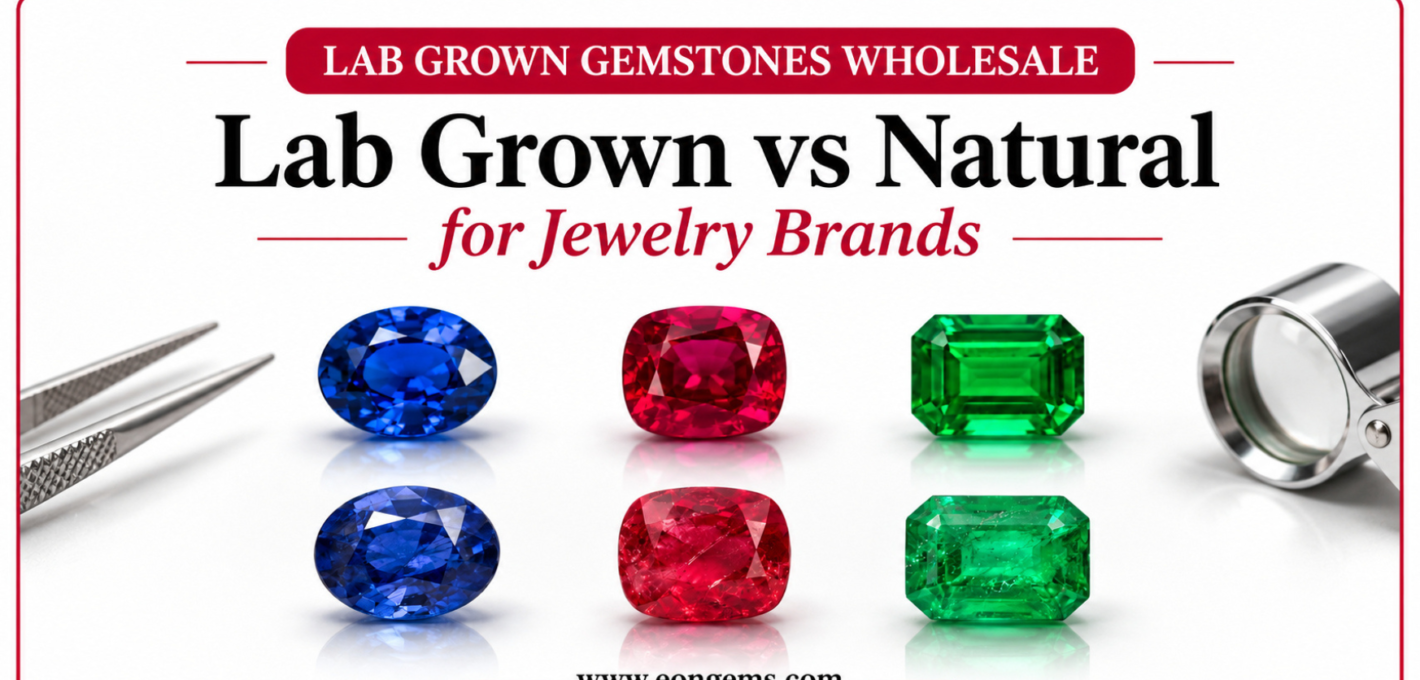
A lab grown gemstone is made in a controlled setting that copies how the mineral forms in nature. It has the same chemistry, crystal structure and hardness as a mined stone. A lab grown sapphire is real sapphire.
An imitation is different. Glass and cubic zirconia only look like the real thing. They aren’t the same material. Mixing these up is the most common mistake we see, and it leads to bad product descriptions.
How They Differ From Natural
The difference is origin. Natural stones formed in the earth over a very long time. Lab grown stones are made in weeks or months. Lab grown stones are usually cleaner, with fewer inclusions and more even color. Natural stones show more character and natural variation.
Lab Grown vs Natural Gemstones: What Matters to a Brand
Buyers ask about the same five things. Here’s how they compare.
Cost and Margin
Lab grown stones usually cost far less. For ruby, sapphire and emerald, the gap is often 60 to 90 percent for a similar look. That changes what you can offer at a given retail price. A vivid blue sapphire pendant that would be out of reach in natural stone becomes a realistic product.
Exact prices move with the market and with quality, so always get a written quote with the grade spelled out.
Consistency Across a Batch
This is the quiet advantage of lab grown. If you need matching earrings, a pavé row or twelve identical pendants, lab grown stones are far easier to match. Natural stones vary, so matching means sorting through parcels. It takes time and sometimes leaves leftover stones you can’t use.
Rarity and Resale
Natural stones are limited by what the earth produces. Fine ones are rare, and that supports their value. Lab grown stones can be produced in larger numbers, so they don’t carry the same rarity premium. If your customers buy for investment or inheritance, natural wins. If they buy to wear and enjoy, it matters much less.
Durability
Same mineral, same hardness. A lab grown sapphire rates 9 on the Mohs scale, just like a natural one. Wear, scratches and toughness behave the same way. Durability shouldn’t decide your choice.
Story and Positioning
Natural stones sell well on origin and “from the earth.” Lab grown stones sell on value, clean color and a more traceable source. Neither story is wrong. They just fit different brands and customers.
Which Stones Come in Lab Grown Versions
Not every gemstone can be made in a lab, and this affects collection planning.
Ruby, sapphire, emerald, spinel, alexandrite and moissanite are widely made in labs. These are the stones where lab grown makes the most sense, and we source them for clients regularly.
Other stones are really natural only. Turquoise, moonstone, labradorite, malachite and most opals fall here. You’ll see imitations, but they aren’t true lab grown equivalents. If your brand is built around bohemian or spiritual stones, you’re mostly working with natural material anyway.
How to Choose for Your Collection
Think about who buys from you and what they expect.
When Natural Makes Sense
Choose natural if your brand sells on rarity and origin, or if you make artisan or spiritual jewelry where the earth story is the point. It also suits premium pieces and markets where natural stones are expected.
When Lab Grown Makes Sense
Choose lab grown if you want vivid, clean stones at accessible prices. It also suits collections that need matched stones, and brands that care about a traceable source.
Offering Both
Many of our clients do this. They launch one design with a natural stone for the premium version and a lab grown stone for the accessible one. You cover two price points without designing twice. Customers choose by budget and values, and you don’t lose the sale either way.
Disclosure Rules You Can’t Skip
Selling a lab grown stone as natural is misrepresentation, and in many markets it’s a legal issue. In the USA and UK, buyers and regulators expect clear labeling.
Treat disclosure as part of the product. Put “lab grown” or “natural” on every invoice, and list any treatments too. Many natural stones are heated, oiled or filled. Many brands also add the stone type to product pages and packaging. The GIA Gem Encyclopedia is a useful reference for how labs describe stones.
At Eon Gems, every stone is labeled clearly on the commercial invoice, and we provide documents for export markets as standard.
Setting Lab Grown Stones in Silver and Vermeil
Setting works the same for lab grown and natural stones, since the material is the same. Choose bezel or prong based on the stone’s hardness and cleavage, not its origin.
Both stone types look great in 925 sterling silver jewelry. It’s the best base for most gemstone collections, and it takes every finish. For a warmer, premium look, gold vermeil jewelry pairs well with lab grown ruby and emerald in particular. Offering one design in both metals, with both stone types, gives you a wide range from a single sample.
How to Source Lab Grown Gemstones Wholesale
A few habits will save you money and headaches.
Ask for Specifics in Writing
“Lab grown sapphire” isn’t enough. Ask for color, size, shape and grade, and get it on the quote. Vague specs usually mean a vague stone.
Get Samples First
Order samples before you commit to a bulk order. Stones can look different in photos than in person. Check color under different lights, because lab grown stones can look slightly different under daylight than under indoor lighting.
Check Stones From the Same Parcel
For matched sets, ask that the full order comes from one parcel. It keeps color consistent across the batch.
Work With a Manufacturer Who Sets as Well as Sources
When the same team sources and sets the stones, problems get fixed faster. Stone size, cut and setting depth all affect each other. Jaipur is the world’s largest colored gemstone trading hub, so manufacturers here can offer wide choice and direct sourcing.
Common Mistakes Brands Make With Lab Grown Stones
A few errors come up again and again.
Some brands call lab grown stones “natural” in marketing. Don’t do this. It damages trust fast and can cause legal trouble.
Others assume every stone has a lab grown version. Moonstone and labradorite, for example, don’t. Check availability before you plan a collection around a stone.
Some brands choose purely on price and end up with stones that look flat or uneven. A cheap stone isn’t a deal if returns eat the margin. And others skip samples, then find the color doesn’t match their expectations once the order arrives.
Frequently Asked Questions
Are lab grown gemstones real?
Yes. They have the same chemical makeup and crystal structure as natural stones. They’re made in a lab instead of formed in the earth. They’re different from imitations like glass.
Is lab grown cheaper than natural for wholesale?
Usually, yes, often by a large margin. The gap is biggest for ruby, sapphire and emerald. Exact prices depend on size, quality and the market, so ask for a written quote.
Do lab grown stones last as long as natural ones?
Yes. Hardness and durability are the same for the same mineral. A lab grown sapphire is as tough as a natural sapphire.
Do lab grown gemstones hold their value?
Generally not as well as fine natural stones. They can be made in larger numbers, so they lack the same rarity. They suit jewelry meant to be worn and enjoyed.
Must I disclose lab grown stones?
Yes. Disclosure is expected, and in many markets it’s required. Label every stone as natural or lab grown on invoices and product pages.
What is the minimum order for lab grown gemstone jewelry?
It depends on the manufacturer. At Eon Gems there’s no minimum order quantity, so you can start with one prototype and scale once the design sells.
Source Lab Grown and Natural Gemstone Jewelry From Eon Gems
At Eon Gems, we work with natural stones and lab grown ruby, sapphire, emerald, moissanite and alexandrite. Every stone is labeled clearly. We set them in 925 sterling silver and gold vermeil, and we handle export paperwork for the USA, UK, EU and Australia.
Tell us your design, stone and quantity, and we’ll send a clear quote with samples to follow. If you’re comparing options, our gemstone jewelry manufacturer page shows what we offer.