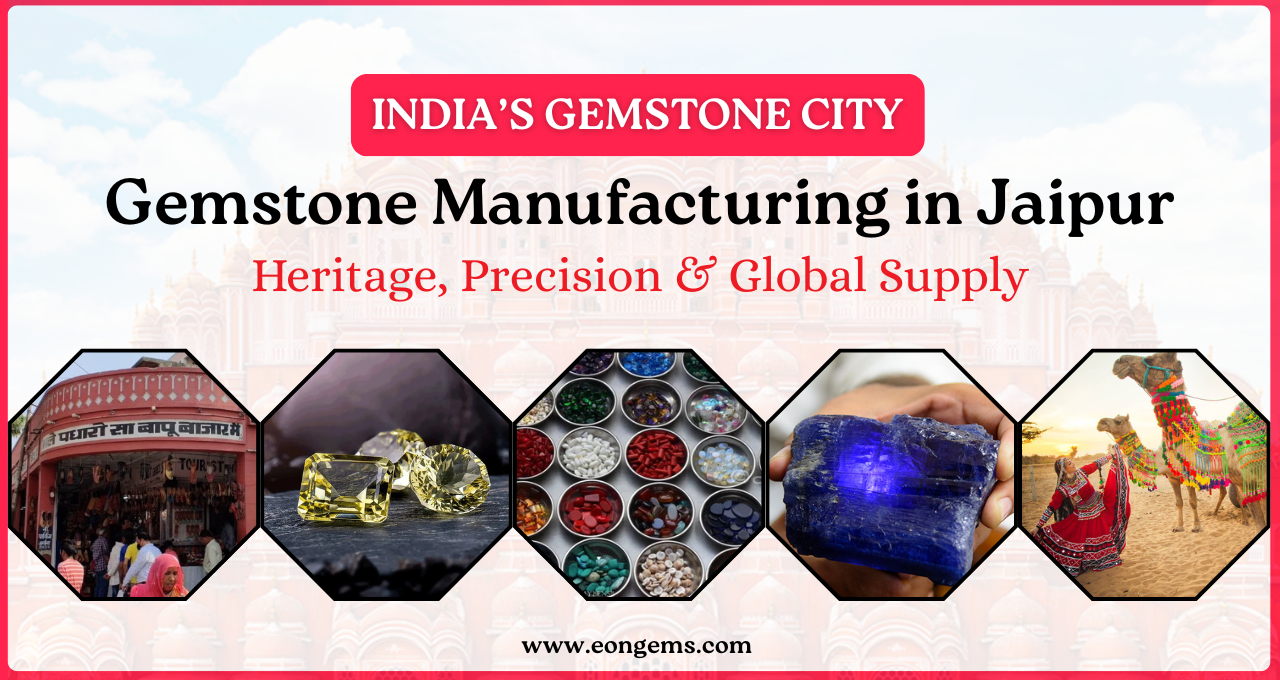
Jaipur is widely known as India’s gemstone city, and for good reason. The region has built a powerful ecosystem around colored gemstones that blends heritage craftsmanship with modern precision. From selecting rough material to calibrated cutting, polishing, matching, and export ready quality checks, Jaipur has become a preferred destination for jewelry brands, wholesalers, and designers who want consistent supply and reliable finish.
What makes gemstone manufacturing in Jaipur special is the balance between tradition and technical control. Skilled lapidaries carry knowledge passed through generations, while workshops increasingly use standardized sizing, strict tolerances, and quality inspection routines that meet global expectations. If you are sourcing for a retail brand, a private label collection, or bulk wholesale requirements, understanding how Jaipur operates helps you choose the right partner and buy with confidence.
To explore a wide range of stones used in manufacturing, you can start with the Gemstones collection on Eon Gems.
Jaipur’s gemstone legacy and why it still matters
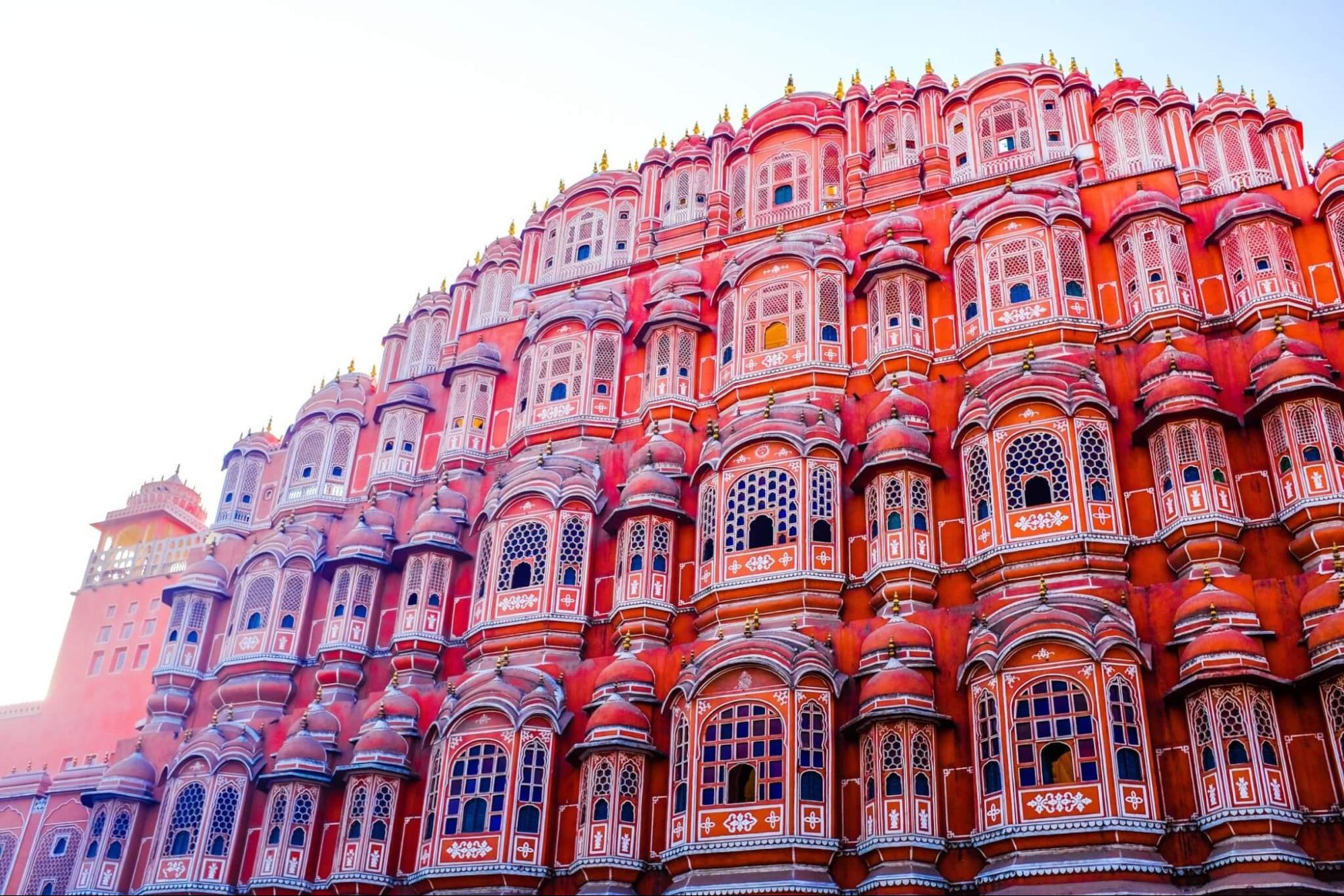
Jaipur’s connection to gemstones is not a recent trend. The city developed as a trade and artistry hub where cutting, polishing, and jewelry making grew together. Over time, specialized clusters formed around specific skills, such as faceting, cabochon shaping, bead making, and fine polishing. That specialization is one reason Jaipur can handle diverse gemstone orders at scale, from small calibrated goods to high craftsmanship cuts.
Today, heritage is not only about history. It directly impacts output quality. Experienced artisans can read rough material, plan the best orientation, and preserve beauty even in stones that are challenging. This matters for colored gemstones where tiny choices, like angle, depth, and symmetry, can change the face up color and overall life of the stone.
If you want a clear view of how modern workflows are structured, explore the Gemstone manufacturing used by manufacturers who focus on consistency and export readiness.
Why global buyers source gemstones from Jaipur
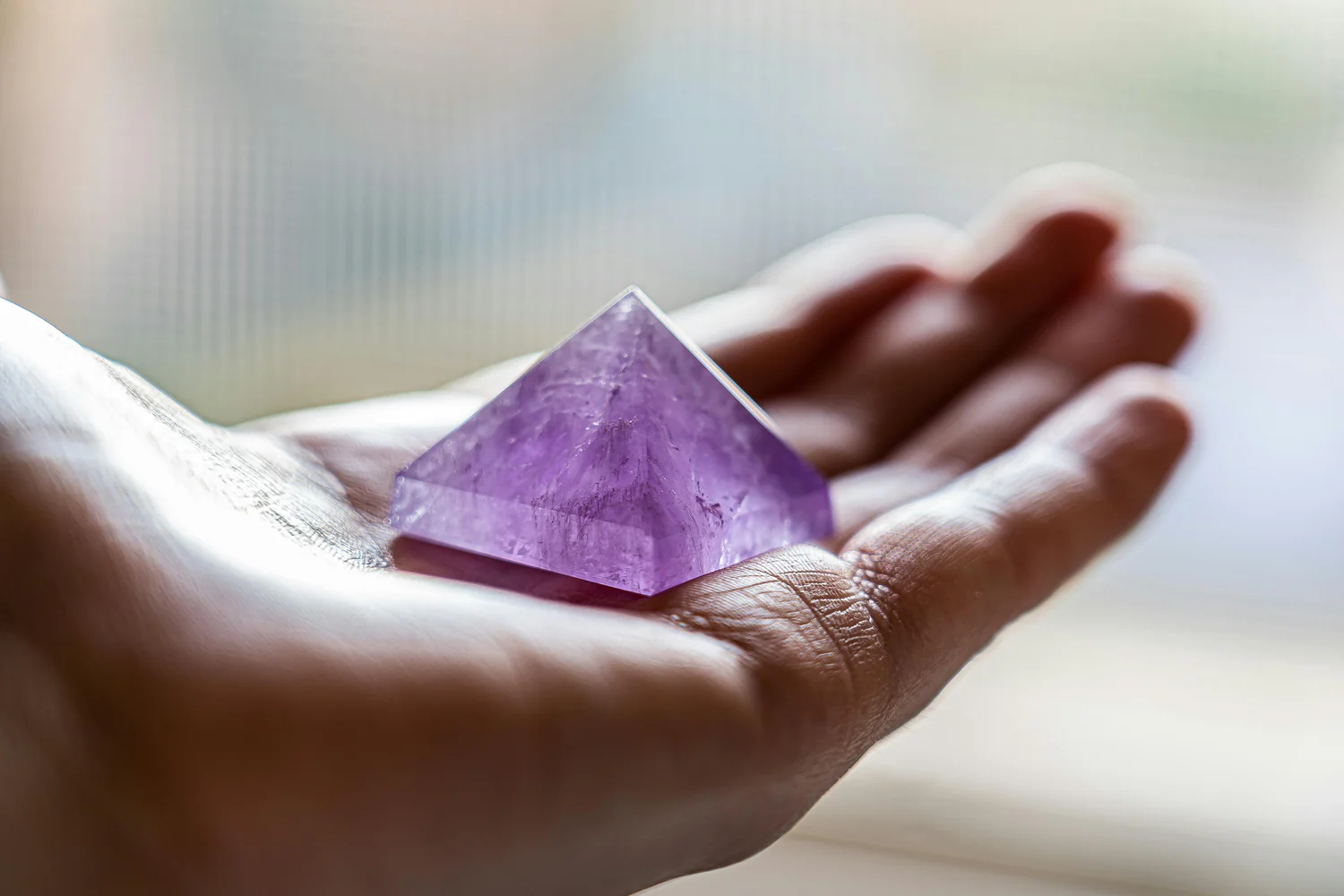
Global supply depends on three things, consistency, capacity, and trust. Jaipur’s ecosystem supports all three by combining skilled labor, established sourcing networks, and production setups that can deliver repeatable results.
Buyers also value Jaipur because it supports multiple order styles. Some customers need matched sets for earrings and necklaces. Some need calibrated stones for ready made settings. Others need custom cuts for signature designs. Jaipur suppliers can often support these needs under one roof or through closely connected partner workshops.
Here are key reasons Jaipur is a preferred sourcing hub.
- Strong lapidary talent for cutting and polishing
- Wide access to colored gemstones used in fine jewelry
- Ability to produce calibrated stones for bulk production
- Matching capability for pairs, sets, and consistent shade lots
- Export support through standardized packaging and documentation
- Flexible production for custom and wholesale gemstone orders
For brands also producing finished jewelry, it helps to understand how gemstones fit into manufacturing pipelines. The Jewelry manufacturing process guide gives helpful context for sourcing decisions.
The modern Jaipur gemstone manufacturing workflow
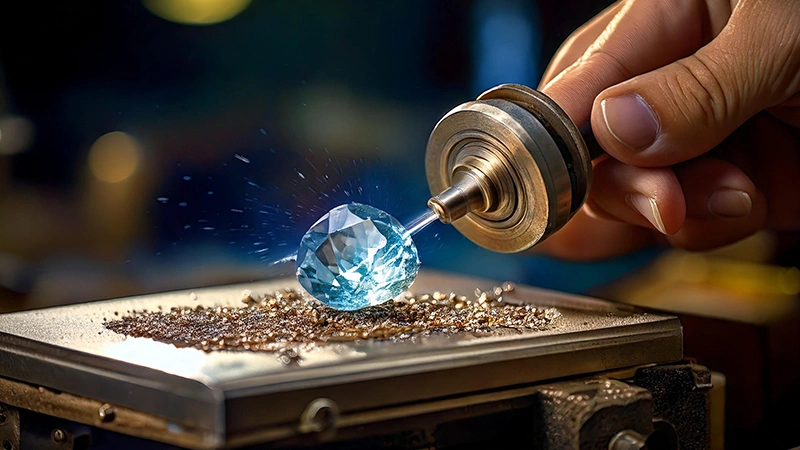
Even though every gemstone type behaves differently, most Jaipur operations follow a structured production flow. The strongest manufacturers treat each step as a quality gate, not just a task to finish. This is what enables consistent supply and reliable grading across batches.
Most workflows include rough selection, preforming, orientation planning, cutting, polishing, calibration, matching, final inspection, and packing. The difference between average and premium output often comes down to how strict these steps are and how well they are documented.
A reliable workflow usually includes the following focus points.
- Rough evaluation for inclusions, fractures, and yield potential
- Orientation planning to improve color appearance and reduce windowing
- Cutting decisions based on wearability and design use
- Polishing standards that remove haze and micro surface lines
- Calibration checks to meet size tolerances
- Matching protocols for shade, brilliance, and symmetry
- Final quality control under multiple lighting conditions
If you are specifically looking for local expertise, the Gemstone manufacturing company in Jaipur page can help you evaluate what to expect from a dedicated manufacturing partner.
Precision cutting, polishing, and calibration standards
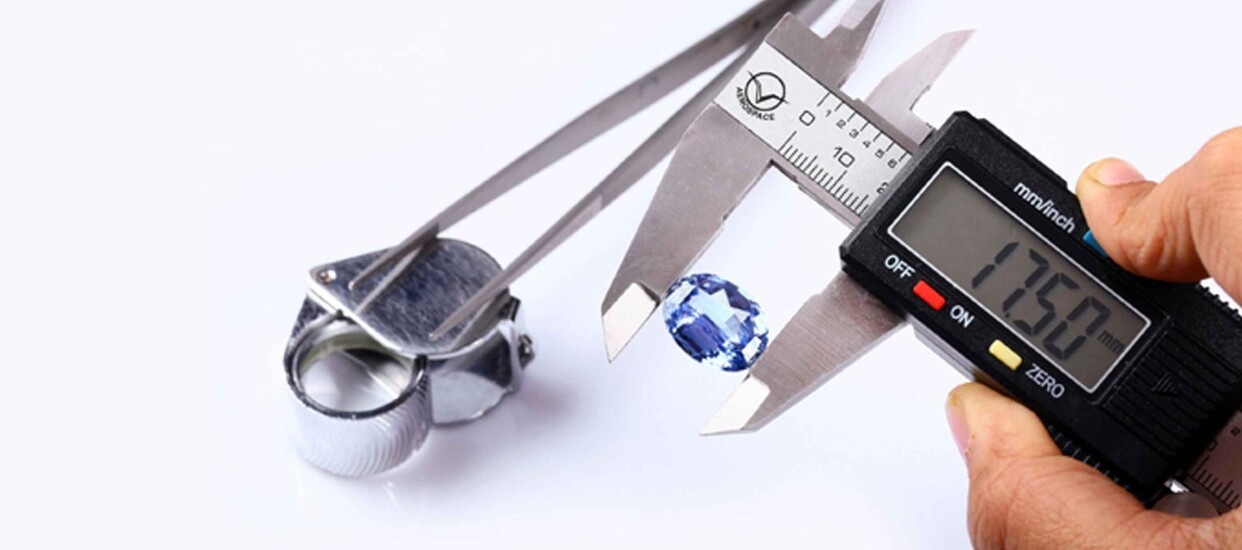
Precision is the competitive advantage in Jaipur today. International buyers want gemstones that fit settings cleanly, especially for production jewelry. That means dimensions must be accurate, outlines must be consistent, and thickness must be balanced so the stone looks bright and sets securely.
Calibration is especially important for ovals, cushions, rounds, and pears used in repeat designs. Even small variations can cause setting gaps, uneven prong pressure, and long production delays. Strong Jaipur suppliers use gauges, calipers, and lot based checks to keep stones within agreed tolerances.
Polish quality is another major factor. A gemstone can be cut well but still look dull if polishing is poor. Premium polish delivers crisp reflections, clean facet junctions, and a lively face up appearance that photographs well for ecommerce.
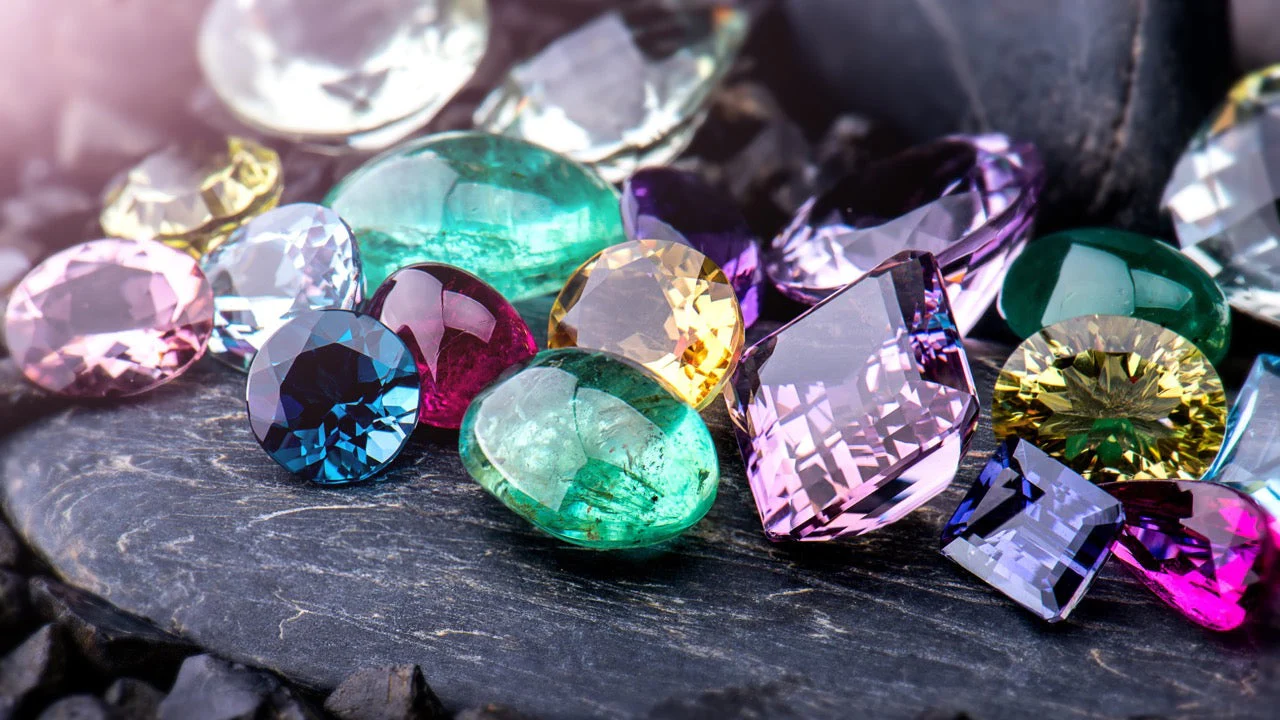
Jaipur supplies a broad spectrum of gemstones, from commercial grades for fashion jewelry to premium stones for fine jewelry. This is where grading becomes essential. Buyers should understand how color, clarity appearance, and cut performance influence both price and final look.
A useful way to think about selection is by intended use. A daily wear ring needs more durable stones and protective cutting choices. Statement pendants can support more artistic cuts and softer materials, as long as care guidance is clear.
If your customers are still learning the difference between gemstone categories, the guide on Precious vs semi precious gemstones is a helpful supporting read that also aligns with common buyer questions.
Heritage craftsmanship plus technology, how Jaipur blends both
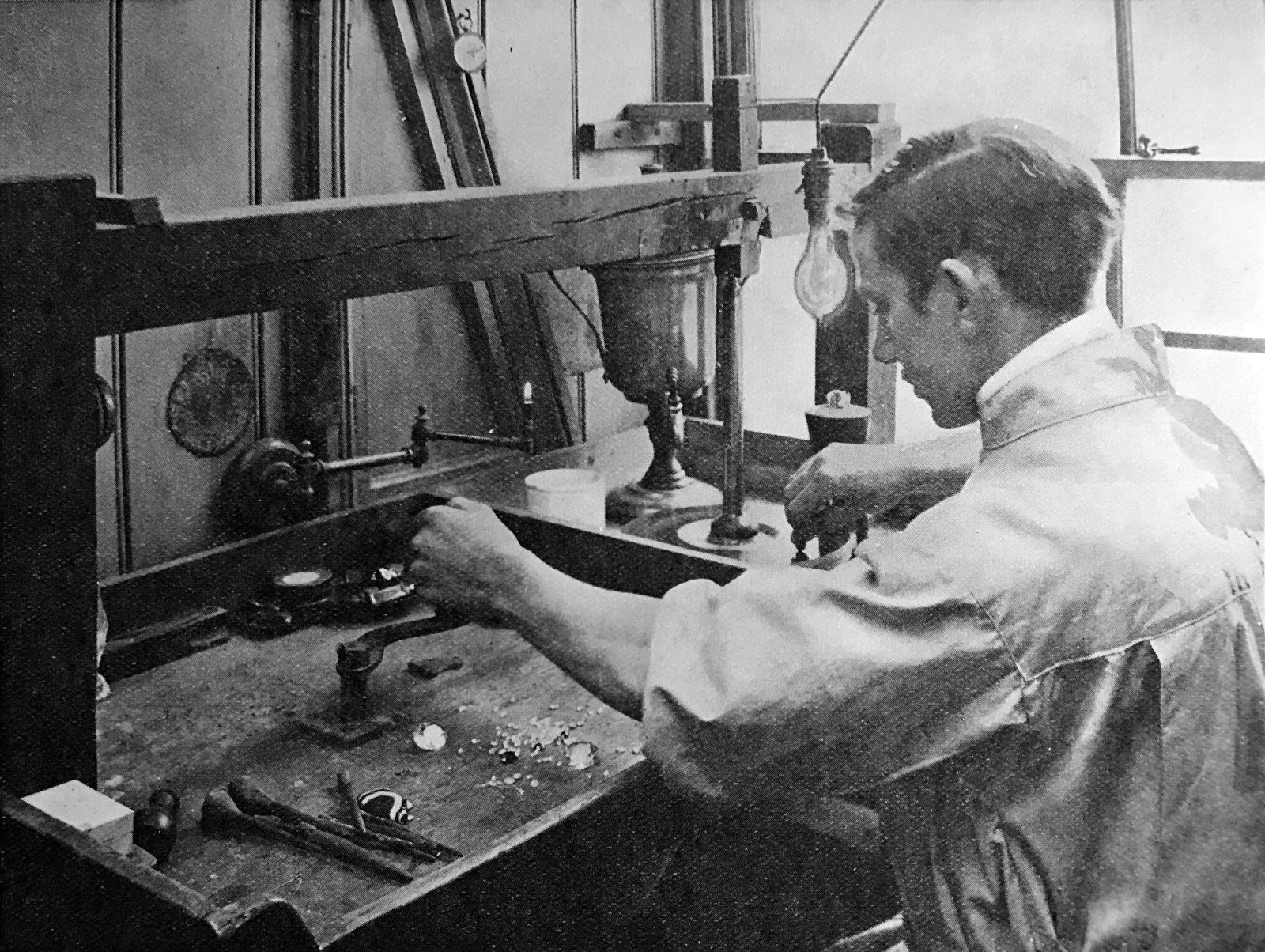
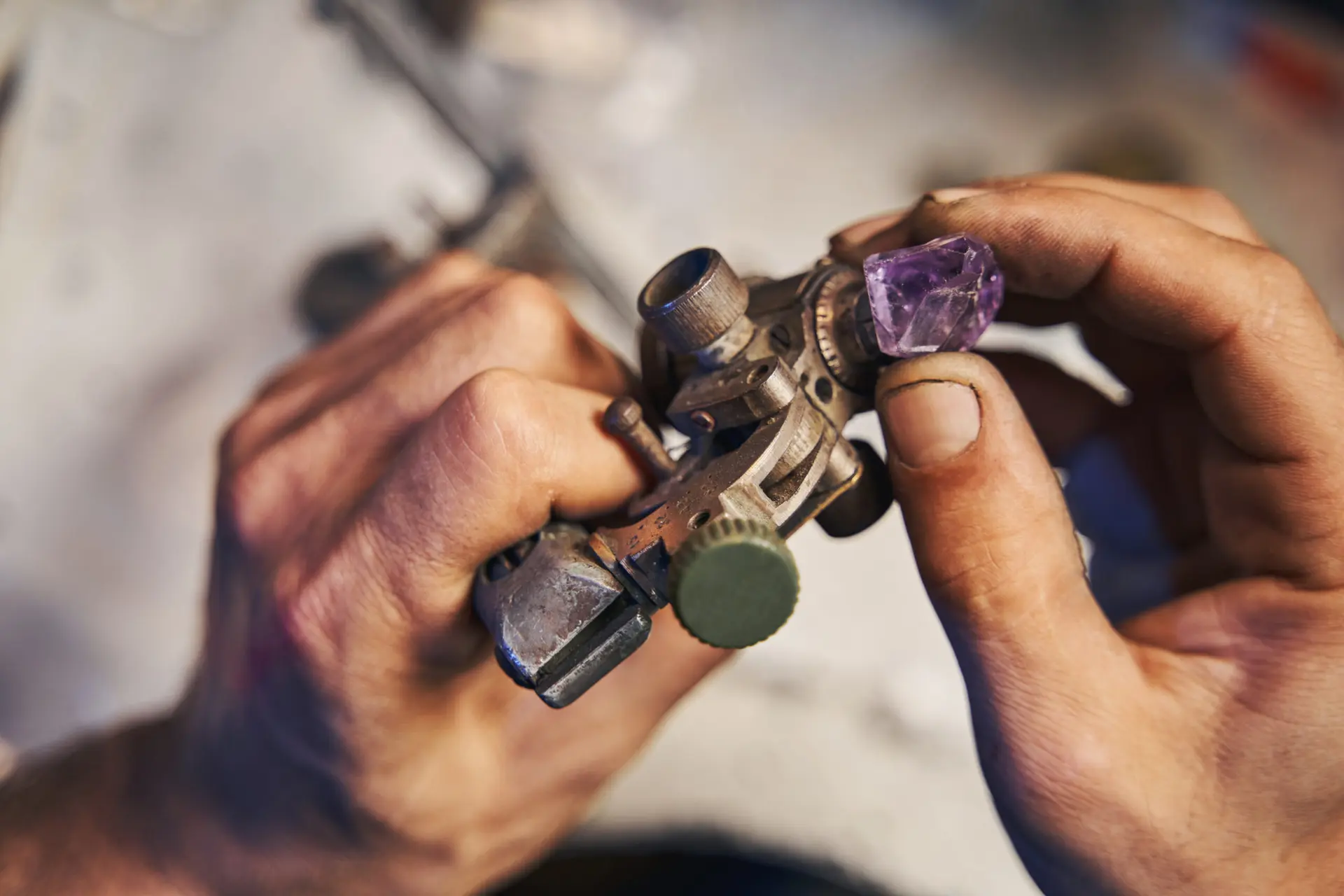
The Jaipur advantage is not only skilled hands. It is also process thinking. Many workshops now combine artisan judgement with modern tools for repeatability. Artisans handle rough decisions and fine finishing, while tools support accuracy in angles, symmetry, and size.
This blend is especially valuable in colored gemstones where the best result is not always the most mathematically perfect cut. The goal is a stone that looks bright, shows strong color, and suits the jewelry it will be set into. Jaipur cutters often optimize for beauty and wearability rather than maximizing carat weight alone.
For buyers, this means you should ask how a supplier balances weight retention with optical performance. A manufacturer focused only on weight may deliver stones that look dark, windowed, or smaller in face up size than expected.
Quality control and ethical sourcing expectations
International markets increasingly demand traceability, disclosure, and responsible business practices. While gemstone supply chains can be complex, strong Jaipur manufacturers work toward clearer sourcing records, transparent treatment disclosure, and consistent quality documentation.
Quality control typically includes checking symmetry, polish, chips, scratches, and consistency within a parcel. For matched sets, quality control also includes color alignment and brightness balance, so pairs do not look mismatched when worn.
Ethical sourcing expectations also affect communication. Buyers often want to know whether stones are natural or lab grown, and what treatments were applied. Treatment is not automatically negative, but it must be disclosed because it impacts value and care instructions.
If you want a buyer friendly overview of gemstone families and common types used in jewelry, the Types of gemstones article is a strong companion resource.
How to choose the right Jaipur manufacturer for global supply
Choosing a supplier is about more than price. The right partner delivers consistency and protects your brand reputation. When evaluating gemstone manufacturing in Jaipur, focus on capability, communication, and quality discipline.
Look for a manufacturer who can explain their workflow clearly, share real photos and videos of lots, and offer sample approvals before bulk production. A serious supplier will also discuss tolerance ranges, matching criteria, and packing standards.
Here are practical evaluation checks.
- Ask for sample parcels matched to your shade range and size needs
- Confirm calibration tolerances and whether sizes are measured batch wise
- Ask how they handle reorders so future lots match your previous supply
- Request clarity on treatments and whether documentation is provided
- Check their export packaging standards to prevent transit damage
- Review lead times based on complexity, not only based on quantity
- Ensure communication is consistent and specifications are followed
Frequently asked questions
1. Why is Jaipur called a global gemstone hub?
2. What kinds of gemstones are commonly manufactured in Jaipur?
3. What does calibrated mean in gemstones?
4. How do Jaipur manufacturers match gemstones for earrings and sets?
5. Are treatments common in gemstones made in Jaipur?
6. How can I reduce risk when placing a bulk order?
7. What documents are useful for export orders?
Conclusion
Gemstone manufacturing in Jaipur stands out because it combines heritage craftsmanship with modern precision. The city’s lapidary expertise, wide gemstone variety, and production capability make it a reliable supply center for global jewelry brands and wholesalers who value consistency and quality.
When you choose the right Jaipur manufacturer, you gain more than gemstones. You gain stable processes, better matching, cleaner finishing, and a partner who can support long term growth across collections and seasons.
If you want help sourcing gemstones or building a dependable supply line from Jaipur, explore the Services page for related solutions. For enquiries, connect through the Contact Us page or call +91 8769104410 to discuss your requirements.