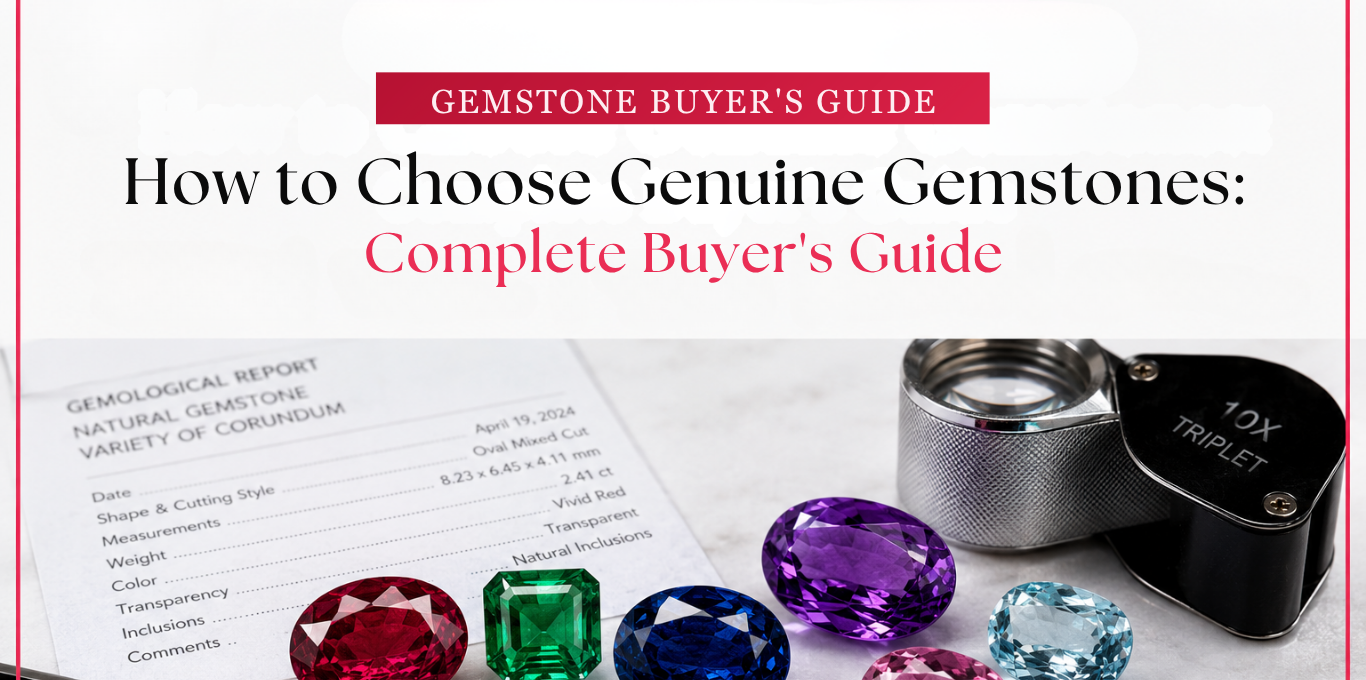
Buying genuine gemstones is one of the most important — and most confusing — decisions a jewelry buyer, designer, or brand owner will face. The market is flooded with synthetic stones, treated gems, and outright fakes that are nearly impossible to detect without the right knowledge. Whether you are sourcing for a jewelry collection, gifting a loved one, or building a wholesale order, knowing how to identify and choose genuine gemstones can save you thousands of dollars and protect your reputation.
This complete guide covers everything you need to know — from the visual and physical properties of genuine gemstones to certification, treatments, and how to work with a supplier you can actually trust.
Why It Matters to Buy Genuine Gemstones
The global gemstone market is enormous — and unfortunately, so is the volume of misrepresented stones sold within it. Treated, synthetic, and simulant stones are sold every day under the label of “natural” or “genuine.” For jewelry buyers and brands, this is not just a financial risk — it is a reputational one.
Here is why choosing genuine gemstones matters:
- Value retention — Natural, untreated genuine gemstones hold and appreciate in value over time
- Customer trust — Buyers who discover they received a treated or synthetic stone rarely return
- Brand integrity — Your jewelry brand’s identity depends on the authenticity of what you sell
- Legal compliance — Many markets legally require disclosure of treatments and synthetics
- Long-term quality — Genuine gemstones are more durable and stable than most simulants
At Eon Gems, every stone we supply comes with complete transparency on origin, treatment status, and quality grade — because we believe genuine gemstones deserve genuine representation.
Understanding the Different Types of Gemstones
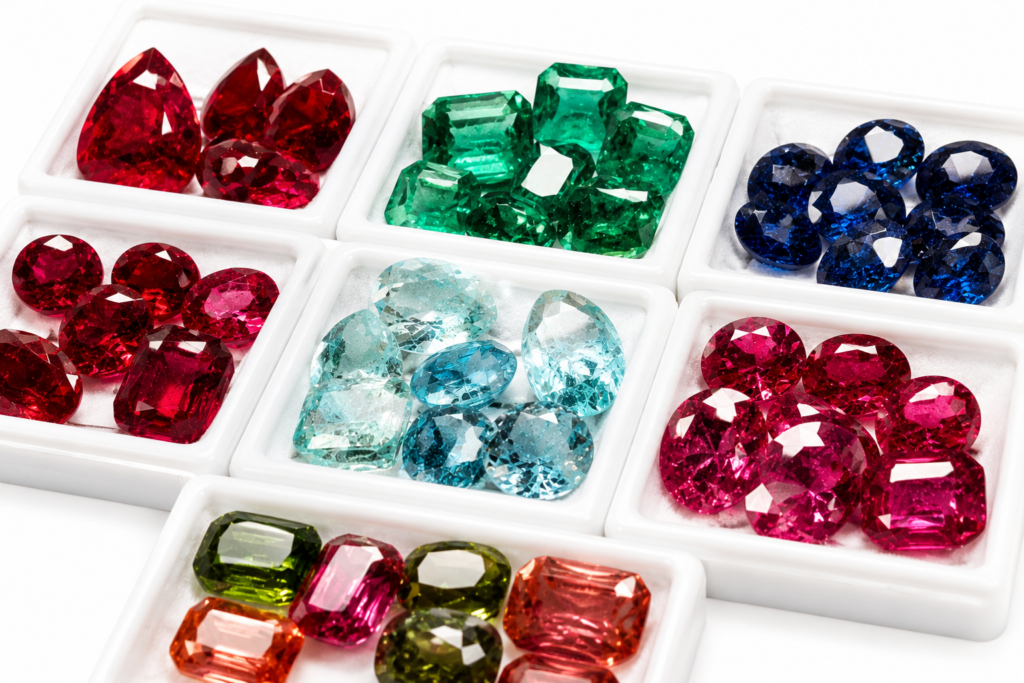
Before you can choose genuine gemstones confidently, you need to understand what the different categories mean:
Natural Genuine Gemstones
These are stones formed entirely by nature, without any human intervention in their creation. They may or may not have been treated after mining — but their origin is 100% natural. Natural genuine gemstones include rubies, emeralds, sapphires, amethysts, opals, and hundreds of others.
Treated Natural Gemstones
Many genuine gemstones are treated after mining to enhance their color, clarity, or appearance. Heat treatment, fracture filling, and diffusion are common. Treated stones are still considered genuine gemstones — but treatments must always be disclosed. An untreated genuine gemstone is typically worth significantly more than a treated one of the same variety.
Lab-Grown or Synthetic Gemstones
Lab-grown stones have the same chemical composition as natural genuine gemstones but are created in controlled environments. They are real gemstones — just not naturally formed. They are not fakes, but they must never be sold as natural stones.
Simulant or Imitation Stones
These are stones that merely look like a particular gemstone but have an entirely different chemical composition. Cubic zirconia sold as a diamond is a simulant. These are not genuine gemstones and must be clearly labeled as such.
Understanding these distinctions is the first step to buying genuine gemstones with confidence. You can explore our full range of natural gemstones and substitute stones at Eon Gems — all clearly categorized and transparently priced.
How to Identify Genuine Gemstones: 10 Key Tests and Checks
1. Check Color Depth and Consistency
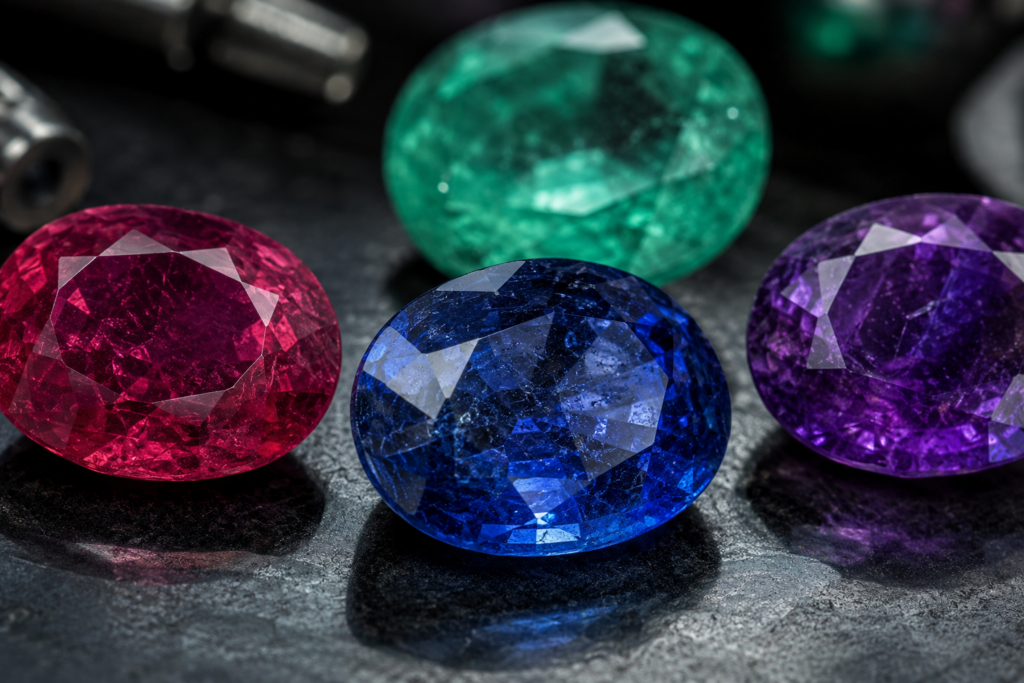
Color is the most immediately visible quality in any gemstone. Genuine gemstones typically display rich, deep, consistent color with natural zoning — slight variations in color saturation that occur naturally during formation. Synthetic or simulant stones often look unnaturally perfect in color — too vivid, too even, or too saturated.
What to look for in genuine gemstones:
- Natural color zoning (slight variations in hue across the stone)
- Depth of color that shifts slightly under different lighting
- No artificial-looking uniform color saturation throughout
For example, a genuine emerald will have natural inclusions and slight color variation. A glass imitation will look suspiciously flawless and uniformly green.
2. Examine Clarity and Inclusions
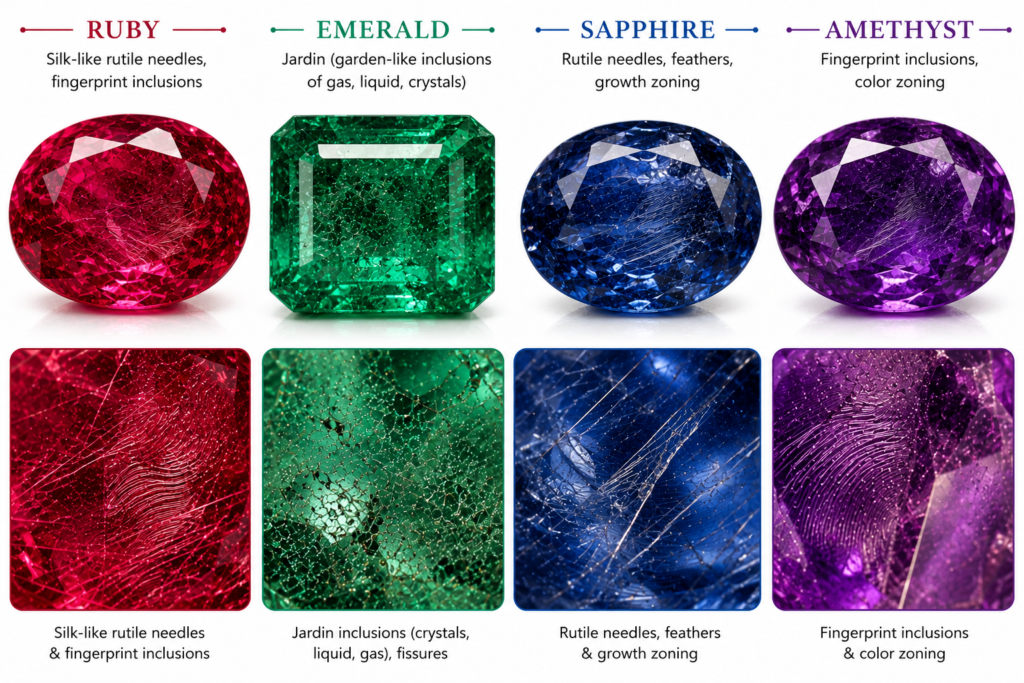
Inclusions are internal characteristics formed during a gemstone’s growth in the earth. Almost all genuine gemstones have some inclusions — and this is actually a good sign. A stone with absolutely zero inclusions visible to the naked eye may be synthetic or glass.
Different genuine gemstones have characteristic inclusion types:
- Ruby — Silk-like rutile needles, fingerprint inclusions
- Emerald — Jardin (garden-like inclusions of gas, liquid, crystals)
- Sapphire — Rutile needles, feathers, growth zoning
- Amethyst — Fingerprint inclusions, color zoning
Ask your supplier to show you inclusions under a loupe or microscope. A reputable wholesale gemstone supplier will always be willing to do this. Visit our gemstone manufacturing page to see how we grade and assess each stone at Eon Gems.
3. Test the Weight (Specific Gravity)
Genuine gemstones have consistent specific gravity — a ratio of the stone’s weight to an equal volume of water. A trained gemologist can use a hydrostatic balance to test this. At home, you can notice that most genuine gemstones feel noticeably heavier than glass or plastic imitations of the same size.
For example:
- Genuine diamonds feel denser than cubic zirconia of the same carat size
- Genuine garnets feel significantly heavier than glass simulants
If a stone feels surprisingly light for its visible size, it may not be a genuine gemstone.
4. Look for Natural Surface Characteristics
Genuine gemstones, when cut and polished, show very specific surface features:
- Facet edges — Genuine gemstones have sharp, precise facet edges. Glass simulants often have rounded edges due to lower hardness
- Luster — The surface brilliance and reflectivity differs by stone type
- Polish quality — Natural stones take a specific type of polish based on their hardness
Run your fingernail lightly over the surface and feel for consistent polish. A genuine ruby or sapphire will feel harder and smoother than most glass imitations.
5. Use the Scratch Test Wisely
The Mohs hardness scale rates minerals from 1 (softest) to 10 (hardest). Diamonds are 10. Sapphires and rubies are 9. Quartz is 7. A genuine gemstone should only be scratched by materials harder than itself.
However, use this test carefully — do not scratch valuable mounted stones. Use it only on loose stones when necessary, and always consult a gemologist for high-value genuine gemstones.
6. Assess the Cut Quality
Genuine gemstones are cut by skilled lapidaries to maximize their natural beauty — color, brilliance, and clarity. The cut of a genuine gemstone should reflect the stone’s natural optical properties.
Signs of a properly cut genuine gemstone:
- Symmetrical facets aligned precisely
- Consistent brilliance and light return
- Cut style appropriate to the stone type (emerald cut for emeralds, brilliant cut for diamonds)
- No windowing (a see-through effect caused by poor cut angles)
At Eon Gems, our in-house lapidary team in Jaipur cuts every genuine gemstone to maximize its natural character — custom cuts and calibrated sizes available on request.
7. Inspect Under UV Light
Many genuine gemstones show characteristic fluorescence under ultraviolet (UV) light. This is a quick and useful screening tool:
- Diamond — Many genuine diamonds fluoresce blue under UV light
- Ruby — Often shows strong red fluorescence
- Synthetic stones — May show different or no fluorescence compared to their natural counterparts
A UV lamp is an affordable and accessible tool for anyone who regularly buys or handles genuine gemstones. It will not give you a definitive answer on its own, but combined with other checks, it adds a useful data point.
8. Request a Thermal Conductivity Test
Gemologists use thermal probes to test how quickly a stone conducts heat. Genuine gemstones have specific thermal conductivity values that differ significantly from glass and most simulants. A diamond, for example, conducts heat extremely well — much faster than cubic zirconia.
Thermal testers are widely available and reasonably priced for professional buyers. For high-value genuine gemstones, this is a worthwhile investment.
9. Always Ask About Treatments
One of the most important steps when buying genuine gemstones is asking directly about treatments. Reputable suppliers will always disclose:
- Whether the stone has been heat-treated
- Whether any fracture filling or clarity enhancement has been applied
- Whether surface diffusion or coating has been used
- Whether the stone is fully natural and untreated
Treatment significantly affects both value and durability. A heat-treated sapphire is still a genuine gemstone — but it is worth considerably less than an unheated one of equal quality. Always get treatment disclosure in writing.
At Eon Gems, we provide complete treatment disclosure for every gemstone we supply. No hidden enhancements, no misrepresentation — ever.
10. Require Certification from a Recognized Lab
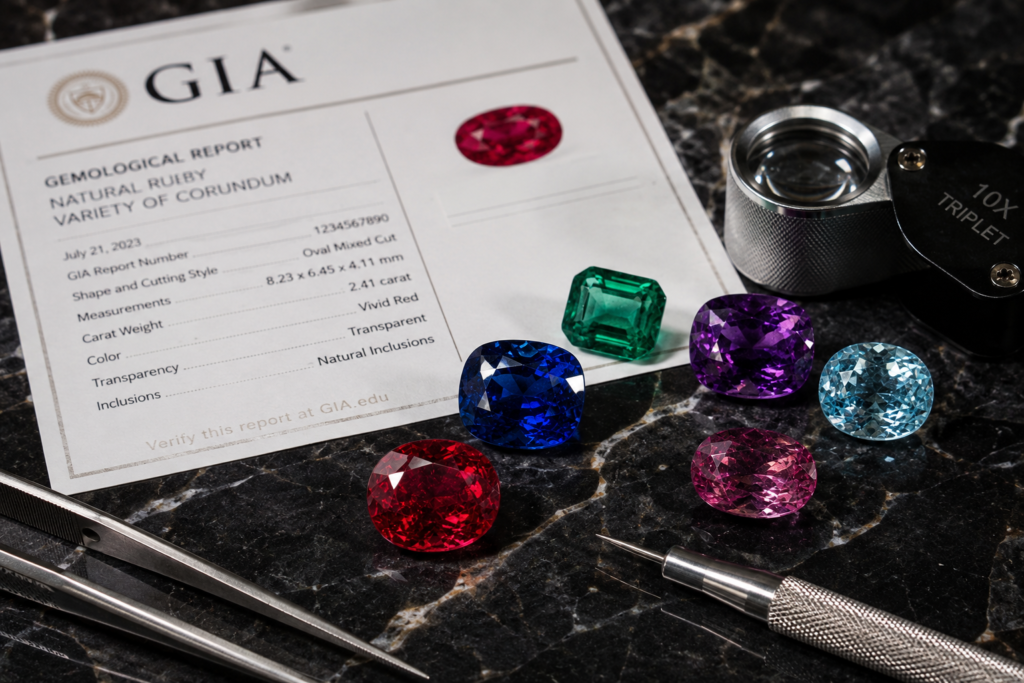
The most reliable way to verify genuine gemstones is independent laboratory certification. A certified stone has been tested by trained gemologists using specialized equipment, and its authenticity, origin, quality grade, and treatment status have been formally documented.
Recognized gemological laboratories include:
- GIA — Gemological Institute of America (gold standard globally)
- IGI — International Gemological Institute
- AGL — American Gemological Laboratories
- Gübelin — Highly respected for colored stone origin reports
- SSEF — Swiss Gemmological Institute
Always verify that the certificate matches the stone exactly — check carat weight, dimensions, color grade, and treatment status. Certificates can be forged, so buy only from suppliers willing to have stones independently verified.
Common Genuine Gemstones and How to Evaluate Each
Ruby
Genuine rubies are among the most valuable colored stones in the world. Look for:
- Deep red to pinkish-red color (the finest are “pigeon blood” red from Burma)
- Characteristic silk inclusions visible under magnification
- Strong red fluorescence under UV light
- GIA or Gübelin certification for high-value stones
Synthetic rubies and red garnets are common imitations. A professional gemologist can distinguish them easily.
Emerald
Genuine emeralds almost always have inclusions — their “jardin.” An emerald with no inclusions is almost certainly synthetic. Look for:
- Rich green color with natural blue or yellow secondary hue
- Visible inclusions (a sign of genuineness, not a defect in emerald)
- Origin reports from recognized labs for Columbian, Zambian, or Brazilian stones
Sapphire
Genuine sapphires come in almost every color — blue is most recognized. Evaluate:
- Color saturation and natural zoning
- Treatment status (heating is extremely common in sapphires)
- Origin — Kashmir, Burma, and Ceylon sapphires command significant premiums
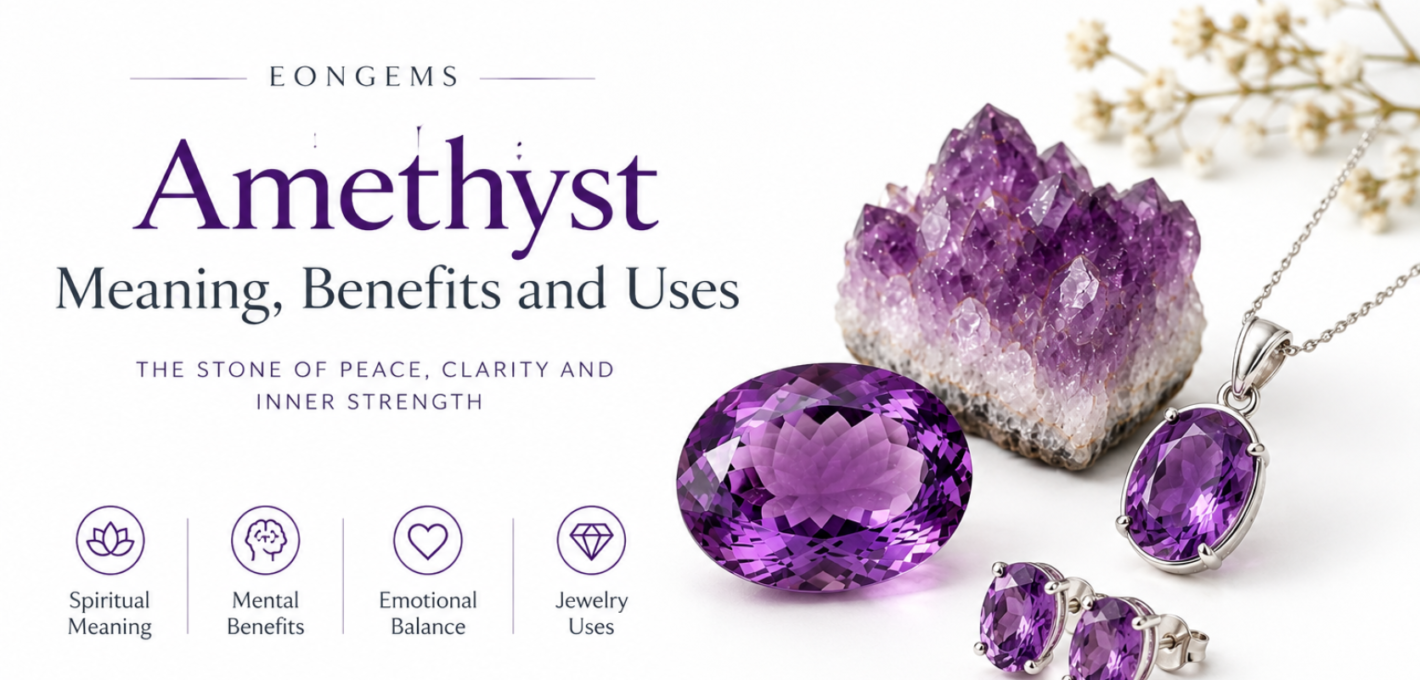
Amethyst
Genuine amethysts are widely available and affordable. Common imitations are glass and synthetic amethyst. Check for:
- Natural color zoning (not perfectly uniform purple throughout)
- Inclusions consistent with natural quartz
- Appropriate weight for size
Explore our complete collection of these and 250+ other genuine gemstones at Eon Gems, sourced and graded transparently from our Jaipur facility.
How to Choose a Supplier for Genuine Gemstones
Even if you know how to evaluate genuine gemstones, you still need a supplier you can trust. Here is what to look for:
- Full treatment disclosure — Non-negotiable. Any supplier who refuses to disclose treatments is not trustworthy
- Certification support — Can they provide or arrange third-party lab certification?
- Sample availability — Never commit to a bulk order without testing samples first
- Physical facility — A supplier with a real, inspectable manufacturing facility is far more accountable than an anonymous online seller
- Industry registration — Look for suppliers registered with bodies like GJEPC
- Years of experience — Experience in genuine gemstone sourcing takes years to develop
At Eon Gems, we are a GJEPC-registered, Jaipur-based wholesale gemstone manufacturer with 36 years of legacy. Every genuine gemstone we supply comes with complete origin and treatment transparency — and we welcome client visits to our facility.
Contact us today to request samples, discuss certification requirements, or explore our full genuine gemstone collection.
Red Flags When Buying Genuine Gemstones
Watch for these warning signs when sourcing genuine gemstones:
- “Guaranteed natural” with no documentation — Words without paper are meaningless
- Prices far below market — Genuine gemstones have real cost floors; suspiciously cheap stones are almost never genuine
- Refusal to disclose treatments — This is both a legal and ethical issue
- No physical address or verifiable facility — Anonymous sellers have no accountability
- Pressure to buy quickly — High-pressure tactics exist to prevent you from doing your due diligence
- No willingness to provide samples — Genuine stone suppliers are confident in their product
Final Thoughts
Learning how to choose genuine gemstones takes time, practice, and the right knowledge — but it is an essential skill for any jewelry buyer, designer, or brand owner. Use the 10 checks in this guide as your starting framework, always ask for treatment disclosure, and require certification for high-value purchases.
Most importantly, partner with a wholesale gemstone supplier who values transparency as much as you do. The right supplier will never make you wonder whether your stones are genuine — because they will show you, document it, and stand behind every piece they sell.
If you are ready to source genuine gemstones from a trusted, certified supplier in Jaipur, India — Eon Gems is here to help.
Browse our genuine gemstone collection or get in touch with our team to discuss your specific requirements today.
Also read from our blog:
- How to Choose a Wholesale Gemstone Supplier: Complete Guide
- Gemstone Certification Explained: What Buyers Should Check
- Top 10 Gemstones Trending in 2026