Introduction
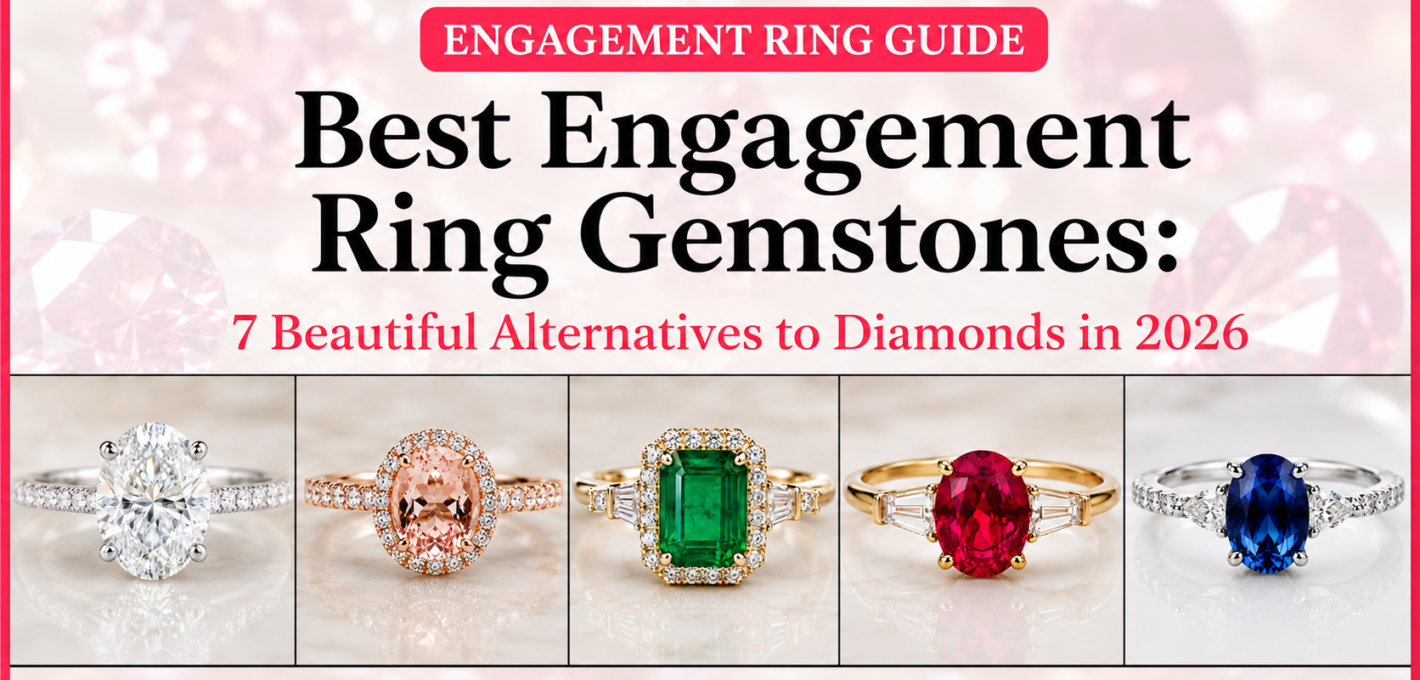
The best diamond alternatives for engagement rings offer everything a diamond does — beauty, durability, and lasting value — while adding something a diamond often can’t: personality and color. A growing segment of buyers, particularly millennials and Gen Z, are choosing engagement rings that reflect their individuality rather than follow convention.
For jewelry brands, this shift represents a real opportunity. The gemstone engagement ring market is growing fast, and brands that offer a well-curated range of alternatives are capturing buyers that the diamond-only segment simply can’t reach.
Why More Buyers Are Choosing Gemstone Engagement Rings
Consumer preferences have changed dramatically over the past decade.
Modern buyers want more than just tradition. They want a gemstone that reflects their story, personality, and lifestyle.
Several factors are driving this shift:
Individuality
Many couples prefer engagement rings that stand out from conventional diamond solitaires. Colored gemstones provide a unique appearance while maintaining elegance and sophistication.
Better Value
Many gemstone alternatives offer larger sizes and stronger visual impact at a fraction of the cost of natural diamonds.
Meaning and Symbolism
Different gemstones carry different meanings.
- Sapphire symbolizes loyalty and trust.
- Ruby represents passion and devotion.
- Emerald symbolizes growth and eternal love.
- Morganite is associated with romance and compassion.
For many buyers, these symbolic meanings add emotional value to the ring.
Social Media Influence
Platforms such as Instagram, Pinterest, and TikTok have introduced consumers to alternative engagement ring styles, increasing demand for colored gemstones and unique bridal jewelry collections.
What Makes a Good Engagement Ring Gemstone?
An engagement ring is designed to be worn every day for many years. Therefore, selecting a gemstone involves more than simply choosing a beautiful color.
The best engagement ring gemstones combine durability, stability, and lasting visual appeal.
Hardness
Hardness measures a gemstone’s resistance to scratches and is rated on the Mohs Hardness Scale.
For engagement rings, gemstones with a hardness of 7 or higher are generally recommended.
Toughness
Toughness measures a gemstone’s ability to resist cracking or chipping.
A gemstone can be hard yet still be vulnerable to impact damage.
Stability
Stability refers to a gemstone’s resistance to sunlight, heat, chemicals, and everyday environmental conditions.
Long-Term Beauty
The gemstone should maintain its brilliance, color, and attractiveness throughout years of daily wear.
With these criteria in mind, let’s explore the best alternatives to traditional diamond engagement rings.
1. Blue Sapphire – The Timeless Classic
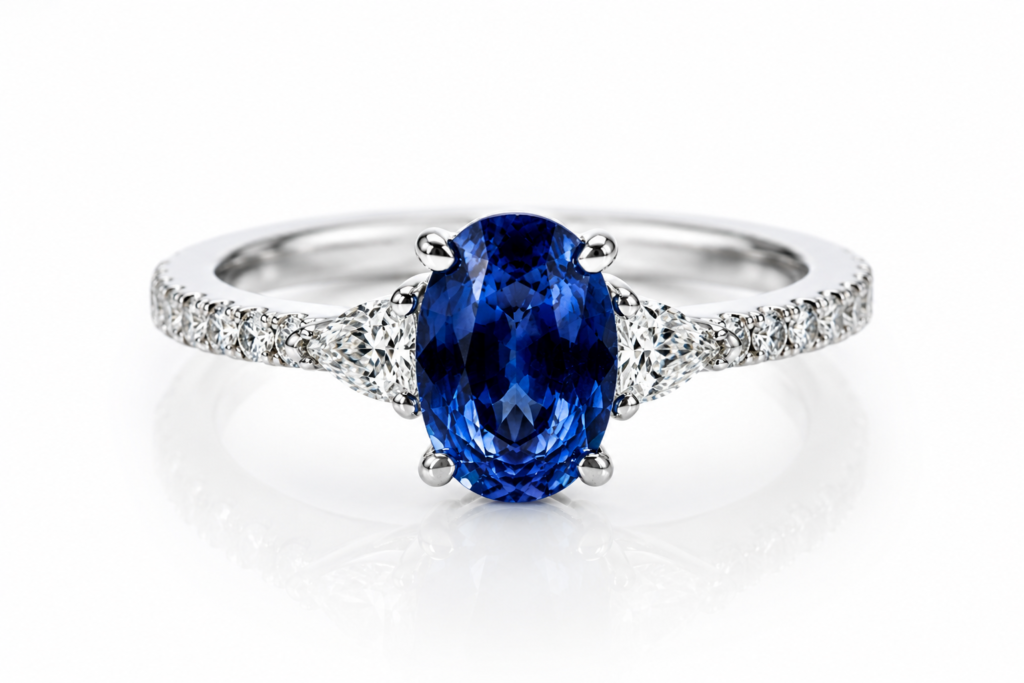
Blue sapphire remains the most popular alternative to a diamond engagement ring.
For centuries, sapphire has symbolized loyalty, trust, wisdom, and sincerity. Its rich blue color offers a sophisticated and elegant appearance that never goes out of style.
With a Mohs hardness rating of 9, sapphire is one of the most durable gemstones available. It is second only to diamond in hardness, making it highly suitable for daily wear.
One reason sapphire engagement rings remain so popular is their association with royalty. The iconic sapphire ring originally worn by Princess Diana and now worn by Catherine, Princess of Wales, helped establish sapphire as one of the most desirable engagement ring gemstones in the world.
Although blue sapphire is the most recognized variety, sapphires are available in numerous colors including:
- Pink Sapphire
- Yellow Sapphire
- White Sapphire
- Green Sapphire
- Padparadscha Sapphire
Why Buyers Love Sapphire
- Exceptional durability
- Timeless appearance
- Strong symbolic meaning
- Available in multiple colors
- Suitable for luxury and affordable collections
Best Settings
Sapphires look stunning in:
- 18K Yellow Gold
- White Gold
- Gold Vermeil
- Platinum
Mohs Hardness
9/10
2. Ruby – The Stone of Passion
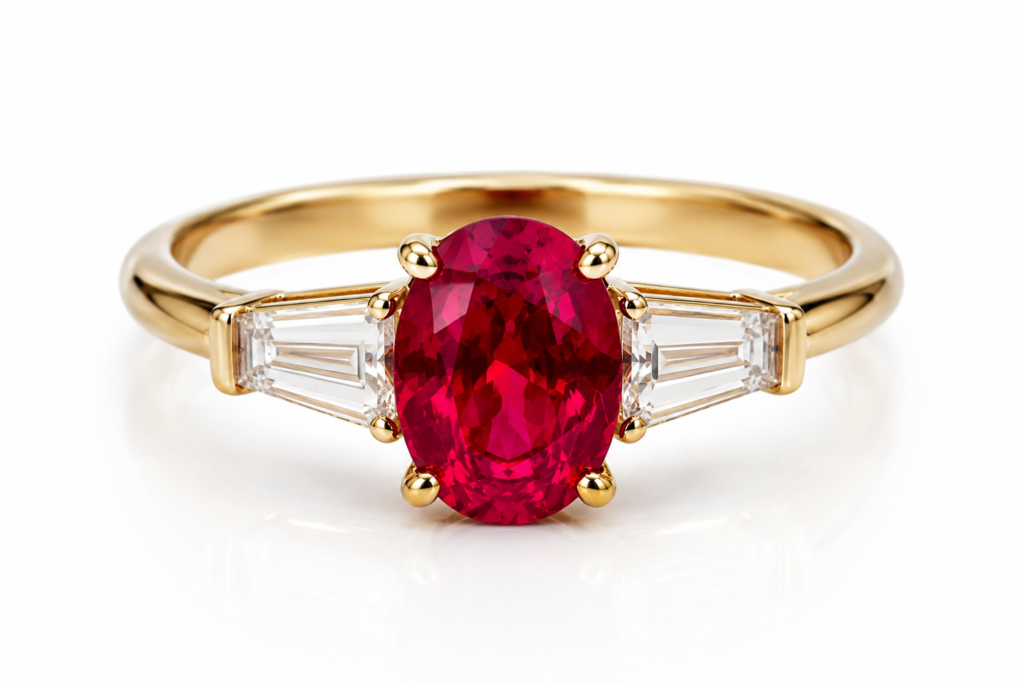
Ruby is one of the most emotionally powerful gemstones used in engagement rings.
Its rich red color has symbolized love, passion, courage, and devotion for thousands of years.
Ruby belongs to the corundum family, the same mineral family as sapphire. As a result, ruby shares the same impressive hardness rating of 9 on the Mohs scale.
This durability makes ruby an excellent choice for engagement rings intended for everyday wear.
Natural fine-quality rubies are among the rarest and most valuable gemstones in the world. However, high-quality lab-grown rubies now provide a more accessible option for buyers seeking the beauty of ruby without the premium price tag.
Why Buyers Love Ruby
- Deep romantic symbolism
- Exceptional durability
- Rich and luxurious appearance
- Strong visual impact
- Increasing popularity in bridal jewelry
Best Settings
Rubies pair beautifully with:
- Yellow Gold
- Gold Vermeil
- Rose Gold
- Vintage-inspired designs
Mohs Hardness
9/10
3. Emerald – For the Bold and Sophisticated
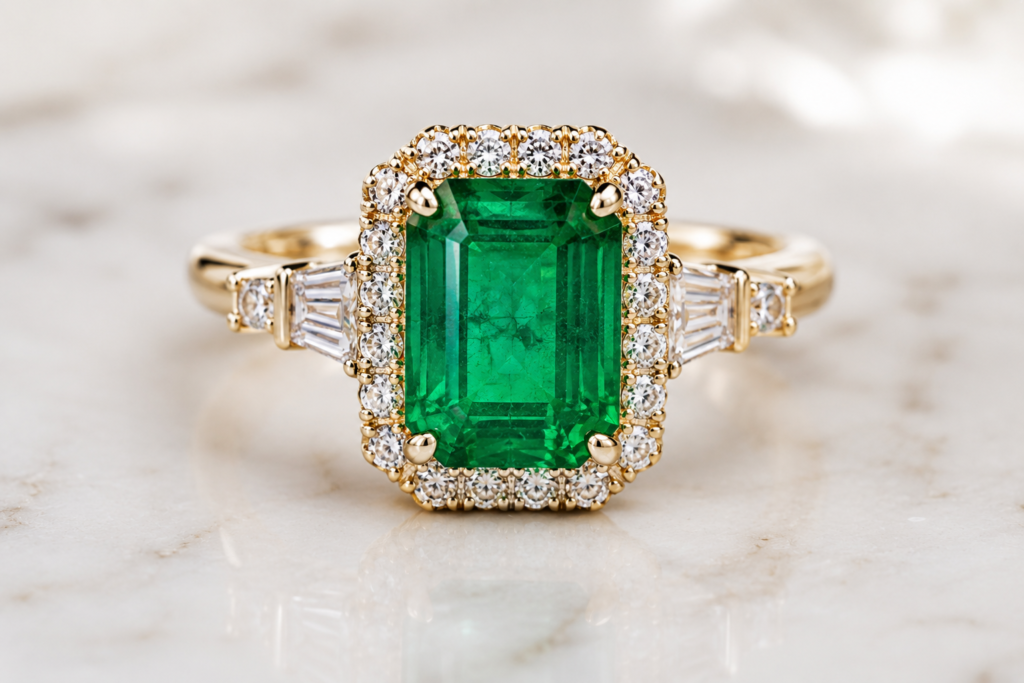
Emerald engagement rings have experienced a significant rise in popularity in recent years.
Known for their rich green color and unmistakable character, emeralds offer a distinctive alternative to traditional engagement ring stones.
Historically associated with Venus, the goddess of love, emeralds have long symbolized growth, renewal, prosperity, and eternal love.
Unlike diamonds and sapphires, emeralds often contain natural inclusions known as “jardin,” which contribute to their individuality and charm.
While emeralds have a hardness of approximately 7.5–8 on the Mohs scale, they require slightly more care than sapphire or diamond due to their internal characteristics.
For maximum protection, many jewelers recommend bezel settings or halo designs.
Why Buyers Love Emerald
- Stunning green color
- Luxury appeal
- Unique natural character
- Strong symbolism
- High fashion influence
Best Settings
- Yellow Gold
- Gold Vermeil
- Halo Settings
- Bezel Settings
Mohs Hardness
7.5–8/104. Morganite – The Romantic Choice
Morganite has become one of the most sought-after engagement ring gemstones among millennials and Gen Z buyers. Its delicate blush pink to peach tones create a soft, feminine appearance that feels both modern and timeless.
As a member of the beryl family, which also includes emerald and aquamarine, morganite offers excellent clarity and good durability for engagement rings.
One of the biggest reasons behind morganite’s popularity is its perfect pairing with rose gold. Together, they create a warm, romantic aesthetic that performs exceptionally well across social media platforms and bridal collections.
Morganite is particularly popular among buyers looking for a distinctive engagement ring that feels elegant without being overly traditional.
Why Buyers Love Morganite
- Soft romantic color
- Excellent value for money
- Large stone appearance
- Beautiful with rose gold
- Strong appeal among younger buyers
Best Settings
- Rose Gold
- Rose Gold Vermeil
- Halo Designs
- Vintage-Inspired Rings
Mohs Hardness
7.5–8/10
5. Aquamarine – Elegant and Timeless
Aquamarine is admired for its cool blue color, exceptional clarity, and understated elegance.
Its name comes from the Latin words for “water of the sea,” which perfectly describes its calming ocean-blue appearance.
Unlike more vibrant gemstones such as ruby or sapphire, aquamarine offers a subtle and sophisticated beauty that appeals to buyers seeking a refined engagement ring.
Because most aquamarines are eye-clean, they often appear exceptionally bright and transparent even in larger sizes.
Aquamarine belongs to the beryl family and offers a Mohs hardness of 7.5–8, making it suitable for engagement rings when properly cared for.
Why Buyers Love Aquamarine
- Clean and elegant appearance
- Excellent clarity
- Larger sizes available at affordable prices
- Timeless and sophisticated style
- Perfect for minimalist jewelry designs
Best Settings
- White Gold
- Sterling Silver
- White Gold Vermeil
- Contemporary Solitaires
Mohs Hardness
7.5–8/10
6. Moissanite – The Ultimate Diamond Alternative
Moissanite has rapidly become one of the most popular engagement ring stones in the world.
Originally discovered in a meteorite crater, natural moissanite is incredibly rare. Today, nearly all moissanite is laboratory-created, allowing consumers to enjoy its extraordinary beauty at an accessible price.
Many buyers choose moissanite because it closely resembles a diamond while offering even greater fire and sparkle.
With a Mohs hardness of 9.25, moissanite is one of the hardest gemstones available and is exceptionally resistant to scratching.
For buyers who want the appearance of a large diamond engagement ring without the associated cost, moissanite is often the ideal solution.
Why Buyers Love Moissanite
- Exceptional brilliance
- More fire than diamond
- Outstanding durability
- Affordable pricing
- Sustainable production
Best Settings
- White Gold
- Sterling Silver
- Gold Vermeil
- Modern Solitaire Designs
Mohs Hardness
9.25/10
7. Lab-Grown Diamonds – Real Diamonds, Better Value
Lab-grown diamonds have transformed the engagement ring industry.
Unlike diamond simulants, lab-grown diamonds are genuine diamonds. They possess the same chemical composition, physical properties, and optical characteristics as natural diamonds.
The only difference lies in their origin.
Natural diamonds form deep within the earth over billions of years, while lab-grown diamonds are created using advanced technology in a controlled environment.
Because production costs are significantly lower, lab-grown diamonds are often available at prices 60–80% below comparable natural diamonds.
This allows buyers to purchase larger, higher-quality diamonds without exceeding their budget.
Why Buyers Love Lab-Grown Diamonds
- Genuine diamonds
- Exceptional durability
- Better value
- Larger sizes for the same budget
- Increasing consumer acceptance
Best Settings
- Yellow Gold
- White Gold
- Platinum
- Gold Vermeil
- Sterling Silver
Mohs Hardness
10/10
What This Means for Jewelry Brands
The engagement ring market is no longer dominated by a single gemstone category.
Today’s buyers are more informed, more style-conscious, and more willing to explore alternatives that align with their personality and values.
For jewelry brands, this creates an opportunity to differentiate themselves through unique gemstone collections rather than competing solely on traditional diamond offerings.
A carefully curated engagement ring collection featuring sapphire, ruby, emerald, moissanite, or lab-grown diamonds can help brands attract new customers, improve margins, and establish a stronger identity in an increasingly competitive market.
Brands that embrace alternative engagement ring gemstones today are positioning themselves for long-term growth as consumer preferences continue to evolve.
How EON GEMS Supports Jewelry Brands
At EON GEMS, we work with jewelry brands, designers, wholesalers, and retailers worldwide to develop custom engagement ring collections featuring both natural and lab-grown gemstones.
Based in Jaipur, India, one of the world’s leading gemstone and jewelry manufacturing centers, we provide:
- Custom Jewelry Manufacturing
- Natural Gemstone Sourcing
- Lab-Grown Gemstone Sourcing
- Moissanite Supply
- CAD Design Services
- Prototype Development
- Private Label Manufacturing
- Gold Vermeil Jewelry Manufacturing
- 925 Sterling Silver Jewelry Manufacturing
- Worldwide Shipping
Whether you are launching your first bridal collection or expanding an established jewelry brand, our team can help bring your ideas to life with flexible manufacturing solutions and no minimum order quantity requirements.
Frequently Asked Questions
What is the best alternative to a diamond engagement ring?
Blue sapphire is widely considered one of the best alternatives due to its durability, timeless appeal, and symbolic meaning. Moissanite is another excellent choice for buyers seeking maximum brilliance at a lower price.
Which gemstone is closest to a diamond?
Moissanite is considered the closest alternative to a diamond in terms of appearance, sparkle, and durability.
Are emerald engagement rings durable?
Yes. Emeralds can be worn daily, although they require slightly more care than sapphire or diamond due to their natural inclusions.
Are lab-grown diamonds real diamonds?
Yes. Lab-grown diamonds are chemically, physically, and optically identical to natural diamonds.
What is the most affordable engagement ring gemstone?
Moissanite generally offers the best combination of durability, brilliance, and affordability.
Can jewelry brands create custom engagement ring collections?
Absolutely. Many brands work with manufacturers to create private-label engagement ring collections featuring natural gemstones, lab-grown gemstones, moissanite, and diamonds.
Final Thoughts
Diamonds may remain the traditional choice, but they are no longer the only choice.
From the timeless elegance of sapphire and ruby to the modern brilliance of moissanite and lab-grown diamonds, today’s engagement ring buyers have more options than ever before.
For jewelry brands, embracing alternative gemstones offers a powerful opportunity to stand out in a competitive market while meeting the evolving preferences of modern consumers.
The future of bridal jewelry is personal, meaningful, and increasingly colorful—and gemstone engagement rings are leading that transformation.