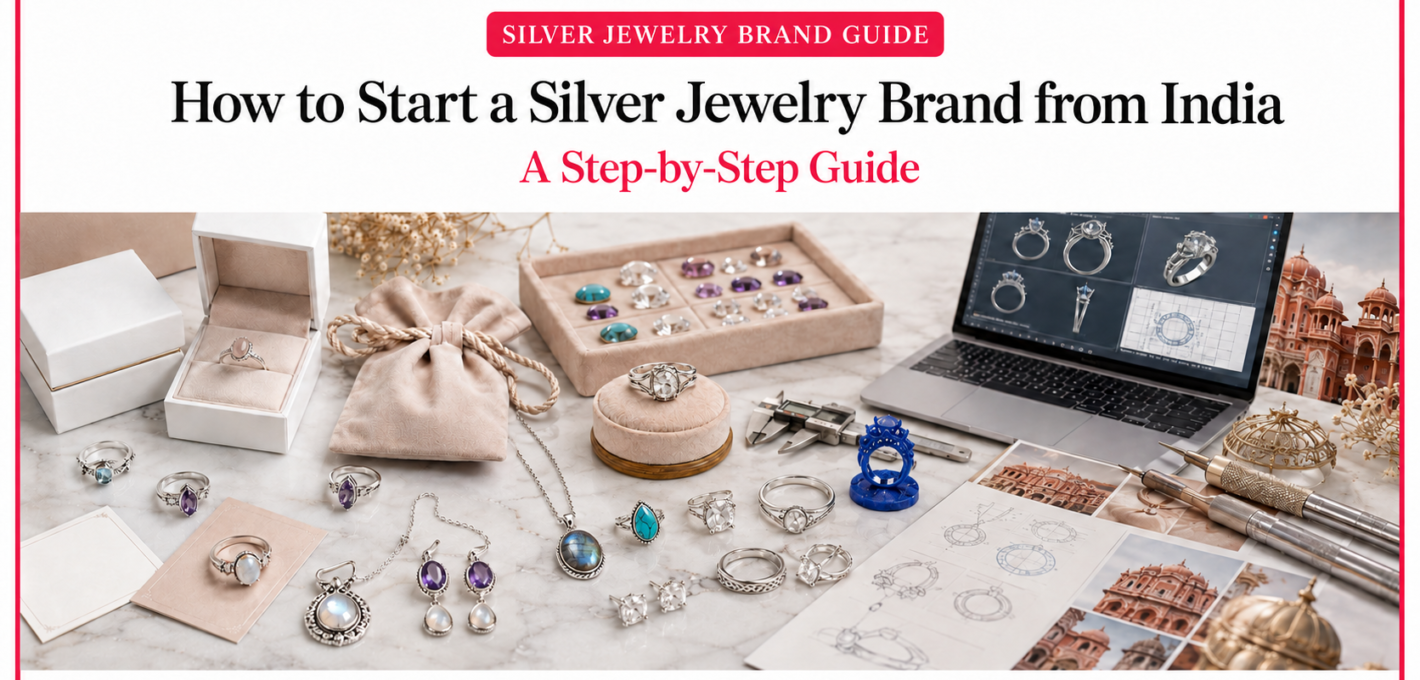
Starting a silver jewelry brand from India is one of the most commercially viable decisions a jewelry entrepreneur can make in 2025.
Starting a silver jewelry brand from India is one of the most commercially viable decisions a jewelry entrepreneur can make in 2025. India — and Jaipur specifically — gives you access to world-class 925 sterling silver manufacturing, in-house gemstone supply, skilled artisans, and competitive pricing that no other country can match at the same quality level.
This guide walks you through every step — from your first idea to your first international order.
Why India Is the Right Place to Start a Silver Jewelry Brand
India has been at the center of global jewelry manufacturing for centuries. Jaipur alone accounts for a significant share of the world’s gemstone-set silver jewelry exports. When you start a silver jewelry brand sourcing from India, you get:
- Lower manufacturing costs compared to the USA, UK, or Europe — without sacrificing quality
- In-house gemstone access — manufacturers here work directly with gemstone suppliers, cutting out middlemen
- Skilled artisan workforce — stone setting, enamelling, and silversmithing skills passed down through generations
- No MOQ flexibility — many Indian manufacturers work with no minimum order quantity, ideal for new brands testing the market
- Export experience — Jaipur manufacturers regularly ship to the USA, UK, Australia, and the Middle East with full documentation
Step 1 — Define Your Brand Niche and Target Customer
Before you contact a single manufacturer, get clear on who you are selling to and what makes your brand different. The silver jewelry market is crowded. Brands that succeed have a clear, specific identity.
Ask yourself these questions:
- Who is my customer? (Age, lifestyle, budget, geography)
- What aesthetic am I building around? (Minimalist, bohemian, bridal, contemporary, spiritual)
- What price range will I sell at? ($30–$80 everyday wear, $80–$200 gifting, $200+ fine)
- Will I focus on plain silver or gemstone-set pieces?
- Will I sell direct-to-consumer online, through retailers, or both?
Your answers directly determine which manufacturer is right for you, which gemstones to use, and how to price your collection.
Step 2 — Choose Your Core Metal and Material
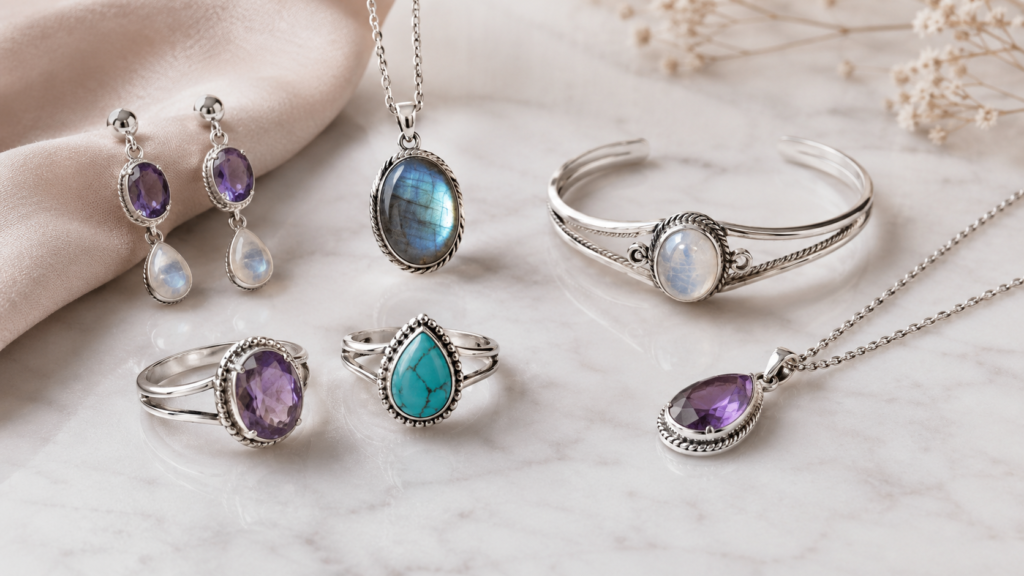
For a new silver jewelry brand, 925 sterling silver is the clear starting point. It is:
- Affordable to manufacture compared to gold
- Hypoallergenic when nickel-free — important for customer satisfaction
- Durable enough for daily wear with proper care
- Universally flattering across skin tones and aesthetics
- Compatible with virtually every gemstone variety
As your brand grows, you can introduce gold vermeil (real gold plated over 925 silver) as a premium tier — using the same manufacturer and the same moulds, just with an additional plating step.
One important rule: Always confirm your manufacturer uses certified, nickel-free 925 sterling silver and can provide hallmarking certificates. This is non-negotiable for selling in the USA, UK, and European markets.
Step 3 — Build Your First Collection (Start Small)
New brands consistently make the same mistake — launching with too many designs. Start with 5 to 8 hero pieces that form a cohesive collection. A tight, well-photographed collection of 6 pieces will outperform a scattered collection of 40 every single time.
When deciding on your first designs, consider:
- Rings — highest repeat purchase rate, strong search volume
- Earrings — easiest entry point, lower price point, high gifting appeal
- Pendants — great for layering trends and personalisation
- Sets — matching ring + earrings + pendant increases average order value
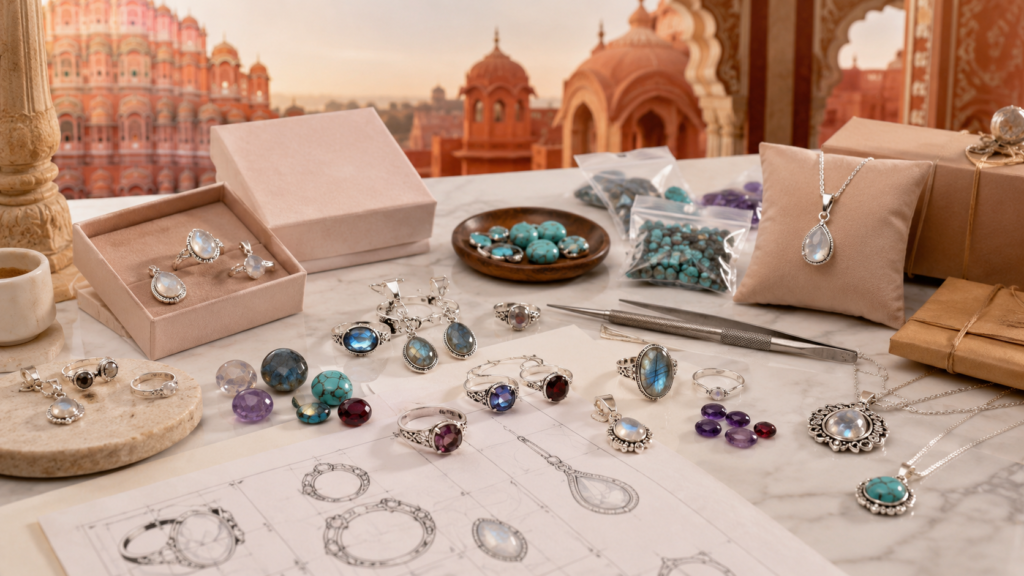
For gemstone selection, start with 2 or 3 stones maximum. Amethyst, moonstone, turquoise, and labradorite are consistently strong sellers for new brands because they are visually distinctive, widely available, and affordable.
Step 4 — Find the Right Silver Jewelry Manufacturer in Jaipur
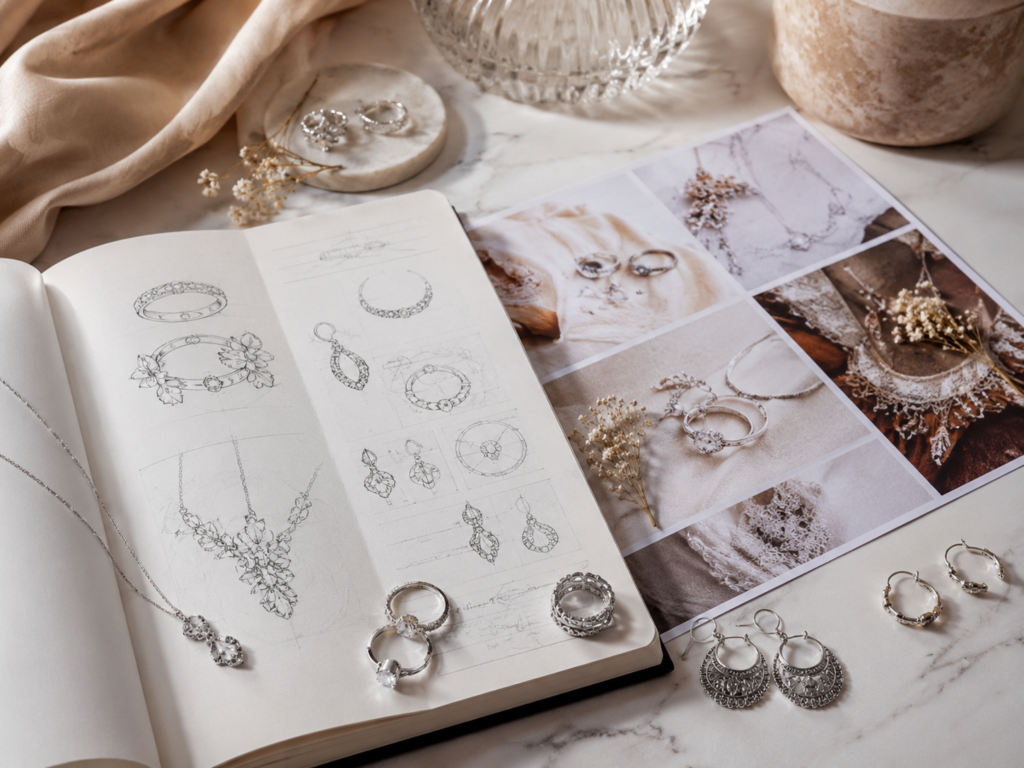
This is the most important decision you will make. Your manufacturer controls your product quality, your timeline, and your margins. Here is what to look for when evaluating a 925 sterling silver jewelry manufacturer in Jaipur:
Must-have criteria:
- Uses certified, nickel-free 925 sterling silver
- Offers CAD design and 3D prototyping
- Has in-house gemstone supply for consistent stone matching
- Works with no or low minimum order quantity
- Has clear communication — WhatsApp or email responses within 24 hours
- Can provide export documentation, hallmarking certificates, and gemstone authenticity records
- Has verifiable experience working with international brands
Questions to ask before placing any order:
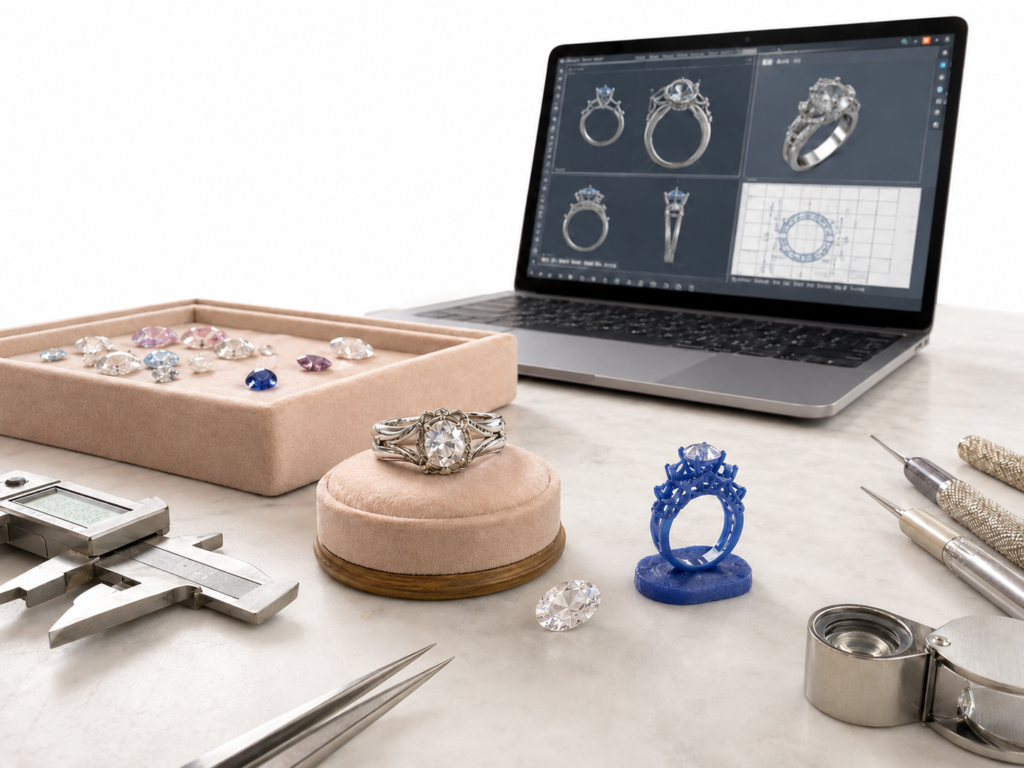
- Can you show me physical samples of previous work?
- What is your production lead time for samples and bulk orders?
- Do you charge separately for CAD design and sampling?
- Can you match stones consistently across repeat orders?
- What packaging options do you offer for retail-ready products?
Step 5 — Order Samples Before Bulk Production
Never place a bulk order without reviewing physical samples first. This is one of the most important rules in jewelry sourcing, and new brand founders often skip it to save time — and regret it.
A sample tells you everything a photograph cannot:
- The actual weight of the piece
- The quality of the gemstone setting — is the stone firm or does it rattle?
- The surface finish — smooth, even, and free of filing marks?
- The clasp and closure quality
- Whether the dimensions match the CAD design specification
Budget for sampling costs. Most manufacturers charge a sample fee (typically $20–$50 per design) which is applied against your bulk order. This small investment protects you from receiving 200 pieces that don’t meet your standard.
Step 6 — Understand Pricing and Set Your Retail Price
A common mistake for new brands is pricing too low in an attempt to compete on cost. This destroys margins and positions your brand poorly. Here is a simple pricing framework for 925 sterling silver jewelry:
Manufacturing cost (what you pay the manufacturer per piece)
Multiply by 3 to 4x for your wholesale price (if selling to retailers)
Multiply by 5 to 7x for your direct-to-consumer retail price
For example, if a silver ring with a gemstone costs $12 to manufacture:
- Wholesale price: $36–$48
- Retail price: $60–$84
This is a standard industry margin structure. Brands that undercut this framework typically struggle to cover marketing, packaging, and operational costs.
Factors that affect manufacturing cost:
- Silver weight of the piece (heavier = more expensive)
- Gemstone type and quality
- Complexity of the design and setting style
- Gold plating (for vermeil pieces)
- Order quantity
Step 7 — Sort Your Packaging and Brand Presentation
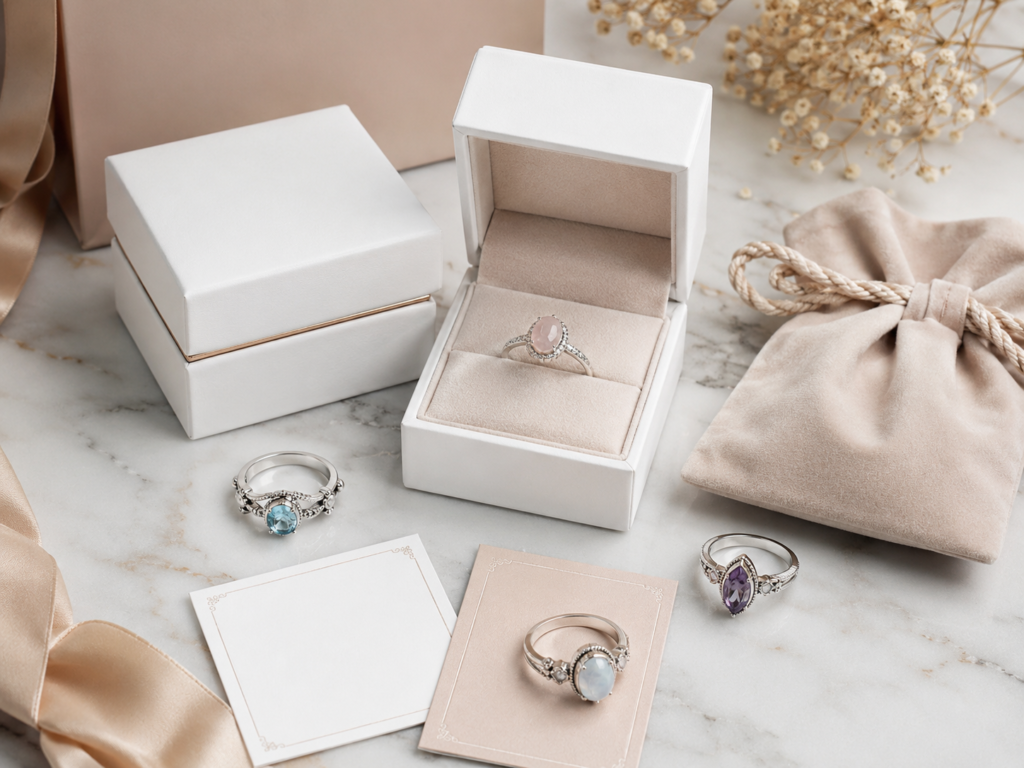
Your jewelry packaging is part of your product. Customers buying online form their first physical impression of your brand through the unboxing experience. At minimum, every piece should ship with:
- A branded jewelry box or pouch
- A care card explaining how to maintain silver jewelry (prevents tarnish complaints)
- A thank you card or brand story insert
- A certificate of authenticity for gemstone pieces
Most Jaipur manufacturers can source basic packaging locally at low cost. For branded packaging with your logo, budget for a separate packaging order — minimum quantities are typically 100–200 units.
Step 8 — Set Up Your Sales Channel
Before your first collection arrives, your sales infrastructure should be ready. The most common channels for new silver jewelry brands:
Direct to consumer (DTC) online:
Shopify or WooCommerce store with professional product photography. This gives you the highest margins and full control over your brand experience.
Marketplaces:
Etsy is particularly strong for handmade and artisan silver jewelry. Amazon Handmade is growing. These give you access to existing traffic but at lower margins.
Instagram and Pinterest:
Visual platforms are where jewelry brands build audiences. Consistent, high-quality content — product photography, reels, behind-the-scenes content from Jaipur manufacturing — builds organic reach over time.
Wholesale to retailers:
Once you have proof of concept from DTC sales, approach independent boutiques and multi-brand retailers. Wholesale requires higher volumes but builds brand credibility quickly.
Step 9 — Handle Imports, Duties, and Documentation
When importing silver jewelry from India to the USA, UK, or Australia, you need to be aware of:
- Import duties — varies by country. In the USA, sterling silver jewelry typically falls under HS code 7113.11.50. Check current duty rates with a customs broker.
- Hallmarking certificates — required in the UK for pieces above a certain weight. Your Jaipur manufacturer should provide these automatically.
- Gemstone certificates — for pieces with natural gemstones, ask for basic authenticity documentation. Not always legally required but builds customer trust.
- Customs value declaration — your manufacturer will provide an invoice with declared value for customs purposes.
For your first few orders, work with a freight forwarder or customs broker to handle the import paperwork correctly. The cost is small relative to the risk of getting it wrong.
Step 10 — Launch, Test, and Scale What Works
Your first collection is not your final collection — it is a test. Treat it that way.
Launch with your 5–8 hero designs. Track which pieces sell fastest. Identify which gemstones, styles, and price points your customers respond to. Reorder what works, discontinue what doesn’t, and introduce 2–3 new designs each season based on what you’ve learned.
The brands that build sustainable silver jewelry businesses from India are the ones that stay lean, test consistently, and scale from data rather than assumption.
Frequently Asked Questions
How much does it cost to start a silver jewelry brand from India?
A realistic starting budget including samples, a first small production run of 5–8 designs (10–20 units each), and basic packaging is $1,500–$4,000. This varies significantly based on design complexity and gemstone choice.
Do I need a business license to import jewelry from India?
Requirements vary by country. In most cases, you need a business entity (sole trader, LLC, or equivalent) and an import tax ID. Consult a local accountant or customs broker for your specific country.
What is the minimum order quantity when sourcing from Jaipur?
Many Jaipur manufacturers, including established exporters, work with no fixed minimum order quantity. You can start with as few as 5–10 pieces per design while you validate the market.
How long does production take?
Sampling typically takes 10–20 days. Bulk production after sample approval takes 3–6 weeks depending on order size and design complexity.
Can I do private label manufacturing from India?
Yes. Most Jaipur manufacturers offer private label and white label services — your brand name, your packaging, your designs, manufactured by their workshop.