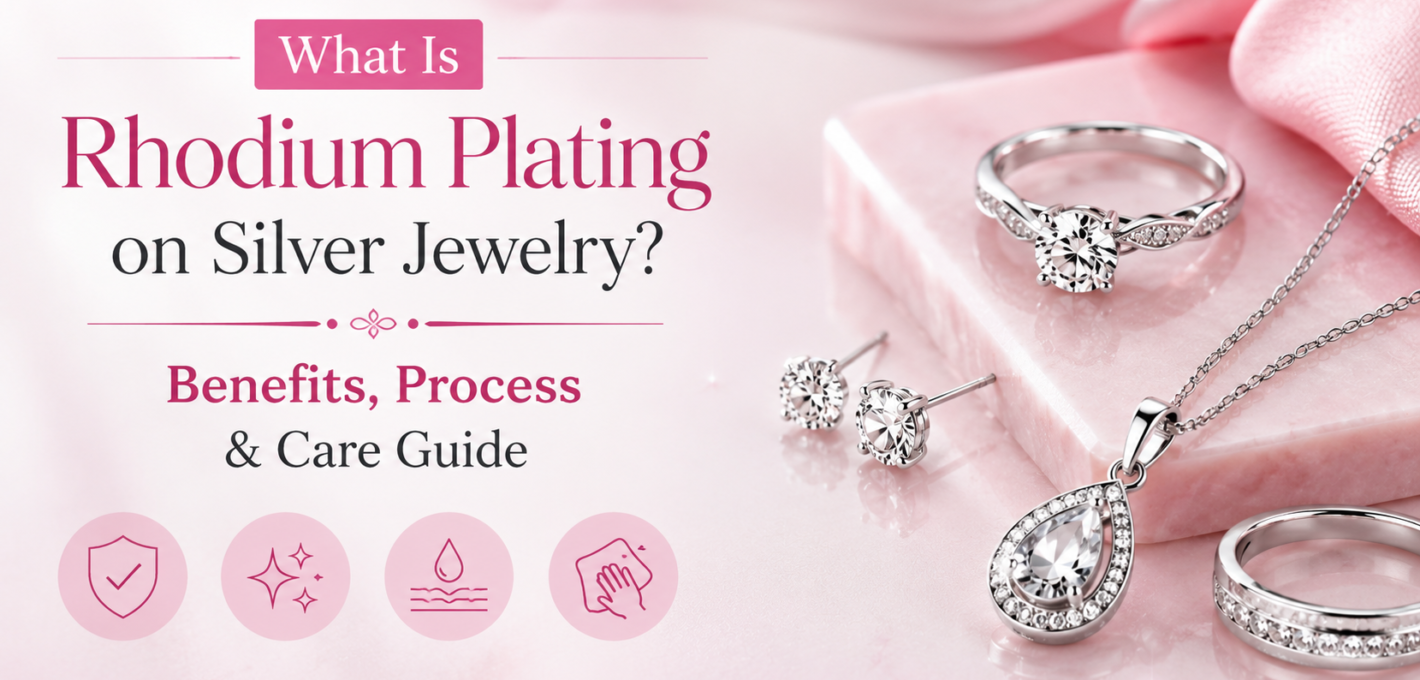
If you’ve ever bought sterling silver jewelry that stayed bright white for years without tarnishing, there’s a good chance it was rhodium plated. Rhodium plating is one of the most widely used finishing techniques in the jewelry industry — yet most buyers, and even many brand owners, don’t fully understand what it is, how it works, or why it matters.
This guide covers everything: the definition, the process, the benefits, the limitations, and how to care for rhodium plated silver jewelry — so you can make informed sourcing and buying decisions.
What Is Rhodium?
Rhodium is a rare, silvery-white metal belonging to the platinum group of metals — alongside platinum, palladium, iridium, osmium, and ruthenium. It is one of the rarest and most valuable metals on earth, significantly more expensive than gold or platinum by weight.
Rhodium has three properties that make it exceptionally valuable in jewelry finishing:
- Extreme hardness — harder than gold, silver, or platinum
- High reflectivity — produces a brilliant, mirror-like white finish
- Corrosion and tarnish resistance — does not oxidize or react with most chemicals
Because rhodium itself is too brittle and expensive to use as a primary jewelry metal, it is used exclusively as a surface coating — applied in a very thin layer over a base metal to transfer its properties to the finished piece.
What Is Rhodium Plating on Silver Jewelry?
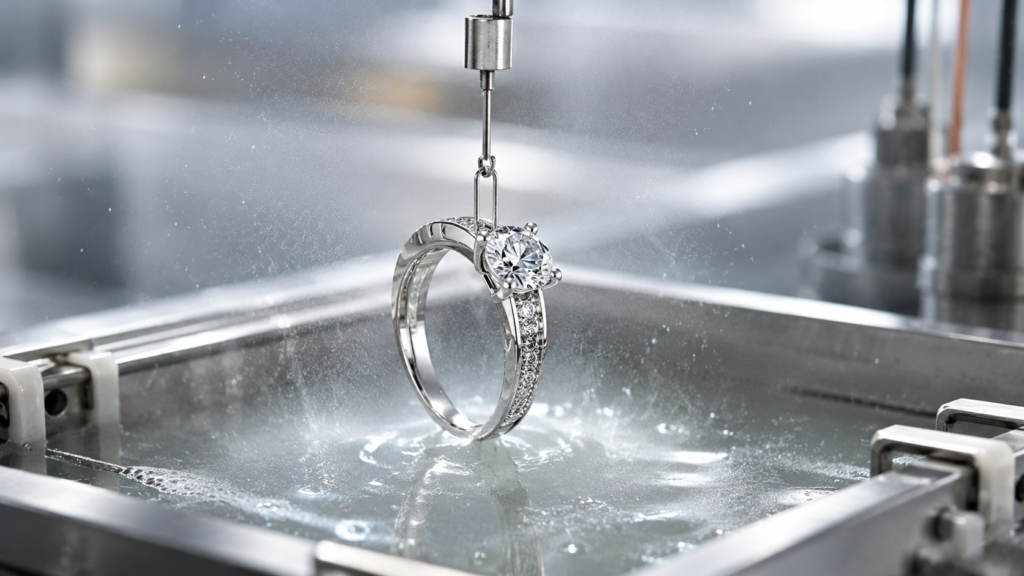
Rhodium plating on silver jewelry is the process of electroplating a thin layer of rhodium onto the surface of a 925 sterling silver piece to enhance its appearance, durability, and resistance to tarnish.
When applied to sterling silver, rhodium plating delivers three immediate improvements:
- Bright white finish — rhodium is whiter and more reflective than silver, giving pieces a crisp, high-end appearance
- Tarnish protection — silver naturally oxidizes over time, turning yellow or black; rhodium acts as a barrier that prevents this
- Scratch resistance — the hardness of rhodium protects the silver surface from everyday wear and minor abrasion
Rhodium plated silver is one of the most popular finishes in the wholesale and retail jewelry market — particularly in the USA, UK, and European markets where customers expect silver jewelry to stay bright without constant polishing.
How Is Rhodium Plating Applied? The Step-by-Step Process
Rhodium plating is an electroplating process. Here is how it works at a professional manufacturing facility:
Step 1 — Surface Preparation and Cleaning
Before any plating begins, the silver piece must be perfectly clean. Any oil, residue, or oxidation on the surface will cause the rhodium layer to adhere unevenly or peel prematurely.
The piece goes through a series of cleaning stages — ultrasonic cleaning, steam cleaning, and electrocleaning — to remove all contaminants at a microscopic level.
Step 2 — Pre-Plating (Nickel or Palladium Flash)
In many professional setups, a very thin flash layer of nickel or palladium is applied before the rhodium. This intermediate layer improves adhesion between the silver and the rhodium, extending the life of the plating significantly.
Step 3 — Rhodium Electroplating
The cleaned piece is submerged in a rhodium plating solution — a mixture of rhodium sulfate or rhodium phosphate in an acidic solution. An electric current is passed through the solution, causing rhodium ions to deposit evenly onto every surface of the piece.
The thickness of the rhodium layer is controlled by:
- The concentration of the plating solution
- The voltage and current applied
- The duration of immersion
Step 4 — Rinsing and Drying
After plating, the piece is carefully rinsed in distilled water to remove all plating solution, then dried. Any residue left on the surface can affect the finish appearance.
Step 5 — Quality Inspection
The finished piece is inspected under magnification for even coverage, surface defects, and consistent finish. At Eon Gems, every rhodium plated piece is quality checked before it leaves the production floor.
How Thick Should Rhodium Plating Be?
Rhodium plating thickness is measured in microns. Here is a practical guide to thickness levels and their applications:
0.05–0.10 microns — Standard Commercial Grade
The most common thickness for fashion and mid-range jewelry. Provides a good white finish and moderate tarnish resistance. Lifespan of 1–3 years with normal wear and proper care.
0.15–0.25 microns — Premium Grade
Thicker coating with significantly better durability. Recommended for pieces worn daily — rings, bracelets, and bangles that experience the most friction. Lifespan of 3–5 years.
0.50+ microns — Heavy Plate / Industrial Grade
Used for pieces requiring maximum durability or for jewelry that will be re-plated infrequently. Less common in retail jewelry due to higher cost.
For most wholesale buyers and jewelry brands, 0.10–0.25 microns is the recommended range — it balances cost, appearance, and durability effectively.
Benefits of Rhodium Plating on Sterling Silver Jewelry
1. Prevents Tarnishing
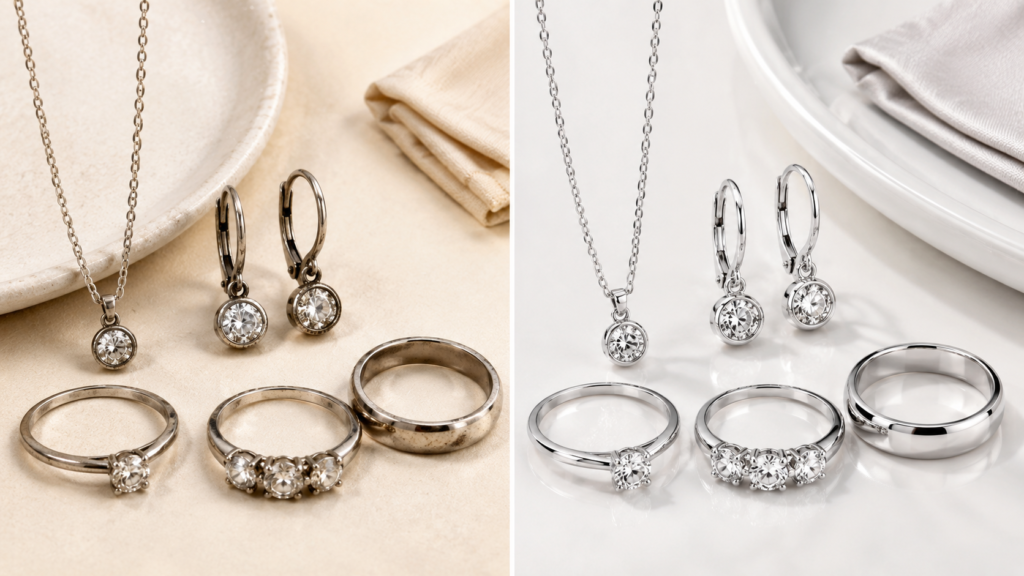
Sterling silver tarnishes naturally — it reacts with sulfur compounds in the air and on skin, turning yellow and eventually black. Rhodium plating creates a physical barrier between the silver and the environment, dramatically slowing or preventing tarnish entirely.
2. Bright, White Appearance
Rhodium has a naturally whiter, more reflective appearance than silver. Rhodium plated silver jewelry has a crisp, almost platinum-like brightness that photographs exceptionally well and appeals strongly to modern retail buyers.
3. Scratch and Wear Resistance
Silver is a relatively soft metal. Rhodium is significantly harder, which means rhodium plated pieces resist surface scratches better than plain polished silver — important for rings and bracelets worn daily.
4. Hypoallergenic Properties
Some people react to the copper content in 925 sterling silver. A rhodium layer eliminates skin contact with the silver alloy entirely, making rhodium plated jewelry effectively hypoallergenic for most wearers.
5. Low Maintenance for End Buyers
Plain silver jewelry requires regular polishing to maintain its appearance. Rhodium plated silver stays bright with minimal effort — a significant selling point for retail brands whose customers want jewelry that “just works.”
Limitations of Rhodium Plating — What to Know Before Sourcing
Rhodium plating is not permanent. There are several limitations every brand owner and buyer should understand:
It Will Wear Off Over Time
Rhodium plating is a surface coating — it will gradually wear through with friction, particularly on high-contact areas like the inner shank of rings or the clasp of bracelets. When it wears through, the silver underneath is exposed and will begin to tarnish normally.
Re-Plating Is Required
When the rhodium wears, pieces need to be re-plated to restore the finish. This is a routine jeweler service — most local jewelers offer rhodium re-plating for a small fee. For brand owners, communicating this to end customers upfront prevents negative reviews.
Cannot Be Applied Over Oxidized Silver
Rhodium plating requires a clean, polished silver surface. It cannot be applied over oxidized or antique-finish silver without removing the oxidation first — which defeats the purpose of the oxidized finish.
Higher Manufacturing Cost
Rhodium is expensive — its market price fluctuates but is consistently many times higher than gold per gram. This adds a small but real cost to each piece. For bulk orders, this cost is manageable; for very low price-point jewelry, it may affect margins.
Rhodium Plating vs. Other Silver Finishes — Which Is Right for Your Brand?
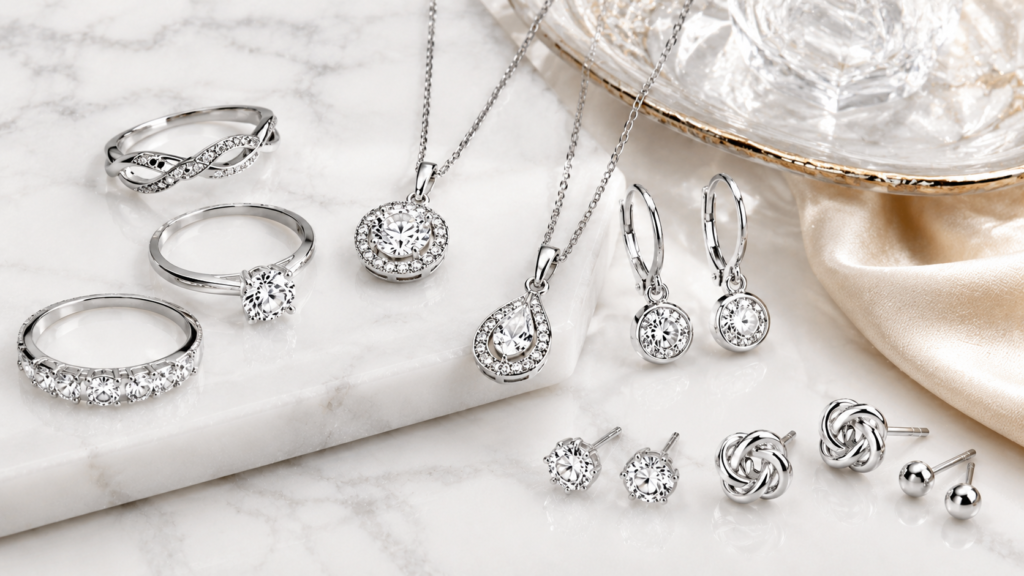
Understanding how rhodium compares to other finishes helps you make the right choice for your collection:
Rhodium Plated Silver
Bright white, tarnish-resistant, hypoallergenic. Best for: minimalist, modern, bridal, and Scandinavian-inspired jewelry. Ideal for markets where customers expect low-maintenance silver.
Plain Polished Silver
Natural silver color, requires regular polishing. Best for: artisan brands that want a “real silver” feel, customers who prefer natural metal patina.
Oxidized / Antique Silver
Intentionally darkened finish that highlights design details. Best for: bohemian, tribal, ethnic, and vintage-inspired jewelry. Very popular in the European and Middle Eastern markets.
Gold Vermeil
Gold electroplated over 925 sterling silver — minimum 2.5 microns. Best for: premium brands wanting a gold look with silver economics. Our gold vermeil jewelry manufacturing service offers full custom options in yellow, rose, and white gold.
Rose Gold Plated Silver
Warm pink-gold tone over silver base. Best for: romantic, feminine, and contemporary jewelry collections.
The right finish depends entirely on your brand aesthetic and target market. Many successful brands offer multiple finishes across the same core designs — giving customers choice while keeping design and manufacturing costs efficient.
How to Care for Rhodium Plated Silver Jewelry
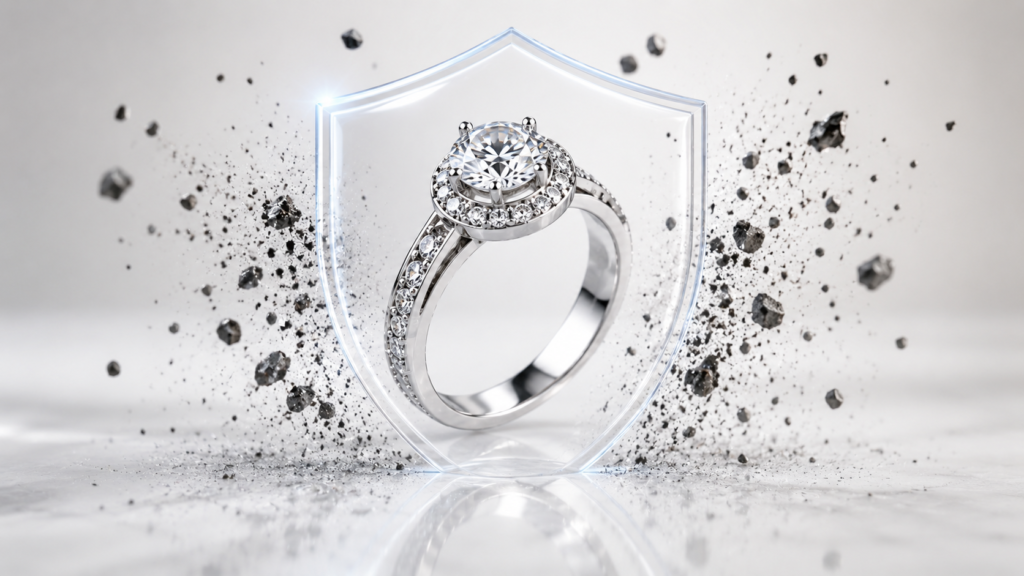
Proper care significantly extends the life of rhodium plating. Share these guidelines with your end customers:
Do
- Store pieces individually in soft pouches or anti-tarnish bags
- Clean gently with a soft, dry lint-free cloth
- Remove jewelry before sleeping, bathing, or swimming
- Put jewelry on last — after applying perfume, lotion, and hairspray
Do Not
- Use abrasive cloths, brushes, or polishing compounds — these scratch and remove the rhodium layer faster
- Expose pieces to chlorine, bleach, or harsh cleaning chemicals
- Use ultrasonic cleaners at home — the vibration can weaken stone settings and affect the plating
- Store multiple pieces together where they can scratch each other
When to Re-Plate
Signs that rhodium plating needs refreshing include: yellowing on high-contact areas, visible silver color showing through, or a dull appearance that doesn’t improve with gentle cleaning. A local jeweler can re-plate most pieces in under an hour for a small fee.
Rhodium Plated Silver Jewelry — FAQs
Is rhodium plated silver real silver?
Yes. The base metal is genuine 925 sterling silver — 92.5% pure silver. The rhodium is an additional surface coating that does not change the silver content of the piece.
Does rhodium plating turn skin green?
No. Rhodium itself does not react with skin. The “green skin” reaction is caused by copper in base metals like brass — not present in rhodium plated 925 silver jewelry.
How long does rhodium plating last on silver?
With normal wear and proper care, rhodium plating on silver lasts 1–3 years at standard thickness (0.05–0.10 microns) and 3–5 years at premium thickness (0.15–0.25 microns). High-contact pieces like rings wear faster than pendants or earrings.
Can rhodium plated silver be repaired if scratched?
Minor surface scratches in the rhodium layer can be polished out by a jeweler. Deep scratches that go through to the silver require re-plating to fully restore the finish.
Is rhodium plating safe for sensitive skin?
Yes — rhodium is hypoallergenic and biocompatible. Rhodium plated silver is one of the safest jewelry options for people with metal sensitivities.
Eon Gems — 925 Sterling Silver Jewelry Manufacturer in Jaipur
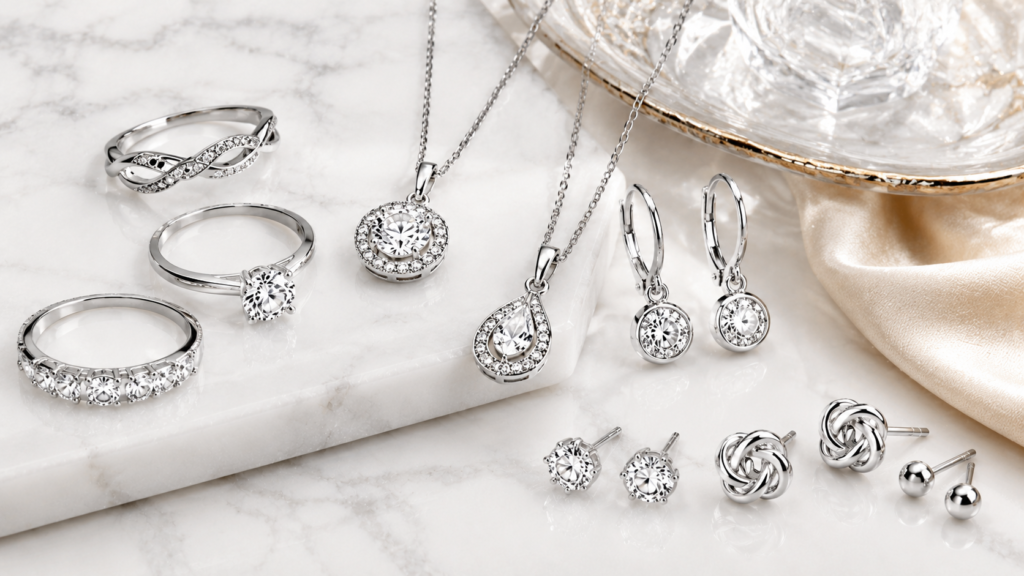
At Eon Gems, we manufacture custom 925 sterling silver jewelry with a full range of finishing options — including rhodium plating, plain polish, oxidized, rose gold, and gold vermeil.
With 36+ years of manufacturing and export experience, we work with jewelry brands, retailers, and private-label buyers across 50+ countries — delivering consistent quality, verified finishes, and complete export documentation.
What we offer:
- 925 hallmarked silver jewelry — all styles, all categories
- Rhodium plating at 0.05µ to 0.25µ — quality verified on every batch
- 250+ gemstone varieties in-house for custom stone-set pieces
- No MOQ — single prototype to large bulk orders
- CAD design development from your brief or sketches
- Full private label support — your brand, your designs, manufactured by us
Explore our 925 sterling silver jewelry manufacturing services →
Final Thoughts
Rhodium plating transforms sterling silver jewelry — giving it a brighter finish, longer tarnish resistance, and better durability than plain silver alone. For jewelry brands targeting markets where customers expect low-maintenance, long-lasting silver jewelry, it is one of the most valuable finishing options available.
Understanding what rhodium plating is, how it’s applied, and what its limitations are makes you a smarter buyer — and helps you communicate more honestly and effectively with your end customers.
If you’re looking for a manufacturing partner who can deliver consistently plated, quality-verified sterling silver jewelry with full export support, Eon Gems is ready to work with you.