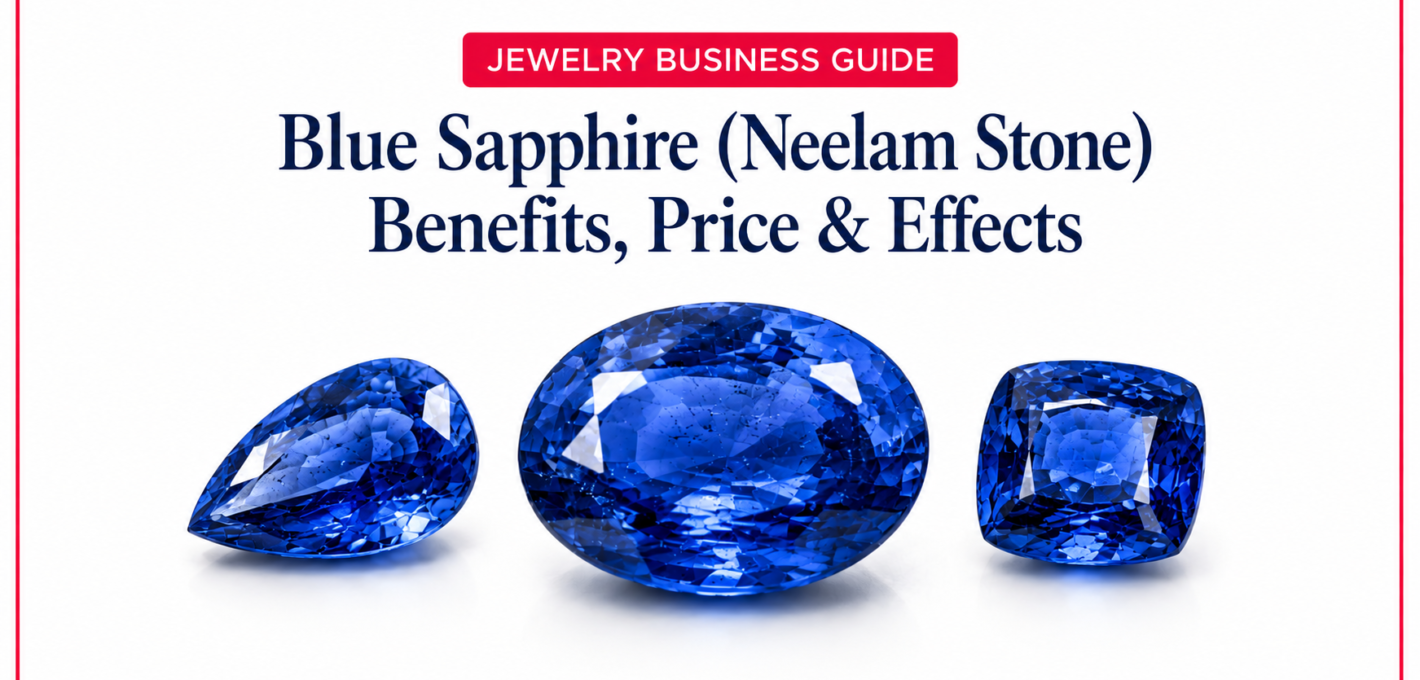
Blue sapphire — known as Neelam in Vedic astrology — is one of the most powerful and most discussed gemstones in both the jewelry world and the astrological tradition.
Vedic astrologers consider it the fastest-acting gemstone in the entire Navaratna system. Furthermore, jewelry experts recognize it as one of the most beautiful and durable natural gemstones in existence. Additionally, the global jewelry market values fine natural blue sapphire among its most commercially significant stones — with prices that rival fine ruby and emerald.
At Eon Gems, we are Jaipur-based gemstone jewelry manufacturers with 36+ years of experience sourcing and setting natural blue sapphire for jewelry brands, astrologers, and wholesale buyers worldwide. This complete guide covers everything — Neelam stone benefits, astrological effects, price, quality grading, and how to identify genuine blue sapphire.
What Is Blue Sapphire (Neelam Stone)?
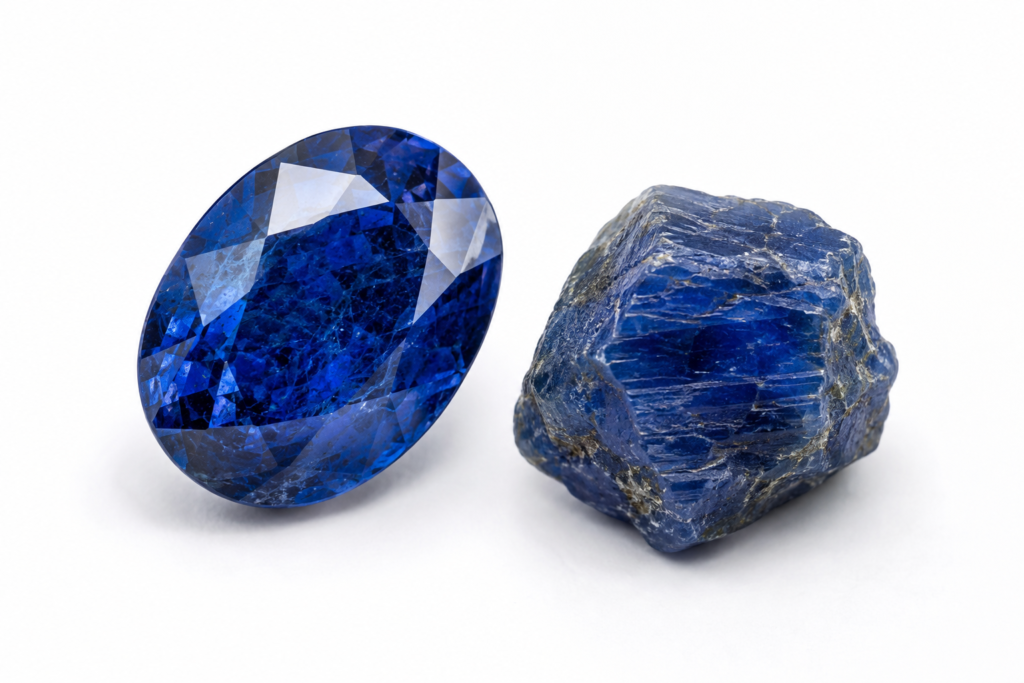
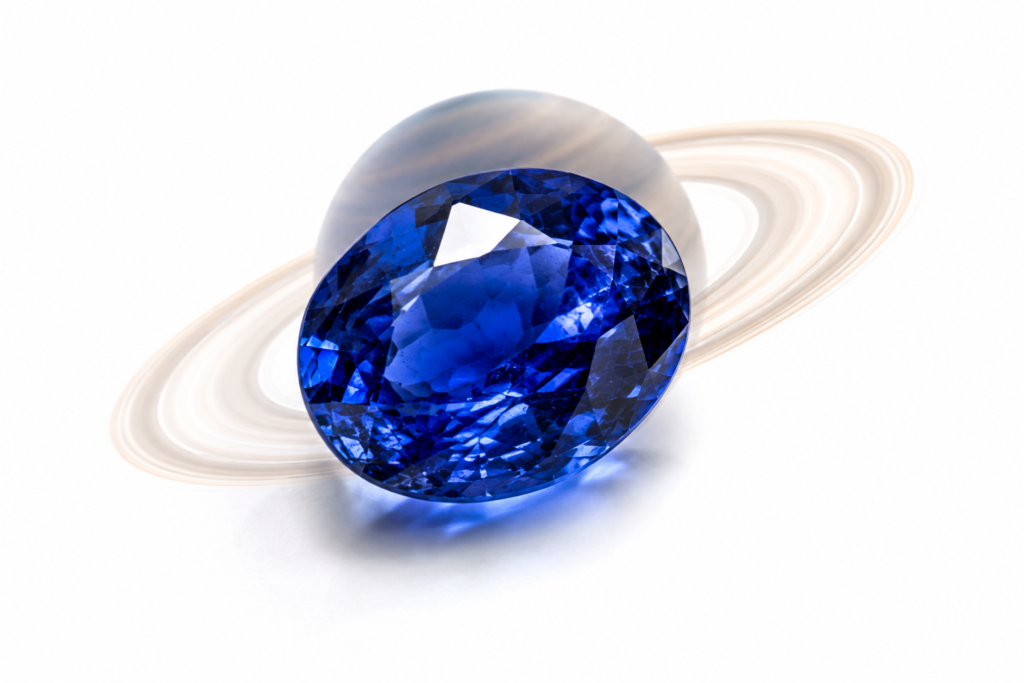
Blue sapphire is the blue variety of corundum — aluminum oxide — colored blue by trace amounts of iron and titanium within its crystal structure. It rates 9 on the Mohs hardness scale — second only to diamond — making it one of the most durable gemstones available for jewelry and daily wear.
The name Neelam comes from the Sanskrit word for blue — “Nila.” In Vedic astrology, blue sapphire represents the planet Saturn (Shani) and holds a place among the Navaratnas — the nine sacred gemstones of Hindu tradition.
Blue sapphire occurs naturally in several countries. Sri Lanka (Ceylon) produces the most prized cornflower blue stones. Kashmir sapphire — now extremely rare — holds the title of finest blue sapphire in the world. Myanmar, Madagascar, Thailand, and Australia also produce significant quantities.
Blue Sapphire (Neelam Stone) Benefits
Astrological and Vedic Benefits
In Vedic astrology, blue sapphire represents the primary gemstone for Saturn (Shani). Saturn governs discipline, karma, justice, perseverance, and long-term success. Wearing Neelam stone strengthens Saturn’s positive influence and helps mitigate its challenging effects — according to Vedic astrological tradition.
Astrologers associate the following benefits with wearing genuine blue sapphire:
Career and professional success: Blue sapphire carries strong associations with professional advancement, discipline, and focus. Furthermore, astrologers believe it accelerates career progress — particularly in fields Saturn governs such as law, construction, engineering, and government service.
Financial stability and wealth: Astrologers consider Neelam one of the most powerful gemstones for attracting financial stability and long-term prosperity. Additionally, it carries associations with removing financial obstacles and creating consistent income flow.
Mental clarity and focus: Wearing blue sapphire sharpens mental clarity, improves concentration, and supports clear decision-making — particularly valuable for students and professionals facing complex challenges.
Protection from negative energy: In Vedic tradition, blue sapphire provides strong protective energy — shielding the wearer from negative influences, evil eye, and psychic disturbances.
Health benefits: Astrologers associate Neelam with benefits for the nervous system, bones, and teeth — all areas Saturn governs in Vedic tradition. Furthermore, practitioners believe it supports recovery from chronic conditions.
Spiritual growth: For practitioners on a spiritual path, blue sapphire deepens meditation, develops intuition, and accelerates spiritual progress — according to Vedic astrological tradition.
Crystal Healing Benefits
In modern crystal healing traditions, practitioners associate blue sapphire with the throat chakra and third eye chakra — supporting clear communication, truth, and intuitive perception.
Crystal healing practitioners connect blue sapphire with wisdom, mental clarity, and the ability to see situations from a higher perspective. Additionally, they associate it with calming an overactive mind and reducing anxiety in daily life.
Who Should Wear Blue Sapphire (Neelam Stone)?
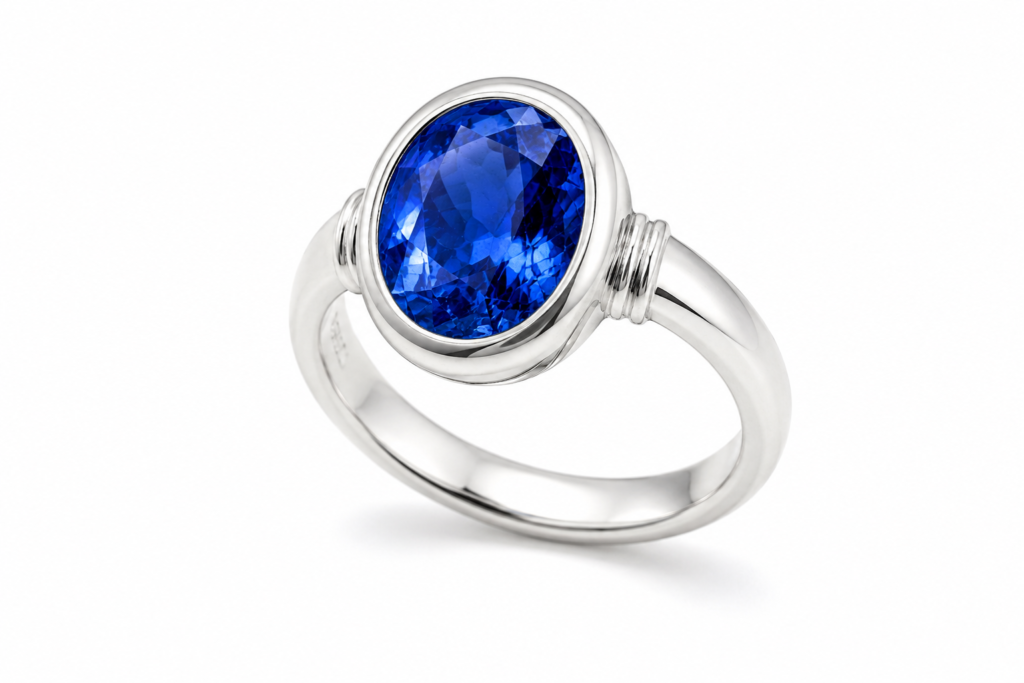
In Vedic astrology, blue sapphire suits individuals for whom Saturn (Shani) holds a favorable position in their birth chart.
Favorable Ascendants for Neelam Stone
Saturn generally favors the following ascendants (lagnas):
- Capricorn (Makar) — Saturn rules this sign; Neelam is highly recommended
- Aquarius (Kumbha) — Saturn rules this sign; Neelam is highly recommended
- Taurus (Vrishabha) — Saturn rules the ninth and tenth houses; generally beneficial
- Gemini (Mithuna) — Saturn rules favorable houses; astrologers often recommend Neelam
- Virgo (Kanya) — Saturn rules favorable houses; often recommended
- Libra (Tula) — Saturn rules the fourth and fifth houses; often very beneficial
Important: Blue sapphire acts with unusual speed and strength in Vedic astrology. Consequently, consulting a qualified Vedic astrologer before wearing Neelam is strongly recommended. The stone produces significant effects — both positive and negative — depending on Saturn’s placement in the individual’s chart.
How to Wear Blue Sapphire (Neelam Stone) — Vedic Guidelines
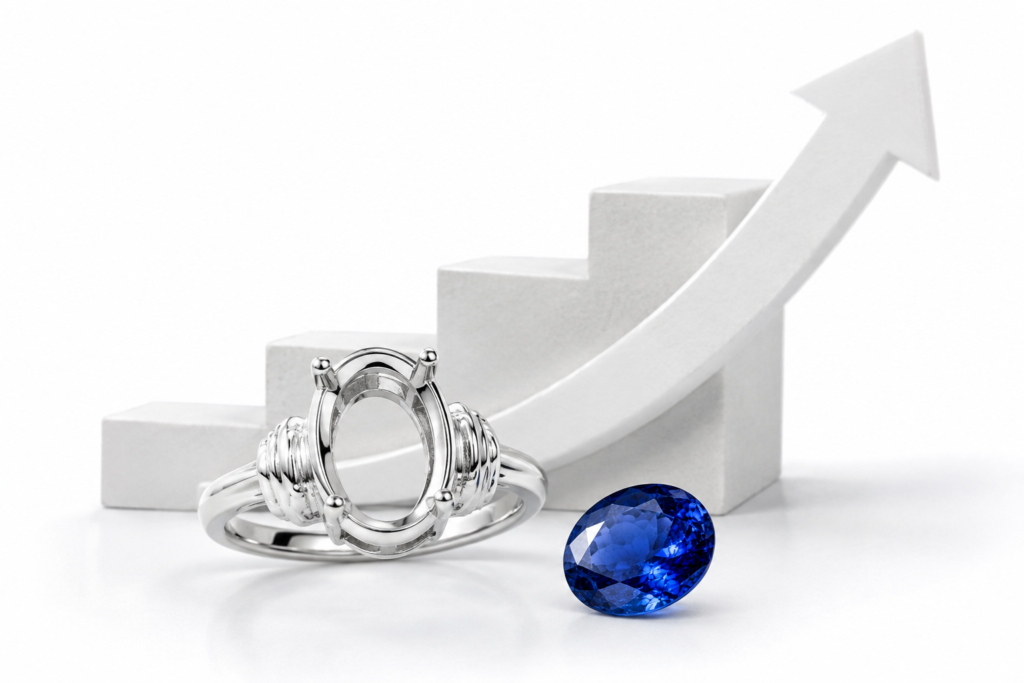
Vedic astrology prescribes specific guidelines for wearing Neelam stone to maximize its astrological benefits.
Metal: Astrologers traditionally recommend setting blue sapphire in silver or gold. Furthermore, 925 sterling silver and gold vermeil are both considered appropriate metals for astrological sapphire rings.
Finger: The middle finger of the right hand is the traditional finger for blue sapphire — as this finger carries Saturn’s association in Vedic tradition.
Weight: Most astrologers recommend a minimum of 2 carats. However, many recommend 3 to 5 carats for stronger astrological influence.
Day and time: Wearers traditionally put on blue sapphire on a Saturday — Saturn’s day — during the Shani hora (Saturn’s planetary hour), ideally in the morning hours.
Activation ritual: Before wearing, wearers traditionally place the ring in raw milk or Gangajal overnight. They then wash and wear the ring after a brief prayer to Saturn.
Trial period: Because blue sapphire acts quickly, most astrologers recommend a trial period of 3 to 7 days — wearing the stone wrapped in a cloth near the body rather than directly on the finger — to observe initial effects before committing to daily wear.
Neelam Stone Effects — What to Expect
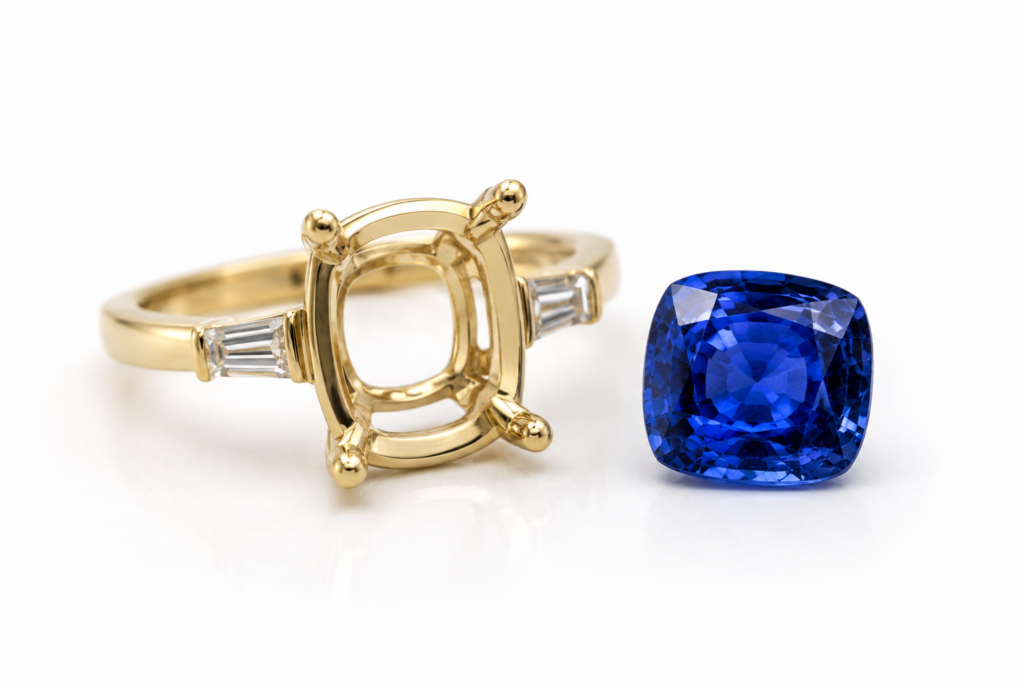
Blue sapphire produces noticeable effects quickly — often within days or weeks of first wearing, which is unusual among astrological gemstones.
Positive effects (when Saturn is favorable) may include sudden positive changes in professional circumstances, unexpected financial opportunities, improved mental clarity and focus, stronger sense of discipline and purpose, and positive developments in legal or official matters.
Challenging effects (when Saturn is unfavorable or the stone is unsuitable) may include disturbed sleep, increased anxiety, financial disruptions, or relationship challenges. Consequently, if significant negative effects occur within the first week of wearing, most astrologers recommend removing the stone immediately and seeking astrological consultation before continuing.
The speed and strength of blue sapphire’s effects make it both one of the most sought-after and most carefully approached stones in Vedic astrology.
Blue Sapphire Quality — The Four Cs
Understanding blue sapphire quality helps buyers make informed decisions — whether sourcing for astrological use, jewelry manufacturing, or wholesale purchasing.
Color — The Most Important Factor
Color is the primary quality factor for blue sapphire and the characteristic that most determines value.
Hue: Pure blue is most valued. Slightly violet-blue (cornflower blue) commands particular premiums. Greenish-blue tones reduce value. Grey or blackish modifiers further reduce value and price.
Tone: Medium to medium-dark tones are most valued — not so light that color appears pale, not so dark that the stone appears nearly black in indoor lighting.
Saturation: Vivid, highly saturated blue commands the highest prices. The finest Ceylon (Sri Lankan) sapphires display a velvety, intensely saturated blue that gemologists describe as “cornflower” blue.
The most valued colors: Kashmir blue (velvety, intensely saturated, no secondary hues — extremely rare), Ceylon cornflower blue, and vivid royal blue from Mozambique or Madagascar.
Clarity
Most blue sapphires contain natural inclusions — silk (fine rutile needles), crystals, fingerprints, and growth zoning are all common. Unlike diamonds, colored gemstone grading accepts inclusions more liberally. What matters is whether inclusions affect the stone’s appearance and structural integrity.
Eye-clean sapphires — where no inclusions appear to the naked eye — command significant premiums over included stones. However, even fine sapphires with minor visible inclusions offer excellent value when their color is exceptional.
Cut
Cut quality affects how well a blue sapphire displays its color and brilliance. Well-cut sapphires show vivid, even color across the face with minimal windowing or extinction. Oval and cushion cuts are the most popular shapes for blue sapphire. Additionally, round brilliant, pear, and emerald cuts are common — each affecting how the stone’s color appears under different lighting conditions.
Carat Weight
Blue sapphire prices increase significantly with size. Fine quality 1-carat sapphires are priced very differently from equivalent 3-carat or 5-carat stones — the per-carat price increases non-linearly with size. For astrological use, 2 to 5 carats is the most practical range.
Blue Sapphire Price Guide — 2026
Blue sapphire pricing varies dramatically based on origin, color, clarity, treatment status, and size.
Commercial grade (included, good color):
1 to 2 carat natural sapphire — approximately $20 to $80 per carat. Suitable for astrological use and mid-market jewelry.
Good grade (eye-clean or near eye-clean, good-to-fine color):
1 to 2 carat natural sapphire — approximately $80 to $300 per carat. Suitable for premium jewelry and astrological use.
Fine grade (eye-clean, vivid cornflower blue, minimal treatment):
1 to 3 carat natural sapphire — approximately $300 to $1,500 per carat. Used in premium and fine jewelry collections.
AAA grade / unheated fine sapphire:
Unheated natural blue sapphire of fine color and clarity — $1,500 to $10,000+ per carat depending on size and origin.
Kashmir sapphire:
The rarest and most valuable blue sapphire origin — fine quality Kashmir sapphires regularly exceed $10,000 to $50,000+ per carat at auction.
Lab-grown blue sapphire:
Chemically identical to natural, excellent color and clarity — approximately $2 to $15 per carat. Ideal for brands wanting vivid blue sapphire jewelry at accessible retail price points.
Factors that significantly increase price:
- Unheated (no heat treatment) — adds 30 to 300% premium over treated equivalent
- Ceylon (Sri Lanka) origin — commands a premium over other origins
- Kashmir origin — the highest premium in the colored stone market
- GIA or AGL certificate confirming origin and treatment status
Blue Sapphire Treatments — What Buyers Must Know
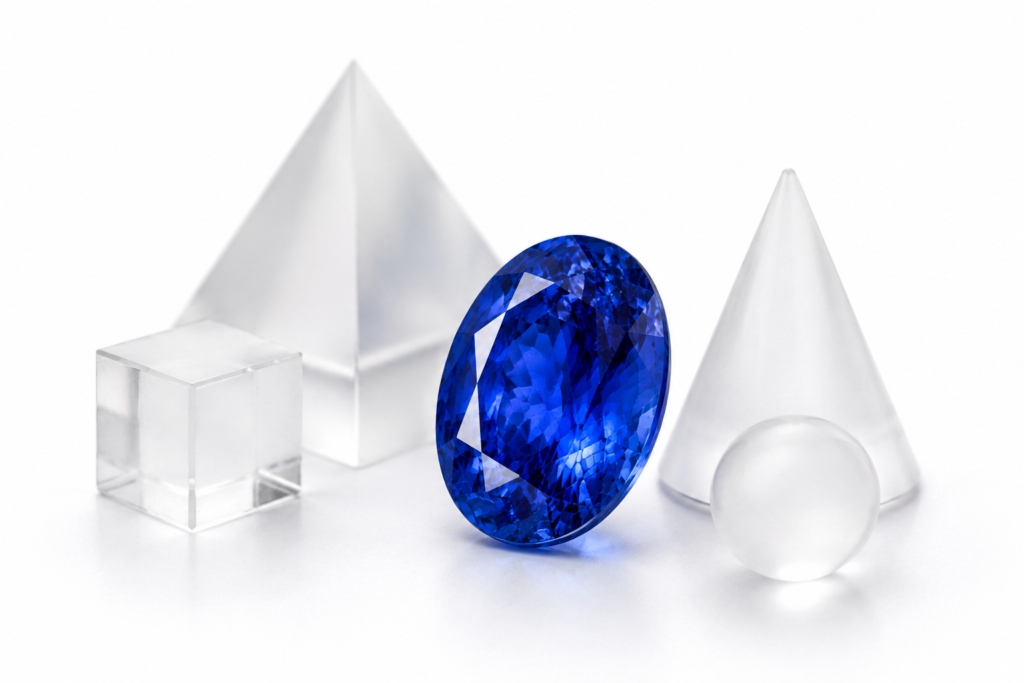
The vast majority of blue sapphire in the market has undergone heat treatment. The trade universally accepts heat treatment as standard practice — sellers must disclose treatment status on every invoice.
Heat Treatment — Most Common
Heat treatment improves color saturation and reduces silk inclusions. Heat-treated sapphires are significantly less expensive than unheated equivalents of the same appearance. Furthermore, sellers must disclose this treatment on all invoices and certificates.
Beryllium Diffusion — More Invasive
Beryllium diffusion treatment involves diffusing beryllium into the stone to dramatically change its color. Sellers must disclose beryllium-treated sapphires as treated — they carry significantly less value than heat-treated or unheated stones of equivalent appearance.
Fracture Filling — Least Acceptable
Glass or resin filling of fractures improves clarity appearance. The trade considers this treatment less acceptable than heat treatment. Furthermore, fracture-filled sapphires require special care during cleaning and setting — and sellers must fully disclose this treatment.
For Astrological Use
Many Vedic astrologers recommend unheated (natural) blue sapphire for maximum astrological benefit — believing that treatments reduce the stone’s energetic potency. Consequently, untreated sapphire commands a significant premium in astrological markets.
How to Identify Real Blue Sapphire (Neelam Stone)
Distinguishing genuine natural blue sapphire from imitations requires knowledge and — for significant purchases — professional testing.
Visual Tests
Color and luster: Genuine blue sapphire has a distinctive velvety depth of color and a bright, adamantine luster. Glass imitations appear flatter and less vibrant. Furthermore, synthetic sapphire appears too perfect — too evenly colored without natural variation.
Natural inclusions: Look for natural inclusions under magnification — silk (fine parallel needles), fingerprints, and crystal inclusions characterize natural sapphire. Glass imitations show bubbles. Synthetic sapphire shows curved growth lines rather than straight natural growth zoning.
Dichroism: Natural blue sapphire is dichroic — it shows different colors (blue and violet-blue) when viewed from different directions with a dichroscope. Glass and cubic zirconia do not show dichroism.
Common Imitations to Avoid
Blue glass: The most common imitation — shows bubbles under magnification, no dichroism, warms quickly in the hand.
Synthetic sapphire: Chemically identical to natural but produced in a laboratory. Shows curved growth lines under magnification. Sellers must disclose it as synthetic. Furthermore, it carries significantly less value than natural sapphire for astrological use.
Blue topaz: A genuine gemstone but not sapphire — different refractive index and specific gravity. Professional testing confirms the distinction.
Tanzanite: Another blue gemstone sometimes sellers market as sapphire — distinctly different in properties and significantly softer (Mohs 6 to 7).
Doublets and triplets: Composite stones with a thin layer of genuine sapphire over glass — appear genuine from the top but are composite construction. Common in low-priced jewelry that sellers market as sapphire.
Professional Verification
For any significant purchase — particularly for astrological use — professional gemological certification is essential. According to GIA, sapphire certificates confirm natural vs. synthetic origin, geographic origin, and treatment status.
At Eon Gems, we source natural blue sapphire with full treatment disclosure as standard. Furthermore, we provide GIA or IGI certificates on request for significant stones — particularly for clients sourcing for astrological use where treatment status matters most.
Blue Sapphire in Jewelry — Setting and Care
Best Settings for Blue Sapphire
Blue sapphire’s exceptional hardness (Mohs 9) and toughness make it suitable for all jewelry types and setting styles — including daily-wear rings that softer stones cannot handle.
Prong setting: Maximizes light entry and color display. Four or six prongs both work well given sapphire’s excellent durability.
Bezel setting: A continuous metal rim surrounds the stone — modern aesthetic and excellent protection. Popular in contemporary sapphire jewelry designs.
Pavé and halo settings: Small sapphires surrounding a center stone amplify the overall blue color impact — particularly effective with gold vermeil settings in yellow or rose gold.
Astrological rings: For Vedic astrological use, the stone needs an open back setting — allowing it to touch the skin. At Eon Gems, we manufacture custom astrological sapphire rings in 925 sterling silver with open back settings specifically for astrological purposes.
Blue Sapphire Care
Blue sapphire is one of the most durable and low-maintenance gemstones in jewelry.
- Safe for ultrasonic cleaning (for heat-treated stones without fracture filling)
- Safe for mild soap and warm water cleaning with a soft brush
- Avoid ultrasonic cleaning for fracture-filled sapphires
- No special storage requirements — only diamond and other sapphires can scratch it
- Remove before activities involving impact risk — sapphire does not chip easily but impacts can damage settings
Neelam Stone vs. Other Blue Gemstones
Buyers and astrologers sometimes confuse blue sapphire with other blue gemstones.
Blue Sapphire (Neelam): Mohs 9, corundum family, strongly associated with Saturn in Vedic astrology, most durable blue gemstone for daily wear.
Blue Topaz: Mohs 8, silicate mineral, no astrological equivalent to Neelam, affordable blue stone popular in contemporary jewelry but not a substitute for astrological use.
Aquamarine: Mohs 7.5 to 8, beryl family, associated with courage and clarity in crystal healing but not equivalent to Neelam in Vedic tradition.
Tanzanite: Mohs 6 to 7, zoisite mineral, beautiful violet-blue color but significantly softer than sapphire — not suitable for daily wear rings and not a Vedic astrological substitute for Neelam.
Iolite: Mohs 7 to 7.5, cordierite mineral, deep blue-violet color sometimes mistaken for sapphire — not a Vedic substitute for Neelam stone.
FAQs — Blue Sapphire (Neelam Stone)
What are the main blue sapphire Neelam stone benefits?
In Vedic astrology, the primary blue sapphire Neelam stone benefits include career advancement, financial stability, mental clarity, protection from negative energy, and accelerated spiritual growth — all associated with Saturn’s positive influence when the stone suits the wearer’s chart.
How quickly does blue sapphire show effects?
Blue sapphire acts faster than most astrological gemstones — many wearers report noticeable effects within 3 to 7 days of first wearing. Consequently, a trial period before committing to daily wear is strongly recommended.
Can everyone wear blue sapphire?
No — blue sapphire specifically benefits individuals for whom Saturn holds a favorable position in their Vedic birth chart. Consulting a qualified Vedic astrologer before wearing Neelam is strongly recommended.
Is heated or unheated blue sapphire better for astrological use?
Many Vedic astrologers recommend unheated natural blue sapphire for astrological use — believing that heat treatment reduces the stone’s energetic potency. However, opinions vary among astrologers. Consequently, consulting your astrologer for specific guidance on this point is advisable.
What weight of blue sapphire is recommended for astrological use?
Most Vedic astrologers recommend a minimum of 2 carats, with 3 to 5 carats considered optimal for astrological effect. Good color and clarity matter as much as weight — a heavily included or pale stone produces less effect regardless of size.
How do I know if my blue sapphire is real?
For significant purchases, request a gemological certificate from GIA, IGI, or AGL. These certificates confirm natural origin, treatment status, and geographic origin. Professional testing using a refractometer and spectroscope provides definitive identification.
What metal should blue sapphire be set in for astrological use?
Silver and gold are both traditional and acceptable metals for astrological blue sapphire. Furthermore, the setting should ideally allow the stone to touch the skin — an open-back setting is preferred for maximum astrological contact with the body.
Eon Gems — Natural Blue Sapphire Jewelry Manufacturer in Jaipur
At Eon Gems, natural blue sapphire — including both heat-treated and unheated varieties — is among our most consistently sourced and most popular stones for gemstone jewelry manufacturing.
Based in Jaipur — the world’s largest colored gemstone trading hub — we source blue sapphire directly from established traders with full treatment disclosure and origin documentation as standard.
What we offer:
- Natural blue sapphire — heat-treated and unheated, commercial to fine grade
- Lab-grown blue sapphire — for accessible jewelry collections
- Custom astrological sapphire rings in 925 sterling silver — open back settings available
- Gold vermeil sapphire jewelry — yellow, rose, and white gold options
- GIA and IGI certificates available on request
- Full treatment and origin disclosure as standard
- No MOQ — single astrological ring to large bulk production
- Complete export documentation for all major markets
👉 Get a Free Quote from Eon Gems →
🔗 Gemstone Jewelry Manufacturing →
🔗 925 Sterling Silver Jewelry →
🔗 Gold Vermeil Jewelry →