Gemstone jewelry is an investment — in beauty, in craftsmanship, and in the materials themselves. However, improper cleaning is one of the most common causes of gemstone damage, setting failure, and premature wear. Many buyers reach for the wrong cleaning method simply because they do not know which stones require which approach.
The truth is that cleaning gemstone jewelry safely is straightforward once you understand which stones can tolerate which methods. At Eon Gems, we are Jaipur-based gemstone jewelry manufacturers with 36+ years of experience working with over 250 natural gemstone varieties. This complete guide gives you everything you need to clean your gemstone jewelry correctly — and what to absolutely avoid.
Why Gemstone Cleaning Requires Care
Before exploring specific cleaning methods, understanding why gemstone jewelry requires careful cleaning helps buyers make smarter decisions.
Hardness differences: Gemstones range from very soft (Mohs 2 for selenite) to extremely hard (Mohs 10 for diamond). Abrasive cleaning methods that are safe for harder stones can scratch or damage softer ones. Furthermore, even the same cleaning method can produce different results on different stones.
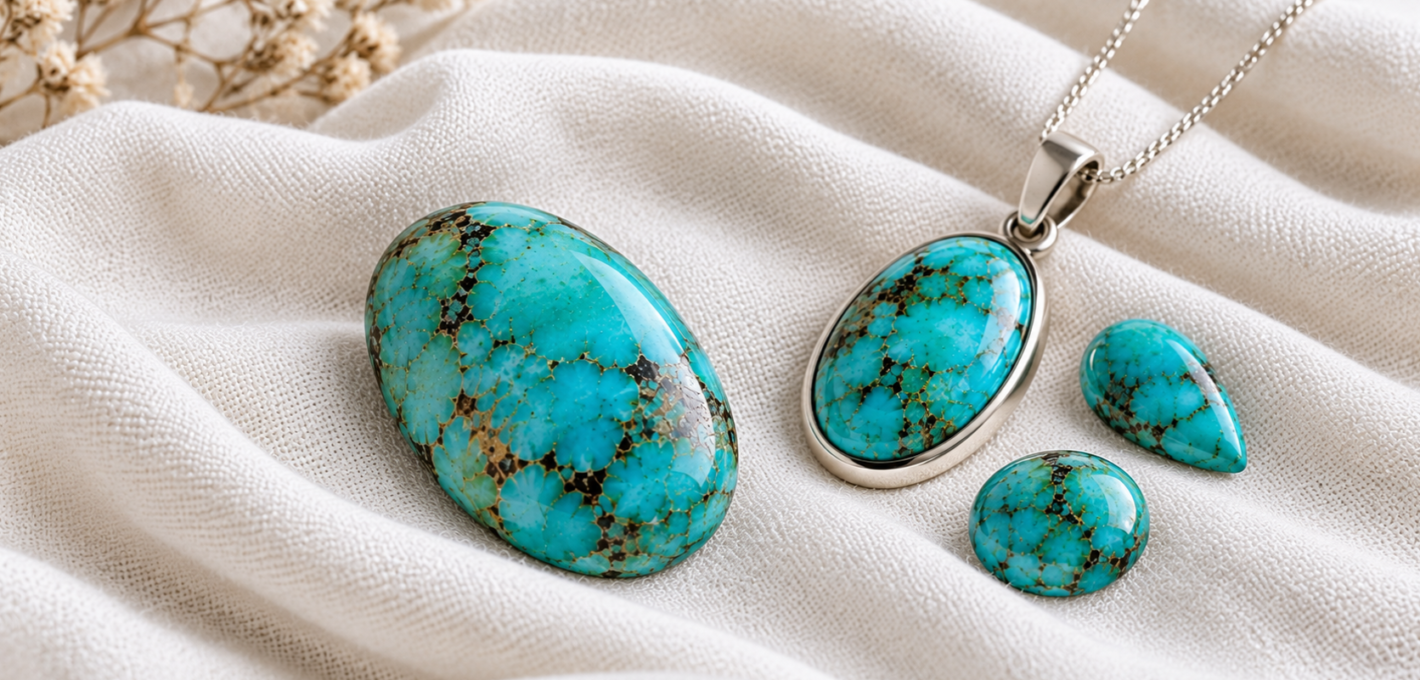
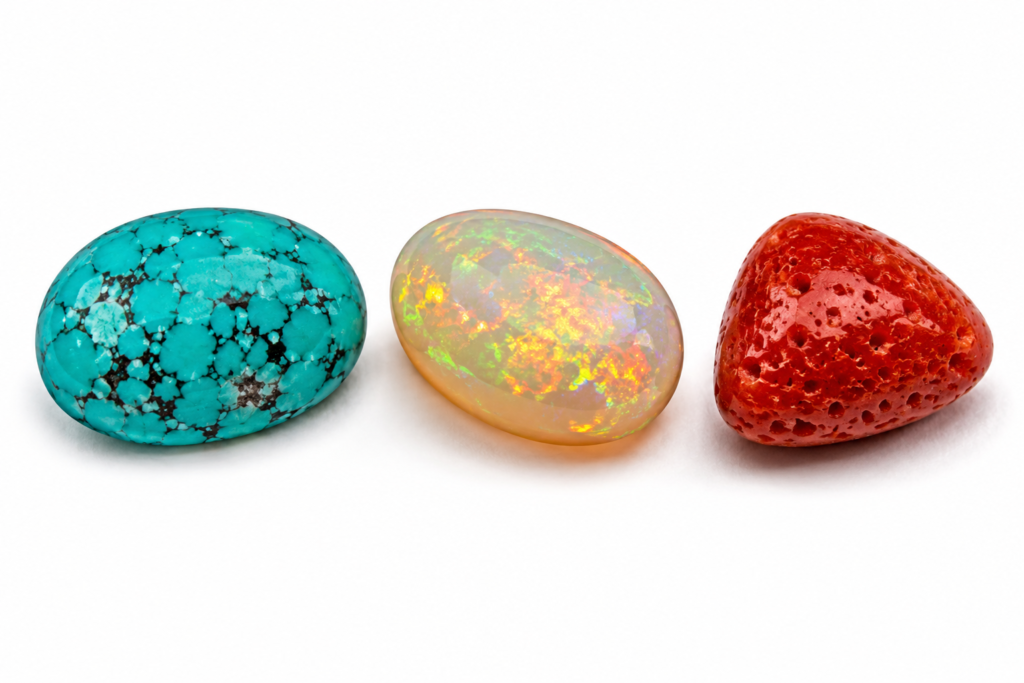
Porosity: Some gemstones are porous — turquoise, opal, and coral absorb liquids easily. Soaking porous stones in water or cleaning solutions causes discoloration, structural weakening, and permanent damage that cannot be reversed.
Treatment sensitivity: Most colored gemstones undergo treatment to enhance their appearance — oil filling in emeralds, stabilization in turquoise, surface coating on some opals. Certain cleaning methods — particularly ultrasonic cleaners and steam — can remove or damage these treatments, permanently altering the stone’s appearance.
Setting integrity: Cleaning methods involving heat, vibration, or chemical immersion can weaken prong tips, loosen stone settings, and damage metal finishes. A stone that seems secure before ultrasonic cleaning may be loose afterward.
Metal finish sensitivity: Gold vermeil jewelry and rhodium-plated 925 sterling silver jewelry have surface finishes that require gentle cleaning methods — abrasive cleaners and polishing compounds remove the finish along with any dirt.
The Universal Safe Cleaning Method — Start Here
Before exploring stone-specific guidance, one method is safe for the vast majority of gemstone jewelry — and should always be the first approach:
What you need:
- Lukewarm water (never hot)
- One drop of mild, pH-neutral dish soap
- A soft-bristled brush — a baby toothbrush works perfectly
- A soft, lint-free cloth — microfibre is ideal
- A small bowl
The process:
Mix one drop of mild soap into a bowl of lukewarm water. Submerge the piece briefly — no longer than 30 seconds for most stones. Gently brush the stone and setting with the soft brush, paying attention to the area beneath the stone where dirt accumulates. Rinse briefly under lukewarm running water. Pat completely dry immediately with a soft cloth. Allow to air dry fully before storing.
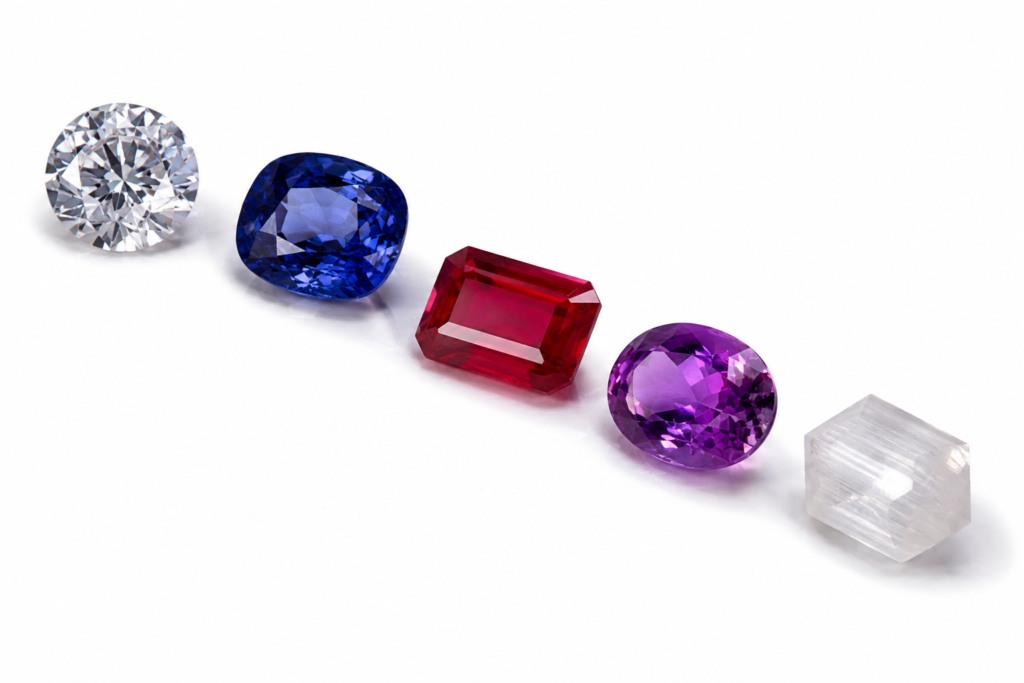
This method works safely for most hard, non-porous gemstones — sapphire, ruby, garnet, amethyst, citrine, tourmaline, spinel, and aquamarine among them. However, several stone categories require different approaches — covered in detail below.
Stone-by-Stone Cleaning Guide
Sapphire and Ruby — Mohs 9
Sapphire and ruby are among the most durable gemstones in jewelry — consequently, they tolerate the widest range of cleaning methods safely.
Safe methods: Mild soap and lukewarm water with a soft brush. Professional ultrasonic cleaning is generally safe for untreated or heat-treated sapphires and rubies. Steam cleaning is acceptable for stones without fracture filling.
Avoid: Ultrasonic cleaning for fracture-filled or heavily included stones — the vibration can worsen existing fractures. Furthermore, avoid harsh chemicals including bleach, ammonia, and acetone.
Frequency: Clean as needed — sapphire and ruby show dirt and oil accumulation beneath the stone, particularly in prong settings. Monthly gentle cleaning maintains brightness.
Diamond and Moissanite — Mohs 10 and 9.25
Diamond and moissanite are the hardest gemstones in jewelry — they tolerate virtually all cleaning methods without damage.
Safe methods: Mild soap and water, ultrasonic cleaning, steam cleaning. Additionally, commercial jewelry cleaning solutions designed for diamond are safe.
Avoid: Chlorine bleach — it does not damage the stone but can damage metal settings and alloys over time.
Special note for moissanite: Moissanite can develop a film of residue that dulls its brilliance over time. Regular cleaning with mild soap and a soft brush restores its characteristic fire effectively.
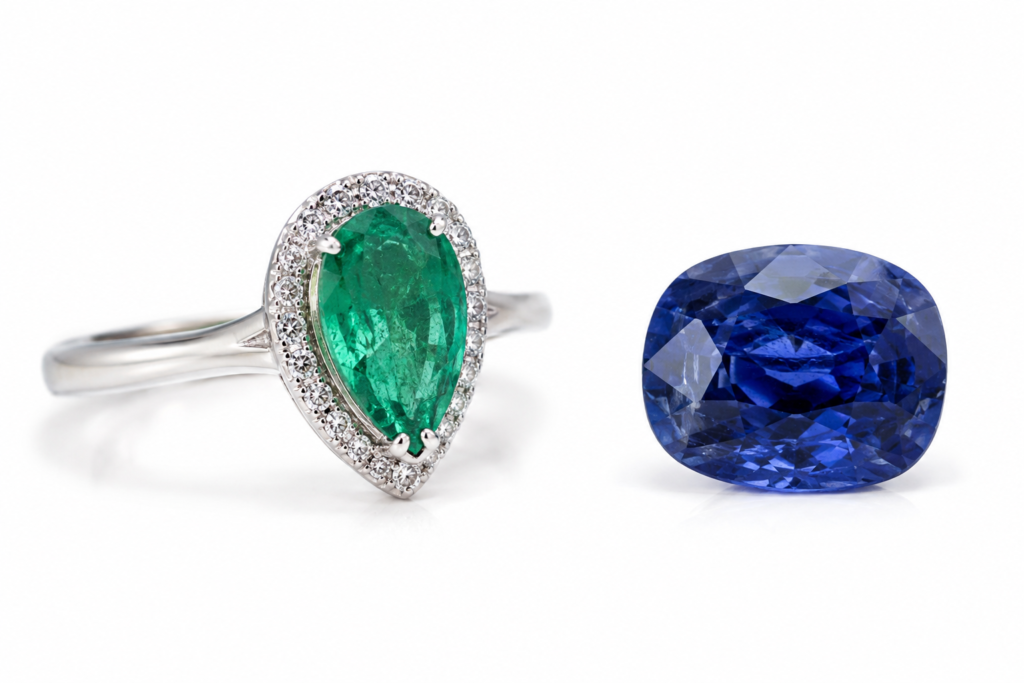
Emerald — Mohs 7.5–8
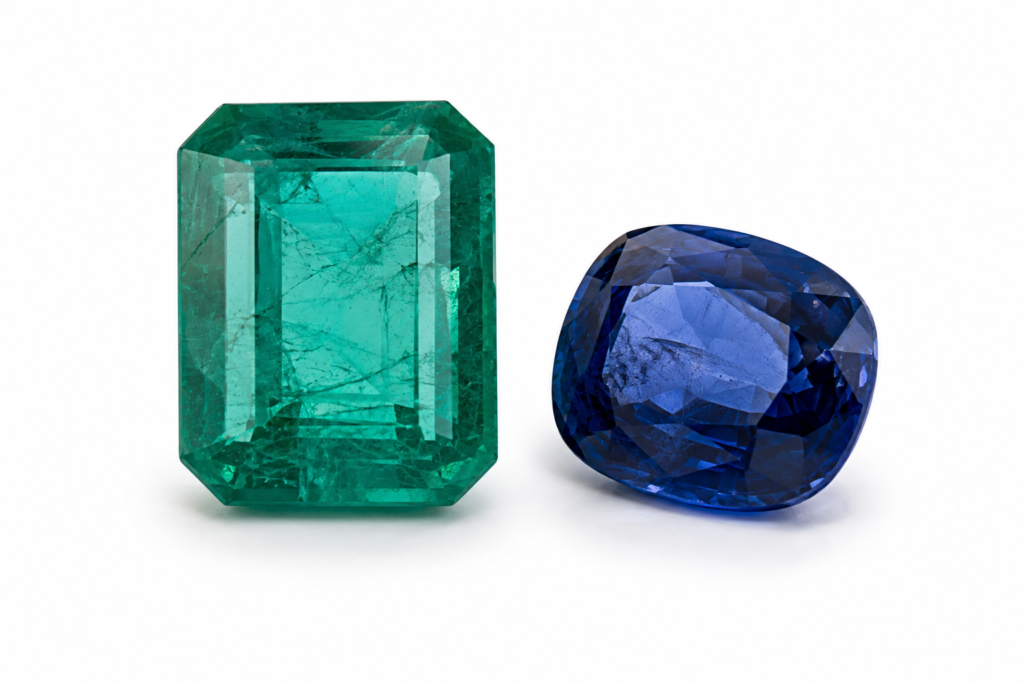
Emerald requires more careful handling than most precious stones due to its typical inclusion content and common oil treatment.
Safe methods: Mild soap and lukewarm water with a soft brush — brief immersion only, under 30 seconds. Pat dry immediately afterward.
Avoid: Ultrasonic cleaners — the vibration can worsen natural fractures and remove oil filling treatment. Steam cleaning for the same reason. Furthermore, avoid soaking emeralds for extended periods — water can enter fractures and displace oil treatment. Avoid harsh chemicals entirely.
Re-oiling: Emeralds that have been cleaned repeatedly may eventually lose their oil treatment, making fractures more visible. A qualified jeweler can re-oil emeralds to restore their original appearance — this is routine maintenance, not damage.
Turquoise — Mohs 5–6
Turquoise is one of the most sensitive gemstones to clean — its porous nature makes it vulnerable to a wide range of cleaning methods that are perfectly safe for harder stones.
Safe methods: Wipe gently with a soft, slightly damp cloth. Dry immediately and completely afterward. Nothing more than this is needed or recommended for regular maintenance.
Avoid: Soaking in water or any liquid — turquoise absorbs liquids and can discolor permanently. Ultrasonic cleaners. Steam cleaning. Any chemical cleaning solutions including commercial jewelry cleaners. Furthermore, avoid contact with perfume, lotion, and hairspray — these discolor turquoise over time through absorption.
Storage: Store turquoise jewelry in individual soft pouches away from harder stones that can scratch its relatively soft surface.
Moonstone and Labradorite — Mohs 6–6.5
Moonstone and labradorite share similar cleaning requirements — both are moderately soft with perfect cleavage in two directions, making them more fragile than their hardness rating alone suggests.
Safe methods: Mild soap and lukewarm water with a very soft brush — extremely gentle pressure only. Pat dry immediately. The goal is removing surface oils and residue, not deep cleaning.
Avoid: Ultrasonic cleaners — the vibration can cause cleavage fractures in these stones. Steam cleaning. Abrasive cloths or brushes. Furthermore, avoid soaking for extended periods.
Special care: Handle moonstone and labradorite pieces carefully during cleaning — the cleavage planes that produce their optical phenomena also make them susceptible to chipping from impact.
Opal — Mohs 5.5–6.5
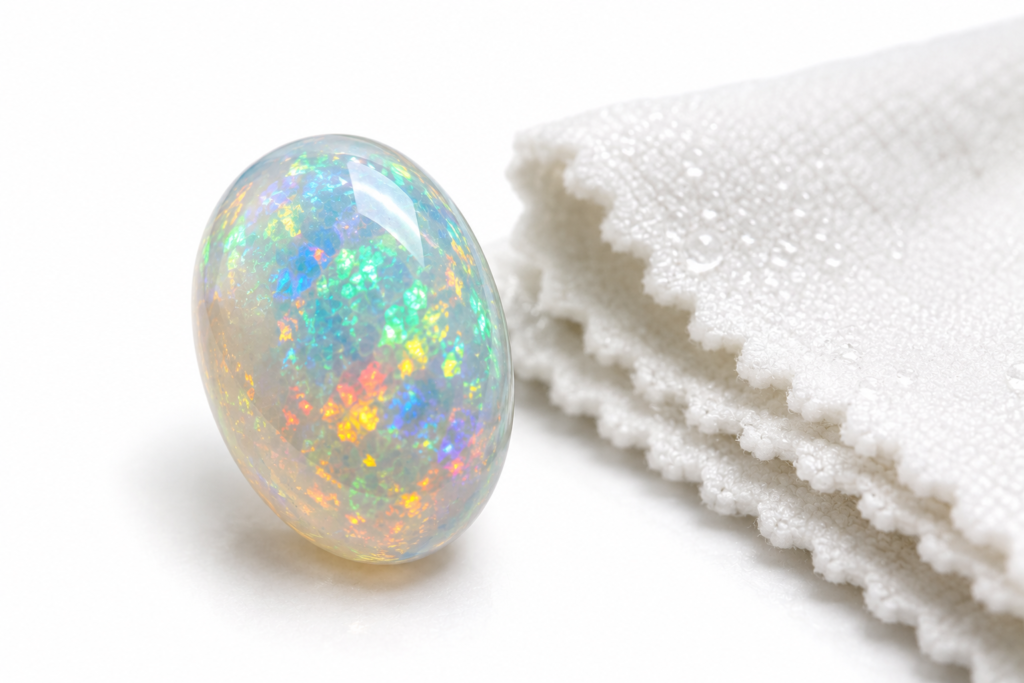
Opal requires the most careful handling of any commonly used jewelry gemstone. Its water content — opals contain 3–21% water — makes it uniquely sensitive to temperature changes and dehydration.
Safe methods: Wipe very gently with a soft, slightly damp cloth. Dry immediately. This is sufficient for routine opal cleaning.
Avoid: Soaking in water — paradoxically, prolonged water immersion can cause opals to absorb too much water and crack as it evaporates. Ultrasonic cleaners. Steam cleaning — temperature changes can crack opals. Harsh chemicals. Furthermore, avoid storing opals in very dry conditions — extreme dryness causes dehydration and cracking.
Ethiopian opal special note: Ethiopian opal is hydrophane — it absorbs water more readily than other opal varieties, which can temporarily change its color and transparency. Allow any Ethiopian opal that has absorbed water to dry completely and naturally before evaluating its appearance.
Amethyst and Citrine — Mohs 7
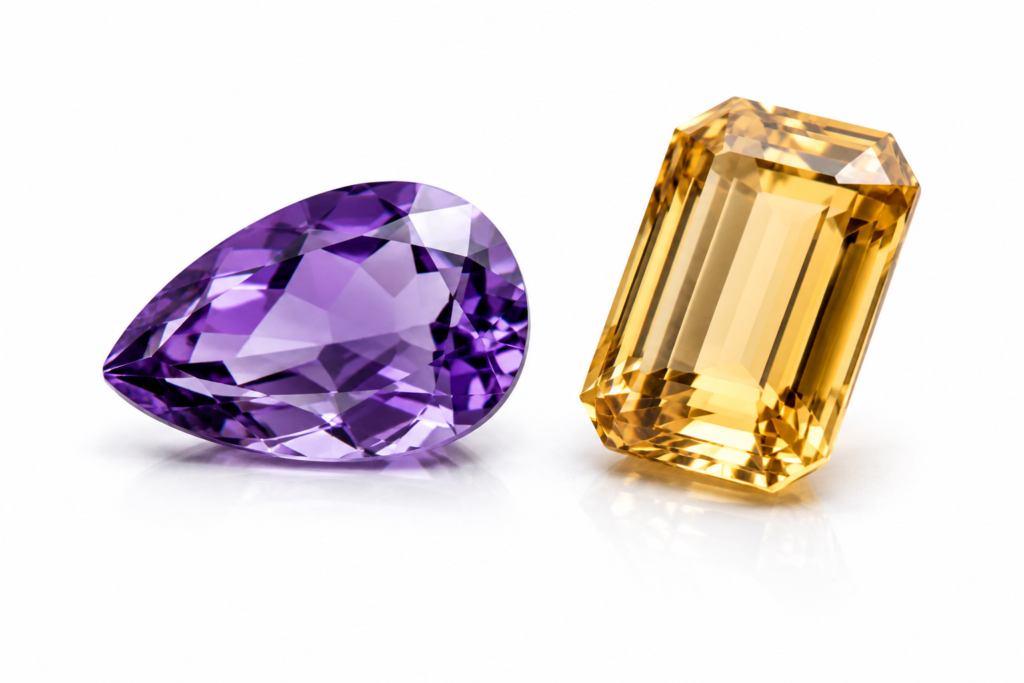
Amethyst and citrine are both varieties of quartz — moderately hard and generally tolerant of standard cleaning methods, with one important exception.
Safe methods: Mild soap and lukewarm water with a soft brush. Brief ultrasonic cleaning for stones without significant fractures.
Avoid: Prolonged direct sunlight and UV exposure — amethyst and citrine can fade with extended UV exposure over time. This affects storage and display as much as cleaning. Furthermore, avoid steam cleaning for fracture-filled specimens.
Malachite — Mohs 3.5–4
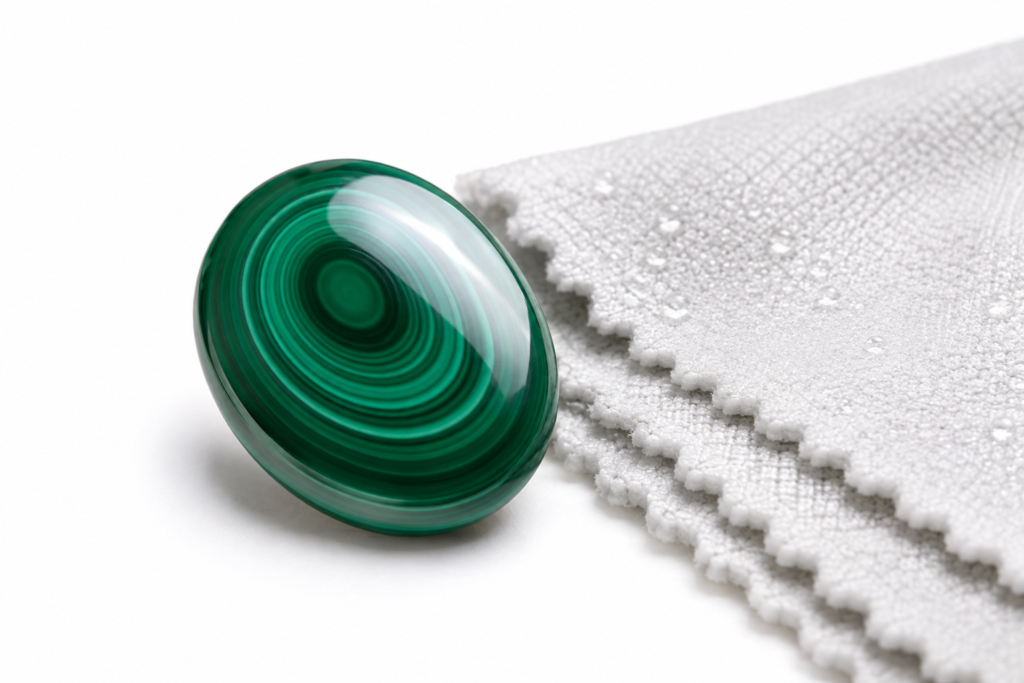
Malachite is one of the softest gemstones commonly used in jewelry — and one of the most sensitive to chemical exposure, as it is a copper carbonate mineral that reacts with acids.
Safe methods: Wipe gently with a barely damp soft cloth only. Dry immediately and completely.
Avoid: Water immersion — malachite is sensitive to prolonged water contact. Any acid-containing cleaning solutions. Ultrasonic cleaners. Steam cleaning. Furthermore, avoid contact with perfume, hairspray, and hand sanitizer — these damage malachite’s surface finish rapidly.
Pearls — Mohs 2.5–3
Pearls are organic gemstones — formed by living organisms — and require the most delicate cleaning of any material commonly used in jewelry.
Safe methods: Wipe gently with a very soft, slightly damp cloth after every wear. Dry completely before storing. This is the only cleaning method that should be used on pearls.
Avoid: All soap and cleaning solutions — chemicals damage the nacre surface. Water immersion. Ultrasonic cleaners. Steam cleaning. Abrasive cloths. Furthermore, avoid contact with perfume, cosmetics, and hairspray — put pearls on last and take them off first to minimize exposure.
Re-stringing: Pearl necklaces and bracelets strung on silk thread should be re-strung every 1–2 years with regular wear — the thread weakens and stretches over time.
Garnet — Mohs 6.5–7.5
Garnet covers a wide range of mineral varieties — all generally tolerant of standard cleaning methods.
Safe methods: Mild soap and lukewarm water with a soft brush. Brief ultrasonic cleaning for clean, unfractured stones.
Avoid: Steam cleaning for demantoid garnet specifically — this variety is heat-sensitive. Furthermore, avoid harsh chemicals and prolonged hot water exposure for all garnet varieties.
Rose Quartz and Crystal Quartz — Mohs 7
Rose quartz and clear quartz are durable and tolerant of standard cleaning.
Safe methods: Mild soap and lukewarm water with a soft brush. Brief ultrasonic cleaning for unfractured stones.
Avoid: Prolonged sun exposure — rose quartz in particular can fade with extended UV exposure. Avoid harsh chemicals.
Cleaning by Metal Type — Additional Considerations
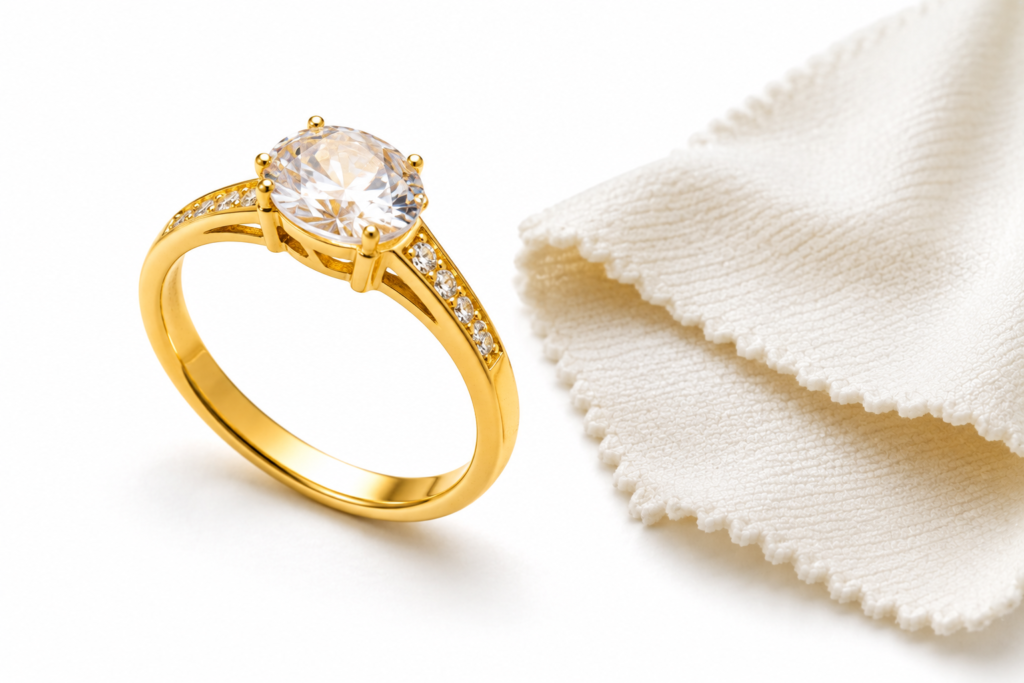
The gemstone is not the only consideration — the metal setting also affects which cleaning methods are appropriate.
925 Sterling Silver Settings
925 sterling silver jewelry tarnishes naturally over time. For plain silver areas around stone settings, a soft silver polishing cloth removes light tarnish effectively. However, avoid applying polishing compound directly to gemstones — particularly soft or porous ones.
For gemstone-set sterling silver pieces, the universal mild soap and water method cleans both the stone and the metal safely. For heavier silver tarnish, apply silver polish carefully to metal areas only, avoiding the stones.
Gold Vermeil Settings
Gold vermeil jewelry requires the same gentle approach as the stones it holds. Abrasive polishing compounds and harsh chemicals remove the gold plating layer along with any dirt. The universal mild soap and water method is the only approach recommended for gold vermeil pieces.
Additionally, avoid ultrasonic cleaning for gold vermeil settings — the vibration can weaken the bond between the gold layer and the silver base. Dry vermeil pieces thoroughly immediately after cleaning and store individually in soft pouches.
What Never to Use on Gemstone Jewelry
Regardless of stone type, these cleaning methods and substances should never be used on fine gemstone jewelry:
Toothpaste: Despite popular advice, toothpaste is mildly abrasive and scratches both stones and metal finishes. Furthermore, its chemical composition can damage treated stones and metal platings.
Bleach: Chlorine bleach attacks metal alloys — particularly the copper in sterling silver and gold alloys — causing structural damage over time. It can also discolor or damage many gemstones.
Ammonia-based cleaners: Damage treated stones, organic gemstones, and metal finishes. Avoid entirely for gemstone jewelry.
Baking soda: Abrasive and alkaline — can scratch soft stones and damage metal finishes.
Hand sanitizer: High alcohol content damages gold plating and can discolor porous stones. Remove rings and bracelets before applying hand sanitizer.
Paper towels: The surface texture of paper towels is abrasive enough to cause micro-scratches on polished stone surfaces and metal finishes. Always use soft cloth or microfibre.
Hot water: Temperature changes stress gemstones with fractures or inclusions. Lukewarm water is always safer than hot.
Professional Cleaning — When to See a Jeweler
Home cleaning maintains jewelry between professional services — but some situations call for a professional jeweler:
Loose stones: If any stone moves when pressed gently, have a jeweler tighten the setting before cleaning. Water and cleaning solutions entering a loose setting accelerate further loosening.
Heavy tarnish on silver: For deeply tarnished silver settings that soft polishing cannot address, a professional cleaning and re-polish restores the metal without risking stone damage.
Re-plating vermeil: When gold vermeil shows wear — yellowing on high-contact areas or silver showing through — professional re-plating restores the gold finish completely.
Emerald re-oiling: After repeated cleaning, oil-treated emeralds benefit from professional re-oiling to restore their original appearance.
Pearl re-stringing: Pearl necklaces with visibly stretched or weakened thread need professional re-stringing to prevent breakage.
Storage Tips That Reduce Cleaning Frequency
Proper storage reduces how often jewelry needs cleaning — and prevents the surface damage that makes cleaning necessary in the first place.
Store pieces individually in soft pouches or anti-tarnish bags — contact between pieces causes scratches on both stones and metal. Keep jewelry away from direct sunlight and extreme temperatures — UV exposure fades some stones over time. Remove jewelry before applying perfume, lotion, and hairspray — these products leave residue that dulls stones and accelerates tarnish. Furthermore, remove jewelry before swimming, bathing, and exercise — water, chlorine, salt, and sweat all accelerate wear and tarnishing.
Quick Reference — Cleaning by Stone
Ultrasonic safe (generally): Diamond, moissanite, sapphire, ruby, spinel, garnet, amethyst, citrine, aquamarine, topaz
Mild soap and water only: Emerald, moonstone, labradorite, rose quartz, peridot, tanzanite, morganite, alexandrite
Damp cloth only: Turquoise, opal, malachite, lapis lazuli, coral, amber, jet
Extremely gentle — damp cloth only: Pearl, shell, all organic materials
FAQs — Cleaning Gemstone Jewelry
Can I use an ultrasonic cleaner at home for gemstone jewelry?
Home ultrasonic cleaners are generally safe only for diamonds, moissanite, and hard non-treated colored stones. However, they are not appropriate for emeralds, opals, turquoise, pearls, moonstone, or any stone with significant fractures or treatments. When in doubt, use mild soap and water instead.
How often should I clean my gemstone jewelry?
For daily-wear pieces, a gentle wipe with a soft cloth after every wear and a mild soap and water clean every 2–4 weeks maintains brightness effectively. For occasional-wear pieces, clean before and after wearing for special occasions.
Can I clean gemstone jewelry with vinegar?
No — vinegar is acidic and damages porous stones, organic gemstones, and metal finishes. Furthermore, it can remove oil treatments from emeralds. Avoid vinegar entirely for gemstone jewelry cleaning.
My gemstone looks dull after cleaning — what happened?
Dullness after cleaning typically results from one of three causes — residue from cleaning solution not fully rinsed, a stone with a surface coating that was removed, or a porous stone that absorbed water and appears temporarily cloudy. Rinse thoroughly with clean lukewarm water and dry completely. If dullness persists, consult a jeweler.
Is it safe to clean gemstone jewelry with steam?
Steam cleaning is safe only for diamonds, rubies, and sapphires without fracture filling or coating. It is not safe for emeralds, opals, turquoise, pearls, or any stone with surface treatments. Furthermore, avoid steam cleaning for gold vermeil settings.
Eon Gems — Gemstone Jewelry Manufacturer in Jaipur
At Eon Gems, every piece of gemstone jewelry we manufacture leaves our facility with full stone identification and treatment disclosure — because we believe buyers who understand their jewelry care for it better, experience fewer quality issues, and become long-term loyal customers.
With 36+ years of manufacturing and export experience, we produce custom gemstone jewelry in 925 sterling silver and gold vermeil for brands and wholesale buyers across 50+ countries — with no minimum order quantity and complete export documentation as standard.
👉 Get a Free Quote from Eon Gems →
🔗 Gemstone Jewelry Manufacturing →
🔗 925 Sterling Silver Jewelry →
🔗 Gold Vermeil Jewelry →