Walk into any jewelry store or browse any wholesale platform and you will encounter three terms repeatedly — 925 sterling silver, gold plated, and gold vermeil. They are often treated as interchangeable. They are not. Furthermore, the differences between them directly affect product quality, customer satisfaction, retail pricing, and brand reputation.
Understanding the difference between 925 silver, gold plated, and vermeil jewelry is therefore one of the most important pieces of knowledge any jewelry buyer or brand owner can have. At Eon Gems, we are Jaipur-based 925 sterling silver jewelry manufacturers and gold vermeil jewelry manufacturers with 36+ years of experience. This guide gives you the complete, honest comparison.
The Quick Answer
Before diving into detail, here is the essential difference in plain language:
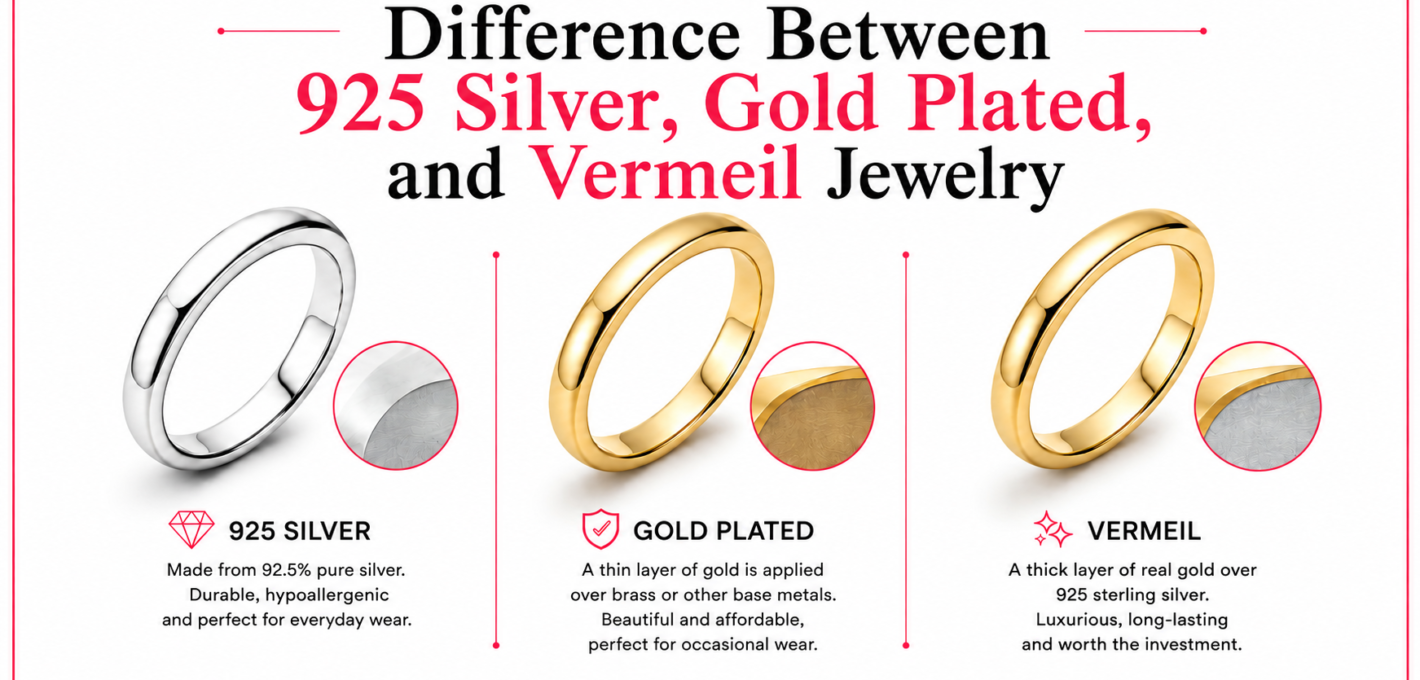
925 Sterling Silver is a precious metal alloy — 92.5% pure silver — used as the primary material throughout the entire piece. It is a genuine precious metal with hallmarked purity and real intrinsic value.
Gold Plated jewelry has a base metal — usually brass or copper — with a very thin layer of gold electroplated onto the surface. The gold layer is typically 0.03 to 0.5 microns thick. The base metal has no precious metal value.
Gold Vermeil is 925 sterling silver electroplated with real gold — minimum 2.5 microns thick and at least 10 karats in purity, as required by the U.S. FTC standard. It combines a genuine precious metal base with a substantial real gold surface.
925 Sterling Silver — Complete Overview
What It Is
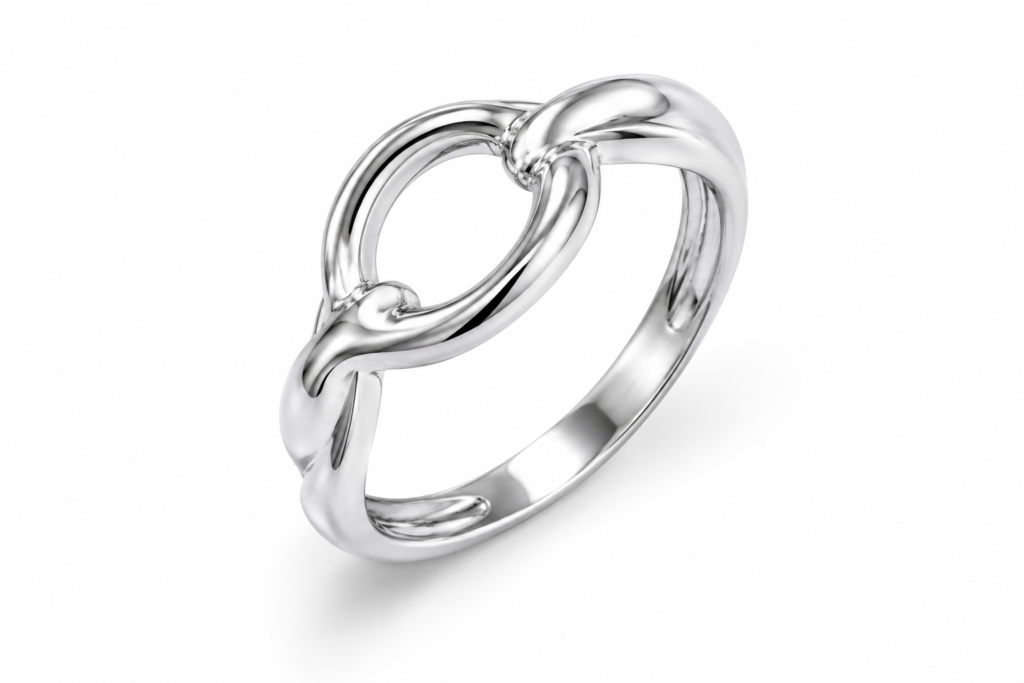
925 sterling silver is an alloy of 92.5% pure silver and 7.5% copper. The copper addition gives the metal the durability needed for wearable jewelry — pure silver is too soft for everyday pieces. The “925” stamp is a legally recognized hallmark in most major markets, guaranteeing the silver content of every piece.
Sterling silver has been the professional jewelry industry standard for centuries. It is a genuine precious metal with real intrinsic value based on the live silver market price.
Appearance
Sterling silver has a bright, cool white metal appearance with natural warmth and depth. It is available in a wide range of finishes — polished, matte, oxidized, rhodium plated, and rose gold plated. Furthermore, it accepts gemstone settings exceptionally well — making it the foundation of most artisan and premium gemstone jewelry.
Durability
Sterling silver is structurally durable — it does not bend, break, or lose its shape under normal wear conditions. However, the surface tarnishes over time as the copper content reacts with sulfur compounds in the air and on skin. Tarnish is entirely reversible with polishing and does not indicate damage or poor quality.
Hallmarking
Every genuine 925 sterling silver piece carries a “925” or “Sterling” stamp — a legal requirement in most regulated markets. At Eon Gems, 925 hallmarking is applied to every piece as standard practice — not an optional add-on.
Best For
- Artisan, bohemian, spiritual, and ethnic jewelry brands
- Gemstone-set jewelry collections
- Markets where silver has strong cultural resonance — Middle East, South Asia, Europe
- Brands targeting the $30–$150 retail price segment
- Any brand that wants a precious metal foundation with maximum finish flexibility
Gold Plated Jewelry — Complete Overview
What It Is
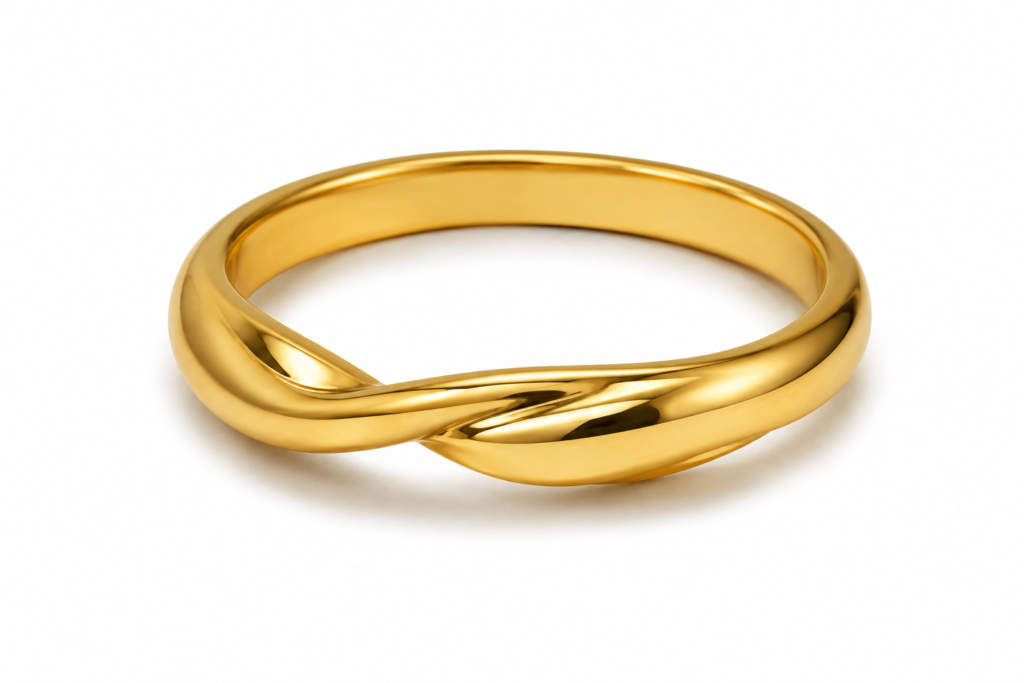
Gold plated jewelry consists of a base metal — almost always brass or copper — with a thin layer of gold deposited onto the surface through electroplating. The gold layer is typically between 0.03 and 0.5 microns thick — extremely thin by any standard.
Gold plated jewelry is not a precious metal product. The base metals — brass and copper — have no precious metal value. Moreover, the gold layer is too thin to contribute significant metal value to the piece.
Appearance
Gold plated jewelry looks identical to gold or gold vermeil when new — the surface gold layer creates a convincing gold appearance. However, the appearance changes significantly over time as the plating wears through, revealing the base metal beneath.
Durability
This is gold plated jewelry’s most significant weakness. At 0.03 to 0.5 microns thickness, the gold layer wears through quickly with regular use — typically within 6 to 12 months of daily wear. High-friction areas such as ring bands and bracelet clasps show wear fastest. Furthermore, when the gold layer wears through, the brass or copper beneath oxidizes, tarnishes, and — in people with copper sensitivity — can cause skin reactions including greenish skin discoloration.
Who It Is Right For
Gold plated jewelry is appropriate for:
- Fashion and trend-driven jewelry at under $30 retail price points
- Seasonal collections where customers expect short lifespan
- Costume jewelry and accessory brands where durability is not a primary selling point
Gold plated jewelry is not appropriate for:
- Brands targeting the premium or accessible luxury segment
- Any brand where customer satisfaction and repeat purchase are priorities
- Products sold with quality positioning that the material cannot sustain
The Mislabeling Problem
One of the most common problems in the jewelry industry is gold plated brass being mislabeled or misrepresented as “vermeil.” This is both commercially deceptive and — in the USA — a potential FTC violation. According to FTC jewelry guidelines, vermeil has specific legal requirements that gold plated brass does not meet.
Gold Vermeil — Complete Overview
What It Is
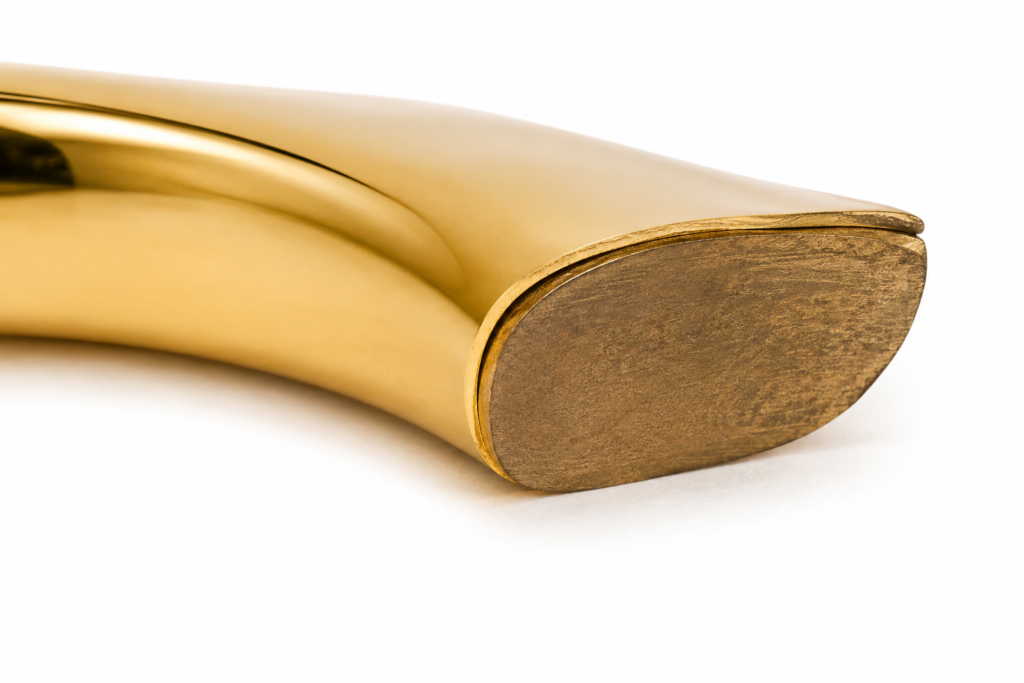
Gold vermeil (pronounced ver-MAY) is 925 sterling silver electroplated with real gold. To qualify as vermeil under U.S. FTC standards, a piece must meet three specific requirements simultaneously:
- Base metal must be 925 sterling silver — not brass, not copper
- Gold purity must be at least 10 karats — real gold, not gold-colored alloy
- Gold plating thickness must be minimum 2.5 microns — ten times thicker than typical gold plating
All three requirements must be met. A piece with a silver base but only 0.5 microns of gold is not vermeil. A piece with 2.5 microns of gold over a brass base is not vermeil. Only the combination of all three elements produces genuine vermeil.
Appearance
Gold vermeil has the rich, warm appearance of gold jewelry — available in yellow gold, rose gold, and white gold finishes depending on the gold alloy used. Because the base is 925 silver rather than brass, the piece has a more premium weight and feel than gold plated brass of equivalent size. Additionally, the thicker gold layer produces a more consistent, deeper color than thin gold plating.
Durability
Gold vermeil is significantly more durable than standard gold plated jewelry. At 2.5 microns minimum — and up to 5 microns for premium grade — the gold layer lasts substantially longer with proper care. Realistic lifespan expectations:
- 2.5 microns — 1 to 3 years with daily wear and proper care
- 3 to 5 microns — 3 to 5 years with daily wear and proper care
Furthermore, when gold vermeil eventually shows wear, the 925 silver base beneath is a precious metal — not reactive brass. Pieces can be professionally re-plated to restore the gold finish, extending their life indefinitely.
Quality Verification
The critical difference between trustworthy and untrustworthy vermeil is quality verification. Plating thickness cannot be judged by eye — it requires an XRF (X-ray fluorescence) machine to measure accurately. At Eon Gems, every batch of gold vermeil jewelry is tested with a German XRF machine before dispatch — and buyers can request the plating thickness report with their shipment.
Best For
- Premium and accessible luxury jewelry brands ($80–$300 retail)
- Brands targeting the USA, UK, Australian, and European markets
- Customers with metal sensitivities — the gold surface eliminates skin contact with the silver-copper alloy
- Brands wanting gold aesthetics with silver economics
- Any brand where customer satisfaction and repeat purchase are priorities
Side by Side Comparison
Base Metal:
925 Silver — 92.5% pure silver throughout
Gold Plated — Brass or copper
Gold Vermeil — 925 sterling silver
Gold Layer:
925 Silver — None (or optional finish plating)
Gold Plated — 0.03 to 0.5 microns
Gold Vermeil — Minimum 2.5 microns real gold
Precious Metal Content:
925 Silver — Yes — silver throughout
Gold Plated — No — base metal only
Gold Vermeil — Yes — silver base plus real gold surface
Hypoallergenic:
925 Silver — Generally yes
Gold Plated — No — copper and nickel risk
Gold Vermeil — Yes — gold surface eliminates base metal contact
Tarnish Resistance:
925 Silver — Moderate (rhodium plating improves this)
Gold Plated — Poor — base metal tarnishes when gold wears through
Gold Vermeil — Good for life of gold layer
Lifespan:
925 Silver — Indefinite with polishing
Gold Plated — 6 to 12 months daily wear
Gold Vermeil — 1 to 5 years depending on plating thickness
Retail Price Range:
925 Silver — $30 to $150
Gold Plated — Under $30
Gold Vermeil — $80 to $300
Best Market:
925 Silver — Artisan, boho, spiritual, gemstone jewelry
Gold Plated — Fashion, trend, costume jewelry
Gold Vermeil — Premium, accessible luxury, B2B wholesale
Which Should You Choose for Your Jewelry Brand?
The right choice depends entirely on your brand positioning, target customer, and retail price point.
Choose 925 sterling silver if your brand is built around artisan craftsmanship, gemstone jewelry, spiritual or healing collections, or markets where silver has strong cultural resonance. Silver’s finish flexibility — polished, oxidized, rhodium, rose gold — makes it the most versatile base metal in professional jewelry manufacturing.
Choose gold vermeil if your brand targets the premium or accessible luxury segment with a gold aesthetic. Vermeil commands significantly higher retail prices than silver, has stronger perceived value in Western markets, and delivers better customer satisfaction than gold plated brass at equivalent price points. Furthermore, it positions your brand in a market segment where margins and customer loyalty are stronger.
Avoid gold plated brass for premium brands. If your brand charges more than $30 retail and positions itself on quality, gold plated brass cannot sustain that positioning. Customer complaints about fading, skin reactions, and tarnishing will undermine your brand reputation before it has a chance to establish itself.
Consider offering both. Many successful jewelry brands offer their core designs in both 925 sterling silver and gold vermeil — giving customers a choice at two price points from the same design. This approach doubles the product range with minimal additional design cost and allows customers to self-select based on budget and preference.
Common Questions from Buyers and Brand Owners
Is gold vermeil real gold?
Yes — gold vermeil contains real gold. The plating layer is genuine gold of at least 10 karats. The base is genuine 925 sterling silver. Vermeil is not costume jewelry — it is real precious metal jewelry with a gold surface over a silver foundation.
Can gold vermeil be re-plated?
Yes — this is one of vermeil’s significant advantages over gold plated brass. When the gold layer shows wear, a local jeweler can re-plate the piece, restoring the gold finish completely. Because the base is 925 silver rather than brass, the piece can be re-plated multiple times without degradation of the base material.
Is 925 silver better than gold plated?
For quality, durability, precious metal content, and long-term value — yes, 925 silver is significantly better than gold plated brass. However, if a customer specifically wants a gold appearance, 925 silver does not provide that. Gold vermeil offers the best of both — 925 silver quality with a gold aesthetic.
Why does gold plated jewelry turn skin green?
The green skin reaction comes from the copper in the base metal — not from gold. When the gold plating wears through, copper in the brass base reacts with sweat and skin acids, producing copper salts that appear green on skin. This does not happen with 925 silver or gold vermeil bases.
How do I know if jewelry is real vermeil or just gold plated brass?
Ask for the base metal specification in writing and request XRF plating thickness documentation. If a supplier cannot confirm 925 silver base and minimum 2.5 micron gold thickness with documentation, the product does not qualify as genuine vermeil.
Eon Gems — 925 Silver and Gold Vermeil Jewelry Manufacturer in Jaipur
At Eon Gems, we manufacture both 925 sterling silver jewelry and gold vermeil jewelry to the highest quality standards — with 925 hallmarking as standard, XRF-verified gold plating on every vermeil batch, and complete transparency on materials and process.
With 36+ years of manufacturing and export experience serving brands across 50+ countries, we understand that the material decisions you make at the sourcing stage determine your brand’s long-term success.
What we offer:
- 925 sterling silver jewelry — hallmarked, all finishes, full in-house production
- Gold vermeil jewelry — XRF-verified plating, 10k to 18k, yellow rose and white gold
- 250+ gemstone varieties for custom gemstone jewelry
- No MOQ — single prototype to large bulk production
- Transparent, itemized pricing — no hidden costs
- Complete export documentation for all major markets
- Guidance on material selection for your specific brand and market
👉 Get a Free Quote from Eon Gems →
🔗 925 Sterling Silver Jewelry Manufacturing →
🔗 Gold Vermeil Jewelry Manufacturing →
🔗 Gemstone Jewelry Manufacturing →