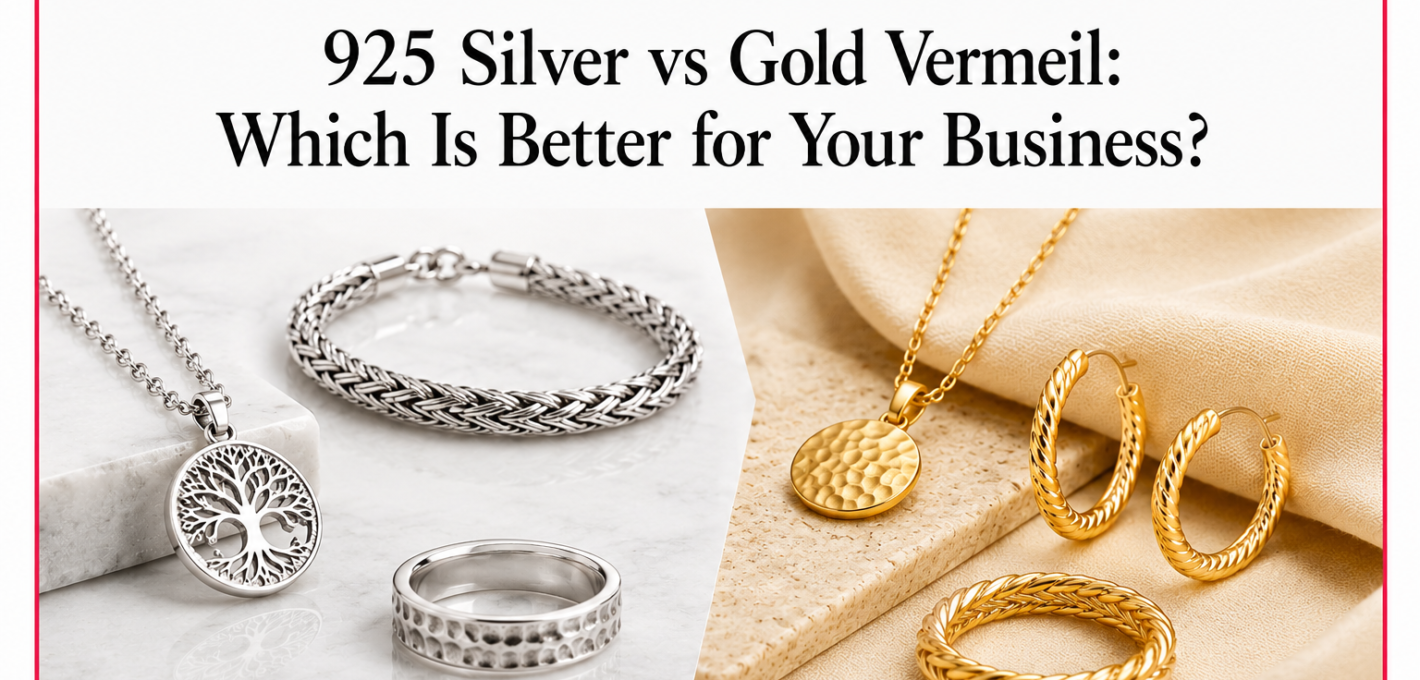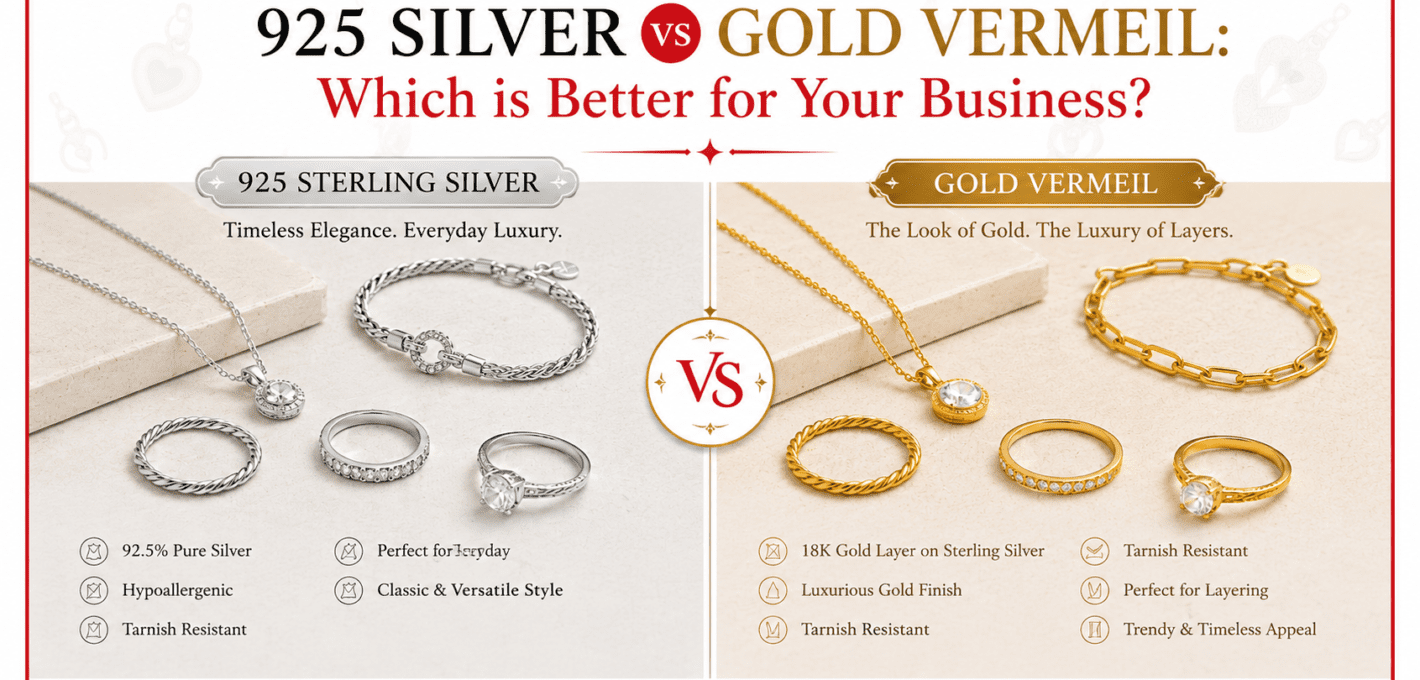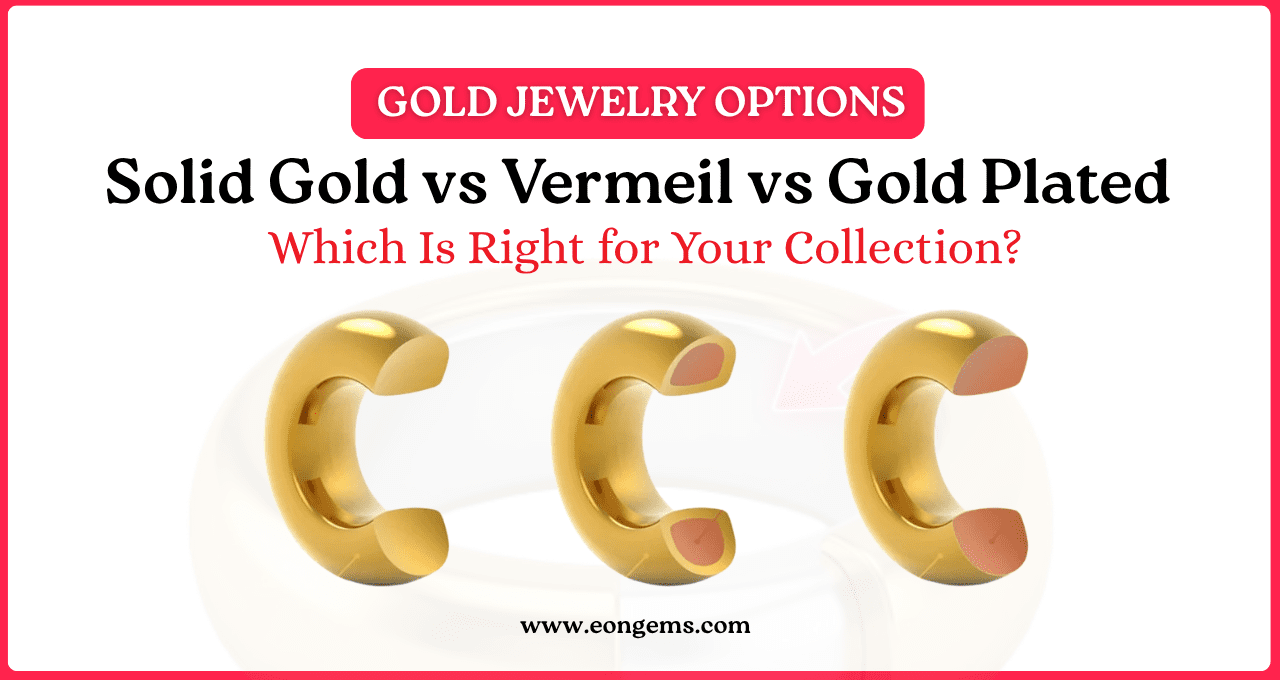
Which gold option actually makes the most sense for your collection? That is a key question for any jewelry brand because material choice affects pricing, positioning, durability, customer expectations, and long term brand value. When comparing solid gold vs vermeil vs gold plated, the right answer depends less on trend and more on what your collection is meant to deliver.
For some brands, solid gold supports heirloom level value and fine jewelry positioning. For others, vermeil offers a strong balance between premium feel and accessible pricing. Gold plated jewelry can also make sense for trend driven or entry level lines, but it comes with different durability expectations. In the US, FTC guidance defines vermeil as sterling silver coated on significant surfaces with gold of at least 22 karat and at least about 2.5 microns thick, while ordinary gold plated jewelry does not carry the same specific sterling silver and thickness standard.
Why This Gold Jewelry Comparison Matters for Brands
A strong gold jewelry comparison is not only about appearance. At a glance, solid gold, vermeil, and gold plated jewelry can all look beautiful. But from a brand perspective, they perform very differently in cost structure, durability, customer communication, and collection strategy. FTC guidance and consumer jewelry resources make clear that these categories describe materially different products, not just different marketing terms.
That is why choosing the right option early can save a brand from product mismatches later. If the material does not align with your audience, price point, and brand promise, even a well designed collection can struggle. This is especially important for brands building long term categories such as bridal, gifting, demi fine, or trend focused fashion jewelry.
What this choice affects
- Product pricing and margin structure
- Customer expectations around longevity
- Positioning as fashion, demi fine, or fine jewelry
- Suitable gemstones and design complexity
- Return rates and customer satisfaction
What Solid Gold Means for a Collection
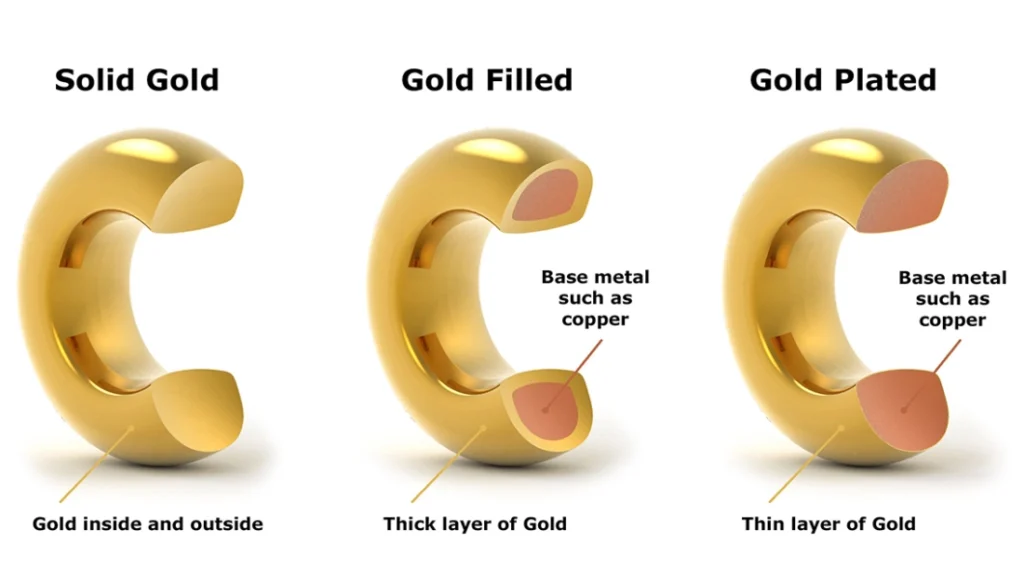
Solid gold is the highest commitment option in this comparison. Instead of a base metal covered with a surface layer, the piece itself is made from a gold alloy throughout. In the US, 10 karat is the minimum karat allowed to be called gold in this context, while higher karats contain more gold content. This gives solid gold jewelry lasting value and makes it especially suitable for collections positioned as fine jewelry.
For brands, solid gold works best when the goal is permanence, resale appeal, and long term wear. It is often used in wedding jewelry, investment minded pieces, core fine jewelry lines, and premium signature collections. Because the gold content runs through the piece, there is no plating layer to wear away in the same way as plated or vermeil jewelry. That makes it the strongest option for brands that want to emphasize longevity.
At the same time, solid gold comes with higher metal cost, higher inventory risk, and a more premium retail threshold. That means it is not automatically the best choice for every brand. It is the best fit when the collection is designed to support that level of cost and value communication.
Solid gold is often best for
- Fine jewelry collections
- Wedding and bridal categories
- Heirloom oriented pieces
- Premium gifting lines
- Customers who prioritize long term ownership
What Vermeil Means for a Collection
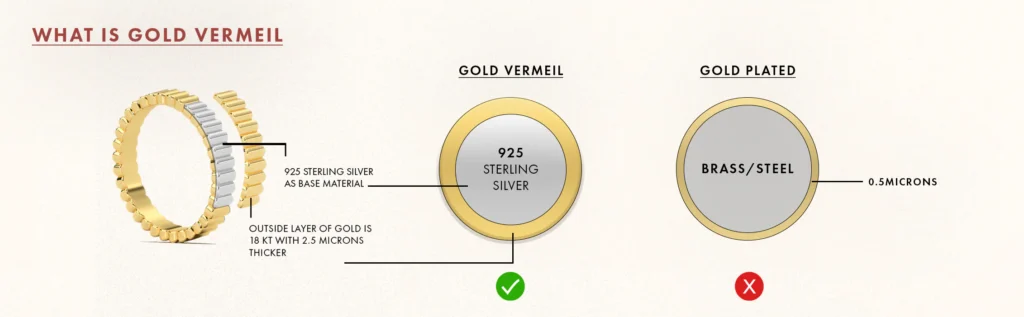
Vermeil sits in a very important middle ground, which is why it is often central to discussions around demi fine jewelry materials. FTC guidance says vermeil must use a sterling silver base and a substantial gold coating on significant surfaces, with minimum standards for gold fineness and thickness. That makes vermeil more defined and more premium than ordinary gold plated jewelry in the US regulatory sense.
For brands, vermeil is often attractive because it gives a premium feel without the cost of solid gold. The sterling silver base already carries recognized value, and the thicker gold layer gives the piece a more elevated story than basic plating. This is one reason vermeil fits so well in modern demi fine collections, especially for brands targeting customers who want luxury appearance at a more accessible price point. Jewelers Mutual also describes vermeil as a useful option for style and budget conscious buyers who want something more substantial than standard plated jewelry.
Vermeil also works well in collections that need elegance and better perceived quality, but still need commercial flexibility. It can support rings, pendants, earrings, bracelets, and gemstone based designs that feel more elevated than entry level fashion jewelry.
If you want more category specific background, this guide on What is Gold Vermeil Jewelry? connects naturally with this material decision.
Vermeil is often best for
- Demi fine jewelry collections
- Premium everyday wear
- Mid luxury gifting categories
- Brands moving up from fashion jewelry
- Collections that need better value perception than plated jewelry
What Gold Plated Means for a Collection
Gold plated jewelry is usually the most accessible of the three options. Consumer jewelry guidance describes it as a base metal, often brass or copper, with a thin layer of gold on top. Unlike vermeil, it does not have the same regulated sterling silver base and minimum thickness framework.
That makes gold plated jewelry useful for brands that want a lower price point, fast moving styles, or highly trend driven collections. It is often the easiest route for launching fashion jewelry because the material cost is lower and the entry price for the customer can stay more competitive. But it also requires more careful expectation setting. Because the gold layer is thinner, consumer guides note it can wear faster over time, especially with friction, moisture, sweat, or chemicals.
Gold plated can absolutely have a place in a smart collection strategy. It is simply best used when the brand is honest about what the category is meant to offer. It is strongest in style first collections, seasonal drops, fashion edits, and more affordable gifting.
Gold plated is often best for
- Trend led fashion jewelry
- Lower entry price collections
- Seasonal or fast moving styles
- Test products for new brands
- Customers buying for look over longevity
Solid Gold vs Vermeil vs Gold Plated, The Core Difference
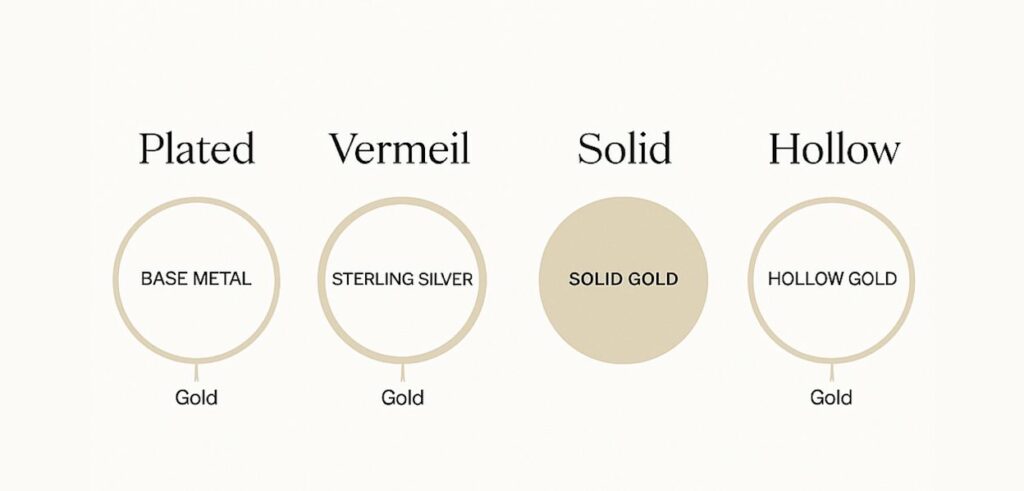
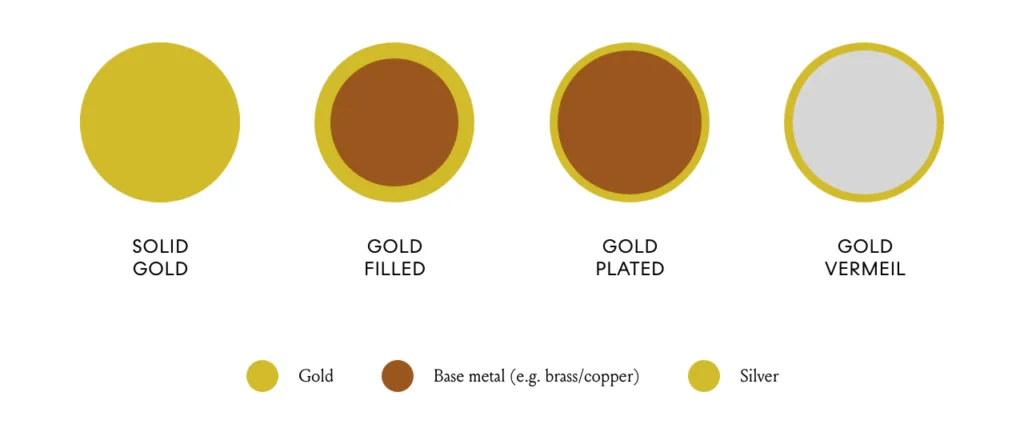
When comparing solid gold vs vermeil vs gold plated, the biggest difference is the relationship between value, structure, and wear. Solid gold is gold throughout the piece. Vermeil is sterling silver with a thicker and more specifically defined gold coating. Gold plated jewelry is a base metal with a thinner outer gold layer and generally lower durability expectations.
This is why vermeil vs plated jewelry is such an important distinction. To a casual buyer, they may look similar at first. But from a material and positioning point of view, they are not the same. Vermeil usually supports a stronger quality story because of the sterling silver base and thicker gold layer standard, while gold plated is usually positioned more as affordable fashion jewelry.
For a brand, this difference should shape product naming, care guidance, price justification, and customer education. A collection becomes stronger when the material story is clear and accurate.
Which Material Fits Fine Jewelry Best
Solid gold is generally the clearest choice for fine jewelry. It supports the strongest long term value proposition, works well in categories where permanence matters, and aligns with buyer expectations for pieces that may be worn for many years. Stamps and karat markings also help communicate this gold content to the market.
That said, not every premium looking collection needs to be solid gold. Some brands use vermeil very effectively in categories that sit between fashion and fine jewelry, especially when targeting style conscious customers who still care about material quality. This is why the rise of demi fine jewelry materials has been so important in recent years. It created room for collections that feel premium without moving fully into the fine jewelry cost bracket.
Which Material Fits Demi Fine Jewelry Best
Vermeil is often the strongest answer for demi fine positioning. It offers a better material narrative than standard plating, a more accessible cost structure than solid gold, and enough premium appeal to support elevated branding. Consumer guides specifically place vermeil as a stronger step up from gold plated jewelry for shoppers balancing appearance and budget.
This makes vermeil a smart option for brands selling modern essentials, layered jewelry, elegant gifting pieces, and premium everyday collections. It is especially useful for labels that want customers to see the product as more than fashion jewelry, but not necessarily as investment fine jewelry either.
For design planning, vermeil can also pair well with silver based structures and selected gemstones. Related guides like best gemstones for 925 silver jewelry collections and gold jewelry manufacturer can help brands think through how the collection should evolve.
Which Material Fits Fashion Jewelry Best
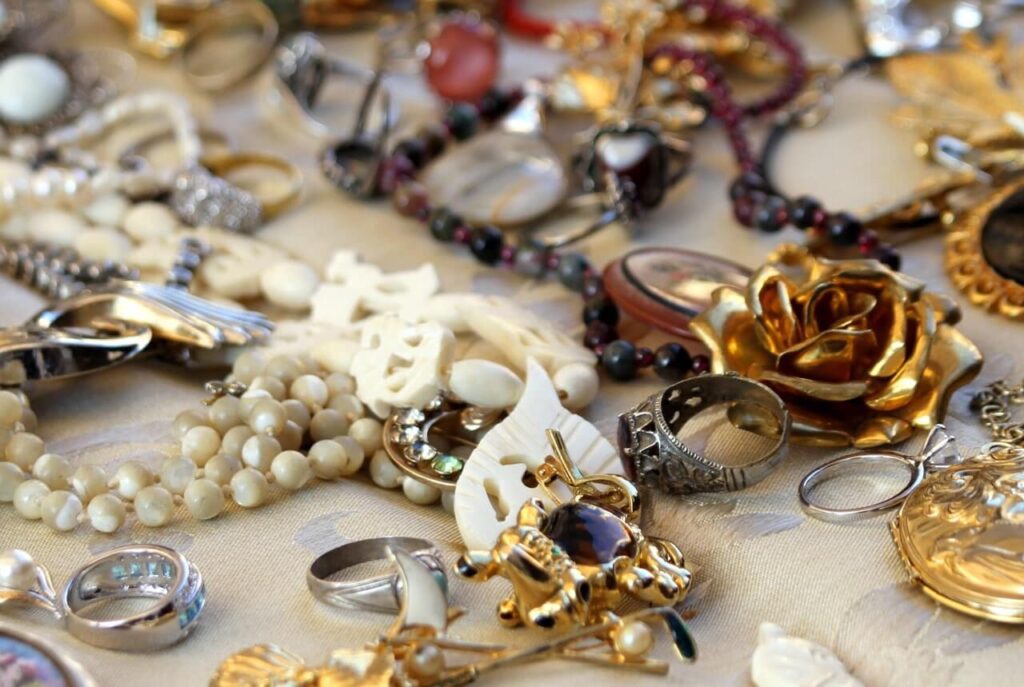
Gold plated jewelry is often the most practical choice for fashion jewelry because it allows brands to deliver the gold look at the lowest material cost of the three. This makes it useful for trend driven launches, experimental product lines, influencer collections, and categories where speed and price accessibility matter most. Consumer resources also describe gold plated as the most budget friendly route to a gold appearance.
The key is not to oversell it. Gold plated can work very well when the collection is designed around style, not heirloom permanence. The strongest fashion brands use it successfully by pairing attractive design with honest material education.
A simple jewelry material guide for collection planning
- Choose solid gold when longevity and fine jewelry value matter most
- Choose vermeil when you want premium feel with more accessible pricing
- Choose gold plated when trend, entry price, and flexibility matter most
- Match the material to the promise your brand is making
- Build care instructions around the actual wear expectations of the product
How Customer Type Should Influence the Decision
The right answer is often easier when you look at the customer first. A customer shopping for wedding bands, milestone gifts, or forever pieces usually expects solid gold. A customer building a polished everyday wardrobe may be very happy with vermeil. A customer buying trend pieces or trying a new style category may prefer gold plated for affordability.
This is why a jewelry material guide should always begin with audience behavior. Material is not only a technical decision. It is a customer expectation decision. When brands get this right, pricing feels logical, marketing feels honest, and the collection performs more smoothly.
How to Think About Long Term Collection Growth
From a business perspective, these materials can also work together. Some brands start with gold plated styles to test designs, then move their bestsellers into vermeil, and later introduce select solid gold hero pieces. This tiered approach can help the collection grow without forcing the brand into one price band too early.
That strategy works especially well when the brand wants to serve multiple customer segments while maintaining clear category language. A well planned ladder of gold plated, vermeil, and solid gold can create a stronger product ecosystem rather than a confusing mix.
You can also connect this to broader business planning through start your own jewelry business and how to select a perfect jewellery manufacturer if the collection is still in development.
FAQs
Solid gold contains gold throughout the piece, vermeil is sterling silver with a substantial gold coating that meets FTC standards, and gold plated jewelry usually has a thinner gold layer over a base metal.
In material terms, vermeil is generally considered a stronger premium option because it uses sterling silver and has a more specific minimum thickness standard for the gold layer in FTC guidance.
Not always. It is the strongest option for fine jewelry and long term value, but it may not be the best commercial fit for every brand because of its higher cost and price positioning.
Because it offers a premium feel and stronger material story than standard plating, while staying more accessible than solid gold. Consumer jewelry guidance positions it as a smart middle option.
Consumer jewelry resources note that gold plated jewelry can wear faster over time because the gold layer is thinner and more affected by friction, sweat, chemicals, and daily wear.
For many brands, vermeil is the best fit for premium everyday wear because it balances appearance, perceived quality, and price more effectively than solid gold or basic plating.
Yes, many brands build a tiered product strategy where gold plated serves entry price points, vermeil supports demi fine positioning, and solid gold anchors the premium range.
They should start with customer expectations, price strategy, wear requirements, and whether the collection is meant to be fashion jewelry, demi fine, or fine jewelry.
Conclusion
The best answer to solid gold vs vermeil vs gold plated depends on what your collection is trying to achieve. Solid gold is strongest for fine jewelry, long term value, and heirloom positioning. Vermeil is ideal for brands building elevated demi fine collections with better perceived quality than standard plating. Gold plated works best for fashion focused, lower price, and trend led collections.
The smartest choice is the one that matches your customer, your pricing strategy, and your brand promise. When the material story is clear, the collection becomes easier to market, easier to price, and easier for customers to trust.
If you are developing a collection and need production support, explore Eon Gems’ vermeil jewelry manufacturer page or their services page to find the right fit, and reach out through the contact us page to discuss your project requirements.