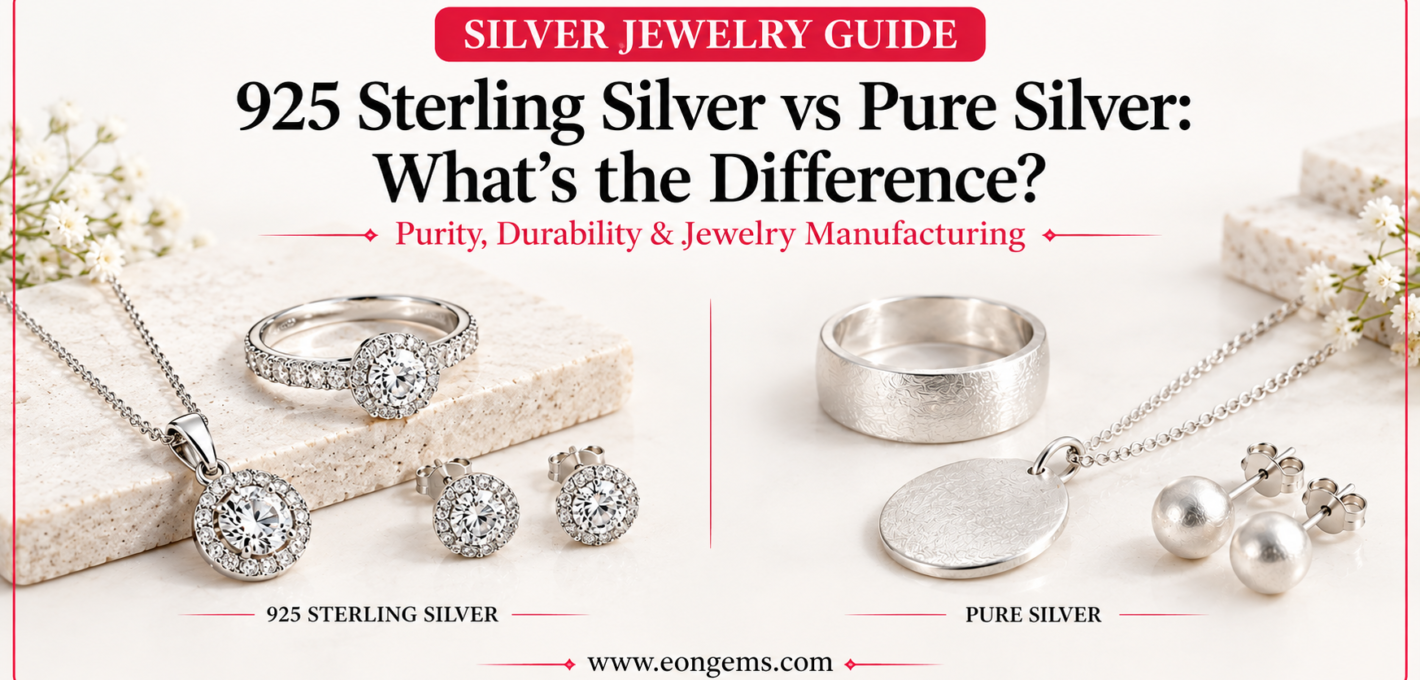
If you have ever bought silver jewelry, you have almost certainly seen the “925” stamp. You may have wondered what it means — and how it differs from pure silver.
The difference between 925 sterling silver and pure silver is one of the most commonly asked questions in the jewelry world. Furthermore, it is one of the most practically important — because understanding it helps buyers make smarter purchasing decisions and helps brands communicate their products more accurately to customers.
At Eon Gems, we are Jaipur-based 925 sterling silver jewelry manufacturers with 36+ years of experience. This complete guide covers everything — composition, durability, hallmarking, tarnish, and which type of silver is better for different applications.
What Is Pure Silver?
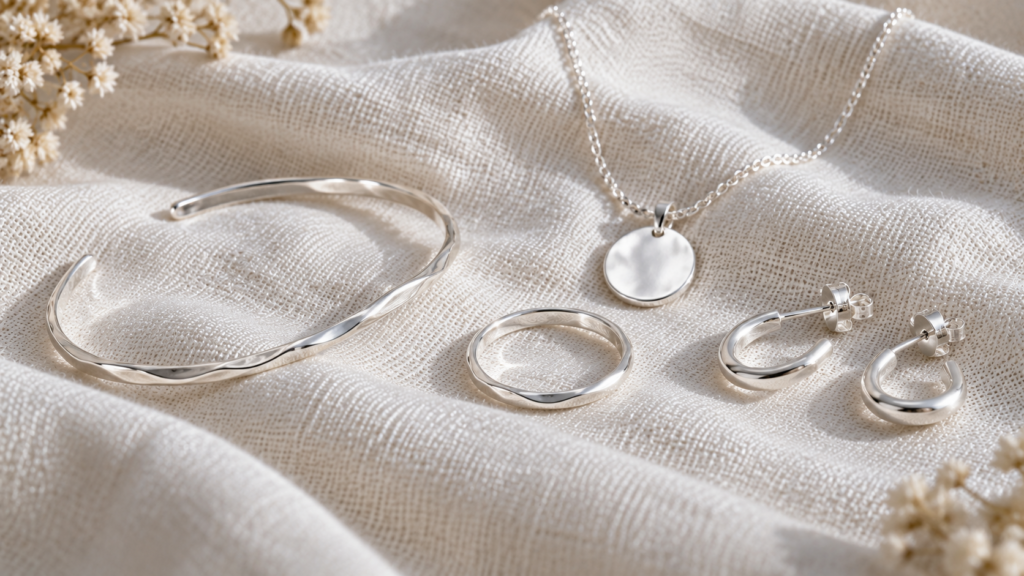
Pure silver — also called fine silver — is silver in its most natural form. It contains 99.9% silver with virtually no other metals present. The hallmark for pure silver is “999” or “999 FS” — reflecting the 99.9% silver content.
Pure silver has a distinctly bright, almost white appearance that is slightly different from the warm luster of sterling silver. Furthermore, it has excellent tarnish resistance compared to sterling silver — because the copper that causes sterling silver to tarnish is absent.
However, pure silver has one significant limitation that makes it impractical for most jewelry applications. It is extremely soft. Pure silver is so malleable that a piece of jewelry made from it would bend, scratch, and lose its shape with even light everyday wear. Consequently, the jewelry industry has largely moved away from pure silver for wearable pieces — using it primarily for bullion bars, coins, and specialized applications where softness is not a problem.
What Is 925 Sterling Silver?
925 sterling silver is an alloy — a mixture of metals — containing 92.5% pure silver and 7.5% other metals, most commonly copper. The “925” hallmark reflects this 92.5% silver content.
The copper addition serves a critical purpose. It gives the alloy the hardness and durability needed for wearable jewelry without significantly compromising silver’s natural beauty, luster, or hypoallergenic properties. Furthermore, the 7.5% copper content is small enough that the alloy retains the appearance and feel of precious silver — while gaining the structural strength needed to hold gemstone settings, maintain ring shapes, and survive years of daily wear.
Sterling silver has been the professional jewelry industry standard for centuries. In fact, when jewelers, manufacturers, and retailers refer to “silver jewelry” in a professional context, they almost always mean 925 sterling silver — not pure silver.
925 Sterling Silver vs Pure Silver — The Key Differences
Composition
Pure silver contains 99.9% silver and 0.1% or less of trace elements. 925 sterling silver contains 92.5% silver and 7.5% other metals — typically copper, though some alloys use zinc, germanium, or platinum as the alloying element.
This compositional difference is the foundation of every other difference between the two materials.
Hardness and Durability
Pure silver has a Mohs hardness of approximately 2.5 — comparable to a fingernail. It scratches easily, bends under light pressure, and cannot maintain the precise shapes required for most jewelry designs under everyday wear conditions.
925 sterling silver has significantly greater hardness — typically around 2.7 to 3.0 on the Mohs scale after working and finishing. Furthermore, the addition of copper creates a metal that holds its shape, maintains sharp design details, and survives the mechanical stresses of daily wear. Consequently, virtually all professional jewelry manufacturing uses 925 sterling silver rather than pure silver for wearable pieces.
This is one of the most commonly misunderstood differences between the two materials.
Tarnish Resistance
Pure silver tarnishes very slowly. Because it contains no copper, there is minimal chemical reaction with sulfur compounds in the air — the primary cause of silver tarnish. Consequently, pure silver pieces can look bright and clean for much longer without polishing.
925 sterling silver tarnishes more readily than pure silver — the copper content reacts with sulfur compounds in the air and on skin, producing the characteristic yellow-to-black tarnish that silver jewelry owners are familiar with. However, this tarnish is entirely reversible with polishing and does not indicate damage or deterioration of the metal.
Rhodium plating — a thin layer of rhodium electroplated over the silver surface — significantly improves tarnish resistance of sterling silver pieces. Furthermore, proper storage in anti-tarnish bags or pouches reduces tarnishing substantially between wears.
Appearance
The visual difference between pure silver and 925 sterling silver is subtle but present. Pure silver has a slightly cooler, brighter white appearance. 925 sterling silver has a warm, rich luster that many buyers and designers actually prefer for finished jewelry.
In contrast, the practical appearance difference in finished jewelry is minimal — both produce beautiful, lustrous pieces that photograph well and have strong retail appeal.
Hallmarking
Pure silver carries a “999” or “999 FS” hallmark. 925 sterling silver carries a “925,” “S925,” or “Sterling” hallmark. These hallmarks are legally regulated in most major markets — including the USA, UK, and EU — providing buyers with documented assurance of metal content.
For wholesale buyers and jewelry brands, hallmarking is a compliance issue as much as a quality one. Furthermore, at Eon Gems, 925 hallmarking is applied to every sterling silver piece as standard practice — included in the export documentation package for every international shipment.
Price
Pure silver commands a slightly higher raw material price per gram than 925 sterling silver — reflecting its higher silver content. However, the price difference is relatively small at the per-piece level for most jewelry applications.
In contrast, the manufacturing cost difference is more significant. Pure silver’s softness makes it harder to work with for complex designs, harder to set stones in securely, and harder to maintain precise dimensions during production. Consequently, labor costs for pure silver jewelry tend to be higher than for equivalent 925 sterling silver pieces — partially or fully offsetting the raw material premium.
Jewelry Applications
Pure silver is used in specific applications where its softness is either acceptable or desirable. Fine silver clay — used in art jewelry making — relies on pure silver’s malleability. Some traditional jewelry-making techniques work specifically with fine silver. Bullion coins and bars use 999 fine silver. Additionally, some specialized settings — particularly fine granulation work — use pure silver because its slightly lower melting point and greater malleability suit the technique.
925 sterling silver dominates virtually every other jewelry application. Rings, necklaces, bracelets, earrings, pendants — all the standard wearable jewelry categories are manufactured in 925 sterling silver as the industry standard. Furthermore, 925 sterling silver is the required base metal for genuine gold vermeil jewelry under FTC standards — another reason for its commercial dominance.
Other Silver Alloys — Beyond 925 and 999
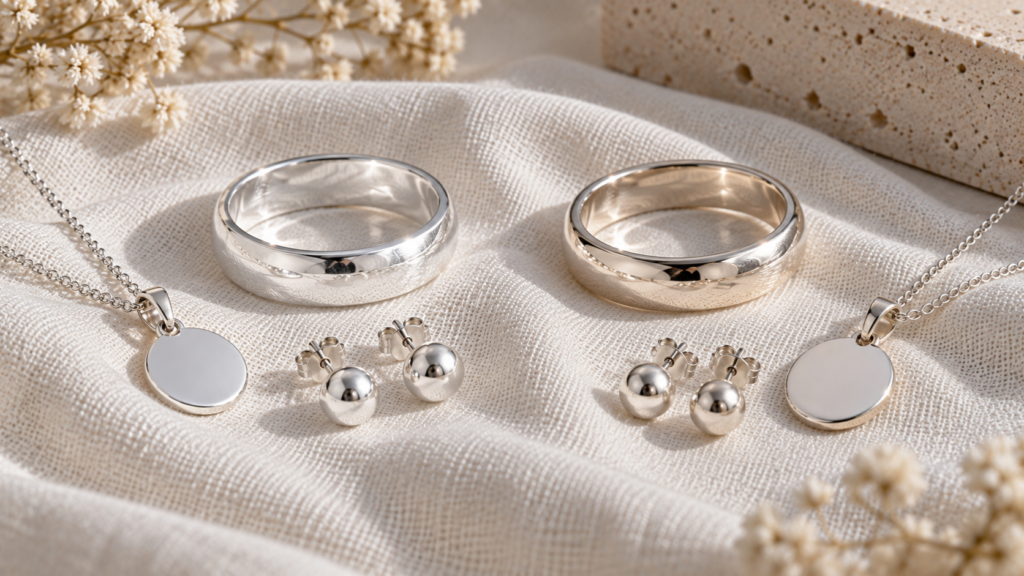
The 925 and 999 standards are the most common — but several other silver alloys exist that buyers and brands encounter in the market.
958 Britannia Silver
Britannia silver contains 95.8% silver — higher purity than sterling but still alloyed for workability. It was the UK standard for silver from 1697 to 1720 and is still used today for high-end silverware and some jewelry applications. The hallmark is “958” or the Britannia figure. However, it is significantly softer than 925 sterling and consequently less suitable for intricate jewelry designs.
800 Silver
800 silver contains 80% silver and 20% other metals — significantly lower purity than sterling. It is common in some European countries — particularly Germany and Italy — for older silverware and jewelry. The hallmark is “800.” However, it is not considered sterling silver and cannot be described as such in regulated markets.
Argentium Silver
Argentium silver is a modern silver alloy that replaces some or all of the copper content in sterling silver with germanium. It contains either 93.5% or 96% silver. Argentium has significantly better tarnish resistance than standard sterling silver — because germanium forms a protective oxide layer that inhibits tarnishing.
Furthermore, Argentium is gaining popularity among jewelry designers who want the durability of sterling with improved tarnish resistance. However, it is more expensive than standard 925 sterling and requires slightly different working techniques. The hallmark includes the silver content percentage alongside the distinctive Argentium winged unicorn mark.
Coin Silver
Coin silver — historically used in American coins — contains 90% silver. It appears in some antique jewelry and silverware but is rarely used in contemporary jewelry manufacturing. The hallmark is “900” or “Coin.”
Is 925 Silver Real Silver?
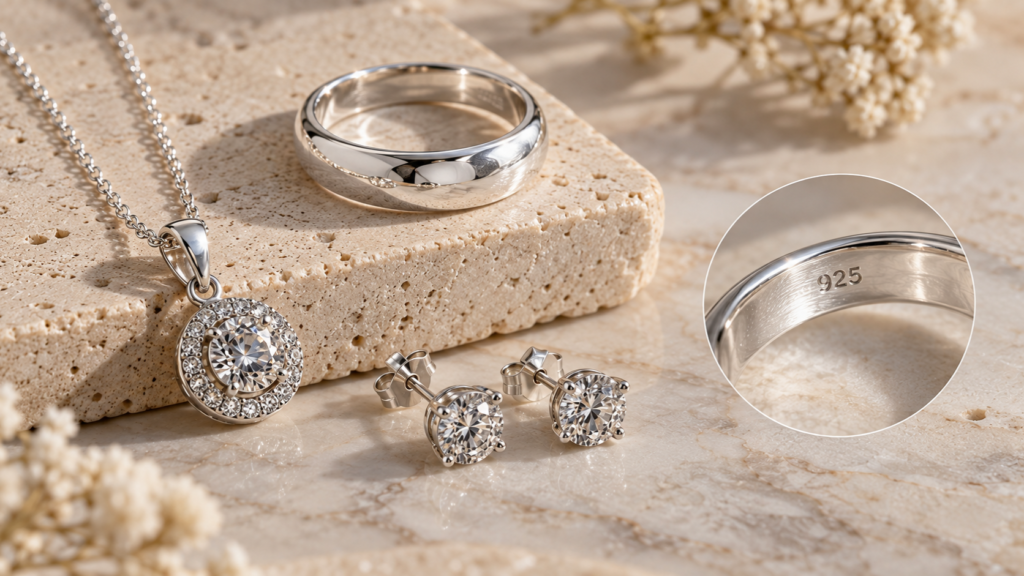
This is one of the most frequently asked questions about sterling silver — and the answer is unambiguously yes.
925 sterling silver is genuine precious silver. The 92.5% silver content is certified by the 925 hallmark and legally regulated. The 7.5% copper alloying element is a standard, accepted industry practice that does not diminish the piece’s status as genuine silver jewelry.
In contrast, silver-colored metals like stainless steel, nickel silver (German silver), and zinc alloys contain no genuine silver at all — despite their silver appearance. These are base metals, not precious metals, and they should never be described or marketed as silver jewelry.
The 925 hallmark is the consumer’s guarantee that a piece contains genuine precious silver — not a base metal substitute. Consequently, buyers should always look for the 925 stamp when purchasing silver jewelry, and brands should always provide hallmark documentation to their wholesale customers.
Which Is Better for Jewelry — 925 Sterling Silver or Pure Silver?
For virtually all wearable jewelry applications, 925 sterling silver is the better choice. The durability advantage is simply too significant to overlook for pieces that will be worn regularly.
Pure silver rings would bend with everyday hand use. Pure silver prong settings would not hold gemstones securely under normal wear. Pure silver chains would stretch and distort. Furthermore, pure silver’s lower hardness makes it more susceptible to surface scratching from contact with harder materials in everyday environments.
925 sterling silver solves all of these problems. It is hard enough for all standard jewelry applications. It holds gemstone settings securely. It maintains its shape under daily wear. Additionally, it accepts all major jewelry finishes — plain polish, oxidized, rhodium plated, rose gold plated, and gold vermeil — giving designers and brands maximum creative flexibility.
The only application where pure silver has a genuine advantage over 925 sterling is tarnish resistance — and this advantage is largely mitigated by rhodium plating or proper storage and care habits.
How 925 Sterling Silver Is Used in Professional Jewelry Manufacturing
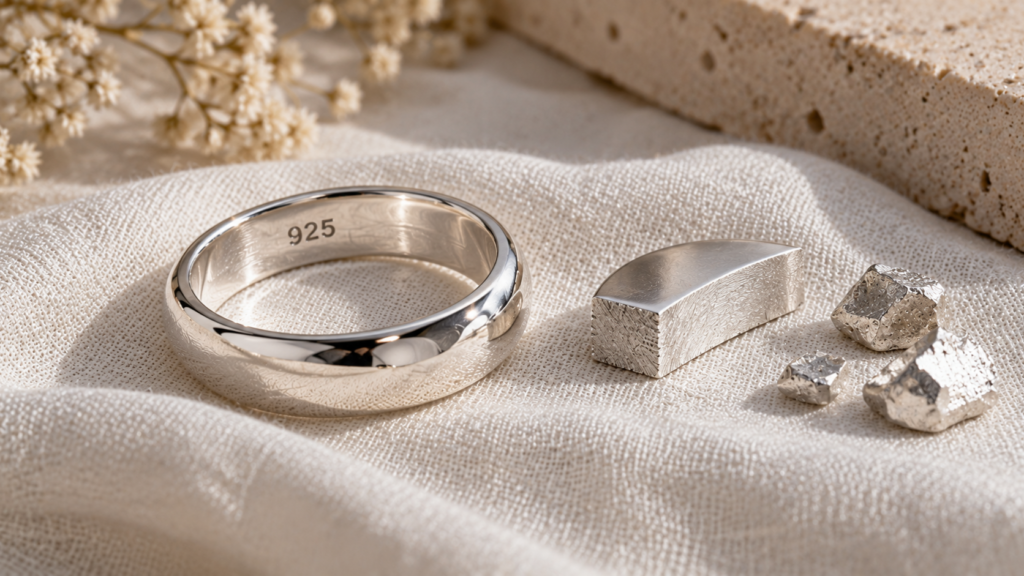
At Eon Gems, 925 sterling silver is the foundation of our entire jewelry manufacturing operation. Every casting, every setting, every finished piece starts with verified 925 alloy — confirmed before production begins and hallmarked on every finished piece.
The manufacturing process for 925 sterling silver jewelry follows a precise sequence. Design development produces CAD models for client approval. Lost-wax casting creates precise silver pieces from approved designs. Progressive polishing brings the surface to the specified finish. Gemstone setting places stones in prong, bezel, pavé, or freeform settings. Gold vermeil plating — where specified — applies XRF-verified gold over the silver base. Quality control inspects every piece before packaging and export.
Furthermore, every piece leaves our facility with documented 925 hallmarking — providing wholesale buyers with the export documentation they need for compliance in USA, UK, EU, and Australian markets.
FAQs — 925 Sterling Silver vs Pure Silver
Is 925 silver the same as pure silver?
No — 925 sterling silver contains 92.5% silver alloyed with 7.5% copper. Pure silver (999) contains 99.9% silver. Both are genuine precious silver — but 925 is significantly harder and more durable for jewelry applications.
Why is jewelry made of 925 silver instead of pure silver?
Pure silver is too soft for most jewelry applications — it bends, scratches, and loses its shape with everyday wear. 925 sterling silver adds 7.5% copper to create an alloy that is durable enough for rings, bracelets, and all standard wearable jewelry while retaining silver’s natural beauty and precious metal value.
Does 925 silver tarnish?
Yes — 925 sterling silver tarnishes more readily than pure silver because the copper content reacts with sulfur compounds in the air. However, tarnish is completely reversible with polishing and does not indicate any damage to the metal. Rhodium plating significantly reduces tarnishing in sterling silver jewelry.
What does the 925 hallmark mean?
The 925 hallmark confirms that the piece contains 92.5% pure silver — the internationally recognized standard for sterling silver. It is a legally regulated quality mark in most major markets including the USA, UK, and EU.
Is 925 silver hypoallergenic?
Generally yes — sterling silver is safe for most skin types. A small percentage of people with copper sensitivity may experience mild reactions. In contrast, rhodium-plated 925 silver eliminates this risk entirely — the rhodium coating prevents direct skin contact with the silver-copper alloy.
What is the difference between 925 silver and 999 silver in price?
999 fine silver commands a slightly higher raw material price per gram — reflecting its higher silver content. However, the per-piece price difference in finished jewelry is typically small. Furthermore, 925 sterling silver often has lower manufacturing costs than pure silver for complex designs — partially offsetting the raw material difference.
Eon Gems — 925 Sterling Silver Jewelry Manufacturer in Jaipur
At Eon Gems, every piece of 925 sterling silver jewelry we manufacture starts with verified 925 alloy — hallmarked as standard, documented in export certificates, and consistent across every batch regardless of order size.
With 36+ years of manufacturing experience and direct access to Jaipur’s gemstone markets, we supply genuine verified 925 sterling silver jewelry to wholesale buyers and jewelry brands across 50+ countries.
What we offer:
- Genuine 925 sterling silver — verified alloy, hallmarked as standard
- 925 hallmark certificates with every wholesale shipment
- Full range of finishes — plain, oxidized, rhodium, rose gold, gold vermeil
- 250+ natural and lab-grown gemstone varieties in-house
- XRF-verified gold plating for vermeil orders
- No MOQ — single prototype to large bulk production
- Complete export documentation for all major markets
👉 Get a Free Quote from Eon Gems →
🔗 925 Sterling Silver Jewelry Manufacturing →
🔗 Gold Vermeil Jewelry Manufacturing →
🔗 Gemstone Jewelry Manufacturing →