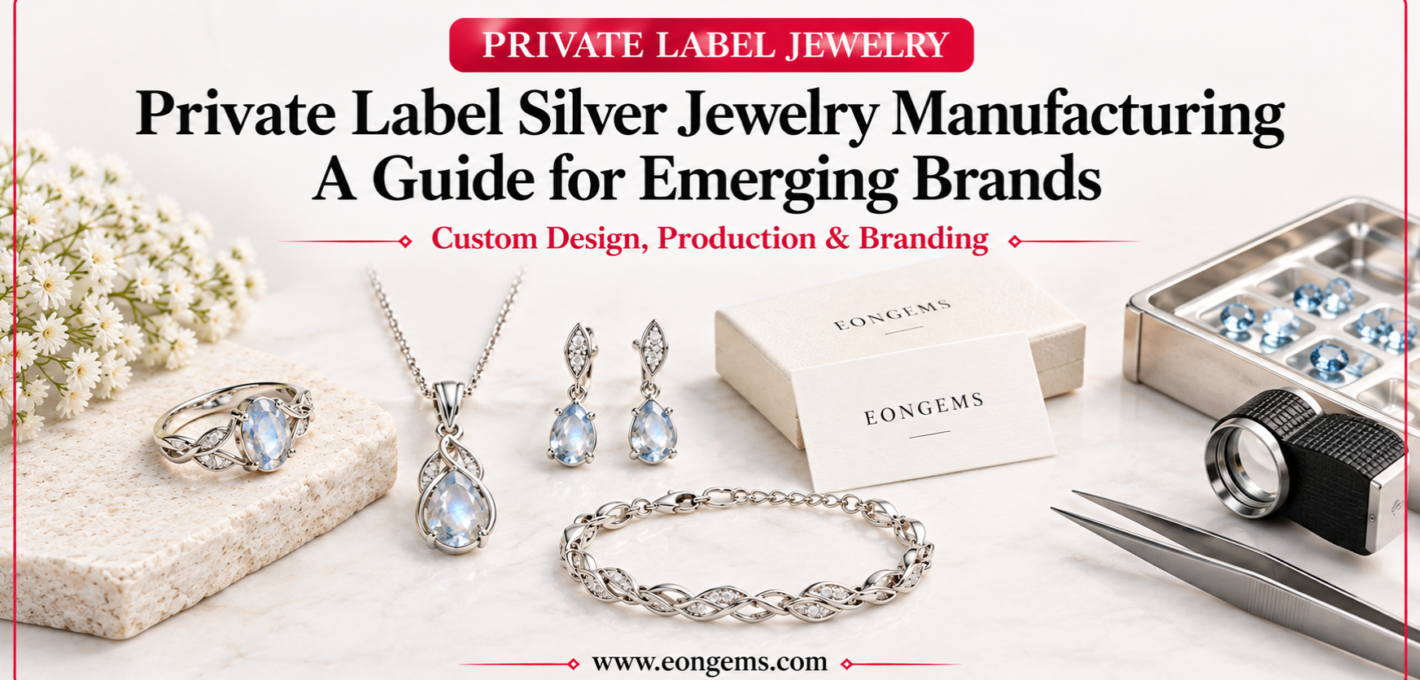
Private label silver jewelry manufacturing is how emerging brands compete with established players — without building a factory, hiring artisans, or investing millions in equipment.
The model is straightforward. You own the brand. You own the designs. You control the pricing, the packaging, and the customer experience. A manufacturer handles the physical production — and your jewelry reaches customers under your name, your logo, and your story.
At Eon Gems, we are Jaipur-based 925 sterling silver jewelry manufacturers with 36+ years of experience supporting emerging brands through the private label process — from first design brief to export-ready finished collection. This guide covers everything an emerging brand needs to know.
What Is Private Label Silver Jewelry Manufacturing?
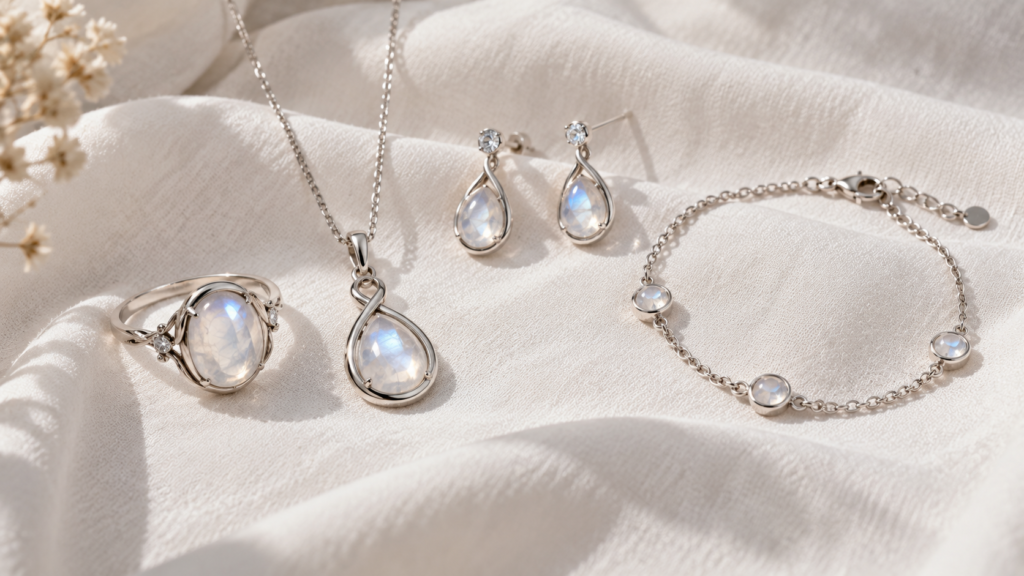
Private label jewelry manufacturing means having your jewelry designed and produced by a third-party manufacturer and sold exclusively under your brand name.
“This differs from reselling — where you buy existing finished jewelry and sell it without modification. White labeling is also different — that simply means putting your brand name on a manufacturer’s existing generic designs. Dropshipping, in contrast, means you never physically handle or control the product at all.”
Private label gives you brand ownership and product exclusivity. Your designs are yours. Your manufacturer produces them for you. Consequently, your customers buy them as your brand — not as a generic product available from dozens of other sellers simultaneously.
Why 925 Sterling Silver Is the Right Material for Emerging Brands
Most emerging jewelry brands face a fundamental question early on. Which metal should the collection be built around? The answer for most brands targeting the $50 to $200 retail price segment is 925 sterling silver — and the reasons are both commercial and practical.
The Commercial Case for 925 Silver
925 sterling silver carries the hallmark of genuine precious metal. The 925 stamp is internationally recognized and legally regulated — it tells customers they are buying something with real material value, not a silver-colored base metal piece.
This matters commercially because it supports premium pricing. Customers who understand the difference between sterling silver and brass or stainless steel alternatives are willing to pay meaningfully more for the genuine article. Furthermore, the 925 hallmark removes a major customer trust barrier — particularly for online purchases where customers cannot physically examine the piece before buying.
Your designs are yours. The manufacturer produces them exclusively for you. Consequently, your customers buy them as your brand — not as a generic product available from dozens of other sellers simultaneously.
The Practical Case for 925 Silver
925 sterling silver is the most versatile base metal in jewelry manufacturing. It accepts every major finish — plain polished silver, oxidized antiqued silver, rhodium-plated bright white, rose gold-plated, and gold vermeil.
This versatility means a single design can be offered in multiple finish options — effectively doubling or tripling the product range from a single design investment. Additionally, 925 silver’s moderate hardness and malleability make it compatible with every major jewelry manufacturing technique — lost-wax casting, die striking, hand fabrication, filigree, and granulation.
The Private Label Silver Jewelry Manufacturing Process — Step by Step
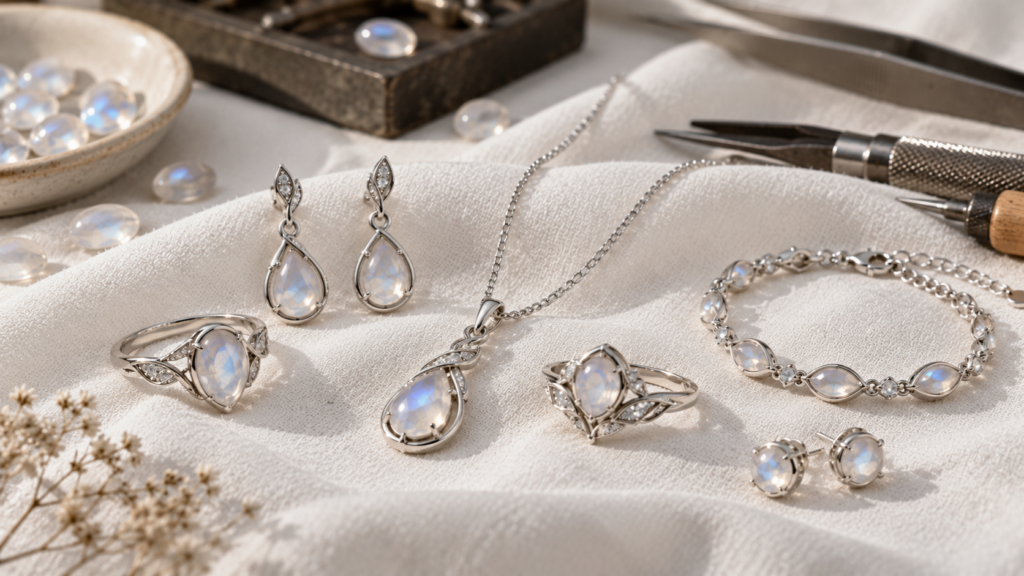
Step 1 — Define Your Brand Before Designing
The most common mistake emerging brands make is designing jewelry before defining their brand. The result is a collection that lacks coherence — a mixture of styles, aesthetics, and price points that does not tell a clear story to customers.
Before approaching any manufacturer, answer three questions clearly. Who is your target customer — specifically, not generically? What aesthetic defines your brand — minimalist, artisan, bohemian, spiritual, romantic, or architectural? What price point are you targeting at retail — because retail price determines manufacturing budget?
Therefore, these answers become the filter through which every design decision passes. Furthermore, they become the foundation of your communication with your manufacturer — the clearer your brief, the more accurately your collection reflects your brand vision.
Step 2 — Choose Your Manufacturing Partner
Your private label manufacturer is your most important business partner. Every quality decision, every timeline commitment, and every compliance outcome depends on who you choose.
For emerging brands, the ideal manufacturing partner has several specific characteristics. In-house production is the most critical — all manufacturing should happen on-site, not outsourced to third-party workshops where quality control is indirect. CAD design capability is essential — a manufacturer who can take your sketches and develop precise 3D models catches design problems early and cheaply.
No minimum order quantity matters enormously for emerging brands. The ability to prototype a single design and order small test batches before committing to significant inventory is the difference between a brand that can pivot quickly and one that is stuck with unsellable stock.
At Eon Gems, we built our manufacturing model specifically to support emerging brands. No minimum order quantity. CAD-first sampling process. In-house production across every stage. Furthermore, 36+ years of export experience makes the import process straightforward for brands in the USA, UK, Europe, and Australia.
Step 3 — Develop Your Designs
Design development for private label silver jewelry manufacturing typically follows one of three paths depending on the brand’s internal capabilities.
Sketch-based development is the first path — brands provide hand sketches, mood boards, or reference images and the manufacturer’s design team develops these into precise CAD models. CAD-to-production is the second path, used by brands with jewelry design backgrounds who provide finished files directly. Collaborative development is the third approach — brand and manufacturer work together from the start, combining the brand’s aesthetic vision with the manufacturer’s technical expertise.
In contrast to the other two paths, collaborative development often produces the strongest results for emerging brands. It integrates manufacturing knowledge into the design process from the beginning — catching feasibility issues before they become expensive corrections.
Step 4 — CAD Approval and Physical Sampling
After design development, every piece should receive CAD model approval before physical samples are produced. This step is non-negotiable in any professional private label manufacturing relationship.
The CAD model shows exact dimensions, proportions, stone placement, setting type, and design detail in a photorealistic render. As a result, reviewing and approving the CAD catches design problems before they become expensive physical mistakes.
After CAD approval, physical samples are produced. Check weight — does it feel premium for the retail price? Check finish quality — smooth, consistent, no rough edges or casting marks? Check stone security — press gently in multiple directions to confirm no movement. One revision round after sampling is entirely standard. Only after written approval does bulk production begin.
Step 5 — Specify Your Finish and Metal Options
Private label silver jewelry manufacturing offers a significant range of finish options that affect both aesthetics and pricing.
Plain polished silver is the classic finish — bright, reflective, and universally appealing. It photographs exceptionally well and is the most cost-effective finish option. Oxidized or antiqued silver intentionally darkens the metal surface through controlled oxidation, then selectively polishes raised surfaces to create contrast — the defining finish for artisan, ethnic, and bohemian aesthetics.
Rhodium plating applies a thin rhodium layer over the silver surface — producing a bright white finish with strong tarnish resistance. Gold vermeil, in contrast, applies real gold plating (minimum 2.5 microns, minimum 10 karat) over the 925 silver base. Offering the same design in both silver and vermeil doubles the product range from a single design investment.
Step 6 — Incorporate Gemstones Thoughtfully
Gemstone-set silver jewelry is one of the strongest categories in private label manufacturing. Jaipur’s position as the world’s largest colored gemstone hub makes it the ideal sourcing location for brands wanting to build gemstone collections.
At Eon Gems, our in-house gemstone manufacturing and setting capability covers 250+ natural and lab-grown stone varieties — turquoise, moonstone, labradorite, Ethiopian opal, amethyst, garnet, sapphire, ruby, emerald, and hundreds more. All sourced directly from Jaipur’s gem markets with full treatment disclosure as standard documentation.
For emerging brands, gemstones offer significant design differentiation. Two brands can use identical silver base designs — but different stone choices create entirely different collection identities. Furthermore, gemstones allow brands to tell a story — birthstones, chakra stones, healing crystals — that connects products to customer meaning rather than just aesthetics.
Step 7 — Plan Your Collection Size and Launch Timeline
Emerging brands consistently over-plan their first collections. More designs feel like more opportunity — but a focused launch of 8 to 15 pieces outperforms a sprawling 50-piece collection in almost every measurable way.
A focused collection photographs better, markets better, and tests the market more efficiently. With fewer designs, it is faster and clearer to identify which styles resonate and which do not. Therefore, start focused, identify your bestsellers, and scale in subsequent drops based on actual sales data.
For timeline planning, the realistic path from first design brief to delivered bulk collection takes approximately 10 to 14 weeks for new manufacturing relationships. Consequently, brands targeting a specific launch date should initiate manufacturing conversations at least 16 weeks before that date to allow adequate buffer.
Costs in Private Label Silver Jewelry Manufacturing
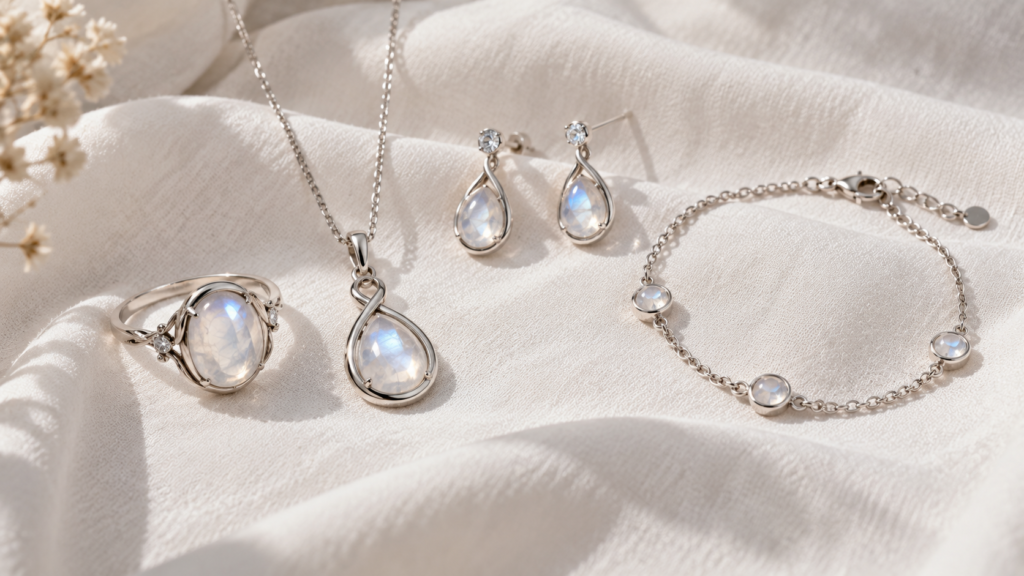
Understanding realistic cost structures helps emerging brands evaluate supplier quotes accurately and build pricing models that support healthy margins.
Manufacturing Cost Components
Every private label silver piece has four primary cost components. Silver base cost is calculated from piece weight and the live silver market rate. Making charges cover labor, casting, finishing, and quality control — typically $1 to $6 per gram depending on design complexity. In addition, gemstone cost where applicable is priced per stone based on species, quality grade, and size. Plating cost for vermeil or rhodium finishes is priced per piece based on gold karat, thickness, and surface area.
Realistic Price Ranges (Ex-Works Jaipur)
Simple plain silver designs without stones typically run $5 to $15 per piece. Silver with semi-precious gemstone settings run $10 to $40 per piece depending on stone variety and complexity. Silver with lab-grown precious stones run $15 to $50 per piece. Gold vermeil versions add $5 to $15 per piece over equivalent silver pricing depending on gold karat and thickness.
Landed Cost and Retail Margin
Landed cost for international brands includes manufacturing cost plus DHL or FedEx shipping, import duty, and custom packaging. Most sustainable jewelry brand economics target a 3x to 5x markup from landed cost to retail price — covering marketing, platform fees, packaging, and profit margin.
Consequently, a piece with a $15 landed cost should retail at $45 to $75 for healthy brand economics. A piece with a $30 landed cost should retail at $90 to $150.
Compliance Requirements for Private Label Silver Jewelry
FTC Requirements for USA Brands
USA brands selling silver jewelry must accurately represent metal content. Sterling silver must contain 92.5% pure silver — confirmed by 925 hallmarking. Gold vermeil must meet FTC standards — 925 silver base, minimum 10 karat gold, minimum 2.5 microns of gold plating verified by XRF machine.
Moreover, gemstone treatment disclosure is legally required in the USA market — heat treatment, fracture filling, and lab-grown status must be disclosed in product listings and on invoices.
UK Hallmarking Requirements
The UK Hallmarking Act requires that silver jewelry above 7.78 grams be hallmarked by an approved UK assay office before sale as sterling silver. According to GJEPC, Indian manufacturers export with a 925 manufacturer’s mark — and many UK importers arrange assay office hallmarking upon import.
At Eon Gems, our export documentation includes 925 hallmark certificates and full compliance documentation for USA, UK, EU, and Australian markets as standard.
Common Mistakes Emerging Brands Make in Private Label Manufacturing
Choosing a manufacturer on price alone is the most damaging mistake emerging brands make. Below-market pricing almost always reflects a quality compromise — lower silver purity, thinner plating, outsourced production, or inadequate quality control. The downstream cost of quality failures far exceeds any per-piece savings.
Skipping sampling is equally costly — no bulk order should ever be placed without physical sample approval. Samples reveal quality, weight, finish, and stone security in ways that photographs and specifications cannot.
Additionally, over-designing the first collection spreads budget and marketing energy too thin. Start with 8 to 12 focused, cohesive designs. Test the market. Scale proven performers. Add new designs in subsequent drops based on actual sales data — not predictions.
FAQs — Private Label Silver Jewelry Manufacturing
What is the minimum order for private label silver jewelry manufacturing?
Minimum order quantity varies by manufacturer. Large factories typically require 500+ pieces per design. At Eon Gems, we offer no minimum order quantity — single prototypes and small test batches are equally welcome alongside large bulk orders.
How long does private label silver jewelry manufacturing take?
For new designs requiring sampling, allow 10 to 14 weeks from first brief to delivered bulk order. For reorders of approved designs, 4 to 6 weeks is typical. DHL and FedEx air express delivery to USA, UK, and Europe takes 3 to 5 days after dispatch.
Can I get exclusive designs from my manufacturer?
Most established manufacturers offer exclusivity arrangements for clients who meet volume commitments. At Eon Gems, we develop fully custom designs from client briefs and discuss exclusivity with clients whose order volumes support it.
What documentation do I receive with my order?
Standard documentation includes commercial invoice with HS codes, packing list, certificate of origin, 925 hallmark certificate, and airway bill. XRF plating thickness reports are included for vermeil orders. Gemstone treatment disclosure is included on all gemstone orders.
Can I offer both silver and vermeil versions of the same design?
Absolutely — and this is one of the most commercially effective product range strategies for private label brands. The same design produced in both 925 silver and gold vermeil gives customers a choice at two price points with no additional design investment required.
Eon Gems — Private Label Silver Jewelry Manufacturer in Jaipur
At Eon Gems, we have supported emerging jewelry brands through the private label manufacturing process for 36+ years — from first-time founders placing their initial prototype order to growing brands scaling into international wholesale distribution.
What we offer emerging brands:
- Full in-house 925 sterling silver jewelry manufacturing — every stage on-site
- CAD-first design process — digital approval before physical sampling
- All finishes — plain, oxidized, rhodium, rose gold, gold vermeil
- 250+ natural and lab-grown gemstone varieties in-house
- No MOQ — single prototype to large bulk production
- Custom branded packaging — boxes, pouches, hang tags, inserts
- 925 hallmark certificates and full compliance documentation
- DHL and FedEx partnerships — 3 to 5 day international delivery
- 36+ years of export experience across 50+ countries
👉 Get a Free Quote from Eon Gems →
🔗 925 Sterling Silver Jewelry Manufacturing →
🔗 Gold Vermeil Jewelry Manufacturing →
🔗 Gemstone Jewelry Manufacturing →