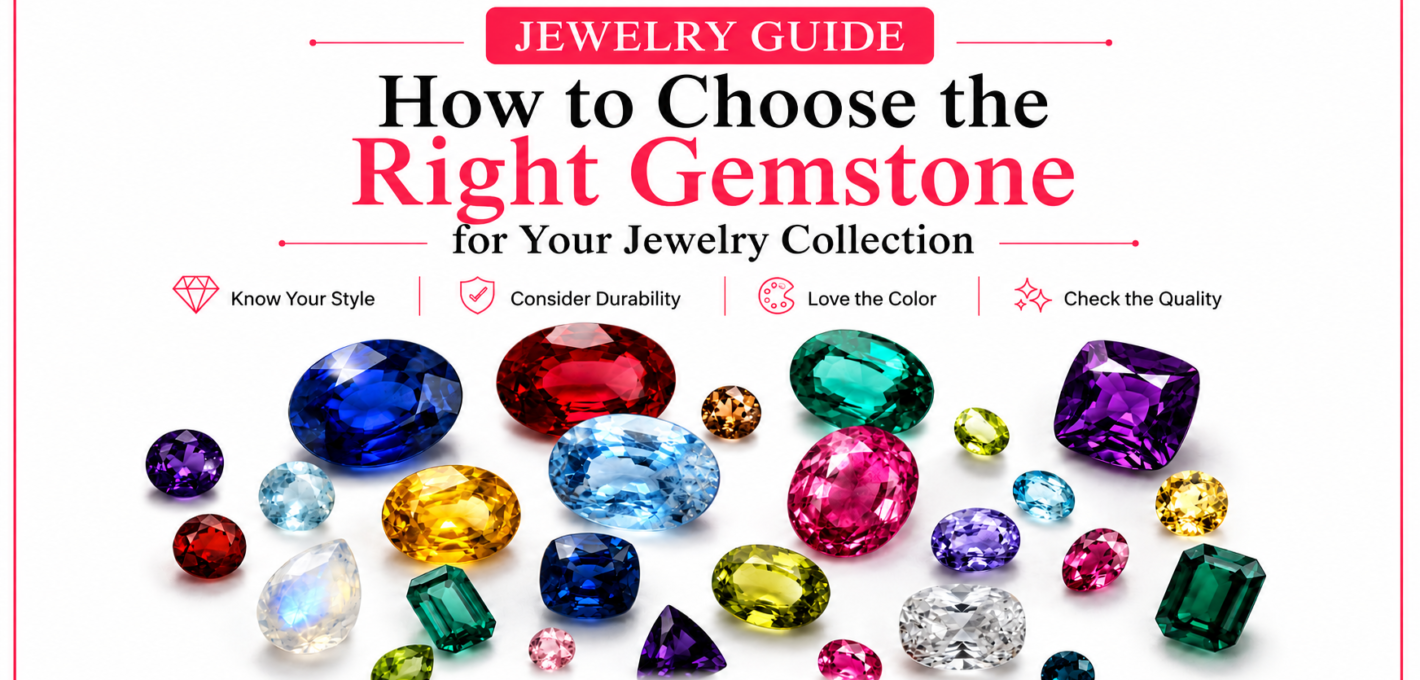
Choosing the right gemstone is one of the most exciting — and most overwhelming — decisions in jewelry. Whether you are building a personal collection, designing pieces for your brand, or sourcing wholesale gemstone jewelry, the options are genuinely endless. Hundreds of stone varieties, dozens of cuts, multiple quality grades, natural vs. lab-grown — and every decision affects how the finished piece looks, lasts, and sells.
At Eon Gems, we are Jaipur-based gemstone jewelry manufacturers with 36+ years of experience helping jewelry brands and wholesale buyers make exactly this decision. This guide gives you a clear, practical framework for choosing the right gemstone — whether for a single piece or an entire collection.
Step 1 — Define the Purpose of the Piece
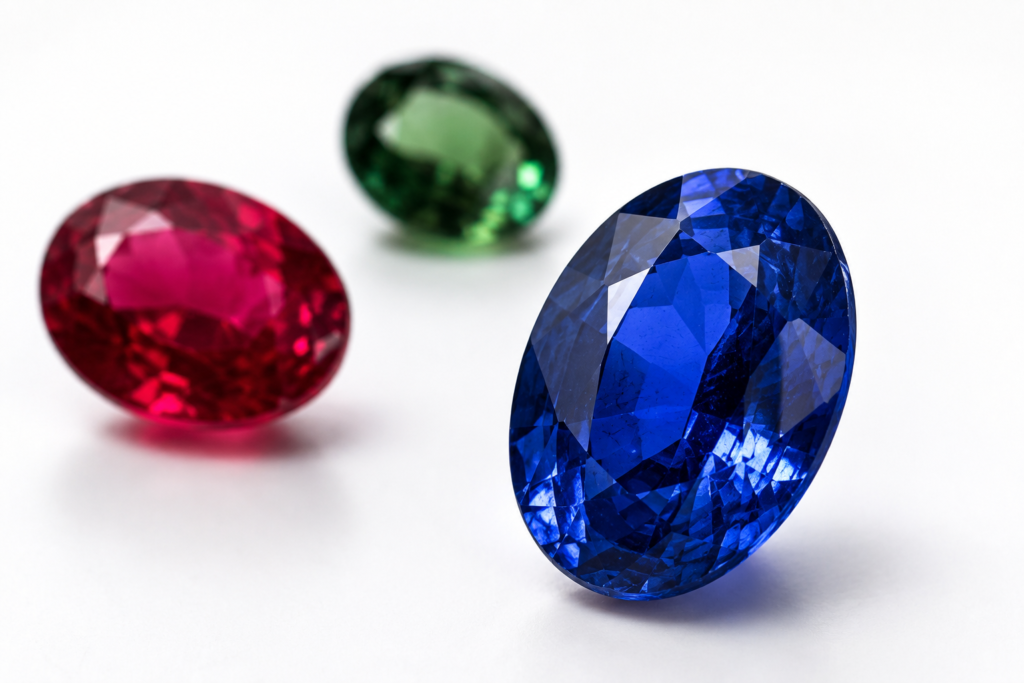
Before choosing any gemstone, define what the piece needs to do. Purpose determines everything — the stone category, the cut, the setting, and the price point.
Daily-wear jewelry: Rings and bracelets worn every day need durable stones — Mohs 7 and above. Softer or more fragile stones chip, scratch, and abrade with regular friction. For daily-wear pieces, sapphire, ruby, garnet, amethyst, and topaz are practical choices. Moissanite and lab-grown sapphire offer excellent durability at accessible price points.
Occasional-wear jewelry: Pendants, earrings, and pieces worn for special occasions can accommodate softer, more delicate stones — moonstone, opal, malachite, and turquoise are all suitable for occasional wear with appropriate settings.
Statement jewelry: Bold, one-of-a-kind pieces where visual impact matters more than everyday practicality. Freeform stones, unusual cuts, and rare varieties create pieces that command attention even if they require more careful handling.
Gifting jewelry: Birthstone jewelry, chakra stones, and stones with personal meaning are the dominant choice for gifting — the emotional resonance of the stone matters as much as or more than its technical properties.
Investment or collectible pieces: Fine natural rubies, sapphires, alexandrite, and emeralds of exceptional quality hold and appreciate in value. For buyers building a collection with investment intent, natural origin and gemological certification matter significantly.
Step 2 — Understand Durability Requirements
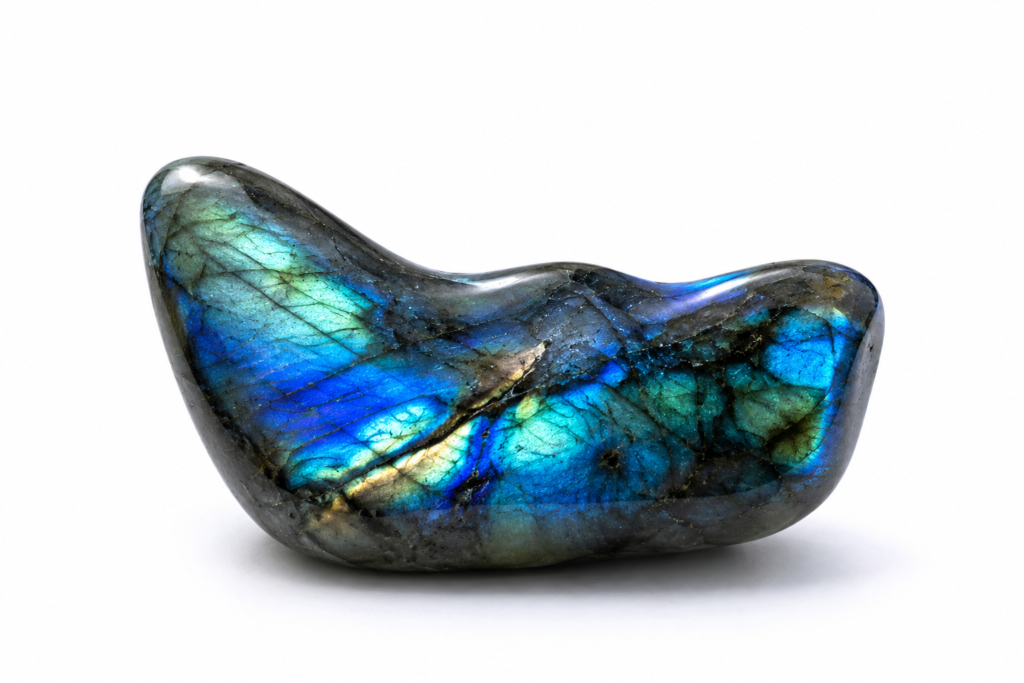
Gemstone durability has three components — and understanding all three helps you make smarter sourcing decisions.
Hardness: Measured on the Mohs scale from 1 to 10. Hardness indicates resistance to scratching. For jewelry worn regularly, stones rated 7 or above are generally recommended. Below 7, the stone will show surface wear over time with daily friction.
Toughness: Resistance to breaking and chipping. A stone can be hard but brittle — emerald, for example, rates 7.5–8 on Mohs but contains natural fractures that make it more susceptible to chipping than its hardness alone suggests. Toughness is as important as hardness for evaluating suitability.
Stability: How the stone responds to light, heat, and chemicals. Some stones fade in prolonged sunlight — amethyst and rose quartz can lighten with extended UV exposure. Others are sensitive to cleaning chemicals or temperature changes. Stability determines long-term maintenance requirements.
Quick durability reference:
Exceptional daily-wear suitability — diamond, moissanite, sapphire, ruby (Mohs 9–10)
Very good daily-wear suitability — alexandrite, topaz, spinel (Mohs 8–8.5)
Good with appropriate settings — emerald, aquamarine, morganite, garnet, amethyst (Mohs 7–8)
Occasional wear recommended — moonstone, labradorite, turquoise, opal (Mohs 5.5–6.5)
Step 3 — Choose Your Color Direction
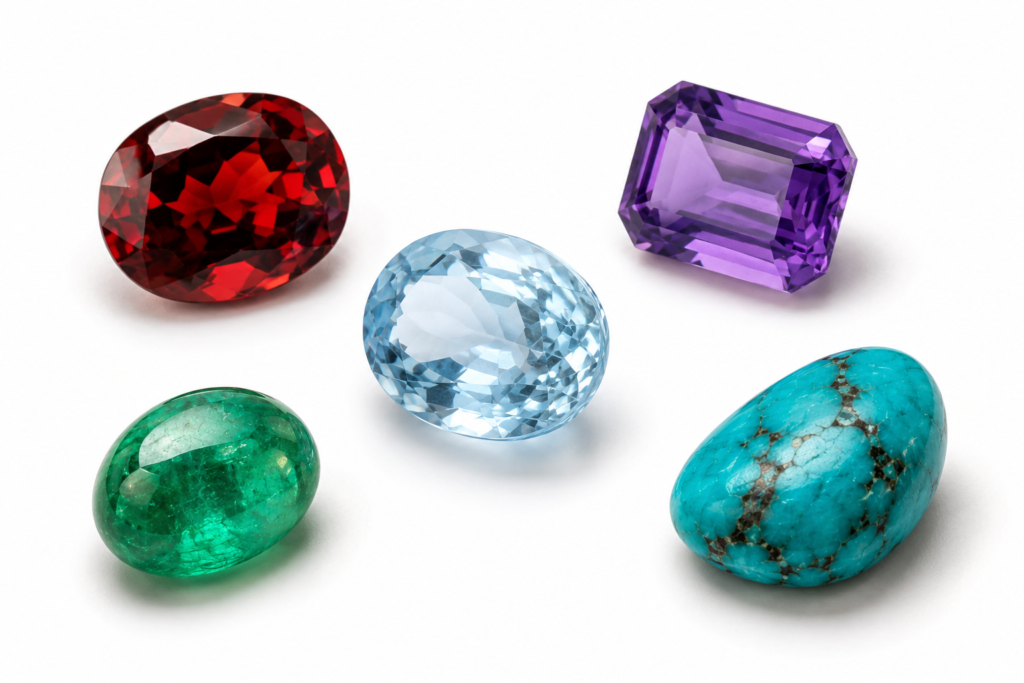
Color is the first thing most buyers notice about a gemstone — and for colored stone jewelry, it is the most important quality factor. Understanding color selection helps you build collections with coherent visual identity and strong market appeal.
Hue: The basic color of the stone. Blue, green, red, orange, yellow, purple, pink, white, black — and every combination. Choose hues that align with your brand aesthetic and target customer.
Tone: How light or dark the color appears. Very light stones can appear washed out. Very dark stones can appear opaque. Medium tones generally offer the best balance of color saturation and light performance in finished jewelry.
Saturation: The intensity of the color. Vivid, highly saturated stones command premium prices and create the strongest visual impact. Lower saturation offers more affordable options with softer, more pastel aesthetics.
Color consistency for brands: If you are building a jewelry brand, consider how color works across your collection. A single color story — all cool blue tones, all warm earth tones, all soft pastels — creates a more cohesive visual identity than mixing unrelated colors across a collection.
Market color preferences:
USA market — blue (sapphire, aquamarine, labradorite), pink and peach (morganite, rose quartz), green (emerald, malachite)
UK and European markets — classic colored stones, sapphire and ruby remain strong, growing interest in unusual varieties like alexandrite and spinel
Australian market — vivid colors, strong demand for opal and Australian-origin stones alongside colored sapphires
Middle Eastern market — strong preference for rich, saturated colors — deep ruby red, vivid sapphire blue, intense emerald green
Step 4 — Decide Between Natural and Lab-Grown
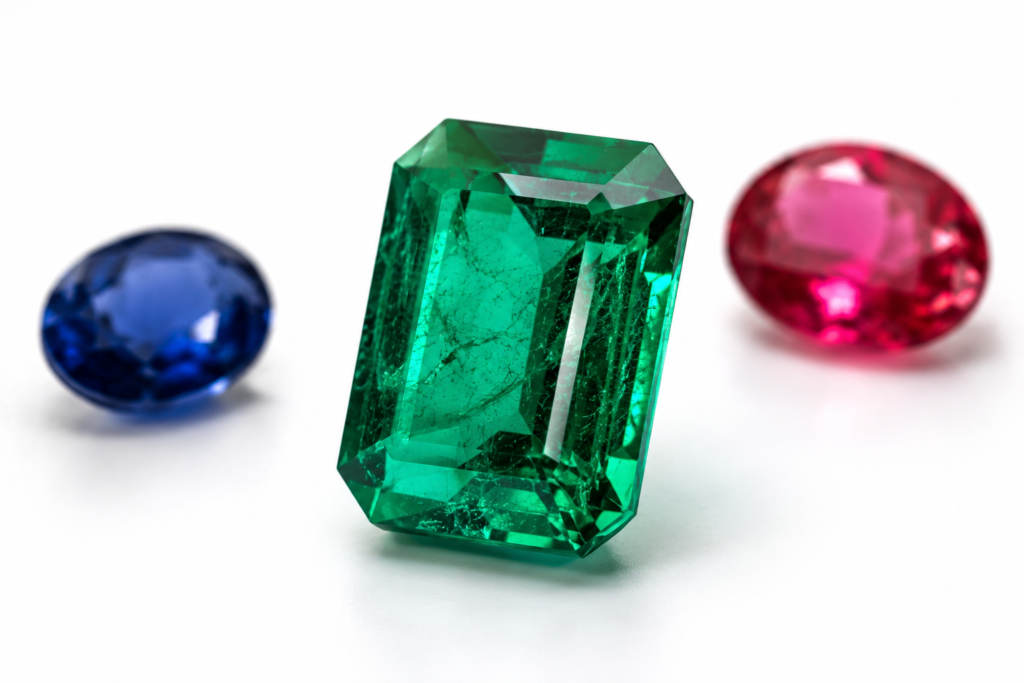
This is one of the most commercially significant decisions in gemstone sourcing — and it deserves clear thinking rather than assumptions.
Natural gemstones are formed by geological processes in the earth over millions of years. Every natural stone is unique — slight variations in color, inclusions, and growth patterns are part of its identity. Natural stones have intrinsic rarity value and carry the strongest appeal in premium, collector, and artisan jewelry markets.
Lab-grown gemstones are produced in controlled laboratory environments that replicate natural formation conditions. They are chemically, physically, and optically identical to natural stones — the only difference is origin. Lab-grown stones cost 60–90% less than natural equivalents of comparable visual quality.
Choose natural when:
- Your brand is positioned in the premium or fine jewelry segment
- Your customers value rarity, provenance, and natural origin
- You are designing artisan, spiritual, or one-of-a-kind collections
- You are targeting Middle Eastern, Asian, or traditional markets
Choose lab-grown when:
- Your brand targets the accessible luxury segment ($50–$200 retail)
- You need visual consistency across large production runs
- Your customers prioritize sustainability and ethical sourcing
- You want ruby, sapphire, or emerald beauty at accessible price points
Consider both when:
- You offer tiered collections at different price points
- You want to give customers a choice based on their values and budget
At Eon Gems, our gemstone jewelry manufacturing operation offers both natural and lab-grown options across our full stone range — with full treatment and origin disclosure as standard on every stone.
Step 5 — Match the Stone to the Metal
The metal you pair with a gemstone affects how its color appears, how the finished piece is perceived, and how well the combination photographs.
Yellow gold vermeil: Warm, rich, and luxurious. Pairs beautifully with warm-toned stones — citrine, carnelian, garnet, peach moonstone, morganite, Ethiopian opal, and rich green emerald. Also pairs well with deep blue sapphire, where the warm metal creates a classic, regal contrast.
Rose gold vermeil: Warm, romantic, and feminine. Particularly flattering with pink and peach stones — rose quartz, morganite, pink sapphire, and peach moonstone. Also works well with warm earth tones — carnelian, sunstone, and hessonite garnet.
White gold vermeil or rhodium-plated silver: Cool, clean, and contemporary. Best for cool-toned stones — blue sapphire, aquamarine, blue lace agate, white moonstone, and clear or grey stones. Also the classic pairing for diamond and moissanite.
Plain oxidized silver: Artisan and organic. Works beautifully with turquoise, labradorite, malachite, coral, and freeform natural stones where the dark metal contrasts with the stone’s color.
At Eon Gems, our 925 sterling silver jewelry and gold vermeil jewelry manufacturing covers all finish options — allowing brands to develop the right metal-stone combination for their specific aesthetic.
Step 6 — Consider the Spiritual and Symbolic Meaning
For jewelry brands targeting the wellness, spiritual, and gifting markets — which together represent one of the fastest-growing jewelry segments globally — stone meaning is not secondary to visual appeal. It is often the primary purchase driver.
Birthstones: Each month has one or more associated stones — garnet for January, amethyst for February, aquamarine for March, and so on through the calendar. Birthstone jewelry is consistently among the best-performing gift categories year-round, with strong spikes around Christmas, Valentine’s Day, and Mother’s Day.
Chakra stones: Each of the seven chakras is associated with specific gemstones — red garnet and black tourmaline for the root chakra, citrine and tiger’s eye for the solar plexus, rose quartz and emerald for the heart, amethyst for the crown. Chakra jewelry is one of the strongest-growing categories in the wellness market.
Zodiac stones: Different from birthstones, zodiac stones are associated with astrological signs rather than calendar months. Increasingly popular as a personalization mechanism in jewelry.
Healing and intention stones: Rose quartz for love, black tourmaline for protection, labradorite for intuition, citrine for abundance — the healing crystal tradition assigns specific properties to stones that resonate strongly with spiritual jewelry buyers.
Building symbolic meaning into your collection — through thoughtful stone selection and clear communication of meaning to buyers — transforms a jewelry collection from a product line into a personal practice.
Step 7 — Set Your Budget and Source Strategically
Gemstone cost is one of the most variable inputs in jewelry manufacturing — a 5mm blue sapphire can cost $2 (commercial grade lab-grown) or $200 (fine natural, no heat treatment). Understanding how to navigate this range allows you to source strategically.
Factors that affect gemstone cost:
Quality grade — commercial, good, fine, and AAA grades represent dramatically different price points within the same stone species
Natural vs. lab-grown — lab-grown stones of equivalent visual quality cost 60–90% less than natural
Treatment status — untreated natural stones command significant premiums over treated material of similar appearance
Size — price per carat increases non-linearly with size; a 2-carat stone costs more than twice a 1-carat stone of equivalent quality
Origin — Sri Lankan sapphires, Colombian emeralds, and Mozambique rubies command premiums over material from other origins
Sourcing strategy for brands:
Start with good grade material in your target stone — it offers the best balance of visual quality and cost for most retail price points.
Use lab-grown for your more expensive stone species — ruby, sapphire, emerald — particularly for entry-level or accessible-tier collections.
Reserve natural, fine-grade material for hero pieces and limited editions where the rarity story justifies premium retail pricing.
Source from a manufacturer with direct gemstone market access — in Jaipur, stone and jewelry manufacturing sit in the same ecosystem, eliminating the markups of secondary stone markets.
Gemstone Selection by Collection Type — Quick Reference
Bohemian and artisan collections:
Turquoise, labradorite, moonstone, Ethiopian opal, malachite, chrysocolla, carnelian — natural, freeform cuts, oxidized silver settings.
Minimalist and modern collections:
White topaz, aquamarine, grey moonstone, spinel, lab-grown sapphire — calibrated cuts, clean settings, white metal.
Romantic and feminine collections:
Rose quartz, morganite, pink sapphire, peach moonstone, rhodonite — oval and cushion cuts, rose gold or yellow gold vermeil.
Spiritual and wellness collections:
Full chakra stone range — garnet, carnelian, citrine, rose quartz, aquamarine, labradorite, amethyst — cabochon cuts, silver settings.
Premium and fine jewelry collections:
Natural sapphire, ruby, emerald, alexandrite, spinel — fine grade, certified, minimal treatment, precious metal settings.
Birthstone collections:
Full twelve-month range — garnet through turquoise — calibrated cuts for consistency, both natural and lab-grown options depending on price tier.
FAQs — Choosing Gemstones for Jewelry
Which gemstone is best for everyday wear?
Sapphire, ruby, spinel, and garnet are among the best natural gemstones for daily wear due to their hardness and toughness. Moissanite and lab-grown sapphire offer excellent durability at accessible price points.
How do I choose between natural and lab-grown gemstones?
Consider your brand positioning and target customer. Natural stones suit premium, artisan, and collector markets. Lab-grown suits accessible luxury brands, customers who prioritize sustainability, and collections where stone cost is a significant margin factor.
Which gemstones are best for a spiritual jewelry collection?
Amethyst, rose quartz, labradorite, moonstone, black tourmaline, citrine, and turquoise are the most popular stones for spiritual and healing jewelry. Each carries strong symbolic associations that resonate with wellness-focused buyers.
How important is gemstone treatment disclosure?
Extremely important — both legally and commercially. Most major markets, including the USA, UK, and EU, require accurate treatment disclosure. Furthermore, customers in the premium and spiritual jewelry markets are increasingly research-savvy and notice undisclosed treatments. Always work with suppliers who disclose treatments as standard.
What is the most versatile gemstone for a jewelry collection?
Amethyst and blue topaz are among the most versatile — widely available, affordable, durable enough for most jewelry applications, and popular across multiple market segments. Sapphire is the most versatile premium stone — available in virtually every color, exceptionally durable, and appropriate for every jewelry category.
Eon Gems — Your Gemstone Sourcing and Manufacturing Partner in Jaipur
At Eon Gems, we combine 36+ years of gemstone sourcing expertise with full in-house jewelry manufacturing — giving brands a single, reliable partner for both stone selection and finished piece production.
Based in Jaipur — the world’s largest colored gemstone trading hub — we have direct access to 250+ natural and lab-grown gemstone varieties, sourced with full treatment disclosure and conflict-free documentation as standard.
What we offer:
- 250+ natural gemstone varieties — direct Jaipur market access
- Lab-grown options — ruby, sapphire, emerald, moissanite, alexandrite
- Expert stone selection guidance for your specific collection brief
- Custom gemstone jewelry manufacturing — all cuts and setting styles
- 925 sterling silver and gold vermeil base metals
- No MOQ — single prototype to large bulk production
- Complete export documentation for USA, UK, EU, Australia and 40+ countries
Get a Free Quote from Eon Gems →
🔗 Gemstone Jewelry Manufacturing →
🔗 925 Sterling Silver Jewelry →
🔗 Gold Vermeil Jewelry →