Jewelry startup mistakes are the leading cause of failed brand launches — not bad designs, not limited budgets, not the wrong market. After working with hundreds of jewelry startups over 36+ years at Eon Gems, we have seen the same errors made repeatedly by smart, well-intentioned founders who simply did not have the right information at the right time.
This guide covers the 10 most costly mistakes jewelry startups make — and exactly how to avoid each one.
Mistake 1 — Choosing a Manufacturer Based on Price Alone
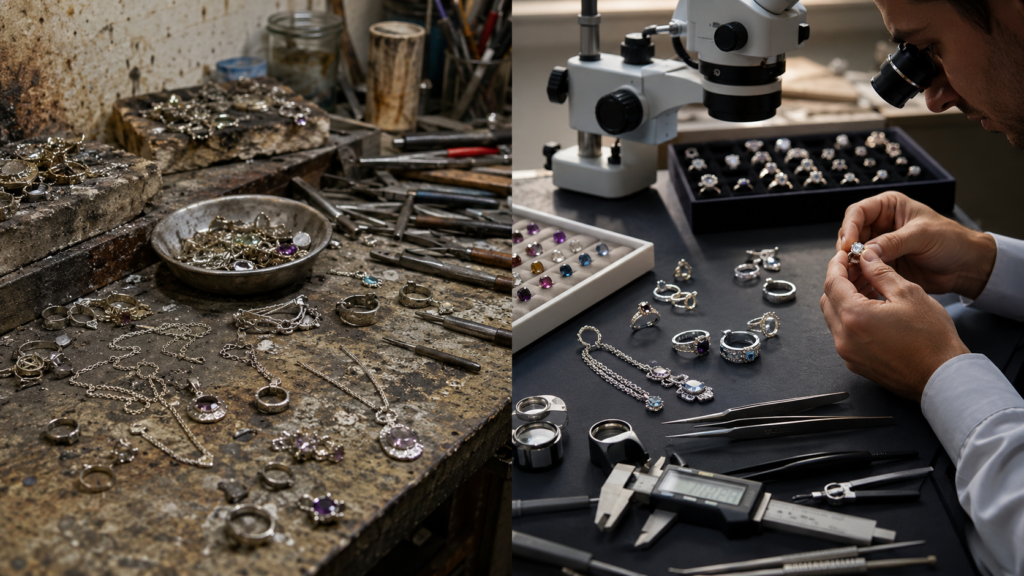
This is the single most common and most damaging of all jewelry startup mistakes. A manufacturer quotes 30% lower than everyone else — and the temptation to take it is completely understandable when startup capital is limited.
In jewelry manufacturing, significantly below-market pricing almost always means one of the following:
- Inferior base metal — brass or copper sold as sterling silver, or low-purity alloys
- Substandard plating — gold vermeil at 0.3 microns instead of the quoted 2.5 microns, with no XRF verification
- Outsourced production — your order farmed out to third-party workshops with no quality control
- Cutting corners on gemstones — commercial grade stones substituted for good grade without disclosure
- Hidden costs — low unit price with inflated shipping, packaging, or “handling” charges added later
The cost of a bad manufacturer is not just the money lost on a failed batch. It is the customer returns, negative reviews, refund requests, and brand reputation damage that takes years to repair.
How to avoid it: Evaluate manufacturers on quality verification processes, export experience, communication quality, and references — not just price. Request XRF plating reports. Ask for 925 hallmark certificates. Visit the facility or request a video tour.
At Eon Gems, we provide XRF-verified plating thickness reports, 925 hallmarking on every piece, and complete transparency on materials and process — because buyers who verify quality become long-term partners.
Mistake 2 — Skipping the Sampling Stage
Every week, a jewelry startup somewhere places a bulk order without approving physical samples first — because sampling takes time, costs money, and the designs look great on the CAD renders.
This is one of the most expensive errors a new brand can make. CAD renders show dimensions and proportions — they do not show weight, finish quality, stone color in real light, or whether the clasp mechanism works smoothly. Physical samples reveal all of this before you commit to 200 units of a piece that does not represent your brand.
Common sampling errors include:
- Approving samples too quickly without thorough evaluation
- Not wearing samples for a few days to test comfort and durability
- Not checking stone firmness by gently pressing each setting
- Not requesting XRF plating thickness reports with vermeil samples
- Approving under time pressure because a launch deadline is looming
How to avoid it: Build sampling time into your production timeline from the start. Allow 3–4 weeks for physical sample production and delivery. Only approve bulk production when you are genuinely satisfied.
At Eon Gems, our sampling process includes CAD approval before physical production begins — so design misunderstandings are caught digitally before they become expensive physical mistakes. Explore our sterling silver jewelry manufacturing process →
Mistake 3 — Choosing the Wrong Metal for Your Market
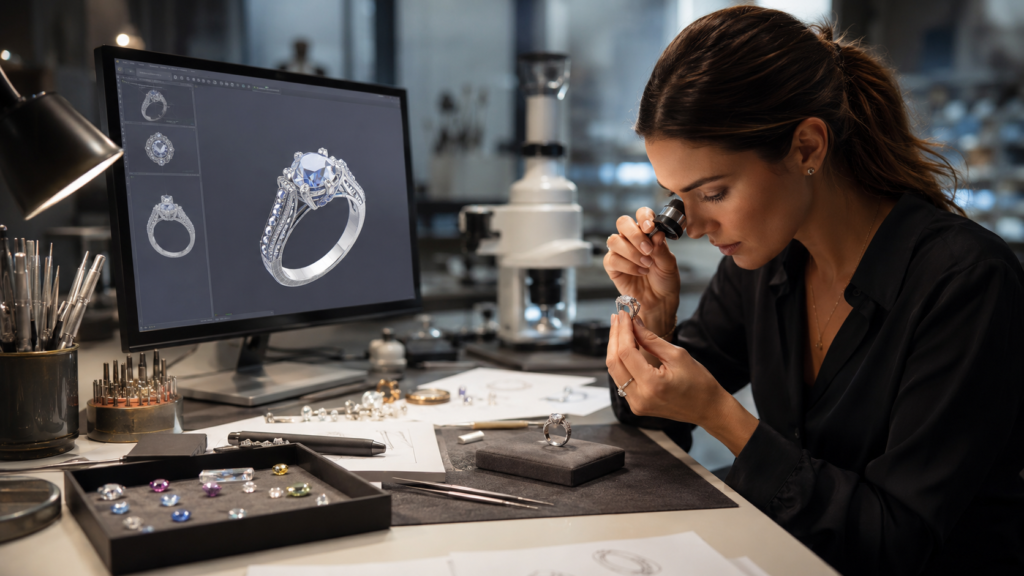
Many founders choose their base metal based on personal preference — without considering whether it suits their target customer and price point. The three most common mismatches:
Gold-plated brass for a premium brand: Standard gold-plated brass jewelry — 0.3–0.5 microns of gold over brass — is appropriate for fashion jewelry priced under $30. Using it for a brand targeting the $80–$150 price point creates a product that does not deliver on the quality promise your pricing implies.
Plain silver when the market wants gold: Brands targeting the USA, UK, and Australian premium jewelry segments often find customers strongly prefer gold-toned pieces. Launching an all-silver collection in a gold-dominant market limits commercial performance.
Vermeil without educating customers on care: Gold vermeil is the right choice for most premium jewelry brands — but startups that skip customer education face returns and negative reviews when pieces show wear after daily use.
How to avoid it: Research your target market before choosing your metal. For artisan, boho, spiritual, and ethnic jewelry markets, 925 sterling silver often resonates more authentically. For most brands targeting the $80–$300 retail segment in Western markets, gold vermeil is the strongest choice.
Mistake 4 — Over-Designing the First Collection
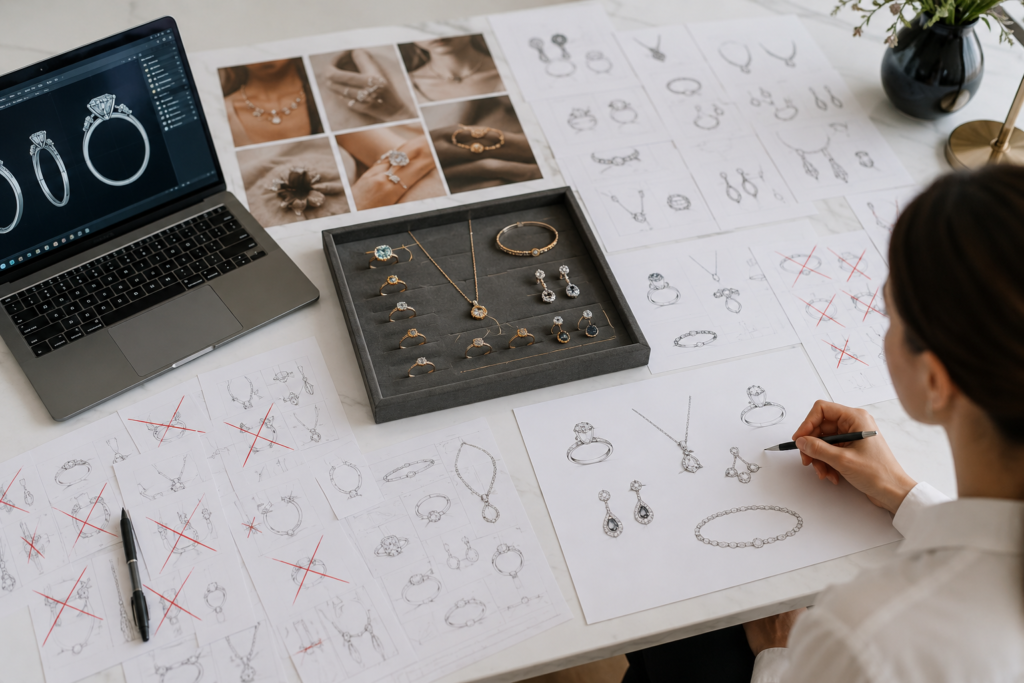
More designs feel like more opportunity. In practice, a large first collection almost always works against a new brand:
- Capital: 50 designs at sampling stage means 50 sample costs before a single piece is sold
- Marketing focus: Every design requires photography, copywriting, and attention — spreading your budget too thin
- Inventory risk: A large first collection means a larger inventory commitment before you know what your market actually wants
Most new brands find that 20–30% of their first collection drives 70–80% of their sales.
How to avoid it: Launch with 8–15 focused, cohesive designs. Test them in the market. Identify your bestsellers — then expand with a second collection built on what you know works.
Mistake 5 — Ignoring Hallmarking and Compliance
Jewelry is a regulated product category in most major markets. Ignoring compliance is a jewelry startup mistake that can result in consequences ranging from customs delays to legal liability.
Common compliance failures:
- No 925 hallmarking: In the UK, 925 sterling silver jewelry above certain weight thresholds must be hallmarked by an approved assay office. Selling non-hallmarked silver jewelry as “sterling silver” is a legal violation. Learn more at the UK Assay Office →
- FTC vermeil misrepresentation: In the USA, calling a product “gold vermeil” when it does not meet FTC standards — 925 silver base, minimum 10k gold, minimum 2.5 microns — is a regulatory violation. See FTC jewelry guidelines →
- Undisclosed gemstone treatments: Most colored gemstones are treated. Sellers are legally required to disclose treatments — heat treatment, fracture filling, coating.
- Incorrect product labeling: Gold karat, metal type, and gemstone identity must be accurately represented on listings and physical tags.
How to avoid it: Work with a manufacturer who understands the compliance requirements of your target market and builds them into the production process as standard.
Mistake 6 — Underestimating Lead Times
The most common cause of missed launch deadlines is simple: underestimating how long manufacturing actually takes. This is a jewelry startup mistake that is almost universal among first-time founders.
Realistic timeline for a new collection:
Realistic Timeline for a New Jewelry Collection:
- Design brief to CAD development — 3 to 7 days per design
- CAD approval and revisions — 3 to 7 days
- Physical sample production — 10 to 20 days
- Sample shipping (international) — 3 to 5 days
- Sample evaluation and revision — 7 to 14 days
- Bulk production — 3 to 6 weeks
- Bulk shipping via air freight — 3 to 5 days
- Total from brief to delivery — 10 to 14 weeks
Most startups plan for 4–6 weeks and are surprised when the realistic timeline is two to three times longer.
How to avoid it: Work backwards from your launch date and add a 2-week buffer. Start the manufacturing process at least 14–16 weeks before your intended launch.
Mistake 7 — No Customer Education on Jewelry Care
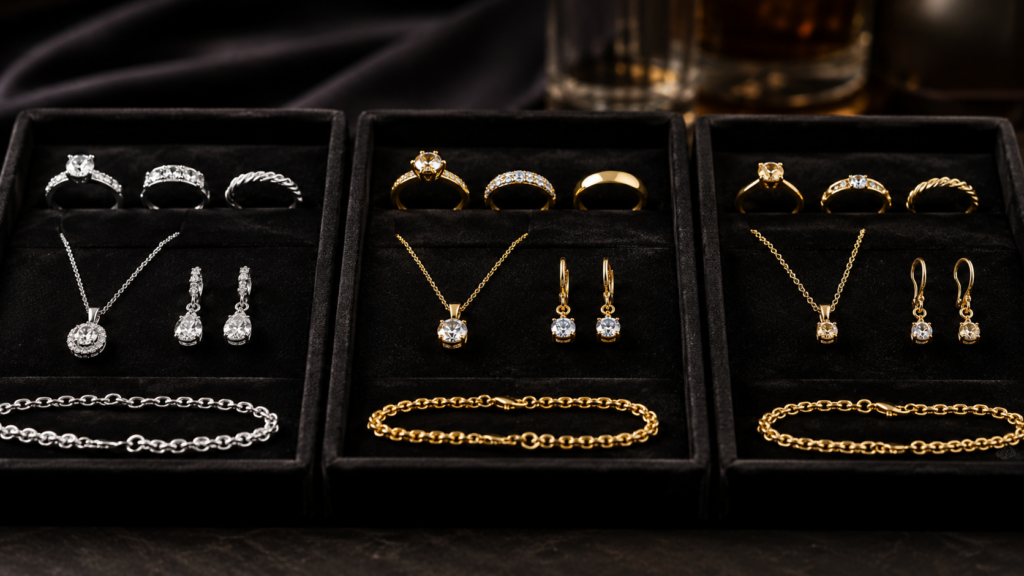
This problem does not show up until 3–6 months after launch — when complaints about tarnishing, fading, and stone loss start arriving.
Most jewelry care complaints are entirely preventable. Sterling silver tarnishes when exposed to perfume, lotion, and moisture. Gold vermeil plating wears faster when customers sleep in their jewelry or apply hand sanitizer while wearing rings. These are not manufacturing defects — but without customer education, buyers blame the brand.
How to avoid it:
- Include a care card with every order
- Add a jewelry care page to your website
- Include care instructions in every product description
- Train your customer service team to identify care-related issues vs. genuine manufacturing defects
Mistake 8 — Not Building a Relationship with Your Manufacturer
Many brands treat their manufacturer as a transactional vendor to be squeezed on price. This approach costs more than money — it costs quality, reliability, and growth capacity.
A manufacturer who knows your brand and has a stake in your success delivers better results at every stage — faster sampling, more careful QC, priority scheduling during busy periods, and proactive communication when issues arise.
How to build a strong relationship:
- Pay reliably and on time
- Communicate quality feedback clearly and constructively
- Give advance notice of upcoming orders
- Visit your manufacturer in person when possible — one trip to Jaipur changes the relationship entirely
At Eon Gems, our longest client relationships span 15–20 years. These brands receive first access to new stone arrivals, priority production scheduling, and a manufacturing team that genuinely understands their aesthetic and quality expectations.
Mistake 9 — Poor Photography and Presentation
You can have the most beautifully manufactured jewelry in the world — and completely fail to sell it if the photography is weak.
Common jewelry photography errors:
- Using manufacturer photos instead of original branded photography
- Poor lighting that flattens metal and dulls gemstone color
- Inconsistent backgrounds across a collection
- No lifestyle or on-model shots to show scale and wearability
- Images too small or low-resolution for zoom on e-commerce platforms
How to avoid it: Budget for professional jewelry photography as a non-negotiable launch cost. A well-photographed 10-piece collection will consistently outsell a poorly photographed 50-piece collection.
Mistake 10 — Launching Without a Clear Brand Identity
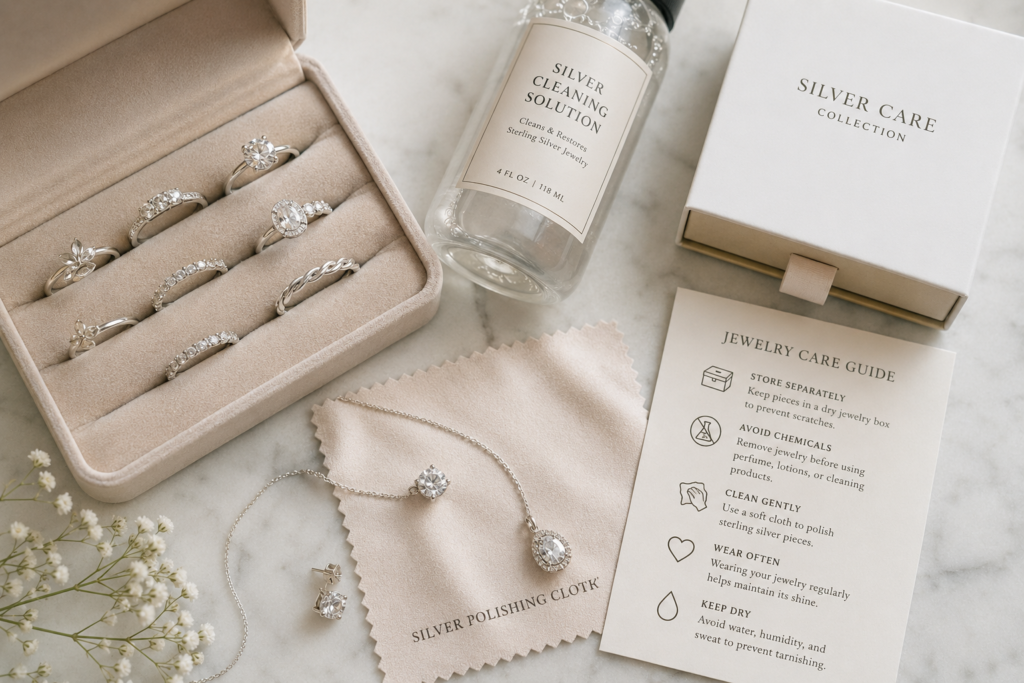
The most technically perfect jewelry collection will struggle to find its market if the brand identity is unclear. A brand identity is not a logo and color palette. It is a clear, specific answer to three questions:
Who is this for? Not “women who like jewelry” — that is everyone. “Women aged 28–42 in the USA drawn to spiritual and healing crystal jewelry who shop on Instagram and Etsy” is a customer you can design for, market to, and build loyalty with.
What does this brand stand for? Sustainability? Craftsmanship? Accessible luxury? Cultural heritage?
Why would someone choose this brand over the alternatives? If you cannot answer this clearly, your potential customer cannot either.
How to avoid it: Write a one-paragraph brand brief before you design a single piece or place a single manufacturing order. Every decision that follows — metal choice, gemstone selection, price point, packaging — should be answerable against that brief.
How Eon Gems Helps Jewelry Startups Avoid These Mistakes
At Eon Gems, we understand that new brands need more than a manufacturer — they need a partner who can help them navigate the decisions that determine whether a brand succeeds or struggles.
With 36+ years of experience working with brands at every stage, we offer:
- Transparent, itemized quoting — no hidden costs
- CAD-first sampling process — design approval before physical production
- XRF-verified gold plating on every vermeil batch
- 925 hallmarking on all sterling silver jewelry
- 250+ gemstone varieties for custom development
- No MOQ — start with a single prototype, scale at your pace
- Compliance guidance for USA, UK, EU, and Australian markets
- Complete export documentation for 50+ countries
- Honest timeline communication — we tell you what is achievable, not what you want to hear
If you are launching a jewelry brand and want a manufacturing partner who will help you avoid the mistakes that derail most startups — we would love to hear from you.
👉 Get in touch with Eon Gems →
Final Thoughts
Every jewelry startup mistake in this guide is avoidable — and every one of them has been made by smart, capable people who simply did not have the right information at the right time.
The brands that succeed are not the ones with the most capital or the most designs at launch. They are the ones who choose the right manufacturing partner, validate before they scale, understand their market, and build their brand identity before they build their collection.
If this guide has helped you avoid even one costly mistake, it has done its job.