Real moonstone benefits go far beyond its stunning appearance — this ancient gemstone has been valued for healing, intuition, and spiritual protection for thousands of years. Its ethereal, floating glow — a phenomenon called adularescence — makes it look as though light moves beneath the surface of the stone, like moonlight reflected on still water. It is one of the most beautiful and most frequently misidentified gemstones in the jewelry market.
At Eon Gems, we are Jaipur-based gemstone jewelry manufacturers with 36+ years of experience sourcing, grading, and setting natural moonstone for jewelry brands and wholesale buyers worldwide. Whether you are a buyer looking for genuine moonstone jewelry or a brand building a moonstone collection, this complete guide covers everything — benefits, pricing, quality grading, and how to tell real moonstone from imitations.
What Is Moonstone?
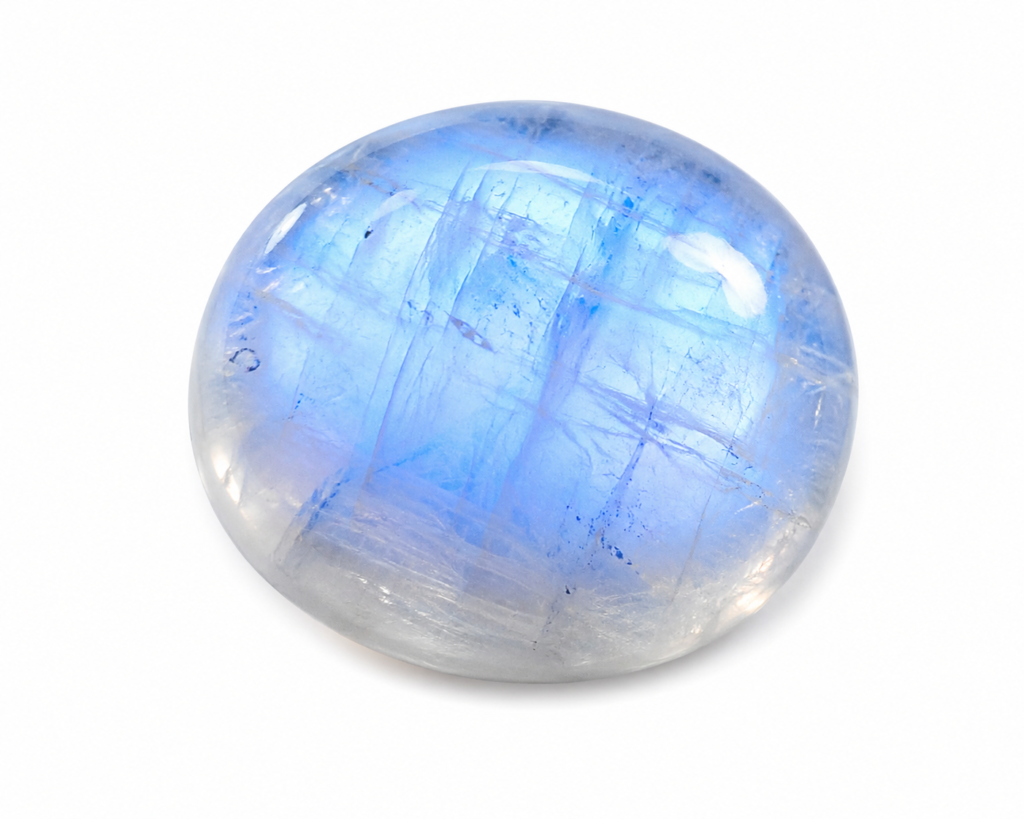
Moonstone is a member of the feldspar mineral group — specifically the orthoclase and albite feldspar family. Alternating layers of these two minerals create the internal structure that produces adularescence — the optical phenomenon that gives moonstone its signature glowing, floating light effect.
According to the GIA Gem Encyclopedia, genuine moonstone is identified by its distinctive adularescence — a floating, three-dimensional glow unique to this feldspar mineral. Fine moonstone displays a vivid blue adularescence floating over a colorless or white body color.
Other color varieties include peach moonstone, rainbow moonstone, grey moonstone, and cat’s eye moonstone.
Moonstone rates 6–6.5 on the Mohs hardness scale — moderately hard but with perfect cleavage in two directions, making it somewhat fragile compared to harder gemstones. This affects how it should be set and worn.
Real Moonstone Benefits — Spiritual and Healing Properties
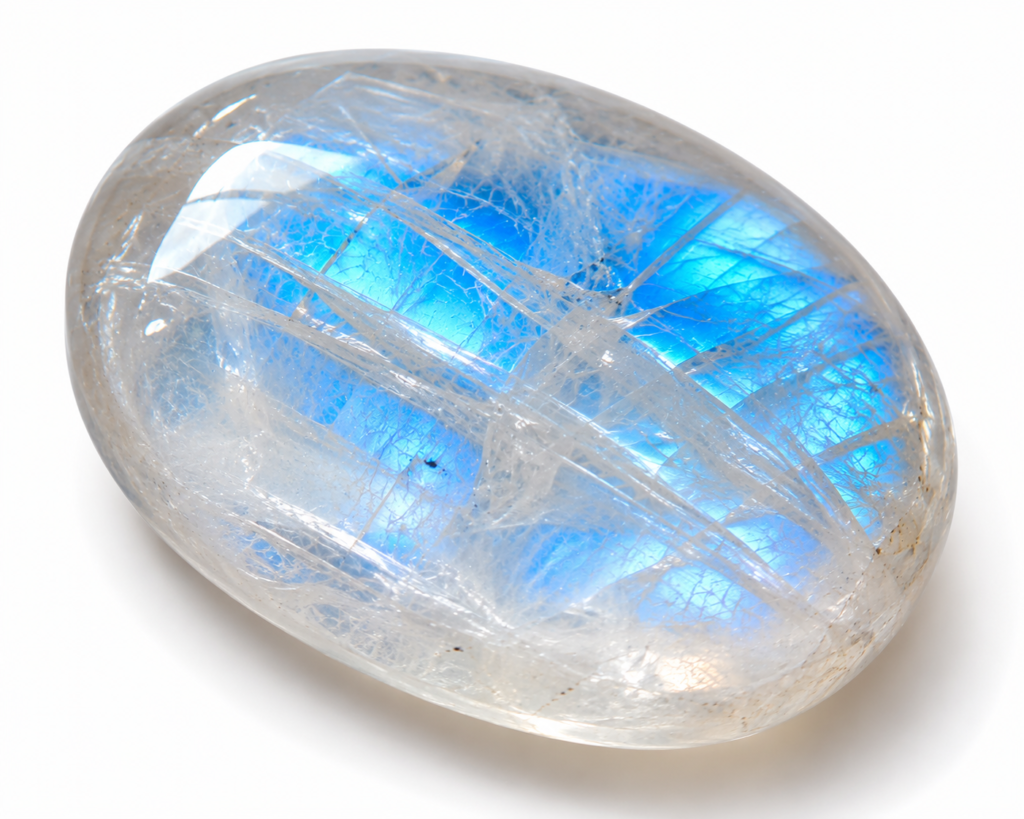
Moonstone has been valued for its spiritual and healing properties across cultures for thousands of years. In Hindu tradition, moonstone is considered a sacred stone associated with the moon deity and is believed to bring good fortune. In Roman mythology, moonstone was associated with the goddess Diana.
Crystal healing traditions associate the following real moonstone benefits with regular wear and use:
Emotional balance and intuition: Many practitioners believe moonstone supports emotional healing, enhances intuition, and promotes inner calm. Furthermore, they consider it one of the most powerful stones for emotional intelligence and empathetic awareness.
Feminine energy and cycles: Moonstone carries strong associations with the divine feminine, the moon’s cycles, and women’s reproductive health. Additionally, it serves as a traditional stone for fertility, pregnancy, and navigating life transitions.
New beginnings: Crystal healers associate moonstone with fresh starts and embracing change — consequently making it a popular gift for life transitions such as moving, starting a new chapter, or launching a new project.
Physical and Protective Benefits
Third eye and crown chakra: In chakra healing traditions, moonstone resonates with both the third eye chakra and the crown chakra — supporting spiritual connection and divine feminine energy.
Sleep and dream work: Many practitioners place moonstone under pillows to promote vivid, meaningful dreams and support restful sleep. This ancient practice remains popular in modern crystal healing communities.
Travel protection: Ancient travelers wore moonstone as protection during journeys — particularly at sea, where its lunar associations connected it to safe passage across water.
Types of Moonstone — What’s Available in the Market
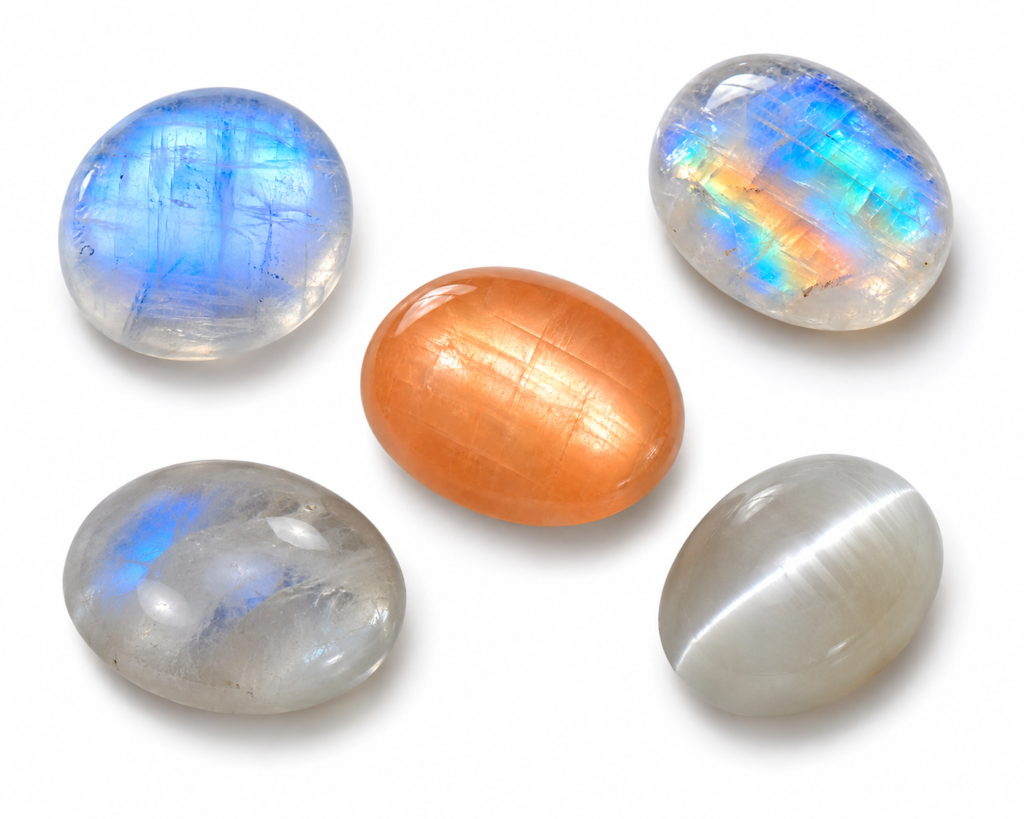
Understanding the different varieties helps buyers and brands make more informed sourcing decisions:
Blue Sheen Moonstone (Classic):
The most prized variety — colorless to white body with vivid blue adularescence. The finest examples come from Sri Lanka, though high-quality material is increasingly rare. This variety commands the highest prices in the moonstone market.
Rainbow Moonstone:
Technically a variety of labradorite (white labradorite) rather than true orthoclase moonstone, rainbow moonstone displays multi-color adularescence — blue, green, peach, and orange flashes across a white body. At Eon Gems, rainbow moonstone is one of our most consistently requested stones for gemstone jewelry manufacturing.
Peach Moonstone:
Warm peachy-orange body color with a softer, more diffused sheen than blue moonstone. Associated with the sacral chakra and feminine creative energy. Popular in romantic and artisan jewelry collections.
Grey Moonstone:
Darker body color with a white or blue sheen. Crystal healers call it “new moon stone” and associate it with perception and seeing beyond the visible.
Cat’s Eye Moonstone:
Displays chatoyancy — a single band of light moving across the surface — in addition to adularescence. Relatively rare and valued by collectors.
Moonstone Price Guide — What to Expect in 2026
Moonstone pricing varies significantly based on variety, quality, origin, and size. Here is a practical pricing guide for buyers and brands:
Commercial Grade Moonstone:
Small calibrated cabochons (6x4mm to 8x6mm) in peach or grey varieties — approximately $0.50 to $3 per stone. Suitable for fashion jewelry and mid-market collections.
Good Grade Blue Sheen Moonstone:
Medium-sized cabochons (8x6mm to 12x10mm) with visible blue adularescence — approximately $3 to $15 per stone. The sweet spot for most jewelry brands targeting the $60–$150 retail segment.
Fine Grade Blue Sheen Moonstone:
Vivid, centered blue adularescence over colorless body, well-shaped cabochon, minimal inclusions — approximately $15 to $80 per stone depending on size.
AAA Grade / Collector Moonstone:
Exceptional blue sheen, large size (15mm+), colorless body, near-flawless — $80 to $500+ per stone.
Rainbow Moonstone:
Good grade calibrated cabochons — approximately $1 to $8 per stone.
Peach Moonstone:
Generally more affordable — approximately $0.50 to $5 per stone in good grade calibrated sizes.
Factors that affect moonstone price:
- Strength and color of adularescence — vivid blue commands the highest premium
- Transparency of body color — colorless over cloudy body
- Centration of sheen — centered sheen over off-center
- Size — price per carat increases significantly with size
- Origin — Sri Lankan moonstone commands a premium over Indian material
How to Identify Real Moonstone — 7 Tests
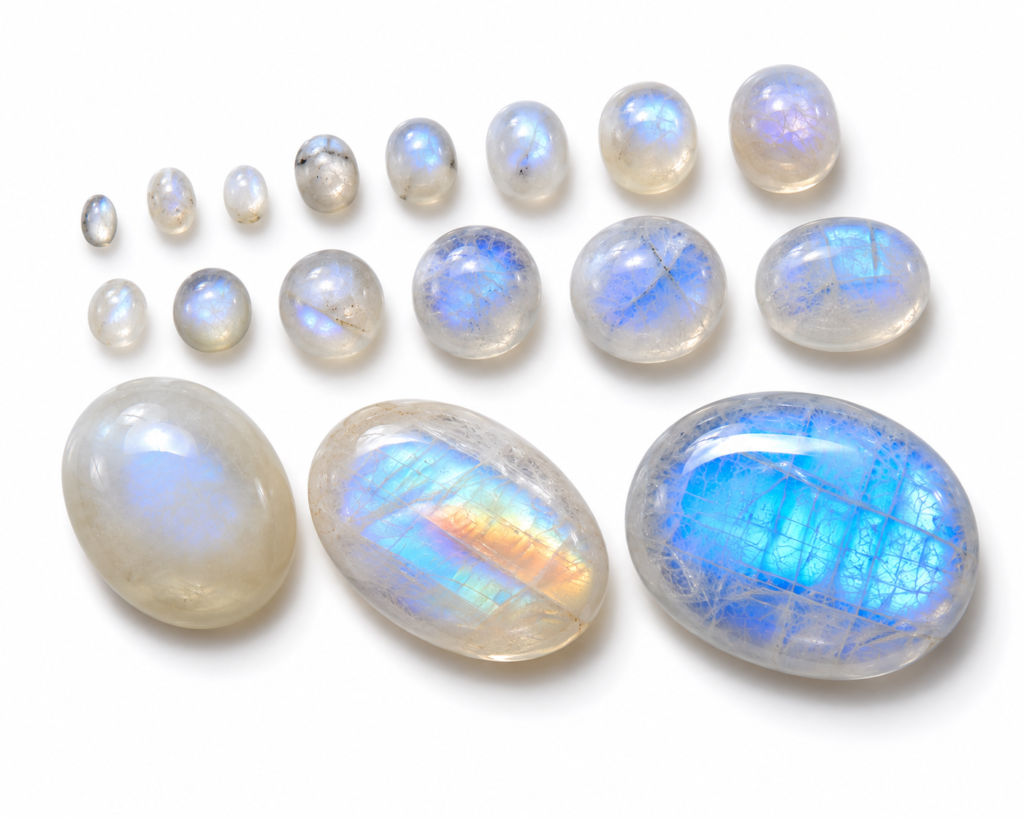
This is the most important section for buyers — particularly those purchasing online or from unfamiliar suppliers. Moonstone imitations are common, and some are convincing enough to fool inexperienced buyers.
Test 1 — Look for Adularescence
Real moonstone displays adularescence — a floating, three-dimensional glow that moves as the stone tilts. This optical effect differs from surface reflection or glitter. Move the stone slowly under a single light source and watch the light float beneath the surface. Imitations typically show flat surface reflection rather than this three-dimensional depth.
Test 2 — Check the Sheen Quality
Fine moonstone adularescence is blue, white, or multi-colored. It has a soft, billowing quality — not sharp or metallic. Cheap glass imitations often show a more uniform, flat blue coating rather than the organic floating quality of genuine adularescence.
Test 3 — Look for Natural Inclusions
Genuine moonstone contains natural inclusions — the most distinctive being “centipede” inclusions, which appear as parallel stress fractures under magnification. Synthetic and glass imitations show no inclusions or show air bubbles rather than natural characteristics.
Test 4 — Temperature Test
Natural gemstones feel cool to the touch and warm slowly in the hand. Glass imitations warm up quickly. Hold the stone in your hand for 30 seconds — genuine moonstone stays cool longer than glass.
Test 5 — Hardness Check
Moonstone rates 6–6.5 on the Mohs scale. A genuine moonstone resists scratching from most household objects, while soft glass imitations (Mohs 5–5.5) show scratches more easily.
Test 6 — Weight Comparison
Natural moonstone has a specific gravity of approximately 2.56–2.59. Glass imitations are typically lighter. If you have a known genuine moonstone of similar size for comparison, feel the weight difference in hand.
Test 7 — Professional Verification
For significant purchases, always request a gemological certificate from GIA, IGI, or a qualified local gemologist. Professional testing using a refractometer or spectroscope provides definitive identification that visual inspection alone cannot.
Common Moonstone Imitations to Watch For
Opalite: A synthetic glass that displays a blue-white glow similar to moonstone’s adularescence. Sellers commonly market it as “moonstone” in low-end markets and online. Opalite has no natural inclusions, warms quickly in the hand, and its glow appears more uniform and flat compared to genuine moonstone.
Blue Glass: Coated or colored glass with a blue sheen. Easy to identify under magnification — air bubbles rather than natural inclusions, and sheen is surface-level rather than internal.
Synthetic Moonstone: Synthetic feldspar material that can display genuine adularescence. Less common than glass imitations but harder to detect without professional testing. Sellers must disclose synthetic origin.
Cat’s Eye Glass: Fiber-optic glass that shows a chatoyant band. Sometimes sellers market it as “cat’s eye moonstone” — genuinely different from natural cat’s eye moonstone, which is extremely rare.
Selenite: White, translucent, and sometimes confused with moonstone by inexperienced buyers. Shows no adularescence. Very soft (Mohs 2) and easily scratched.
Moonstone in Jewelry — Setting and Care Guide
Best Settings for Moonstone
Moonstone’s moderate hardness and perfect cleavage require thoughtful setting choices — particularly for daily-wear pieces.
Bezel setting: The most protective option for moonstone. A metal rim surrounds the stone completely, protecting the edges from impact. Strongly recommended for moonstone rings and bracelets.
Prong setting: Works well for pendants and earrings where impact risk is lower. Less recommended for rings, where exposed stone edges are vulnerable to knocks.
Freeform / organic setting: Particularly popular for moonstone in bohemian and artisan jewelry — the stone’s organic shape is celebrated rather than trimmed to standard calibration.
At Eon Gems, moonstone is set into both 925 sterling silver jewelry and gold vermeil jewelry — with bezel settings recommended for rings and bracelets, and prong or freeform settings for pendants and earrings.
Moonstone Care Instructions
- Remove moonstone jewelry before physical activity, cleaning, and bathing
- Store individually in a soft pouch — moonstone can be scratched by harder gemstones
- Clean gently with a soft, damp cloth — avoid ultrasonic cleaners and steam cleaning
- Avoid prolonged exposure to direct sunlight — some moonstone varieties can fade with UV exposure
- Handle carefully — perfect cleavage makes moonstone more susceptible to chipping than harder stones
Moonstone for Jewelry Brands — Sourcing Considerations
For jewelry brands building moonstone collections, here are key sourcing decisions to address:
Variety selection: Blue sheen moonstone commands the highest retail prices and strongest aspirational appeal. Rainbow moonstone is more accessible in price and supply, with broad boho and spiritual market appeal. Peach moonstone fills the mid-tier.
Calibrated vs. freeform: Calibrated moonstone fits standard settings and creates production consistency. Freeform moonstone creates more distinctive, one-of-a-kind pieces — better for artisan brand positioning.
Setting recommendation: Always specify bezel settings for moonstone rings in your manufacturing brief — it protects the stone and reduces customer complaints about chipping.
Disclosure: Moonstone is typically untreated. However, some lower-grade material may be surface-coated to enhance sheen. Always confirm treatment status with your supplier.
Metal pairing: Moonstone’s ethereal, cool aesthetic pairs beautifully with rhodium-plated or plain 925 sterling silver and with rose gold gold vermeil for a warmer, romantic aesthetic.
FAQs — Real Moonstone Benefits and Identification
Is moonstone a real gemstone?
Yes — moonstone is a genuine natural gemstone, a member of the feldspar mineral group. Major gemological organizations including GIA officially recognize it as a gemstone.
Which moonstone is most valuable?
Blue sheen moonstone — with vivid, centered blue adularescence over a colorless, transparent body — is the most valuable variety. Sri Lankan origin commands a premium.
Can moonstone go in water?
Occasional water exposure will not damage moonstone, but regular soaking is not recommended. Avoid prolonged water contact, salt water, and chemical exposure.
Is moonstone good for daily wear?
Moonstone suits pendants, earrings, and occasional-wear rings well. For daily-wear rings and bracelets, choose bezel settings for better protection.
What is rainbow moonstone?
Rainbow moonstone is technically white labradorite — a related feldspar mineral. It displays multi-color adularescence and is widely popular in bohemian and spiritual jewelry. It is a genuine natural gemstone.
How do I tell moonstone from opalite?
Genuine moonstone has natural inclusions visible under magnification and warms slowly in the hand. Opalite (synthetic glass) has no natural inclusions, may show air bubbles, warms quickly, and its glow appears more uniform and flat.
Eon Gems — Natural Moonstone Jewelry Manufacturer in Jaipur
At Eon Gems, natural moonstone — including blue sheen, rainbow, and peach varieties — is among our most consistently available and popular stones for gemstone jewelry manufacturing. Based in Jaipur, the world’s largest colored gemstone trading hub, we source directly from established traders with full treatment disclosure as standard.
What we offer moonstone jewelry brands:
- Natural blue sheen, rainbow, and peach moonstone — calibrated and freeform
- Custom gemstone jewelry manufacturing in your chosen variety and setting
- Bezel, prong, and freeform setting options in-house
- 925 sterling silver and gold vermeil base metals
- No MOQ — single prototype to large bulk production
- Complete export documentation for USA, UK, EU, Australia and 40+ countries
- Treatment disclosure as standard on every stone
👉 Get a Free Quote from Eon Gems →
🔗 Gemstone Jewelry Manufacturing →
🔗 925 Sterling Silver Jewelry →
🔗 Gold Vermeil Jewelry →