The diamond engagement ring has dominated Western jewelry culture for decades — but in 2026, more couples than ever are choosing something different. Colored gemstone engagement rings are not a trend. They are a return to centuries of tradition, a statement of individuality, and often a significantly smarter financial decision.
At Eon Gems, we are Jaipur-based gemstone jewelry manufacturers with 36+ years of experience sourcing and setting the natural and lab-grown stones increasingly chosen for engagement rings worldwide. This guide covers the best diamond alternatives — what makes each stone right for an engagement ring, and what every buyer needs to know before choosing.
Why Couples Are Choosing Diamond Alternatives
Several converging factors are driving the shift away from diamonds in engagement rings:
Value: A fine natural sapphire or emerald of equivalent visual impact to a diamond often costs significantly less. Lab-grown colored stones offer even greater savings — beautiful, durable, and a fraction of the cost.
Individuality: A colored gemstone engagement ring stands out. In a world where diamond solitaires look identical from a distance, a deep blue sapphire or vivid green emerald is immediately distinctive.
Meaning: Many couples choose stones with personal significance — a birthstone, a stone tied to their heritage, or a gemstone whose symbolism resonates with their relationship.
Ethics: Growing awareness of mining practices has led many buyers to seek alternative stones — particularly lab-grown options where origin is fully transparent.
Royal influence: Princess Diana’s sapphire ring — now worn by Princess Catherine — sparked global interest in colored gemstone engagement rings that has never fully faded.
What Makes a Gemstone Suitable for an Engagement Ring?
Before exploring specific stones, it is important to understand what makes any gemstone suitable for daily wear in an engagement ring:
Hardness: The Mohs hardness scale rates mineral hardness from 1 to 10. For an engagement ring worn daily, gemologists generally recommend stones rated 7 or above. Softer stones chip, scratch, and abrade more easily with regular wear.
Toughness: Hardness and toughness are different. A stone can be hard but brittle — diamond is the hardest natural material but can cleave along crystal planes if struck at the right angle. Toughness refers to resistance to breaking and chipping.
Stability: How does the stone respond to light, heat, and chemicals? Some gemstones fade in sunlight. Others are sensitive to cleaning chemicals. Stability affects long-term appearance.
Setting: Softer or more brittle stones require protective settings — bezel settings surround the stone with metal, protecting edges from impact. Harder, tougher stones work safely in prong settings.
1. Sapphire — The Most Popular Diamond Alternative
Mohs hardness: 9
Best for: Daily wear, all ring styles
Available in: Blue, pink, yellow, white, padparadscha (pink-orange), green
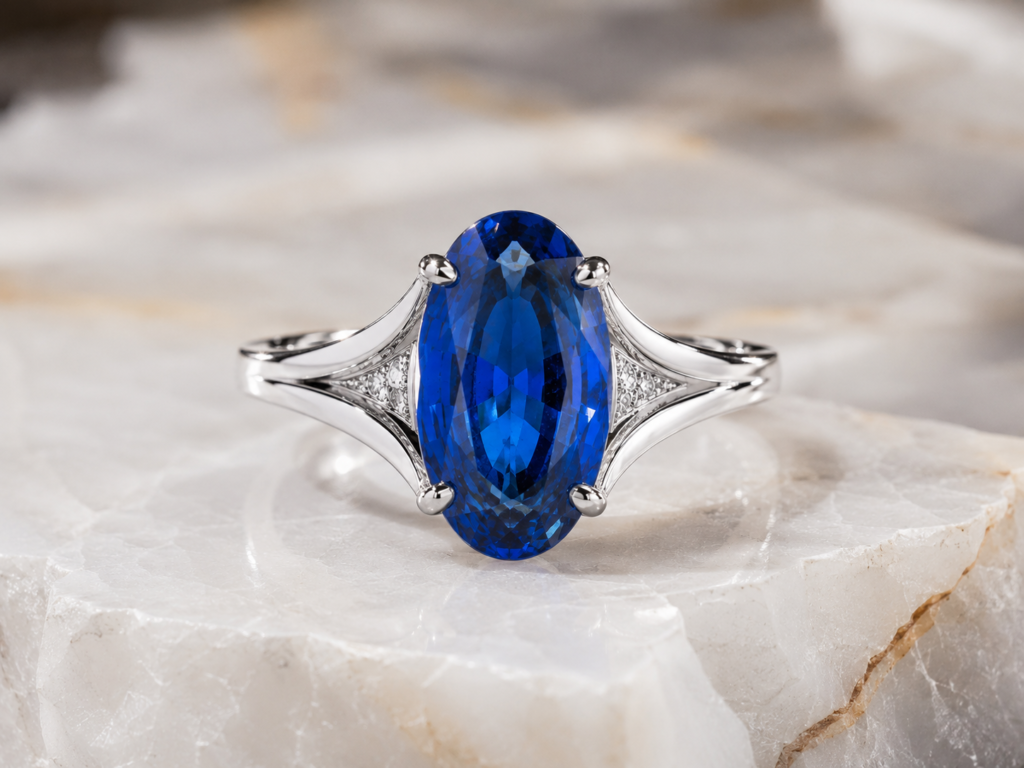
Sapphire is the engagement ring gemstone alternative diamond buyers most frequently choose — and with good reason. At Mohs 9, it is the second hardest gemstone after diamond, making it exceptionally durable for daily wear. It does not cleave, has excellent toughness, and is stable in light and most cleaning conditions.
Blue sapphire — particularly the cornflower blue of fine Ceylon (Sri Lankan) sapphire — is the classic choice. Pink sapphire has grown dramatically in popularity, particularly among younger buyers. Padparadscha sapphire — a rare pink-orange variety — commands some of the highest per-carat prices of any colored stone.
Natural vs. lab-grown: Lab-grown sapphire is chemically identical to natural, available in the full color range, and costs 60–80% less. For buyers prioritizing beauty and durability over rarity value, lab-grown sapphire is an excellent choice.
At Eon Gems, blue and pink sapphire — both natural and lab-grown — are among our most popular stones for custom gemstone jewelry manufacturing, set into 925 sterling silver and gold vermeil engagement ring designs.
2. Ruby — The Stone of Passion and Commitment
Mohs hardness: 9
Best for: Daily wear, statement rings
Available in: Red (from pinkish-red to deep blood red)
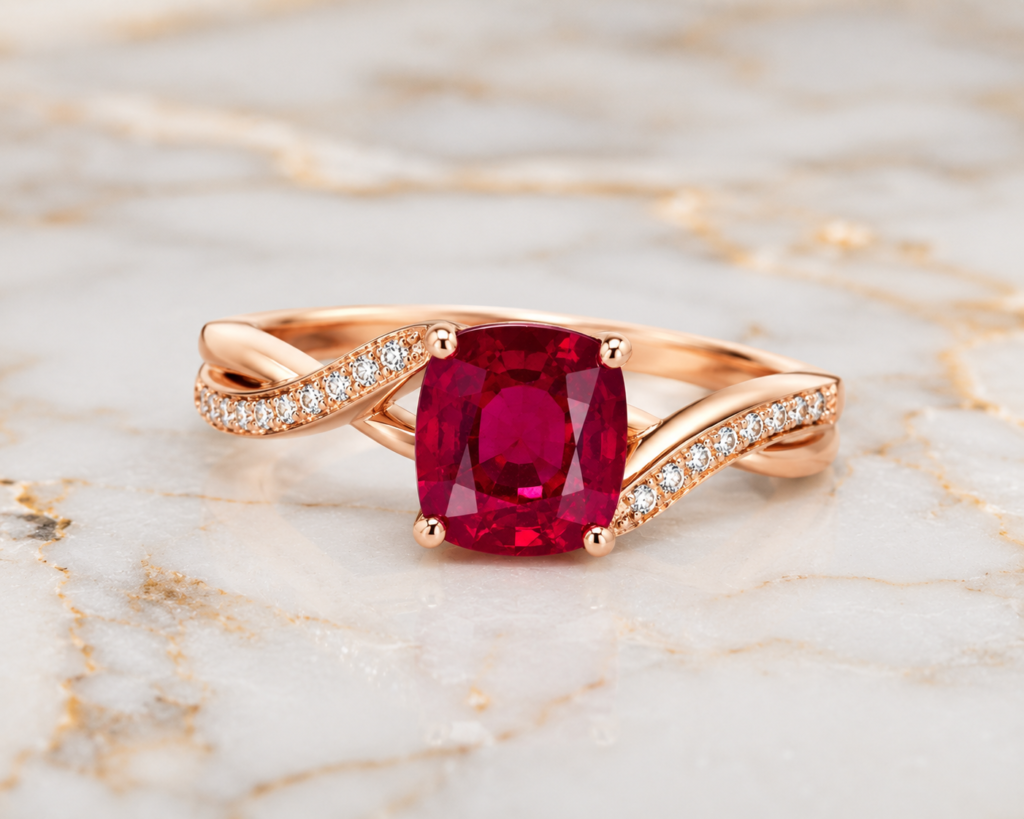
Ruby is the red variety of corundum — the same mineral family as sapphire — and shares its exceptional hardness and durability. It is one of the most historically significant gemstones in the world, associated with passion, protection, and committed love across cultures from Ancient India to Medieval Europe.
A fine natural ruby — vivid red, eye-clean, minimal treatment — is among the most valuable colored gemstones per carat in the world. Myanmar (Burmese) ruby commands the highest prices. Mozambique ruby offers excellent color at more accessible pricing.
Natural vs. lab-grown: Lab-grown ruby offers the same vivid red color and Mohs 9 hardness at a fraction of natural ruby pricing — making ruby engagement rings accessible to buyers who could not otherwise afford natural material of comparable quality.
Setting recommendation: Prong settings maximize ruby’s color and brilliance. Bezel settings offer more protection and a modern aesthetic. Both work well given ruby’s excellent durability.
3. Emerald — The Stone of Growth and New Beginnings
Mohs hardness: 7.5–8
Best for: Statement rings, lower-impact wear, bezel settings
Available in: Green (from light to deep vivid green)
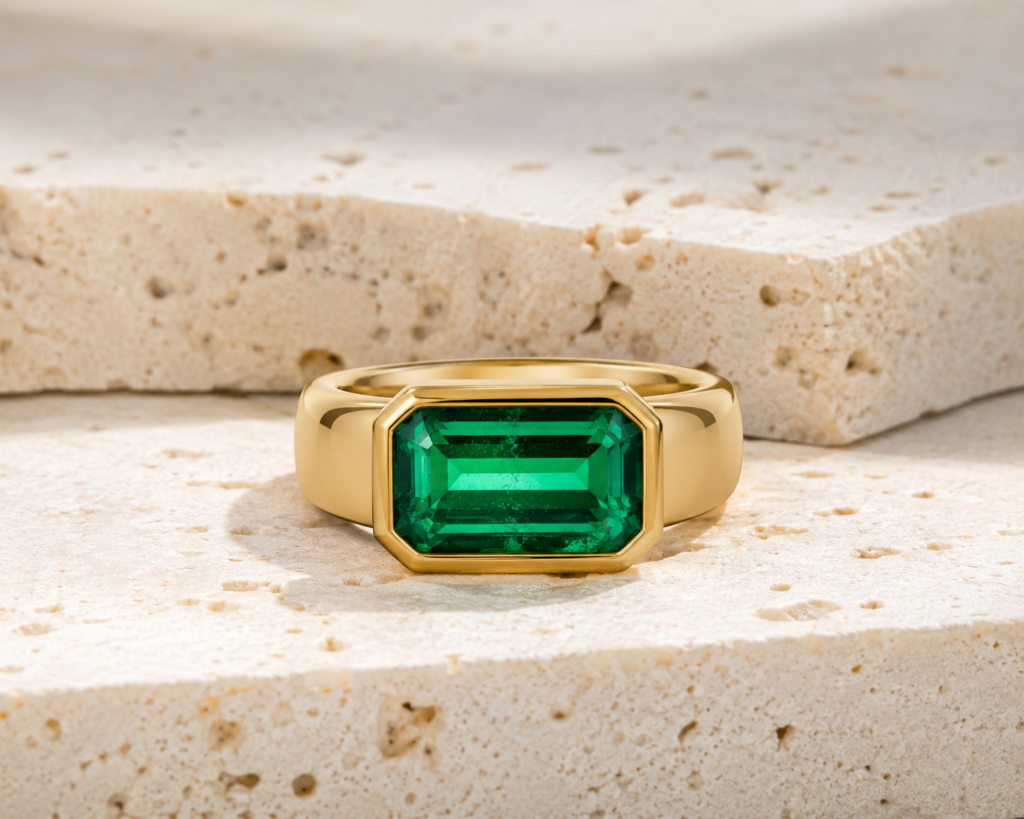
Emerald is one of the most iconic colored gemstones in history — prized by ancient Egyptians, Mughal emperors, and modern jewelry lovers alike. Its rich green color is unmatched by any other gemstone. Emerald symbolizes growth, rebirth, hope, and new beginnings — deeply resonant associations for an engagement ring.
The important consideration for emerald as an engagement ring stone is its durability profile. Although it rates 7.5–8 on the Mohs scale — adequate for ring wear — most emeralds contain natural inclusions and fractures (called a “jardin” or garden) that make them more susceptible to chipping than sapphire or ruby. Additionally, most natural emeralds are oil-treated to fill fractures, which requires periodic retreatment.
Setting recommendation: Bezel settings are strongly recommended for emerald engagement rings — the metal rim protects the stone’s edges from impact. Classic emerald-cut faceting — developed specifically for this stone — minimizes stress on the corners.
Natural vs. lab-grown: Lab-grown emerald offers vivid green color, better clarity than most natural emerald at equivalent price points, and the same chemical composition. For buyers wanting emerald beauty with less durability concern, lab-grown in a protective bezel setting is an excellent choice.
4. Moissanite — The Brilliant Budget-Friendly Choice
Mohs hardness: 9.25
Best for: Daily wear, all ring styles, maximum brilliance
Available in: Colorless, near-colorless, faint yellow, green, grey
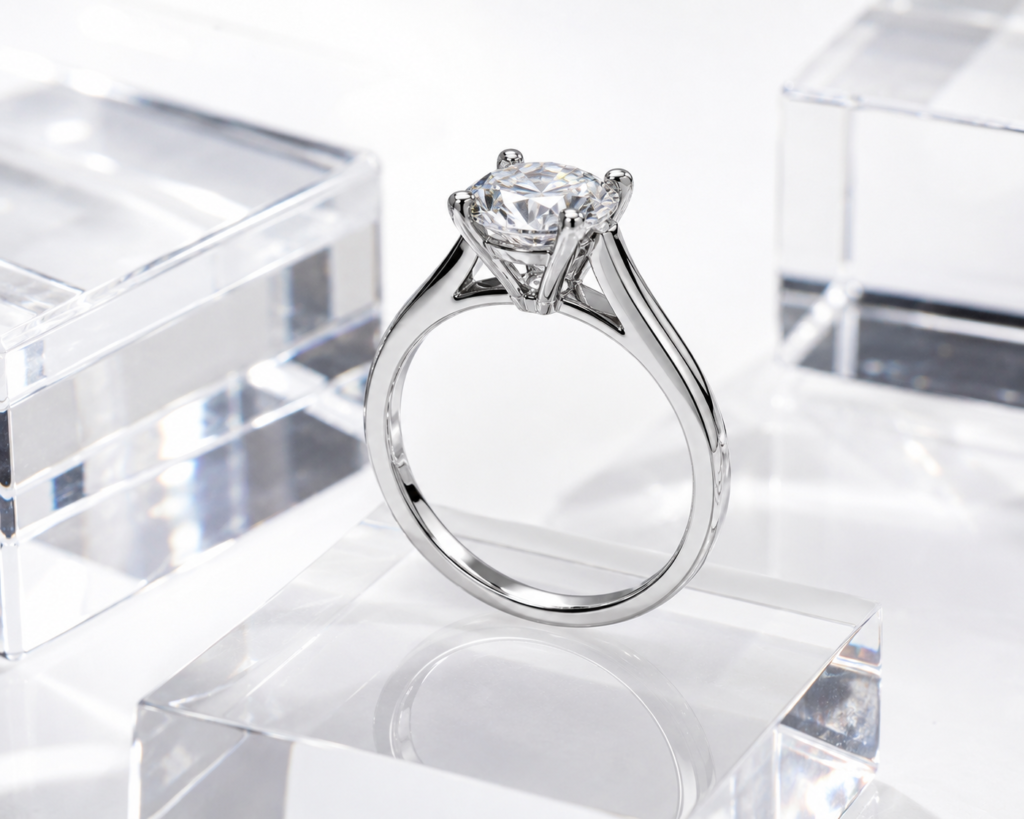
Moissanite is a naturally occurring silicon carbide — originally discovered in a meteorite crater by Nobel Prize-winning chemist Henri Moissan in 1893. Natural moissanite is extraordinarily rare; virtually all moissanite used in jewelry today is lab-grown.
Moissanite has several properties that make it compelling as a diamond alternative:
- Hardness: 9.25 on the Mohs scale — harder than sapphire, nearly as hard as diamond
- Brilliance: Higher refractive index than diamond, producing more rainbow fire
- Price: Significantly less expensive than diamond — typically 85–90% lower for equivalent size
- Durability: Excellent toughness, no cleavage, suitable for all ring styles and daily wear
The primary distinction from diamond is moissanite’s distinctive “rainbow fire” — the colored light dispersion that some buyers love and others find too intense compared to diamond’s white brilliance. This is a personal aesthetic preference, not a quality deficiency.
Moissanite is fully lab-grown and therefore carries no mining ethics concerns — a significant selling point for environmentally conscious buyers.
5. Morganite — The Rose-Toned Romantic Choice
Mohs hardness: 7.5–8
Best for: Occasional-wear rings, bezel or halo settings, romantic aesthetics
Available in: Pink, peach-pink, salmon, rose
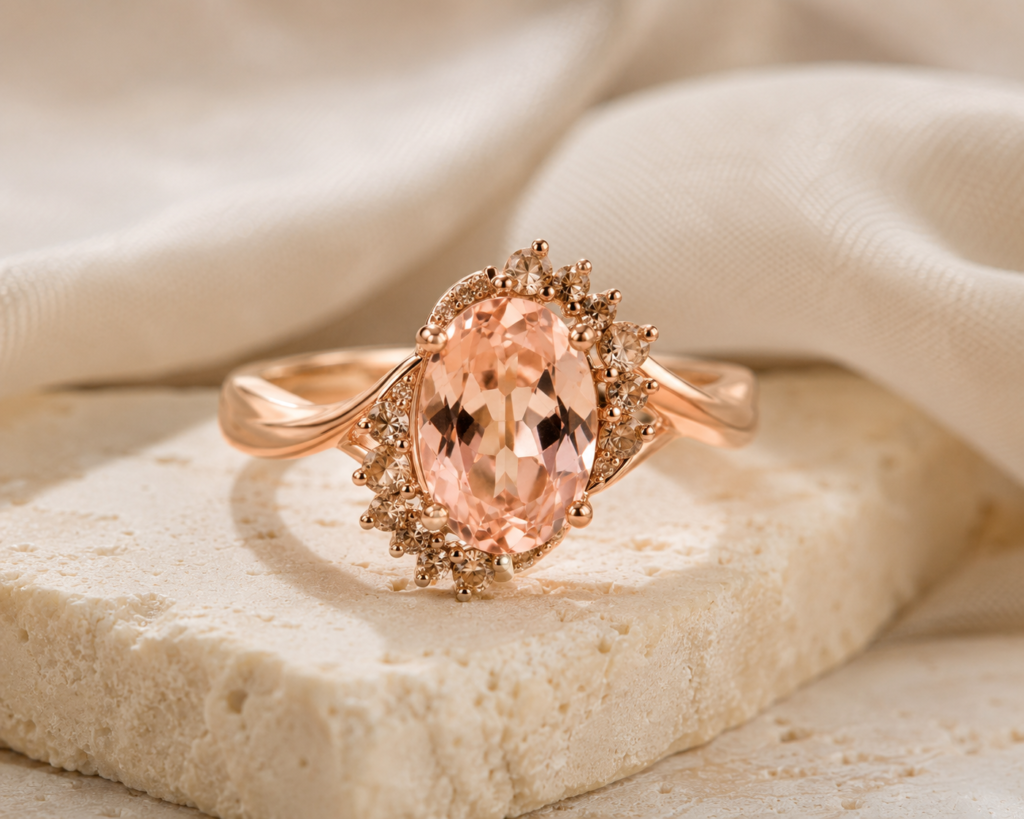
Morganite is the pink variety of beryl — the same mineral family as emerald and aquamarine. Its soft peachy-pink color has made it one of the most popular engagement ring stones of the last decade, particularly popular in rose gold vermeil settings that amplify the stone’s warm pink tone.
Morganite symbolizes divine love, compassion, and emotional healing — beautiful associations for an engagement ring. Its pastel color is particularly flattering against warm skin tones.
Durability consideration: At Mohs 7.5–8, morganite is adequate for ring wear but requires more care than sapphire or ruby. A protective setting — bezel or halo — is recommended for daily-wear engagement rings. The stone is stable in light and cleaning conditions, which makes long-term care relatively easy.
Pairing: Morganite pairs exceptionally well with rose gold gold vermeil settings — the warm pink tones of both stone and metal create a cohesive, romantic aesthetic that has driven much of morganite’s popularity.
6. Aquamarine — The Serene Blue Choice
Mohs hardness: 7.5–8
Best for: Statement rings, bezel or prong settings
Available in: Pale blue to vivid blue-green
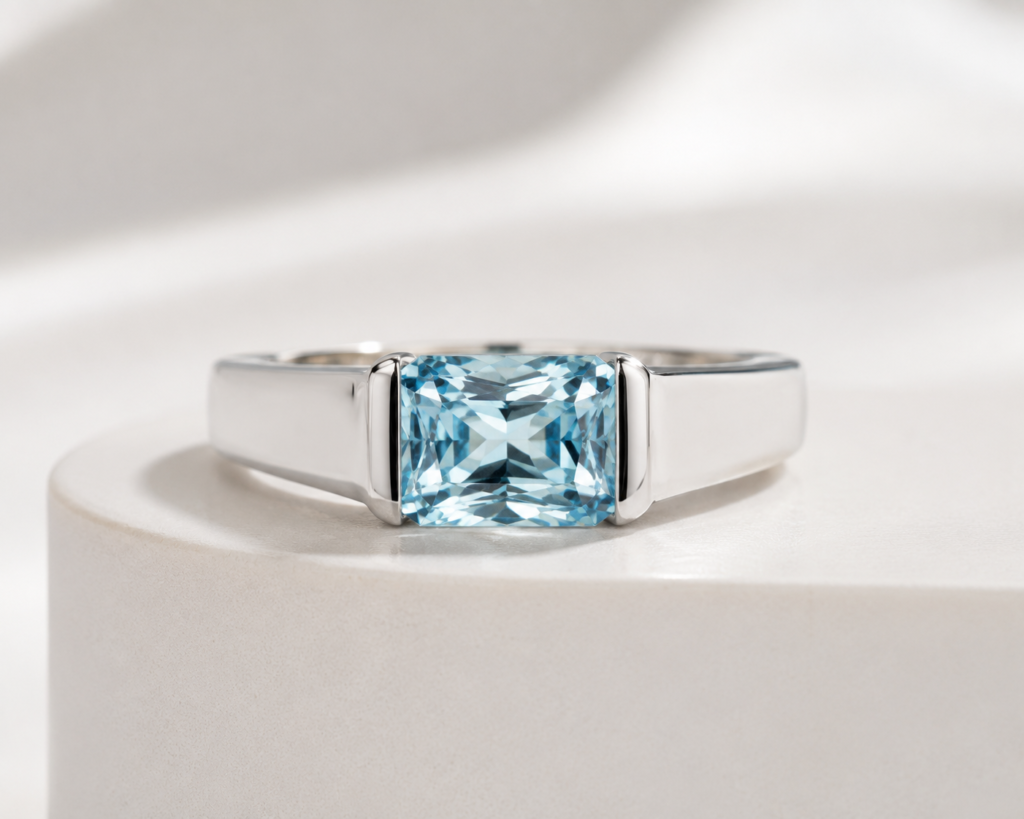
Aquamarine is the blue variety of beryl — calm, serene, and oceanic in its color. It ranges from pale sky blue to a more vivid teal-blue, with the most prized stones showing a clean, medium blue without grey or green undertones.
Aquamarine symbolizes courage, clarity, and tranquility — deeply meaningful associations for a couple beginning a life together. Its cool blue tone pairs beautifully with white gold vermeil or rhodium-plated 925 sterling silver settings.
Durability: Mohs 7.5–8 with good toughness — suitable for daily ring wear with reasonable care. Aquamarine is stable in light and heat, making it low-maintenance as a daily-wear stone.
Price advantage: Fine natural aquamarine is significantly more affordable than sapphire of equivalent size and quality — making it an excellent choice for buyers wanting a vivid blue stone at an accessible price point.
7. Alexandrite — The Rarest and Most Magical Choice
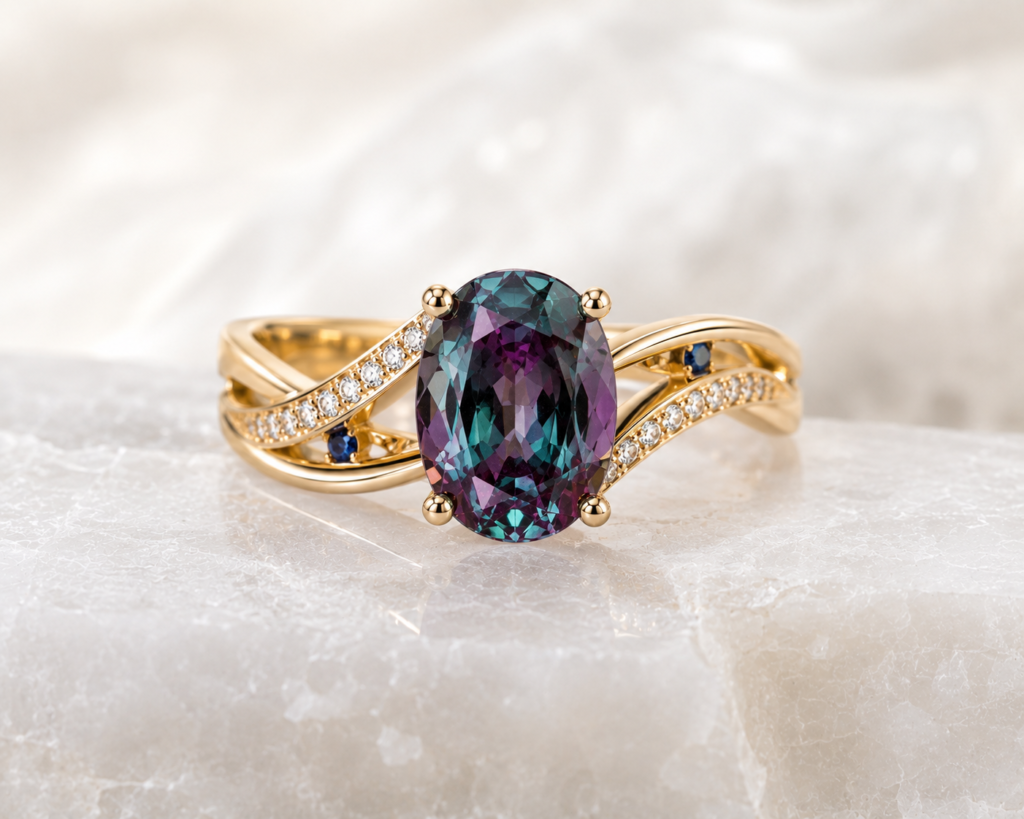
Mohs hardness: 8.5
Best for: Daily wear, all ring styles
Available in: Color-change — green in daylight, red-purple under incandescent light
Alexandrite is arguably the most fascinating gemstone in the world — a chromium-bearing variety of chrysoberyl that changes color dramatically between different light sources. Under daylight or fluorescent light, it appears green. Under incandescent or candlelight, it shifts to red or red-purple.
“Emerald by day, ruby by night” is the classic description — and for couples who want a truly unique engagement ring with extraordinary visual drama, alexandrite is unmatched.
Natural alexandrite of fine quality is among the rarest and most expensive gemstones in the world — fine stones regularly exceed fine ruby and emerald pricing per carat. Lab-grown alexandrite offers the same color-change phenomenon at a tiny fraction of natural pricing, making this magical stone genuinely accessible.
Durability: At Mohs 8.5 with excellent toughness, alexandrite is highly suitable for daily wear engagement rings.
8. White Sapphire — The Understated Diamond Alternative
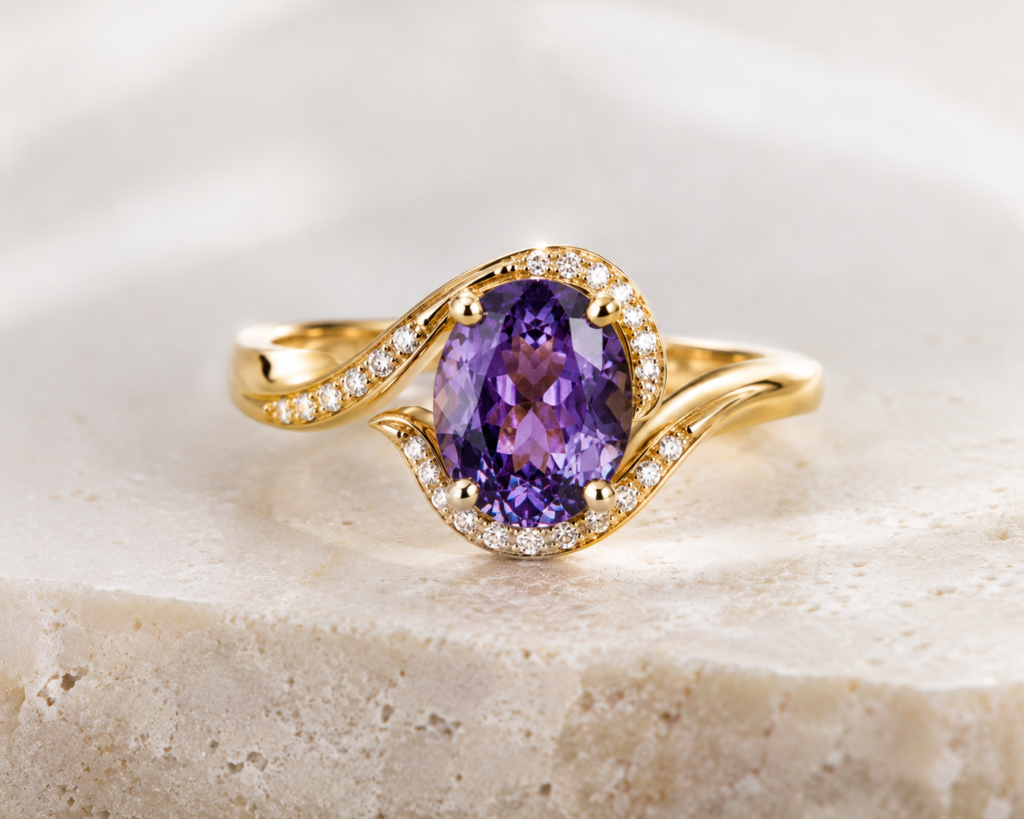
Mohs hardness: 9
Best for: Daily wear, buyers wanting diamond aesthetics without diamond pricing
Available in: Colorless to near-colorless
White sapphire offers diamond-level hardness and durability with a colorless appearance similar to diamond — but at significantly lower cost. It does not have diamond’s fire and brilliance (diamond’s refractive index is higher), producing a more understated, glassy appearance rather than diamond’s characteristic sparkle.
For buyers who want a colorless stone for traditional aesthetic reasons but prefer not to pay diamond prices, white sapphire is a practical and durable choice. For buyers who want maximum brilliance from a colorless stone at accessible pricing, moissanite is the stronger alternative.
Durability Comparison — Quick Reference
Moissanite (9.25): Hardest alternative, excellent for all ring styles and daily wear.
Sapphire and Ruby (9): Exceptional hardness and toughness — the most practical colored stone choices for daily-wear engagement rings.
Alexandrite (8.5): Excellent hardness, suitable for all ring styles.
Aquamarine, Emerald, Morganite (7.5–8): Suitable for ring wear with appropriate settings and reasonable care. Bezel or halo settings recommended.
Setting Recommendations for Alternative Gemstone Engagement Rings
Bezel setting: The most protective option — metal rim surrounds the stone completely. Strongly recommended for emerald, morganite, and aquamarine. Also beautiful for sapphire and ruby in modern designs.
Prong setting: Maximum light exposure and brilliance. Best for harder stones — sapphire, ruby, moissanite, alexandrite. Use six prongs rather than four for better stone security.
Halo setting: Smaller stones surrounding the center stone — increases visual size and protects the center stone’s edges. Excellent for emerald and morganite to compensate for lower hardness.
Three-stone setting: Center stone flanked by two side stones — traditionally symbolizing past, present, and future. Works beautifully with all alternative gemstones.
At Eon Gems, our gemstone jewelry manufacturing capability covers all setting styles in both 925 sterling silver and gold vermeil — with CAD design development for fully custom engagement ring designs.
FAQs — Engagement Ring Gemstone Alternatives
Which gemstone is most durable for an engagement ring?
Moissanite (Mohs 9.25) is the most durable diamond alternative. Blue sapphire and ruby (Mohs 9) are the most durable natural colored gemstone options for daily-wear engagement rings.
Is sapphire or emerald better for an engagement ring?
Sapphire is significantly more durable for daily wear (Mohs 9 vs. 7.5–8), with better toughness and no cleavage concerns. Emerald is more fragile — beautiful for engagement rings but requires a protective setting and more careful daily wear habits.
Can I get a lab-grown colored gemstone engagement ring?
Yes — lab-grown sapphire, ruby, emerald, moissanite, and alexandrite are all excellent engagement ring options. They are chemically identical to natural stones and offer significant cost savings without compromising beauty or durability.
What is the most affordable diamond alternative for an engagement ring?
Moissanite offers the best combination of diamond-like appearance, excellent durability, and low cost. Among natural colored stones, aquamarine and blue topaz offer vivid color at accessible price points.
Is it bad luck to have a non-diamond engagement ring?
No — colored gemstone engagement rings have a longer history than diamond engagement rings. Sapphires, rubies, and emeralds were the preferred engagement stones of royalty and aristocracy for centuries before diamonds became dominant in the 20th century.
Eon Gems — Custom Engagement Ring Gemstone Manufacturer in Jaipur
At Eon Gems, we manufacture custom engagement ring designs with a full range of natural and lab-grown gemstone alternatives — from vivid blue sapphires and rich rubies to ethereal moonstones and color-change alexandrite.
Based in Jaipur — the world’s largest colored gemstone trading hub — we have direct access to the broadest possible range of engagement ring gemstones, combined with 36+ years of custom jewelry manufacturing and export experience.
What we offer:
- Natural and lab-grown sapphire, ruby, emerald, moissanite, alexandrite, aquamarine, morganite
- Custom CAD design development for original engagement ring designs
- All setting styles — bezel, prong, halo, three-stone, solitaire
- 925 sterling silver and gold vermeil base metals
- No MOQ — single custom pieces to bulk production
- Complete export documentation for all major markets
- Treatment disclosure on every stone as standard
Get a Free Quote from Eon Gems →
🔗 Gemstone Jewelry Manufacturing →
🔗 925 Sterling Silver Jewelry →
🔗 Gold Vermeil Jewelry →