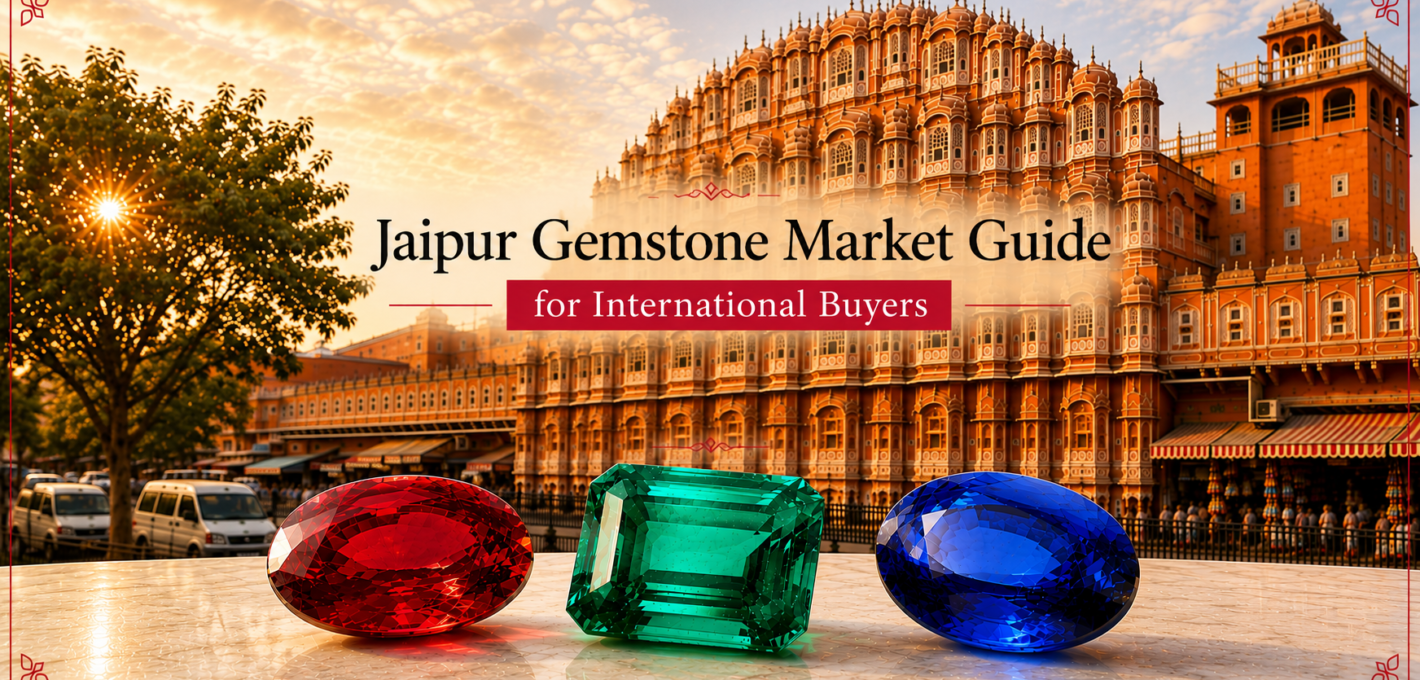
There is no gemstone market in the world quite like Jaipur. Every year, buyers from the USA, UK, Europe, Australia, and dozens of other countries travel to this city in Rajasthan to source colored gemstones directly — drawn by the unmatched variety, competitive pricing, and generational expertise that have made Jaipur the world’s largest colored gemstone trading hub for centuries.
At Eon Gems, we have been manufacturing and exporting gemstone jewelry from Jaipur for 36+ years. We have worked with hundreds of international buyers — first-timers navigating the market for the first time and experienced importers looking to deepen their sourcing relationships. This guide gives you everything you need to know before you arrive — or before you place your first remote order from a Jaipur-based supplier.
Why Jaipur Is the World’s Gemstone Capital
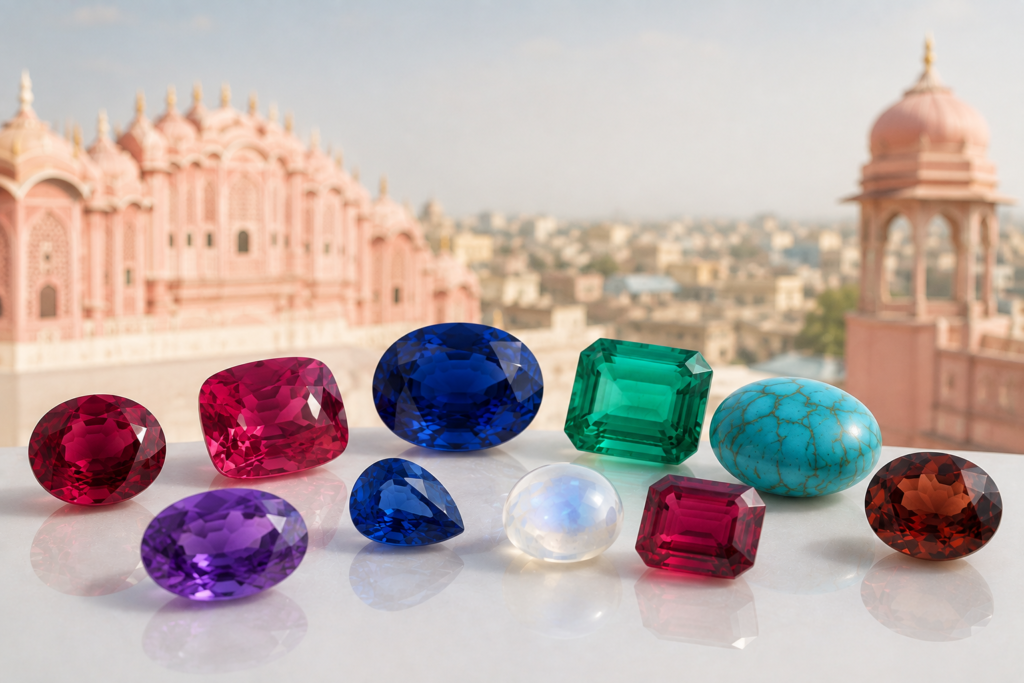
Jaipur’s position as the global center for colored gemstone trading did not happen overnight. It developed over centuries through a combination of geography, royal patronage, craft heritage, and trade relationships that have only strengthened over time.
Historical roots: Jaipur’s gemstone tradition dates to the Mughal era, when Maharaja Sawai Jai Singh II — the city’s founder — invited master craftsmen and gem traders from across India and Central Asia to settle here. The city became the natural meeting point between Indian gem miners, Central Asian traders, and European buyers — a position it has never relinquished.
Geographic advantage: Rajasthan itself is rich in mineral deposits — including emerald mines near Ajmer, garnets from various districts, and a range of semi-precious stones found throughout the state. Furthermore, Jaipur’s central location in India makes it a natural aggregation point for stones arriving from mines across the globe.
Cutting expertise: India accounts for approximately 90% of the world’s gemstone cutting and polishing by volume. Jaipur’s gem cutters have generational expertise across every stone variety — from standard calibrated rounds to complex custom cuts and freeform cabochons. Consequently, rough stones from mines in Colombia, Mozambique, Sri Lanka, Ethiopia, and Afghanistan flow to Jaipur for cutting before reaching global markets.
Complete ecosystem: Jaipur is unique in offering the complete supply chain under one umbrella — rough stone trading, cutting and polishing, quality grading, jewelry manufacturing, and export — all within a few square kilometers. This concentration creates efficiency and cost advantages that no other market can match.
The Main Gemstone Markets in Jaipur
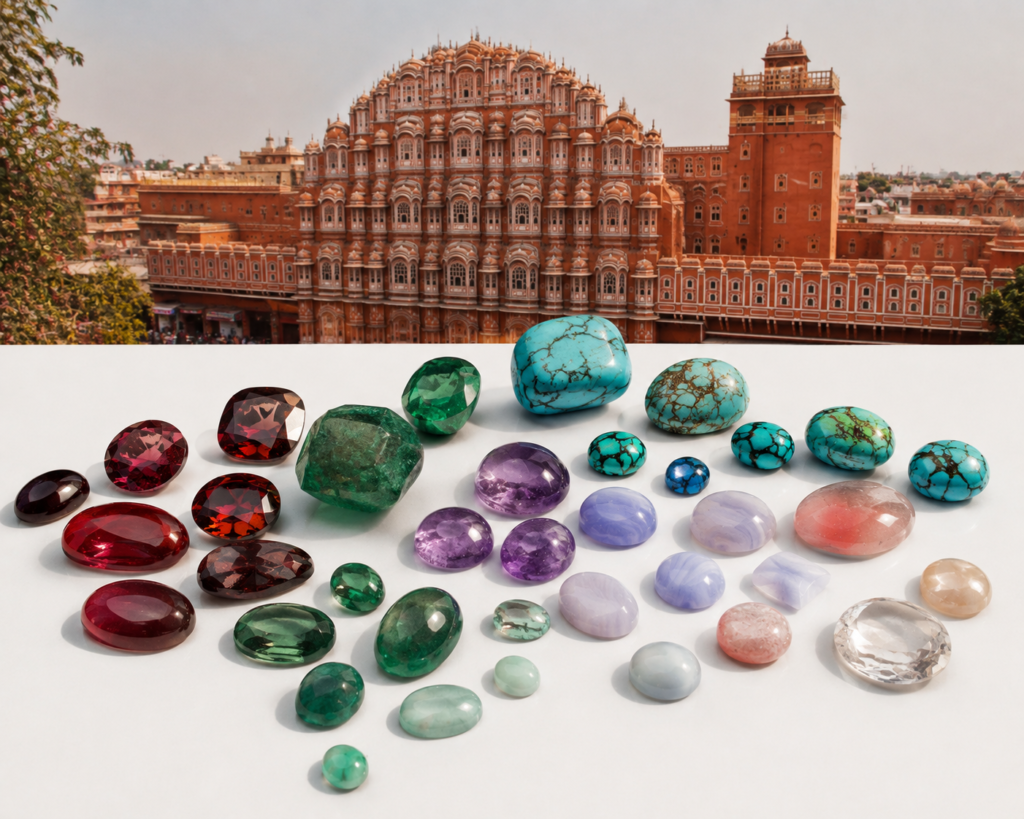
Understanding where different types of stones and transactions happen helps international buyers navigate the city more effectively.
Johari Bazaar
Johari Bazaar — literally “jewelers’ market” — is the historic heart of Jaipur’s gem and jewelry trade. The main street and its surrounding lanes are lined with hundreds of shops ranging from small family-run stone dealers to larger wholesale operations.
Johari Bazaar is best for buyers who want to see a wide variety of stones across multiple vendors in a single area — getting a feel for market pricing, variety, and availability before committing to specific suppliers. However, retail and wholesale pricing are mixed here — buyers without sourcing experience may find it difficult to distinguish genuine wholesale operations from tourist-oriented retail.
Gem and Jewellery Export Promotion Council (GJEPC) Area
The GJEPC — India’s government-backed gem and jewelry export body — maintains a registry of verified, export-registered suppliers. Buyers who source through GJEPC-registered companies have additional assurance of legitimate business operations and export capability.
Many of the city’s most established gem dealers and jewelry manufacturers, including Eon Gems, are GJEPC-registered exporters — a credential worth verifying before placing significant orders.
Pannaheera Building and Wholesale Gem Zones
Several dedicated wholesale gem trading buildings and zones operate in Jaipur — particularly for specific stone categories. These are where serious volume buyers, cutters, and dealers transact. Access is generally easier for buyers with established trade relationships or through introductions from known market participants.
Manufacturer Showrooms and Export Facilities
Many of Jaipur’s most reliable gemstone suppliers — including those with strong international buyer relationships — operate from dedicated showrooms and manufacturing facilities rather than open market stalls. These operations offer a more controlled environment for evaluating stones, discussing specifications, and establishing long-term sourcing relationships.
At Eon Gems, our facility combines a full gemstone jewelry manufacturing operation with direct stone sourcing — giving international buyers the ability to select stones and see them set into 925 sterling silver or gold vermeil jewelry in a single visit.
What Stones Are Available in Jaipur
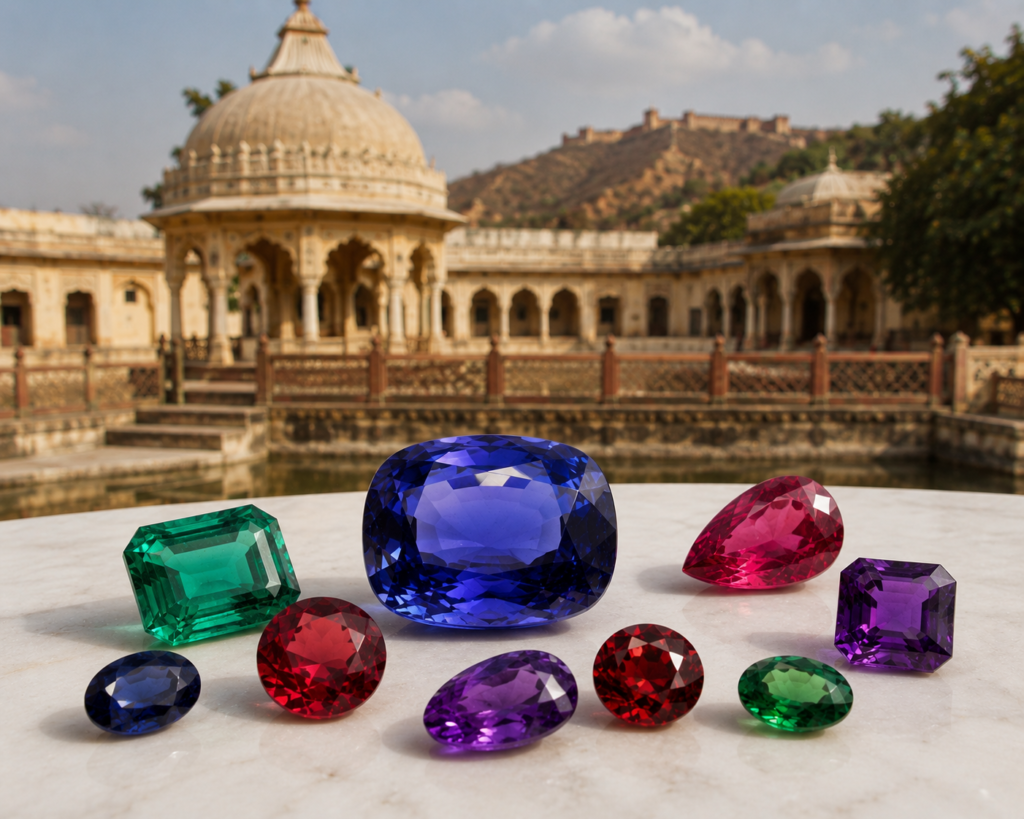
The range of gemstones available in Jaipur is genuinely extraordinary — one of the market’s defining advantages over any other sourcing destination.
Precious stones:
Natural ruby, blue sapphire, pink sapphire, yellow sapphire, emerald — available in a wide range of qualities from commercial to fine grade. Both natural and lab-grown versions are available across all four precious stone categories.
Semi-precious stones:
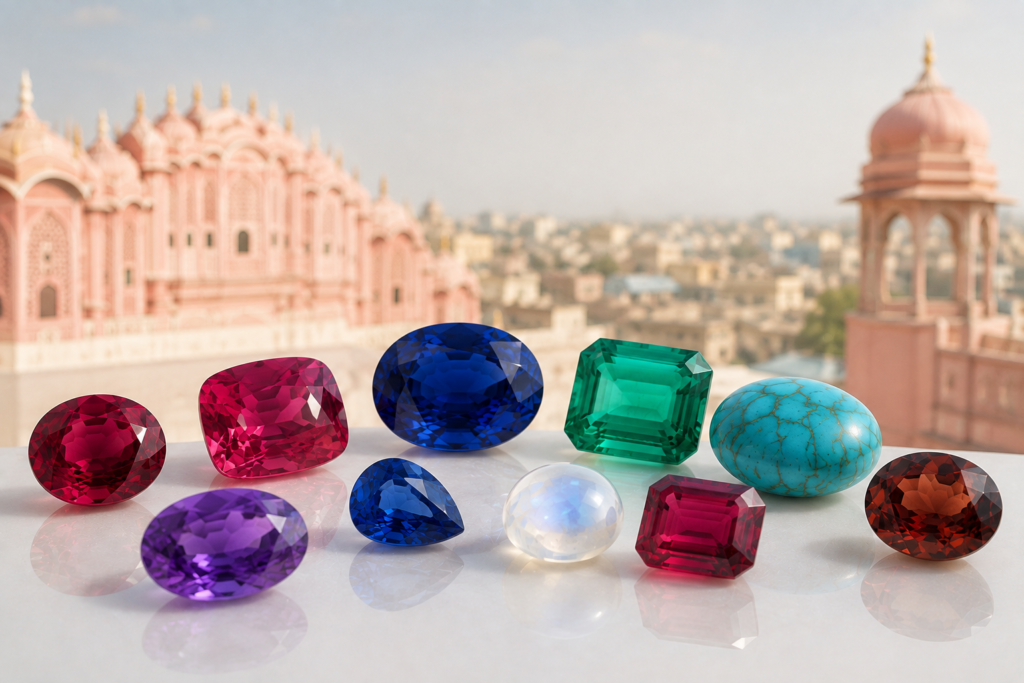
Turquoise, moonstone, labradorite, Ethiopian opal, amethyst, citrine, garnet, carnelian, malachite, lapis lazuli, aquamarine, morganite, rose quartz, tiger’s eye, onyx, chrysoprase, peridot, blue topaz, and hundreds more.
Specialty and unusual stones:
Alexandrite, tanzanite, spinel, iolite, kyanite, zultanite, sunstone, rainbow moonstone, dendrite agate, ocean jasper, and many other varieties that are difficult or expensive to source in other markets.
Lab-grown stones:
Ruby, sapphire, emerald, moissanite, alexandrite, and spinel — all available in Jaipur from specialist lab-grown stone suppliers.
Calibrated vs. freeform:
Both are widely available. Calibrated stones — cut to standard sizes — are essential for jewelry manufacturing with standard settings. Freeform and custom-cut material is available for artisan and one-of-a-kind applications.
Understanding Jaipur Gemstone Pricing
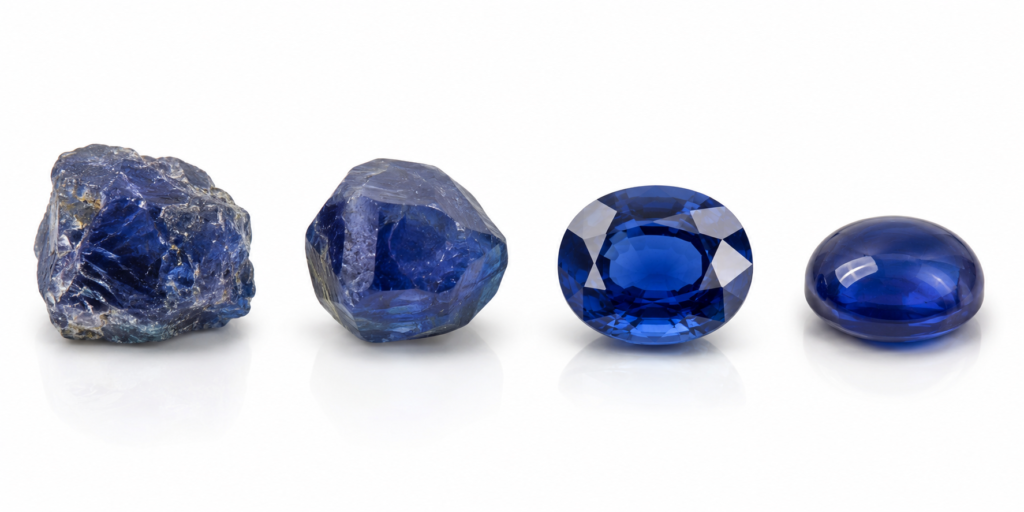
Gemstone pricing in Jaipur is more nuanced than most international buyers expect — and understanding the pricing structure helps buyers avoid overpaying and negotiate effectively.
How Stones Are Priced
Most loose gemstones are priced per carat — and the per-carat price varies enormously based on quality, size, and market demand. Larger stones cost more per carat than smaller stones of equivalent quality — the price-per-carat increases non-linearly with size.
Quality grades in Jaipur’s market are typically described as commercial, good, fine, and top or AAA — though these terms are not standardized across all sellers. Consequently, buyers need to develop their own quality assessment skills or work with trusted partners who grade consistently.
Market vs. Export Pricing
Prices in open market settings — Johari Bazaar stalls, market lane dealers — are often quoted as starting points for negotiation. Export-oriented suppliers with fixed facilities typically quote more consistent prices based on their established quality grading, with less room for dramatic negotiation but greater reliability of quality and documentation.
Treatment Impact on Pricing
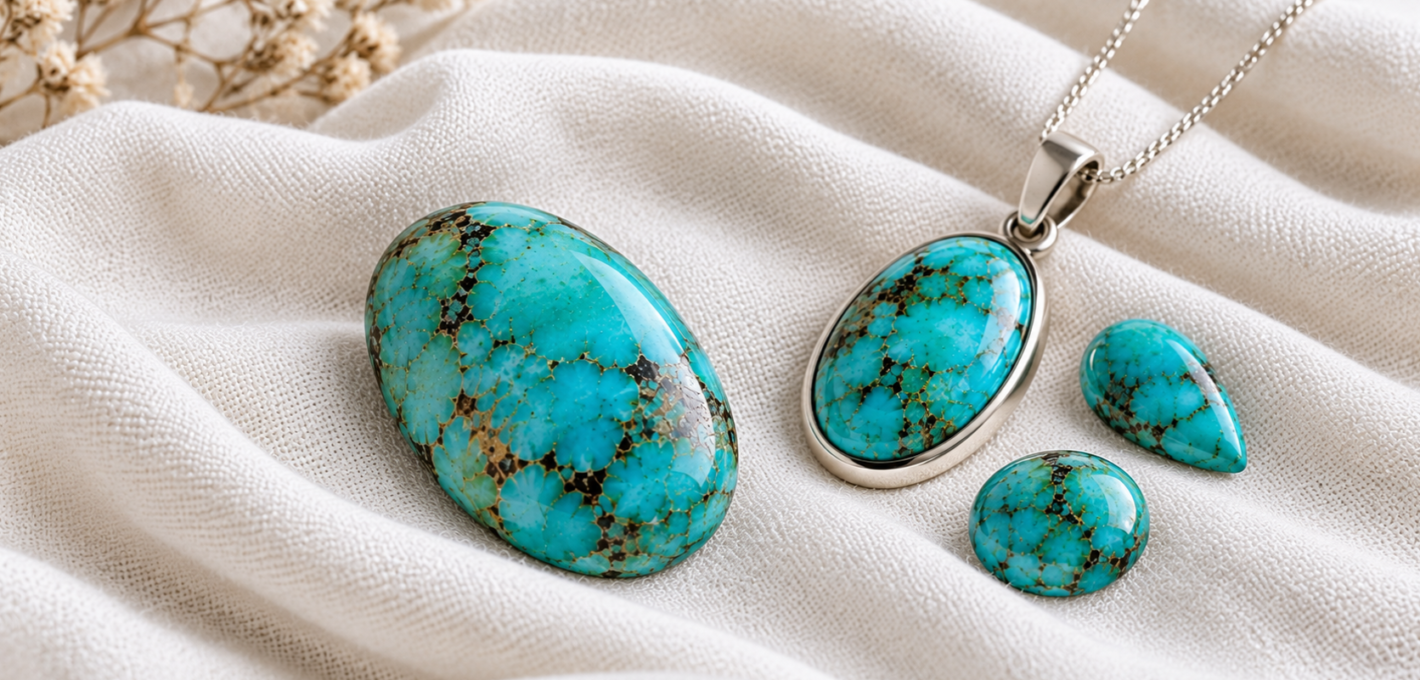
Most colored gemstones undergo treatment to enhance color or clarity — heat treatment for sapphires and rubies, oil treatment for emeralds, stabilization for turquoise. Treated stones are significantly less expensive than untreated stones of equivalent appearance. Furthermore, the treatment status must be disclosed — untreated natural stones of fine quality command substantial premiums.
Always ask: “Is this stone treated? What treatment has been applied?” Reputable suppliers answer immediately and accurately. Hesitation or vague answers indicate either incomplete knowledge or deliberate concealment — both reasons for caution.
Negotiation Norms
Negotiation is entirely standard in Jaipur’s gemstone market — particularly in open market settings. However, several principles apply:
Building relationship before pushing hard on price consistently produces better outcomes than aggressive negotiation on a first visit. Suppliers who trust a buyer’s reliability and long-term intent offer better pricing over time than they offer at a first meeting.
Buying in volume produces better per-carat pricing — larger quantities of the same stone or a single significant purchase of multiple varieties at once creates negotiating leverage.
Unrealistically aggressive negotiation damages the relationship and often results in quality compromises — the supplier finds another way to recover margin. Sustainable pricing that works for both parties is the foundation of long-term sourcing relationships.
What to Check Before Buying Gemstones in Jaipur
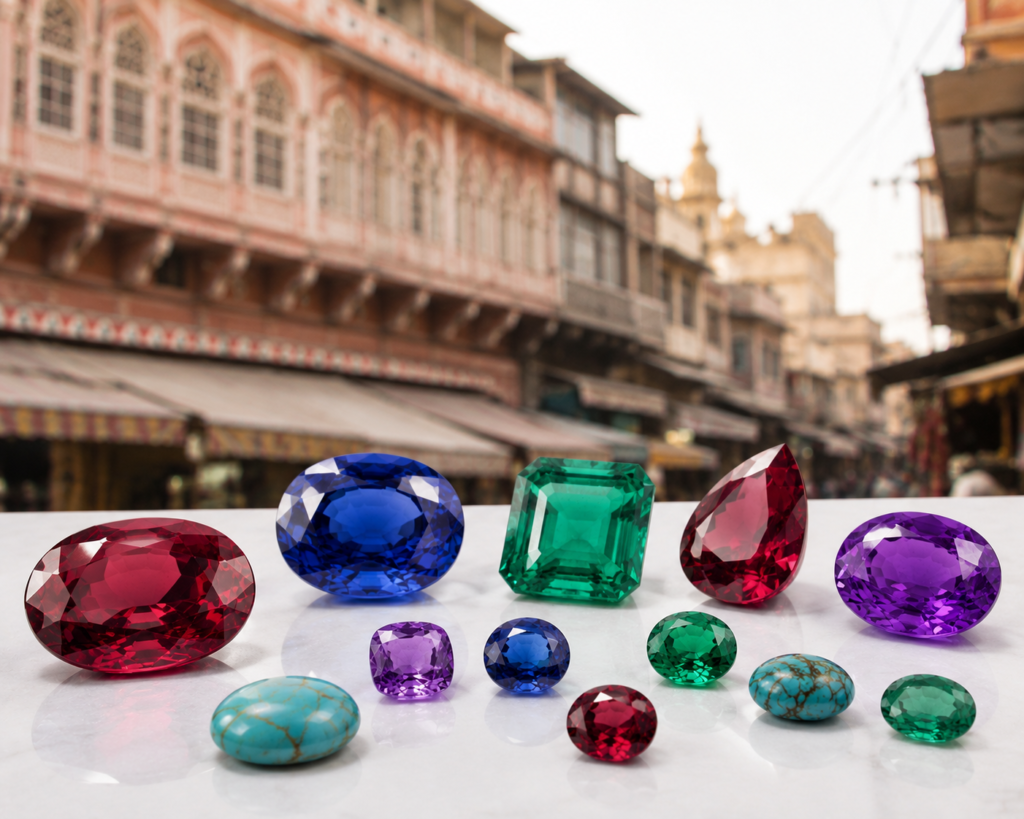
Whether buying in person or ordering remotely, these verification points protect buyers from the most common sourcing mistakes.
Stone Identity Verification
Confirm the exact stone species. Substitution — presenting one stone as another — is one of the most common quality failures in any gemstone market. Common substitutions include:
- Blue glass or synthetic spinel presented as sapphire
- Dyed howlite presented as turquoise
- Synthetic corundum presented as natural ruby or sapphire
- Glass-filled fractures in rubies not disclosed as treatment
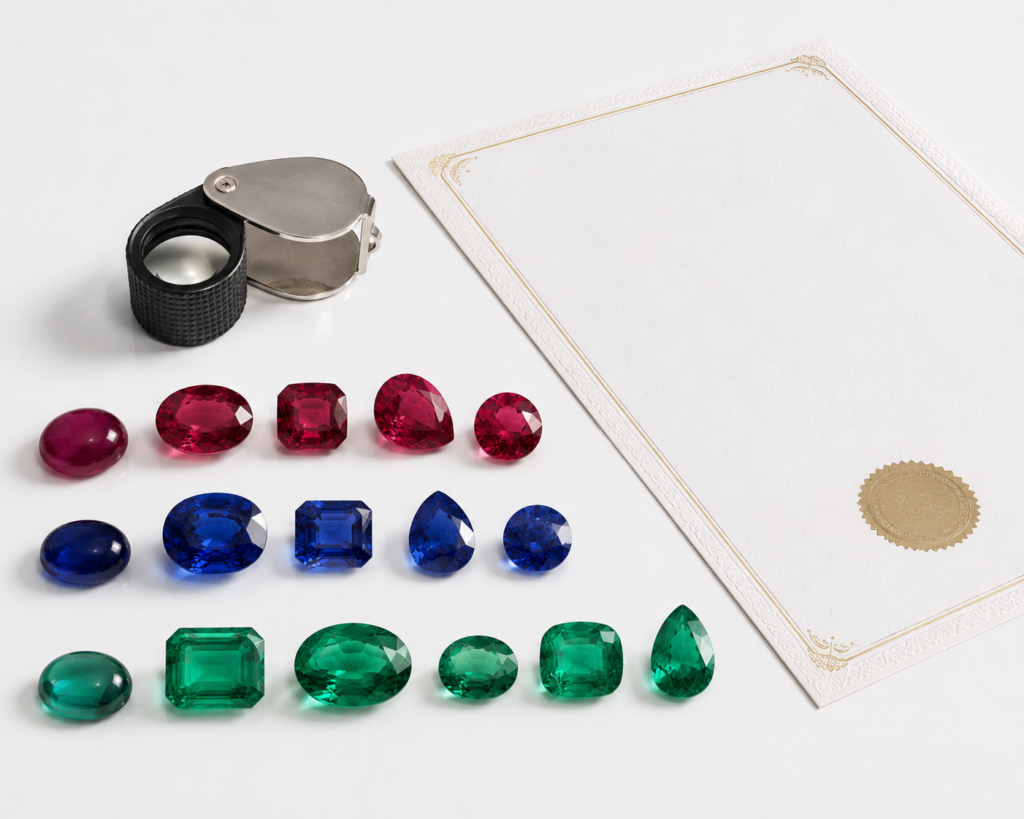
For significant purchases, request a gemological certificate from GIA, IGI, or a qualified local gemologist. Professional testing provides definitive identification.
Treatment Disclosure
Request full treatment disclosure in writing on the invoice. In regulated export markets — particularly the USA and EU — undisclosed treatments constitute misrepresentation. A trustworthy supplier discloses treatments on every invoice as standard practice, without being asked.
Quality Consistency
For wholesale buyers purchasing multiple stones, evaluate the consistency of a batch, not just the individual stones presented as samples. Quality can vary significantly within a lot — request to see the full parcel before agreeing to purchase.
Export Documentation
Confirm that your supplier can provide complete export documentation — commercial invoice with HS codes, packing list, certificate of origin, and any gemological certificates required for your market. A supplier unfamiliar with export documentation is either new to international trade or primarily sells domestically — neither is ideal for a reliable international sourcing relationship.
Visiting Jaipur — Practical Guide for International Buyers
Best Time to Visit
October to March offers the most comfortable climate for visiting Jaipur — temperatures are moderate and the city is at its most accessible. April through June brings intense heat that makes extended market visits physically demanding.
The Jaipur Jewelry Show (JJS) — typically held in January — is the most efficient single event for meeting multiple suppliers and seeing a broad range of stones and jewelry simultaneously. The show attracts serious buyers and manufacturers from across India and internationally.
Getting Around
Jaipur’s main gem and jewelry trading areas are concentrated enough to navigate on foot or by auto-rickshaw. The historic walled city area — where Johari Bazaar is located — is best explored on foot during cooler morning hours. Moreover, most established manufacturer showrooms are located slightly outside the old city center and are best reached by car or auto-rickshaw.
What to Bring
- Business cards — essential for establishing professional credibility
- A loupe (10x magnification) — for examining stones in the market
- A reference notebook — for recording stone specifications, prices, and supplier details
- A mobile UV light — helpful for detecting certain treatments and synthetics
- Cash in Indian rupees — many market vendors prefer cash for smaller transactions; established exporters typically accept wire transfer
Language
English is widely spoken among Jaipur’s export-oriented gem dealers and jewelry manufacturers — particularly those with established international buyer relationships. Hindi is useful for navigating open market areas. However, at established facilities like Eon Gems, all business communication with international buyers is conducted in English.
Safety and Scams to Avoid
Jaipur’s gem market, like any major trading hub, has its share of buyer risks. The most common include:
Gem investment schemes: Strangers who approach tourists offering “special deals” on gems for resale in your home country. These schemes consistently result in buyers paying significantly above market value for low-quality material that cannot be resold profitably. Legitimate wholesale sourcing does not happen through street encounters.
Quality switching: Being shown high-quality samples but receiving lower-quality material in the actual purchase parcel. Always inspect the complete parcel before purchasing, not just the displayed samples.
Certificate fraud: Fake gemological certificates from non-existent or disreputable laboratories. Verify certificates by checking the issuing laboratory’s verification database — GIA and IGI both offer online certificate verification.
Fake “wholesale” prices: Tourist-facing stalls quoting “wholesale” prices that are still significantly above genuine wholesale rates. Genuine wholesale pricing requires genuine wholesale relationships — established over time, not from a first encounter.
Remote Sourcing from Jaipur — For Buyers Who Cannot Visit
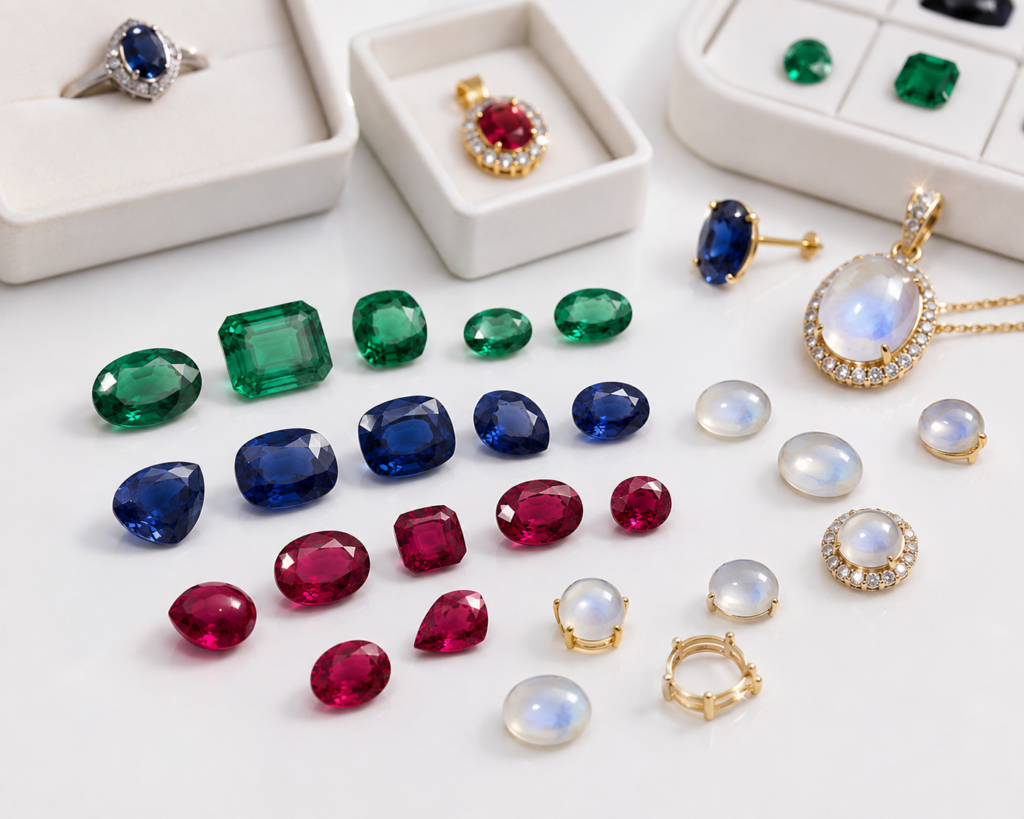
Not every international buyer can visit Jaipur in person — and the good news is that established Jaipur-based suppliers offer reliable remote sourcing options that eliminate the need for physical presence.
Video sourcing: Many established suppliers offer video calls where stones are examined and discussed in real time — allowing buyers to evaluate color, clarity, and optical effects before purchasing. At Eon Gems, we regularly source stones for international clients via video with detailed specifications and photographic documentation.
Sample orders: For new supplier relationships, placing a small initial order — 10 to 20 pieces of a specific stone variety — before committing to larger volumes allows buyers to evaluate actual delivery quality against the supplier’s representations. This is the most reliable remote qualification method.
Trusted intermediaries: Buyers who lack the time or expertise to source independently can work with established manufacturers who handle stone sourcing as part of a complete jewelry manufacturing service — sourcing stones, setting them into finished jewelry, and exporting with full documentation.
At Eon Gems, our gemstone jewelry manufacturing service covers the complete process — stone sourcing from Jaipur’s market, setting into 925 sterling silver or gold vermeil jewelry, quality verification, and export to 50+ countries. Consequently, international buyers get the benefit of direct Jaipur gemstone market access without the complexity of managing the sourcing independently.
Building a Long-Term Sourcing Relationship in Jaipur
The buyers who get the best stones at the best prices from Jaipur are not the ones who negotiate hardest on a first visit. They are the ones who invest in long-term relationships with reliable suppliers — returning consistently, paying reliably, and treating the relationship as a genuine partnership.
How to build strong Jaipur sourcing relationships:
Pay on time, every time — payment reliability is the single most important factor in how a supplier prioritizes and treats a buyer over time.
Communicate specifications clearly — detailed, written stone specifications reduce errors and demonstrate professionalism that suppliers respect.
Give honest quality feedback — suppliers who receive accurate feedback on quality issues improve their selection for subsequent orders.
Visit in person when possible — even one in-person visit to Jaipur dramatically strengthens a sourcing relationship and gives buyers direct insight into a supplier’s operation.
Think long-term — the best sourcing relationships in Jaipur span years and decades, not individual transactions. Buyers who approach the relationship with long-term thinking consistently get better access to fine material than those who treat every interaction as a one-off transaction.
FAQs — Jaipur Gemstone Market
Is it safe to buy gemstones in Jaipur?
Yes — buying gemstones from established, GJEPC-registered suppliers in Jaipur is safe and reliable. The risks are primarily associated with open market purchases from unknown vendors without documentation. Working with established exporters eliminates most of these risks.
Do I need a gemology certificate to buy in Jaipur?
No — you do not need a gemological qualification to buy in Jaipur. However, basic knowledge of quality grading, treatment disclosure, and how to evaluate stones is valuable. For significant purchases, requesting third-party gemological certification protects your interests.
Can I negotiate prices in Jaipur’s gem market?
Yes — negotiation is entirely standard, particularly in open market settings. Established exporters typically quote more consistent prices with less negotiation room, but compensate with better documentation, reliability, and quality consistency.
What is the minimum order for gemstone sourcing in Jaipur?
It varies significantly by supplier. Open market vendors may sell individual stones. Wholesale operations typically have minimum lot sizes. Established manufacturers like Eon Gems offer no minimum order quantity — allowing buyers to start with small test orders before scaling.
How do I export gemstones from India?
Your supplier handles the export process — providing commercial invoice, packing list, certificate of origin, and airway bill. Import duty rates vary by destination country and stone type. Consulting a customs broker in your home country before your first import is recommended.
Eon Gems — Your Jaipur Gemstone Sourcing and Manufacturing Partner
With 36+ years of operation in Jaipur, Eon Gems combines direct gemstone market access with full in-house jewelry manufacturing — giving international buyers a single, reliable partner for both stone sourcing and finished jewelry production.
What we offer international buyers:
- 250+ natural gemstone varieties — direct Jaipur market access, conflict-free
- Lab-grown options — ruby, sapphire, emerald, moissanite, alexandrite
- Full treatment disclosure on every stone as standard
- Custom gemstone jewelry manufacturing — all cuts and settings
- 925 sterling silver and gold vermeil manufacturing
- No MOQ — single sample to large bulk production
- Video sourcing for remote international buyers
- Complete export documentation for 50+ countries
- GJEPC-registered exporter — verified, reliable, established
👉 Get in touch with Eon Gems →
🔗 Gemstone Jewelry Manufacturing →
🔗 925 Sterling Silver Jewelry →
🔗 Gold Vermeil Jewelry →